Yatrataxi
Very wonderful faculty and they are very cooperative and environment is very positive. Training and placement department continuously providing ... Click here : https://yatrataxi.com/




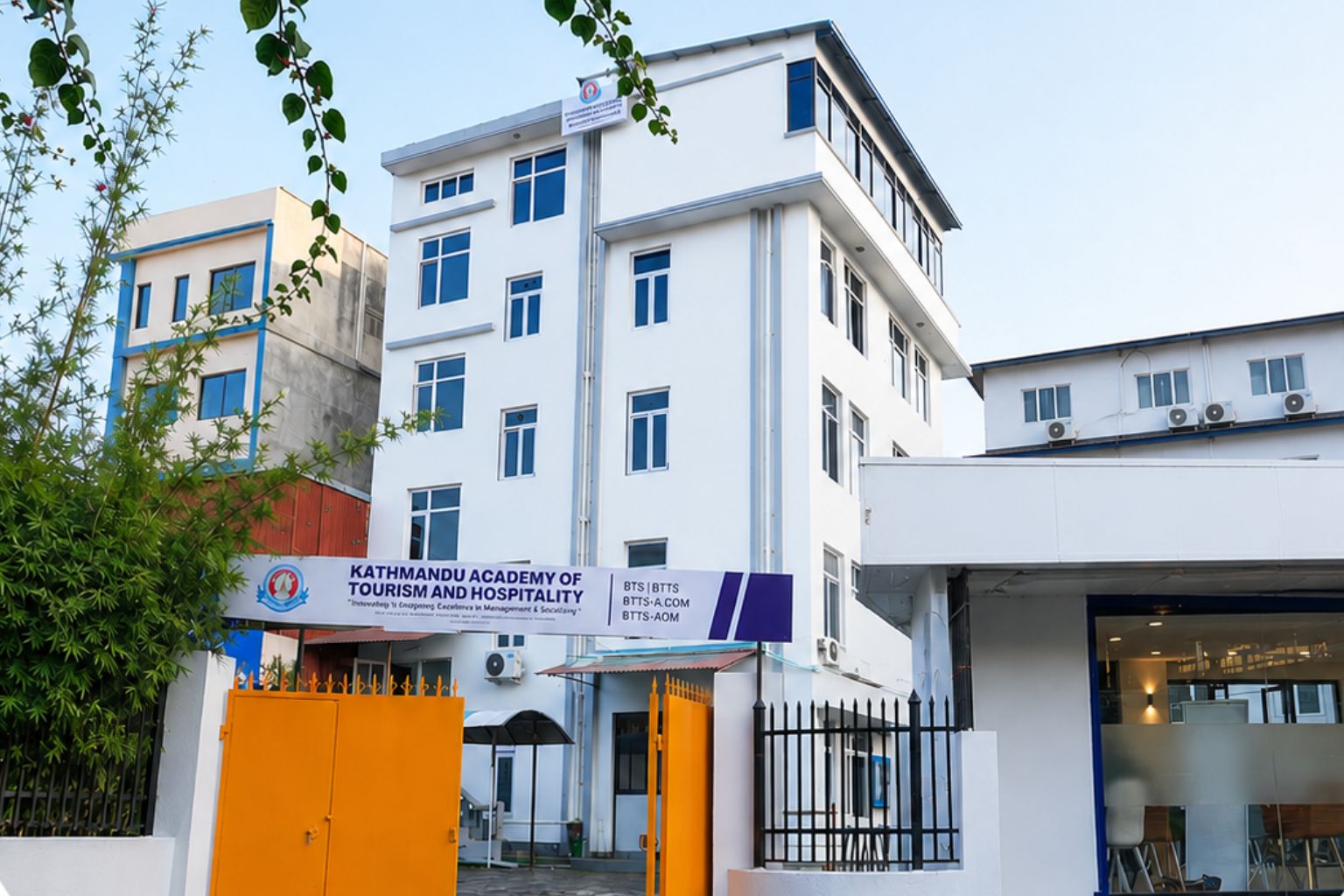
Kathmandu Academy of Tourism and Hospitality (KATH College) was established in March 2002 and is based in Hattisar, Kathmandu. The college focuses on tourism, hospitality, management, and information technology education, with academic programs affiliated with Purbanchal University (PU).
Its teaching environment combines classroom study with practical work, projects, field exposure, internships, simulations, and interaction with professionals. KATH has also conducted short-term training for government agencies, development programmes, and tourism-sector participants. Its current Purbanchal University program allocation covers BIT, BTTS, and MTS, with approved intakes of 48, 40, and 30 seats respectively.
Established: March 2002
Location: Hattisar, Kathmandu, near the Chinese Embassy
Affiliation: Purbanchal University
Institution Type: Private
Academic Areas: Tourism, hospitality, management, and information technology
Founder: Sudhir Raj Adhikari
Programs: BIT, BTTS, and MTS
Approved Seats: BIT – 48, BTTS – 40, MTS – 30
Academic Approach: Classroom learning, practical sessions, field visits, projects, internships, and industry interaction
Student Activities: Tourism, hospitality, aviation, entrepreneurship, media, culture, and technology clubs
KATH was founded in March 2002 with tourism education at the centre of its academic work. Its founding direction was connected to Nepal's need for trained people who could work across travel, tourism, hospitality, and related service sectors.
The phrase “Tourism for Prosperity and Peace” has been associated with the institution's guiding outlook. Over time, its academic scope has expanded beyond tourism studies to include information technology while maintaining tourism, hospitality, and management as central areas of study.
Sudhir Raj Adhikari is identified as the Founder, Chairman, and Ex-Principal of KATH. His professional background includes work connected with Royal Nepal Airlines, international development assignments, tourism education, and tourism policy. He has also served on the Academic Council of Purbanchal University and was involved with the Hotel Management and Travel/Tourism Subject Committee under HSEB Nepal.
This connection between academic work and tourism practice is reflected in the college's use of study tours, simulations, practical laboratories, internships, projects, and interaction with professionals rather than relying only on classroom instruction.
KATH offers undergraduate and postgraduate programs under Purbanchal University. The university's consolidated college and course allocation records KATH in Kathmandu with BIT, BTTS, and MTS and specifies their approved seat numbers.
| Program | Level | Approved Seats |
|---|---|---|
| Bachelor of Information Technology (BIT) | Bachelor's | 48 |
| Bachelor of Travel and Tourism Studies (BTTS) | Bachelor's | 40 |
| Master of Tourism Studies (MTS) | Master's | 30 |
The Bachelor of Information Technology is structured as a four-year, eight-semester program. Its coursework moves through programming, mathematics, computer systems, networking, database management, software development, security, web technology, data-related subjects, and computing applications.
Practical work is built into the program through semester projects. Semester VII includes an internship, while Semester VIII includes an Apprentice Project. This structure gives students opportunities to apply technical study through projects and workplace-oriented assignments before completing the degree.
The Bachelor of Travel and Tourism Studies is a four-year program organised across eight semesters. Its subjects cover tourism fundamentals, international airline ticketing and fare construction, travel trade operations, tourism communication, tourism economics, tourism geography, tourism marketing, tourism legislation, customer relations, tourism planning, and related management areas.
The curriculum also includes Chinese and French language study, a study tour, project work, and extended internship periods. Semesters VI and VII are assigned to full-time internship work in travel and tourism-related organisations, followed by reporting requirements.
The Master of Tourism Studies provides KATH's postgraduate academic offering in tourism. The program has an approved intake of 30 seats under Purbanchal University. It sits alongside the undergraduate BTTS program within the college's tourism-focused academic area.
Practical exposure is a recurring part of KATH's academic setup. The form of practical work differs by program and may include laboratory sessions, projects, field visits, study tours, simulations, internships, and workplace assignments.
For tourism students, field-based learning helps connect subjects such as travel operations, airline services, tourism planning, communication, and hospitality with working environments. BTTS students have dedicated internship periods within the curriculum.
BIT students work through a sequence of academic projects before completing an internship and an Apprentice Project in the later stages of the program. This gives the technology program a practical component alongside its classroom and laboratory work.
The college also uses professional interaction as part of its teaching environment. Faculty members include instructors with academic and industry backgrounds, with visiting professionals contributing in areas connected to tourism, travel, hospitality, and technology.
KATH has developed facilities around the practical requirements of tourism, hospitality, and technology study. Rather than serving a single academic area, the campus includes spaces for hospitality operations, culinary practice, computing, classroom instruction, meetings, counselling, and recreation.
The Professional Training Kitchen is equipped for practical culinary work, with equipment such as gas ranges, convection ovens, blast chillers, and plating stations.
A Coffee Lab and Training Café provides a separate environment for beverage-service practice. It includes espresso equipment and barista training stations where students can work through beverage preparation and service activities.
The Hotel Room Training Suite is designed for practical exercises related to housekeeping and room operations. Students can use the space for activities such as bed-making, room preparation, and inspection procedures.
The Reception and Front Office Lab provides a simulated reception environment for learning guest-service processes. Its use includes exercises related to reception procedures, guest relations, check-in and check-out activities, and hotel management software.
The college has digital-board classrooms for multimedia-supported teaching and a computer laboratory used for technology and tourism-related applications.
The computer lab supports work involving computing subjects as well as software associated with tourism management, Global Distribution Systems, and airline reservation activities.
A Library and Resource Center provides physical and digital study resources in tourism, hospitality, management, and related subjects. The campus also includes air-conditioned classrooms and dedicated areas for academic study.
A conference and boardroom space is available for meetings, presentations, and event-related learning.
The Faculty and Counselling Room provides an area for academic guidance and individual discussions between students and faculty members.
For recreation, the campus includes an outdoor sports area with a fenced basketball court. Awards, academic honours, and cultural items are also displayed within the college premises.
KATH's work has included short-duration and purpose-specific training in addition to its university programs.
Training activities have involved participants connected with the Government of Nepal's Department of Immigration, the Tourism for Rural Poverty Alleviation Programme (TRPAP), the National Examination Board, Eco-Himal, and tourism and travel-trade organisations from different parts of Nepal.
The college has also been involved in enterprise-related training under UN/MEDEP in Baglung and Surkhet. These activities extend the institution's tourism and hospitality training work to professionals and development programmes outside its regular undergraduate and postgraduate classes.
KATH's tourism students have received recognition through external awards and scholarship programmes.
BTTS students have received the WWF Prince Bernhard Scholarship. BTTS graduates have also received Gold Medal recognition from the Pasang Lhamu Mountaineering Foundation for performance in tourism studies.
The college also mentions merit-based scholarships for eligible students. Scholarship arrangements may depend on academic performance and the applicable criteria for the relevant intake.
Student activities at KATH are organised around different academic and creative interests. The club structure connects tourism and hospitality education with aviation, entrepreneurship, technology, culture, media, and community activities.
Atithi Club focuses on hospitality and culinary activities, including food-related events and fellowship programmes.
Skyways Club centres on aviation and airline-related activities, including simulations, workshops, and career sessions.
Yatra Circle brings together students interested in tourism and travel through activities such as heritage trails and travel-related projects.
Travelpreneurs Club focuses on entrepreneurship and leadership through discussions, roundtables, and student programmes.
Ideation Society covers media, marketing, photography, social content, and creative communication.
Sanskriti Circle organises cultural and community activities, including cultural nights and festival programmes.
Tech Society provides a space for coding, technology activities, and digital projects.
These clubs give students additional settings for teamwork, event participation, communication, and subject-related activities outside regular classes.
The combination of BIT, BTTS, and MTS gives KATH an academic structure that spans both tourism-related study and information technology.
BTTS concentrates on travel and tourism operations, airlines, tourism planning, tourism marketing, communication, languages, field exposure, and internships. MTS extends tourism study to the postgraduate level.
BIT follows a separate technology curriculum but shares access to the college's computing environment and project-based academic structure. Students complete multiple projects, an internship, and an Apprentice Project as part of the program.
The presence of tourism, aviation, hospitality, and technology-oriented student clubs also reflects these different academic interests within one campus.
KATH is located in Hattisar, Kathmandu, near the Chinese Embassy. The Kathmandu location houses its classrooms, practical training areas, hospitality labs, computer facilities, library resources, counselling space, meeting rooms, and recreational facilities.
The college also allows prospective students and parents to visit the campus and view its academic and practical facilities.
Kathmandu Academy of Tourism and Hospitality was established in March 2002.
KATH is located in Hattisar, Kathmandu, near the Chinese Embassy.
KATH's BIT, BTTS, and MTS programs are affiliated with Purbanchal University.
The college offers Bachelor of Information Technology (BIT), Bachelor of Travel and Tourism Studies (BTTS), and Master of Tourism Studies (MTS) under Purbanchal University.
The approved allocations are 48 seats for BIT, 40 seats for BTTS, and 30 seats for MTS.
Yes. Practical learning includes projects, laboratory work, field activities, simulations, internships, and study tours depending on the program. BIT includes an internship and Apprentice Project, while BTTS includes extended internship periods.
Facilities include a professional training kitchen, Coffee Lab and Training Café, hotel room training suite, reception and front office lab, computer laboratory, digital classrooms, library and resource centre, conference room, counselling space, and outdoor sports area.
Student activities include Atithi Club, Skyways Club, Yatra Circle, Travelpreneurs Club, Ideation Society, Sanskriti Circle, and Tech Society.
Yes. Its training activities have included work involving the Department of Immigration, TRPAP, Eco-Himal, the National Examination Board, tourism-sector participants, and UN/MEDEP activities in Baglung and Surkhet.
Very wonderful faculty and they are very cooperative and environment is very positive. Training and placement department continuously providing ... Click here : https://yatrataxi.com/






-9075.jpg)