Kathmandu University School of Engineering (KUSoE) is an academic school of Kathmandu University (KU) located in Dhulikhel, Kavre, Nepal. Established in 1994 AD, the School conducts undergraduate, postgraduate, research, and doctoral study across engineering, computing, technology, architecture, geomatics, artificial intelligence, health informatics, environmental engineering, and related technical fields.
KUSoE operates within Kathmandu University rather than as a separate institution affiliated with another university. Its academic activities are concentrated mainly in Blocks 08, 09, 10, and 11 on the university campus in Dhulikhel.
The Kathmandu University School of Engineering, Kavre manages programs through departments and academic areas covering conventional engineering disciplines as well as computing, energy systems, land administration, architecture, environmental engineering, and interdisciplinary technology programs.
Admission, entrance procedures, curriculum, examinations, results, and degree awards for KUSoE programs are governed by the rules and regulations of Kathmandu University.
| Field | Details |
|---|---|
| Institution | Kathmandu University School of Engineering |
| Common names | KUSoE, School of Engineering, SoE |
| Established | 1994 AD |
| Parent university | Kathmandu University |
| Location | Dhulikhel, Kavre, Nepal |
| Academic levels | Bachelor's, master's, research, and doctoral study |
| Main campus blocks | Blocks 08, 09, 10, and 11 |
| School office telephone | +977-11-415100 |
| School office email | soe_office@ku.edu.np |
KUSoE covers a wider academic range than the traditional branches of mechanical, civil, electrical, and computer engineering. Its academic structure also includes geomatics, chemical engineering, architecture, information technology, artificial intelligence, health informatics, environmental engineering, energy-related study, sanitation technology, land administration, and research programs.
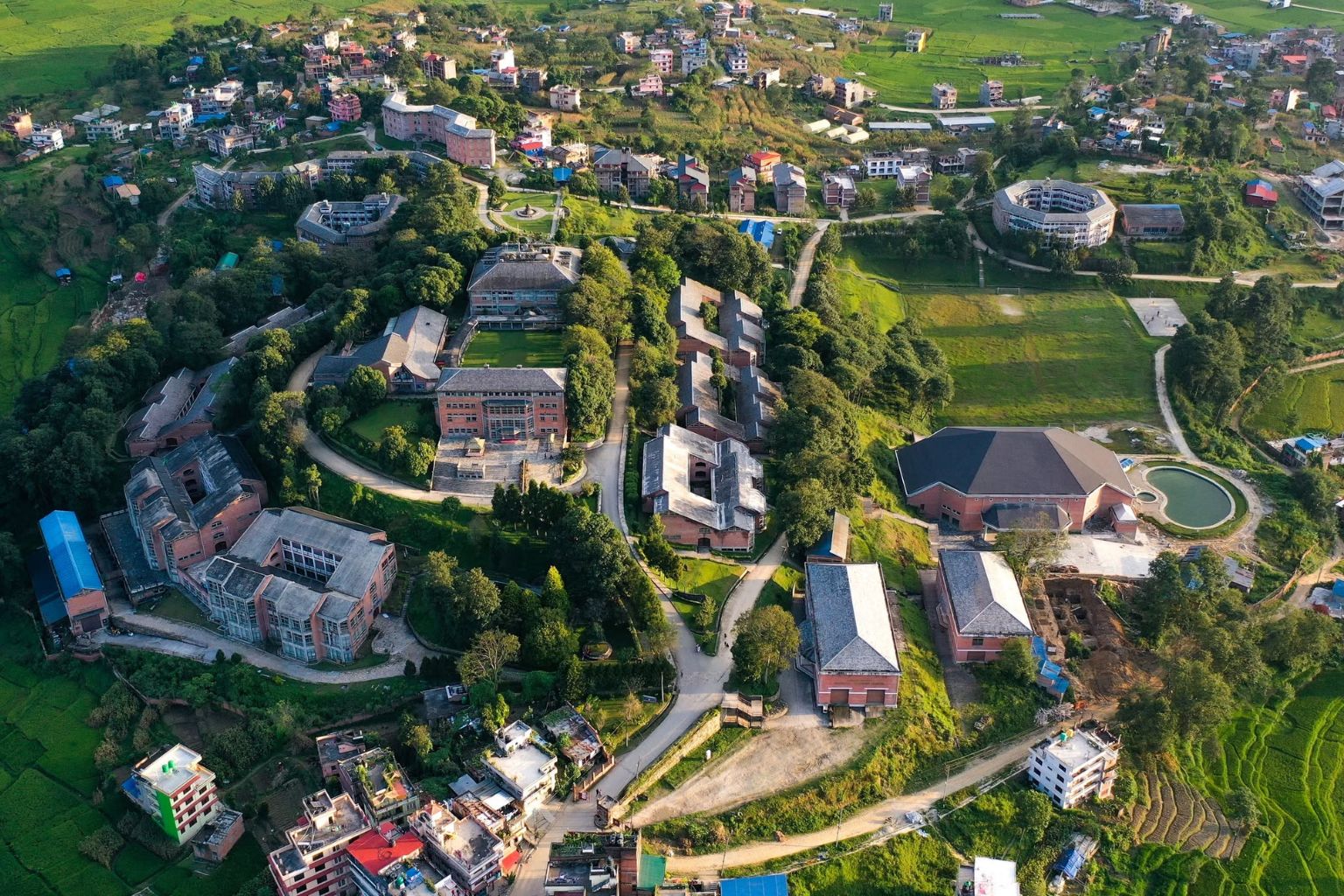
Kathmandu University's engineering education began during the University's early institutional development. Kathmandu University was established by an Act of Parliament on December 11, 1991.
The School of Engineering reached an important stage in 1994 with its first Faculty Board meeting and the beginning of four-year bachelor's programs in Mechanical Engineering, Electrical and Electronics Engineering, and Computer Engineering.
The first BE graduates completed their studies in 1998. The graduating group included students from Computer Engineering, Mechanical Engineering, and Electrical Engineering.
Postgraduate study began to develop in the following years. Graduate programs in Information Technology, Communication Engineering, and Mechanical Engineering started in 2001, and the first graduates from these master's programs completed their degrees in 2003.
The School continued to expand its academic and laboratory base through additional engineering disciplines, specialized master's programs, research activity, and technical facilities.
| Year | Development |
|---|---|
| 1994 | Four-year bachelor's programs started in Mechanical, Electrical and Electronics, and Computer Engineering |
| 1998 | First batch of BE students graduated |
| 2001 | Graduate programs started in Information Technology, Communication Engineering, and Mechanical Engineering |
| 2004 | International ME in Electrical Power Engineering started in collaboration with NTNU |
| 2005 | High Voltage Laboratory established |
| 2007 | Four-year BE in Geomatics Engineering started in collaboration with the Land Management Training Center |
| 2009 | Civil Engineering with specialization in Hydropower started |
| 2011 | Master in Planning and Operation of Energy System started |
| 2011 | Turbine Testing Laboratory established |
| 2013 | Master in Land Administration started |
| 2014 | Technical Training Center established with Korean Government support through KOICA |
| 2015 | Chemical Engineering and ME in Structural Engineering started |
| 2015 | Four subdivisions introduced in Mechanical Engineering |
| 2016 | Energize Nepal project agreement signed between KU and the Ministry of Foreign Affairs Norway |
These developments gradually widened the School's academic scope. Engineering study at KUSoE now includes both established engineering branches and specialized areas connected with energy, computing, spatial information, infrastructure, environmental study, architecture, and applied technology.
The School's core department structure includes:
Department of Computer Science and Engineering
Department of Electrical and Electronics Engineering
Department of Mechanical Engineering
Department of Civil Engineering
Department of Chemical Science and Engineering
Department of Geomatics Engineering
The wider academic program structure also includes Architecture, Health Informatics, Artificial Intelligence, and Environmental Engineering.
Because academic programs are grouped in different ways across departments and program areas, students should focus on the exact program title when considering admission, curriculum, entrance requirements, or postgraduate progression.
Computer Science and Engineering covers undergraduate, postgraduate, research, and doctoral study in computing-related disciplines.
Bachelor-level programs associated with this academic area include:
Bachelor of Engineering in Computer Engineering
Bachelor of Information Technology
Bachelor of Information Technology Double Degree
Bachelor of Science in Computer Science
Bachelor of Technology in Cybersecurity
Graduate and research programs include Master of Engineering in Computer Engineering, Master of Technology in Information Technology, MS by Research, and PhD study.
Computer Engineering combines the study of digital hardware and software. Students work with areas related to computer systems, communication systems, computer-based devices, software development, electrical engineering principles, and mathematics.
The Bachelor of Computer Engineering (BE Computer) is therefore distinct from BIT, Computer Science, Artificial Intelligence, and Cybersecurity even though these programs belong to related computing fields.
The Bachelor of Information Technology (BIT) is a separate undergraduate program. A BIT Double Degree arrangement also exists between Kathmandu University and Crown Institute of Higher Education in Australia, following a different collaborative structure from the standard BIT route.
At postgraduate level, KUSoE includes ME in Computer Engineering and M.Tech in Information Technology as separate degree programs.
Electrical and Electronics Engineering covers bachelor's, master's, research, and doctoral-level study.
The undergraduate structure includes B.E Electrical and Electronics Engineering (BE Electrical).
Electrical and Electronics Engineering has also been presented through Communication and Power and Control study areas within different academic and admission structures.
At postgraduate level, related programs include ME in Communication Engineering and ME in Electrical and Power Engineering.
The department's academic development also includes MS by Research and PhD study in Electrical and Electronics Engineering.
KUSoE's history in this discipline includes the establishment of a High Voltage Laboratory in 2005 and earlier international postgraduate work in Electrical Power Engineering.
Mechanical Engineering has a broad undergraduate and postgraduate structure at KUSoE.
The general BE Mechanical Engineering (BE Mechanical) has a stated capacity of 120 seats. The undergraduate program structure also identifies four Mechanical Engineering areas, each with a stated capacity of 30 seats:
The introduction of four Mechanical Engineering subdivisions in 2015 provides the institutional background for this differentiated undergraduate structure.
Postgraduate study in the mechanical and energy area includes ME in Mechanical Engineering, Master in Energy Efficient Building Design (EEBD), and Master in Planning and Operation of Energy Systems.
Research routes under Mechanical Engineering include MS by Research and PhD study.
The Turbine Testing Laboratory, established in 2011, forms part of the School's technical development in the mechanical and energy field.
Civil Engineering includes undergraduate and postgraduate study related to infrastructure and engineering systems.
At bachelor's level, the School offers B.E in Civil Engineering (BE Civil) and Bachelor of Engineering in Mining Engineering.
Mining Engineering is a separate bachelor's program and should not be treated simply as another title for Civil Engineering.
At postgraduate level, the civil and infrastructure area includes ME in Structural Engineering and ME/MS Sanitation Technology.
The School introduced Civil Engineering with a Hydropower specialization in 2009 and later started ME in Structural Engineering in 2015.
Geomatics Engineering includes undergraduate, postgraduate, research, and doctoral study.
The BE in Geomatic Engineering (BE) forms the bachelor's-level program in this academic area.
KUSoE started the four-year Geomatics Engineering program in 2007 in collaboration with the Land Management Training Center.
Graduate programs include Master in Land Administration and ME/MS in Geoinformatics.
Master in Land Administration began in 2013. The academic area also includes MS by Research and doctoral study.
Geomatics should be considered separately from Civil Engineering because its academic pathway extends into land administration, geoinformatics, spatial information, and related research study.
Architecture includes bachelor's and research-level study.
The B.Arch in Architecture is listed with a stated capacity of 30 seats.
The School also includes Bachelor in Heritage Conservation as a separate bachelor's program.
Architecture and Heritage Conservation are therefore distinct academic titles rather than interchangeable forms of the same degree.
Research study is also included under the Architecture academic area.
For the undergraduate admission cycle, Bachelor of Architecture had an additional aptitude-test requirement within the applicable admission process.
Chemical Science and Engineering includes BE in Chemical Engineering.
Chemical Engineering became part of KUSoE's undergraduate program structure in 2015.
The program represents a separate engineering discipline within the School and is listed independently from Mechanical, Civil, Electrical, Computer, and Environmental Engineering.
Artificial Intelligence appears as a separate program area at both undergraduate and postgraduate levels.
The BTech in Artificial Intelligence (BTech in AI) is listed with 30 seats.
At postgraduate level, the School includes MTech in Artificial Intelligence (M Tech in AI), with a stated capacity of 10 seats.
Artificial Intelligence is separate from Computer Engineering, Information Technology, Computer Science, and Cybersecurity. Students comparing these programs should therefore follow the exact degree title rather than grouping all computing-related study under one category.
Health Informatics is represented at bachelor's and master's levels.
The Bachelor in Health Informatics is listed with 30 seats, while the Master in Health Informatics has a stated capacity of 10 seats.
Health Informatics follows its own academic and admission structure. In the undergraduate admission cycle, Bachelor in Health Informatics was not included under the KUCAT-CBT route applied to most School of Engineering undergraduate programs.
Environmental Engineering appears in the wider KUSoE academic structure with bachelor's, master's, research, and doctoral study.
The academic area includes Bachelor of Engineering in Environmental Engineering, Master's by Research in Environmental Engineering, ME in Environmental Engineering, M.E. in Green Infrastructure Engineering, and PhD study.
Environmental Engineering adds another applied engineering area to the School's wider academic coverage, particularly at postgraduate and research levels.
The following programs have stated undergraduate seat capacities.
| Program | Seats |
|---|---|
| Bachelor in Health Informatics | 30 |
| BTech in Artificial Intelligence | 30 |
| BE Mechanical Engineering | 120 |
| BE in Geomatic Engineering | 30 |
| BE in Computer Engineering | 120 |
| BE in Chemical Engineering | 30 |
| BE in Civil Engineering | 120 |
| BE in Electrical and Electronics Engineering | 60 |
| B.Arch in Architecture | 30 |
| BE Mechanical Engineering – Hydropower | 30 |
| BE Mechanical Engineering – Automobile | 30 |
| BE Mechanical Engineering – Energy Technology | 30 |
| BE Mechanical Engineering – Design & Manufacturing | 30 |
The academic program set also includes BIT, Bachelor in Heritage Conservation, and Bachelor of Engineering in Mining Engineering.
The broader School structure contains additional undergraduate entries such as BIT Double Degree, Bachelor of Science in Computer Science, Bachelor of Technology in Cybersecurity, and Bachelor of Engineering in Environmental Engineering.
The appearance of a program within the School's academic structure and its appearance in a particular admission cycle are not necessarily identical. Students need to follow the exact degree and intake arrangement applicable to their program.
A number of postgraduate programs carry a stated capacity of 10 seats.
| Program | Seats |
|---|---|
| ME in Computer Engineering | 10 |
| M.Tech in Information Technology | 10 |
| ME in Structural Engineering | 10 |
| ME in Mechanical Engineering | 10 |
| ME in Communication Engineering | 10 |
| ME in Electrical and Power Engineering | 10 |
| Master in Energy Efficient Building Design | 10 |
| Master in Land Administration | 10 |
| ME/MS in Geoinformatics | 10 |
| ME/MS Sanitation Technology | 10 |
| MTech in Artificial Intelligence | 10 |
| Master in Planning and Operation of Energy Systems | 10 |
| Master in Health Informatics | 10 |
Green Infrastructure Engineering is also included among the School's postgraduate programs.
Beyond coursework-based master's degrees, several academic areas include MS by Research and PhD study. Research-level routes appear in Computer Science and Engineering, Electrical and Electronics Engineering, Mechanical Engineering, Geomatics Engineering, Architecture, and Environmental Engineering.
KUSoE also participates in collaborative academic arrangements.
One such program is the Kathmandu University and Indian Institute of Technology Madras jointly awarded International Master of Technology in Energy Systems.
The program was presented as a two-year joint master's degree combining study and academic resources from Kathmandu University and IIT Madras.
For the 2024-25 intake, international candidates were eligible with a relevant bachelor's degree in Engineering or Technology or a master's degree in a relevant science field, subject to the stated academic requirements. Applicants were also required to have completed four years of undergraduate study in an allied discipline and demonstrate competence in English.
The financial assistance arrangements stated for that intake included a tuition-fee waiver scheme for 20 percent of enrolled students under criteria set by the University Grants Commission, Nepal. Successful candidates were also eligible for a monthly INR 12,000 stipend from IIT Madras during their one-year stay at IITM.
These conditions belong to that specific collaborative program arrangement and should not be applied to other KUSoE programs.
Admission to Kathmandu University School of Engineering follows Kathmandu University rules and the requirements prescribed for each academic intake.
For the undergraduate cycle, KUCAT-CBT, the Kathmandu University Common Admission Test in Computer-Based Test format, applied to most listed School of Engineering undergraduate programs.
The entrance arrangement was not identical for every program. Bachelor in Health Informatics followed a separate route, while Bachelor of Architecture required an additional aptitude-test component.
Students therefore need to distinguish between:
School-level admission information
program-specific eligibility
applicable entrance requirements
merit and selection procedures
enrollment requirements
additional tests attached to specific programs
Admission arrangements can depend on the exact program. A requirement associated with Computer Engineering, Architecture, Health Informatics, BIT, or another program should not automatically be transferred to a different degree.
Eligibility for KUSoE programs follows Kathmandu University rules and the criteria prescribed for the relevant degree and admission cycle.
The exact requirement can differ by academic level and program. Undergraduate engineering, architecture, information technology, artificial intelligence, and health informatics programs should therefore be considered individually.
An earlier Computer Engineering requirement specified I.Sc., 10+2, or equivalent qualifications with minimum marks in the prescribed aggregate and subject combination.
The BIT Double Degree has its own eligibility structure for Nepalese and international applicants, including a science background with the required subjects and conditions related to the collaborative international pathway.
These examples should not be treated as a common eligibility rule for every KUSoE degree. Program-specific Kathmandu University requirements govern admission.
Curriculum for KUSoE programs is governed by Kathmandu University.
The academic content differs considerably across disciplines.
Computer Engineering combines computer hardware, software, digital systems, communication-related study, mathematics, and electrical engineering foundations.
Mechanical Engineering is organized through Automobile, Design and Manufacturing, Energy Technology, and Hydropower areas.
Geomatics Engineering extends into postgraduate study in Land Administration and Geoinformatics.
Civil Engineering connects with postgraduate Structural Engineering and Sanitation Technology.
Electrical and Electronics Engineering includes undergraduate and postgraduate study connected with electrical systems, power, communication, and related research.
Computing-related study is divided across Computer Engineering, Information Technology, Artificial Intelligence, Computer Science, and Cybersecurity. These degree titles represent different academic programs rather than interchangeable labels.
KUSoE's postgraduate structure also contains interdisciplinary and specialized degrees in areas such as health informatics, land administration, energy systems, sanitation technology, energy-efficient building design, and green infrastructure engineering.
KUSoE academic assessment, examinations, results, and degree awards follow Kathmandu University rules and regulations for the respective programs.
The School operates within KU's academic framework, so students enrolled in its programs remain subject to the applicable university regulations concerning curriculum, academic progress, examination procedures, results, and degree completion.
The specific academic requirements depend on the program and level of study.
For standard KUSoE degrees, the degree award is administered within Kathmandu University's academic system. Collaborative programs follow the degree arrangement established for the particular partnership.
Kathmandu University operates scholarship and financial-support arrangements applicable to School of Engineering students.
The KU SOE Scholarship is intended for meritorious and economically needy students enrolled in undergraduate programs.
Under the stated arrangement, the equivalent value of one student's fee is available as a full or partial scholarship for each 30 fee-paying students.
The scholarship is provided to first-year students initially on the basis of need. Continuation is then reviewed according to academic performance.
A minimum total GPA of 3.0 is required for continuation under the stated scholarship conditions. Students appearing in compartmental examinations or failing to maintain the required discipline conditions do not continue under the regular scholarship arrangement.
| Support | Basis | Structure |
|---|---|---|
| KU SOE Scholarship | Merit and financial need | Full or partial scholarship equivalent to one student's fee for each 30 fee-paying students |
| KU Educational Loan | Selection and available funds | 25% to 50% of total university fees |
| KU Graduate Assistantship | Academic performance | Partial or full tuition support for specified graduate and research students |
The KU Educational Loan may cover 25 percent to 50 percent of total fees charged by the University, depending on available funds in the relevant School of Engineering undergraduate program.
Selected students enter into a repayment agreement with Kathmandu University. The number of loans available depends on the loan scholarship fund and the repayment of earlier educational loans.
Graduate-level financial support includes KU Graduate Assistantship for specified M.Tech., M.S. by Research, M.Phil., and PhD students based on academic performance.
Kathmandu University's wider scholarship categories also include:
Merit-based Scholarship
Need-based Scholarship
UGC Formula Funding Scholarship
Local Scholarship
Staff / Faculty Family Scholarship
Loan Scholarship
Endowment Fund-based scholarships
Scholarship conditions, eligibility, and continuation requirements depend on the respective scheme.
KUSoE's academic development includes facilities connected with specific engineering disciplines.
The High Voltage Laboratory was established in 2005.
The Turbine Testing Laboratory was established in the Department of Mechanical Engineering in 2011.
A Technical Training Center was established in 2014 with grant and technical assistance from the Korean Government through KOICA.
The School's engineering activities are mainly distributed across Blocks 08, 09, 10, and 11 on the Kathmandu University campus in Dhulikhel.
These facilities sit within a wider academic environment that includes bachelor's, master's, MS by Research, and PhD programs in several engineering and technology-related disciplines.
KUSoE has several programs with closely related names, making the exact degree title important when comparing options.
Students should keep the following distinctions in mind:
Computer Engineering, Information Technology, Artificial Intelligence, Computer Science, and Cybersecurity are separate programs.
Mechanical Engineering includes four named undergraduate areas: Automobile, Design and Manufacturing, Energy Technology, and Hydropower.
Electrical and Electronics Engineering may be organized through broader or track-specific titles.
Civil Engineering and Mining Engineering are separate bachelor's programs.
Geomatics Engineering leads into separate postgraduate study in Land Administration and Geoinformatics.
Architecture and Heritage Conservation are separate bachelor's programs.
Health Informatics is available at both bachelor's and master's levels.
Environmental Engineering includes undergraduate, master's, research, and doctoral study within the wider academic structure.
Postgraduate engineering study includes both discipline-specific and interdisciplinary programs.
This program-level distinction is particularly important for eligibility, entrance requirements, curriculum, seat capacity, and degree title.
Mechanical and energy-related study forms a substantial part of KUSoE's academic structure.
At undergraduate level, the four Mechanical Engineering areas allow students to enter programs associated with Automobile, Design and Manufacturing, Energy Technology, and Hydropower.
At postgraduate level, the School includes Mechanical Engineering, Energy Efficient Building Design, and Planning and Operation of Energy Systems.
The collaborative International Master of Technology in Energy Systems with IIT Madras adds another energy-focused academic route.
This combination connects the department's undergraduate specialization structure with postgraduate coursework, collaborative study, and research.
KUSoE's computing programs cover several different academic routes.
Computer Engineering combines hardware and software-oriented engineering study.
Information Technology appears at both bachelor's and master's levels.
Artificial Intelligence is offered through BTech and MTech programs.
The wider academic structure also includes Computer Science, Cybersecurity, research degrees, and doctoral study.
Students considering computing programs should therefore compare the exact program rather than assuming that all computing degrees follow the same curriculum or admission process.
KUSoE also has a broad group of programs related to infrastructure, buildings, spatial information, land systems, and the built environment.
These include:
Civil Engineering
Mining Engineering
Structural Engineering
Sanitation Technology
Architecture
Heritage Conservation
Geomatic Engineering
Geoinformatics
Land Administration
Green Infrastructure Engineering
Each is maintained as a distinct academic title.
Civil Engineering and Mining Engineering are separate bachelor's degrees. Structural Engineering and Sanitation Technology operate at postgraduate level.
Architecture and Heritage Conservation form separate undergraduate study routes.
Geomatics Engineering connects with postgraduate programs in Land Administration and Geoinformatics.
Green Infrastructure Engineering appears among the School's postgraduate engineering programs.
KUSoE's academic structure extends beyond taught bachelor's and master's degrees.
MS by Research programs appear in several departments, including Computer Science and Engineering, Electrical and Electronics Engineering, Mechanical Engineering, Geomatics Engineering, Architecture, and Environmental Engineering.
Doctoral study is also included in several engineering and technology-related academic areas.
The School's research structure therefore allows academic progression from undergraduate engineering and technology programs into postgraduate coursework, research master's degrees, and PhD study within relevant disciplines.
Kathmandu University School of Engineering is based at Kathmandu University's Dhulikhel campus in Kavre, Nepal.
Location: Dhulikhel, Kavre, Nepal
Parent University: Kathmandu University
School Office Telephone: +977-11-415100
School Office Email: soe_office@ku.edu.np
Academic activities are mainly associated with Blocks 08, 09, 10, and 11 of the university campus.
Kathmandu University School of Engineering has grown from its initial bachelor's programs in Mechanical Engineering, Electrical and Electronics Engineering, and Computer Engineering into a multi-disciplinary academic school covering engineering, computing, architecture, geomatics, artificial intelligence, environmental engineering, health informatics, energy systems, and related research study.
Its academic structure now includes bachelor's programs, specialized engineering tracks, master's degrees, MS by Research routes, PhD study, and selected collaborative programs.
Students considering KUSoE should pay particular attention to the exact degree title because closely related programs may follow different curricula, entrance arrangements, eligibility requirements, and academic pathways.
Across its programs, the governing academic framework remains Kathmandu University. Admission procedures, entrance requirements, curriculum, examinations, results, and degree awards are administered according to the University's applicable rules and regulations.
Kathmandu University School of Engineering (KUSoE) is an academic school of Kathmandu University located in Dhulikhel, Kavre, Nepal. It offers bachelor's, master's, research, and doctoral study in engineering, computing, technology, architecture, geomatics, artificial intelligence, health informatics, environmental engineering, and related fields.
Kathmandu University School of Engineering was established in 1994 AD. Its initial four-year bachelor's programs were Mechanical Engineering, Electrical and Electronics Engineering, and Computer Engineering.
KUSoE is located at Kathmandu University's campus in Dhulikhel, Kavre, Nepal. Its academic activities are mainly associated with Blocks 08, 09, 10, and 11 of the university campus.
KUSoE operates within Kathmandu University. Admission procedures, entrance requirements, curriculum, examinations, results, and degree awards follow the applicable rules and regulations of Kathmandu University.
The undergraduate academic structure includes programs in Computer Engineering, Information Technology, Electrical and Electronics Engineering, Mechanical Engineering, Civil Engineering, Geomatic Engineering, Chemical Engineering, Architecture, Mining Engineering, Heritage Conservation, Artificial Intelligence, Health Informatics, Environmental Engineering, and other computing-related areas.
The undergraduate Mechanical Engineering structure includes four named areas: Automobile, Design and Manufacturing, Energy Technology, and Hydropower. The general BE Mechanical Engineering program has a stated capacity of 120 seats, while each named area has a stated capacity of 30 seats.
Yes. Its postgraduate programs include Computer Engineering, Information Technology, Structural Engineering, Mechanical Engineering, Communication Engineering, Electrical and Power Engineering, Energy Efficient Building Design, Land Administration, Geoinformatics, Sanitation Technology, Artificial Intelligence, Planning and Operation of Energy Systems, Health Informatics, and Green Infrastructure Engineering.
Yes. MS by Research and doctoral study are included in several academic areas, including Computer Science and Engineering, Electrical and Electronics Engineering, Mechanical Engineering, Geomatics Engineering, Architecture, and Environmental Engineering.
For undergraduate admission cycle, KUCAT-CBT applied to most listed School of Engineering undergraduate programs. Bachelor in Health Informatics followed a separate admission route, while Bachelor of Architecture had an additional aptitude-test requirement.
No. Eligibility depends on the exact program, academic level, and applicable Kathmandu University admission rules. Requirements for engineering, architecture, information technology, artificial intelligence, health informatics, and postgraduate programs should be considered separately.
Yes. The KU SOE Scholarship is intended for meritorious and economically needy undergraduate students. Under the stated arrangement, the equivalent value of one student's fee is available as a full or partial scholarship for each 30 fee-paying students.
Financial-support arrangements include the KU Educational Loan and KU Graduate Assistantship. The educational loan may cover 25% to 50% of total university fees depending on available funds, while graduate assistantship is available for specified graduate and research students based on academic performance.
Yes. One collaborative program is the jointly awarded International Master of Technology in Energy Systems involving Kathmandu University and the Indian Institute of Technology Madras.
Yes. KUSoE offers B.Arch in Architecture. The program has a stated capacity of 30 seats, and the undergraduate admission cycle included an additional aptitude-test requirement for Architecture applicants.
No. They are separate academic programs. KUSoE's computing-related structure includes Computer Engineering, Information Technology, Artificial Intelligence, Computer Science, Cybersecurity, and postgraduate or research study under related academic areas.