Presidential Graduate School (PGS) is a higher-education campus in Thapagaun, New Baneshwor, Kathmandu. Established in 2011, it delivers undergraduate and graduate study in business and technology in affiliation with Westcliff University, USA.
The Presidential Graduate School campus combines regular academic study with computer and networking laboratories, an IoT & Electronics Lab, an Innovation Lab, research support, career services, writing assistance, workshops, student clubs, and co-curricular activities. These facilities and services support classroom learning, technical practice, project work, academic research, communication skills, entrepreneurship, and career preparation.
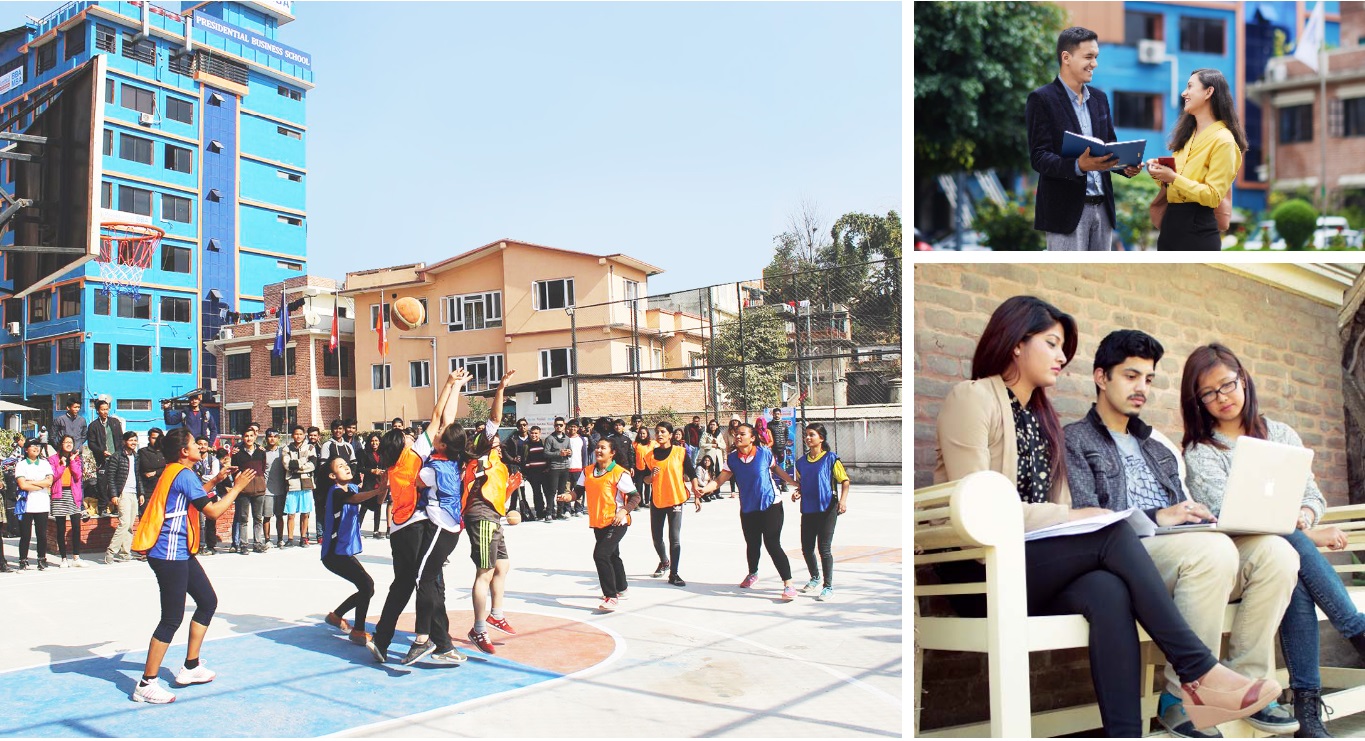
PGS operates from a multi-storey academic campus in New Baneshwor. Business and technology students use the same wider campus services while working with facilities suited to their respective academic areas. The campus also hosts student events, guest sessions, sports, cultural programs, workshops, orientation activities, and graduation-related events.
| Profile Item | Details |
|---|---|
| Institution | Presidential Graduate School (PGS) |
| Established | 2011 |
| Location | Bhakti Thapa Sadak, Thapagaun, New Baneshwor, Kathmandu 44600, Nepal |
| University Affiliation | Westcliff University, USA |
| Academic Areas | Business and Technology |
| Study Levels | Undergraduate and Graduate |
| Academic Facilities | Computer labs, Networking Lab, IoT & Electronics Lab, Innovation Lab, Center for Research, digital research resources |
| Student Support | Career Services, Writing Center, Job Placement Cell, Skill Lab, workshops and training |
| Campus Activities | Student clubs, sports, cultural activities, guest sessions, community programs and student events |
Presidential Graduate School is located at Bhakti Thapa Sadak, Thapagaun, New Baneshwor, Kathmandu 44600, Nepal. New Baneshwor identifies the broader area of the institution, while Thapagaun specifies the immediate locality of the campus.
The physical campus serves as the teaching base for PGS undergraduate and graduate programs. Academic classrooms are supported by technical laboratories, research resources, career and writing services, student activity spaces, and areas used for projects and workshops.
The main academic building carries the Presidential Graduate School identity and is accompanied by other campus facilities, including the PGS Cafe. Students use the campus for scheduled classes as well as project work, research, laboratory exercises, club activities, guest sessions, professional training, and social events.
This concentration of academic and student-support services allows learners to move between different types of work during the same period of study. A student may attend a lecture, complete technical work in a laboratory, prepare an assignment with research resources, participate in a skills workshop, or join a club or campus event.
Orientation programs introduce new students to campus life and academic routines, while graduation activities mark completion of study. Between these stages, classrooms, laboratories, research services, workshops, clubs, cultural activities, sports, and career programs form distinct parts of student life at PGS.
Presidential Graduate School is affiliated with Westcliff University, USA. The affiliation is central to the academic identity of the Kathmandu campus because its undergraduate and graduate business and technology programs are connected with Westcliff University.
Westcliff University is institutionally accredited by the WASC Senior College and University Commission (WSCUC). Its College of Business is also accredited by the Accreditation Council for Business Schools and Programs (ACBSP).
The roles of the two institutions are distinct. Presidential Graduate School is the Kathmandu campus where students attend classes, complete academic activities, and use campus facilities in Nepal. Westcliff University is the affiliated university connected with the academic programs delivered at the campus.
The affiliation extends across business and technology study rather than being limited to one academic area. PGS offers undergraduate and graduate programs covering business administration, information technology, software engineering, cybersecurity, artificial intelligence, data analytics, finance and economics.
Graduates receive Westcliff University transcripts and diplomas, while Presidential Graduate School provides institutional documents such as character certificates and recommendation letters.
PGS offers undergraduate and graduate programs in business and technology. As this is a campus profile, the degree list is kept concise.
| Program | Level | Academic Area |
|---|---|---|
| BBA | Bachelor's | Business |
| Bachelor of Science in Information Technology (BSIT) | Bachelor's | Technology |
| Bachelor of Science in Software Engineering | Bachelor's | Technology |
| Bachelor of Science in Cybersecurity | Bachelor's | Technology |
| BSc in Artificial Intelligence | Bachelor's | Technology |
| MBA | Master's | Business |
| Master of Science in Information Technology (MSIT) | Master's | Technology |
| MBA in IT | Master's | Business and Technology |
| MBA in Data Analytics | Master's | Business and Analytics |
| MBA in Finance & Economics | Master's | Business |
The program mix is closely connected with the campus facilities. Technology study is supported by computer, networking, IoT, electronics, and project facilities. Business students share the wider research, communication, career, skills, and student-development services available across the campus.
Academic life at PGS is organized mainly around business and technology. The campus supports both areas through classrooms, laboratories, project spaces, research resources, academic writing support, workshops, career preparation, and student activities.
Business students work with subjects related to management and associated areas while also taking part in presentations, research assignments, teamwork, career-development activities, and professional-skills sessions. Technology students use computing and technical facilities for programming, networking, systems work, software development, cybersecurity, analytics, and project-based assignments.
Projects, presentations, teamwork, laboratory exercises, research, guest sessions, and workshops sit alongside regular classroom study. These activities allow students to apply academic content in different ways rather than relying entirely on lectures.
Several campus units have clearly defined academic roles. Computer laboratories support computing assignments and technical work. The Networking Lab supports practical network study. The IoT & Electronics Lab provides equipment for electronics and embedded-system work. The Innovation Lab supports prototyping and project development, while the Center for Research focuses on academic inquiry.
Writing support and career services address other parts of student development. The Writing Center assists with academic communication, while career-related services focus on professional preparation, résumé work, interviews, and employment-related guidance.
PGS has two computer laboratories used for classes, projects, research, and practical computing activities.
The laboratories provide workstations, software resources, internet connectivity, and technical assistance. Their use extends across technology programs where students work with programming, software development, information systems, analytics, cybersecurity, and other computing topics.
The labs also provide students with a dedicated place to complete practical assignments that require computing resources. Technical subjects often involve work that cannot be covered through classroom explanation alone, making access to campus computing facilities relevant to the day-to-day study of technology programs.
Students can use the laboratories during practical sessions and for academic work connected with projects and research. Technical assistance also covers software installation, equipment troubleshooting, and other issues related to campus computing resources.
The Networking Lab provides a separate facility for practical study of computer networks.
Students have access to Cisco routers, switches, and other networking equipment. Network simulation resources and guided laboratory exercises also form part of the facility.
This allows students to work directly with networking concepts introduced during academic study. Instead of limiting network study to theory, the lab provides equipment that can be used for configuration, testing, and practical exercises.
The Networking Lab is particularly relevant to programs that include network administration, infrastructure, cybersecurity, and related information technology topics.
Its presence alongside the general computer laboratories gives technology students access to both software-oriented computing resources and dedicated network equipment.
The IoT & Electronics Lab supports work involving embedded systems, electronics, sensors, automation, and prototyping.
Its resources include IoT development kits, electronic components, sensor equipment, and tools used in prototype development. Students can work with physical components while studying topics connected with computing and electronic systems.
The lab is useful for activities in which software interacts with physical devices. Students working on sensor-based systems, embedded applications, electronics, automation, or related projects can use a space designed specifically for this type of work.
By keeping IoT and electronics resources separate from general computer laboratories, the campus gives students access to equipment suited to practical hardware-based activities.
The Innovation Lab is a project and prototyping space where students can work on ideas beyond written assignments.
The lab includes 3D printers, laser cutters, and resources connected with electronics, robotics, and IoT work. These tools allow students to build and test prototypes rather than presenting a project only through a report or presentation.
Technology students can use the lab for technical prototypes, while business students can work on ideas connected with entrepreneurship and product development. Projects involving students from both academic areas can combine technical development with business planning.
Mentoring and technical guidance are also associated with the lab. Students can discuss problems, test concepts, work with equipment, and revise projects as their ideas develop.
The Innovation Lab adds a practical project space between scheduled academic classes and independent work. It gives students a place to turn concepts into physical or functional prototypes while remaining connected with their academic study.
The Center for Research supports academic research in business and information technology.
Students can use the center for research guidance, collaboration, mentorship, and work connected with academic questions in their areas of study. It gives research a dedicated place on campus instead of treating it only as an activity attached to individual assignments.
Business research may cover areas connected with management, finance, marketing, economics, entrepreneurship, and data. Technology research can involve information systems, software, cybersecurity, artificial intelligence, computing, and related subjects.
The center also provides a setting where students can work with peers and academic mentors while developing research skills. This can include identifying a research problem, reviewing academic literature, organizing findings, and preparing academic work.
Digital research access complements the physical research facilities at PGS.
Students and faculty can access LIRN resources, which provide scholarly journals and research materials across multiple academic fields. A Library & Digital Resources Center is also included among the academic resources available to students.
These resources support assignments, research projects, academic writing, presentations, and other work that requires reference material beyond classroom notes.
The digital component is particularly useful for students in business and technology because both fields depend on access to academic publications, research literature, and subject-specific reference material.
Research resources also connect naturally with the Center for Research and Writing Center. Students can locate academic material, develop their research work, and then focus on presenting that work clearly in written form.
The Writing Center provides support for academic writing and communication.
Academic study requires students to do more than understand a subject. They also need to organize ideas, prepare written assignments, communicate arguments, and present research in a clear form.
The Writing Center gives students a dedicated campus service for this part of their academic work. Its role complements classroom teaching and research resources rather than replacing course instruction.
This support is relevant across both major academic areas at PGS. Business students regularly work with reports, presentations, research assignments, and analytical writing, while technology students also prepare project reports, research work, documentation, and other written academic tasks.
PGS provides career-related support through Career Services and the Job Placement Cell.
Career Services covers career counseling, résumé preparation, interview guidance, professional-development classes, workshops, and access to computer resources for career-related work. These activities help students prepare application materials and become familiar with common employment processes.
The Job Placement Cell operates alongside these services and provides employment-related support. Its role is to assist students with career preparation and access to opportunities rather than to guarantee employment outcomes.
Career work can take place throughout a student's time at PGS rather than only at graduation. Students can gradually develop application materials, communication skills, interview preparation, and a clearer understanding of professional expectations.
This service also connects with workshops, guest speakers, skills programs, and practical exposure offered through other campus activities.
International internship opportunities form part of the practical exposure available to students. Internship activities can place students in organizational settings where they encounter professional tasks alongside their academic study.
PGS also conducts Digital Transformation sessions for undergraduate students. The program runs for ten months, with classes organized twice a month.
Topics connected with the sessions include cloud computing, artificial intelligence, machine learning, and the use of technology in organizational change. Corporate professionals with experience in these areas take part in the classes.
These sessions give students opportunities to hear directly from professionals dealing with technology-related changes in organizations. The activity sits outside standard subject teaching while remaining connected with business and technology study.
International internship activities and Digital Transformation sessions add workplace-oriented exposure to the academic and technical facilities available on campus.
PGS uses Skill Lab and Skill Up activities to address practical and professional abilities alongside formal degree study.
Activities include:
Training can cover professional tools, workplace practices, technology topics, leadership, problem-solving, communication, and critical thinking.
Short workshops provide room for focused subjects that may not require a full academic course. Students can spend time on a particular tool, skill, professional practice, or topic while continuing with their regular degree studies.
Guest speakers and practitioners also contribute to campus training. These sessions allow students to hear professional experiences and discuss issues connected with particular fields.
Guest speaker sessions bring people from different professional backgrounds into direct interaction with students.
Speakers share their experiences, discuss their work, and interact with students during campus sessions. These activities add professional perspectives to subjects students may already be studying academically.
The sessions can also expose students to areas outside their immediate specialization. Business and technology students may encounter speakers from different sectors, giving them opportunities to ask questions and hear about workplace experiences directly.
Guest sessions form one part of the broader set of workshops, training programs, and professional-development activities held at PGS.
Communication skills receive attention through campus activities such as the Presidential Toastmasters Club.
Toastmasters activities give students a structured setting in which to practice public speaking, presentations, and communication. These abilities are relevant to academic presentations, group projects, interviews, meetings, and other professional situations.
FranklinCovey-linked training activities are also included within student-development work. Their themes include personal responsibility, collaboration, and professional behaviour.
Such activities differ from regular degree subjects but remain connected with tasks students encounter during study and later professional work.
Student clubs provide another route for practicing organization and teamwork. Planning activities, coordinating events, working with other students, and communicating with participants require responsibilities that differ from ordinary classroom assignments.
Student-managed clubs contribute to campus activities at Presidential Graduate School.
The campus supports cultural, sporting, communication, and social events in which students can participate beyond their scheduled classes. Club-led activities also give students opportunities to take part in planning and coordination.
Campus activities include:
These activities bring together students from different programs and academic levels. Business and technology students who spend much of their academic time in separate courses can participate together through sports, clubs, cultural programs, and other events.
The PGS Cafe also forms part of the campus's social spaces and provides another setting where students can spend time outside formal classes.
Sports and cultural activities create a different part of student life from classrooms, laboratories, and research work.
Sports Week gives students an organized period for sporting participation, while events such as Presidential Gala, Holi programs, Tihar activities, Prestival, and other gatherings provide opportunities for cultural and social participation.
Students can take part as participants, organizers, or club members. Planning and running events can involve coordination, communication, teamwork, and shared responsibility.
These activities give the campus a social dimension without replacing its academic purpose. They provide students with occasions to interact with peers from other programs and take part in activities that are separate from assessed coursework.
PGS student activities also include community-oriented programs.
Blood-donation programs, cleaning campaigns, walkathons, and activities connected with World Environment Day have formed part of the co-curricular work associated with the campus.
These activities allow students to participate collectively in programs outside regular academic study. They can involve planning, volunteering, coordination, and participation across different student groups.
Community programs sit alongside sports, cultural events, clubs, workshops, and professional-development activities as another form of student participation at the campus.
The different facilities at PGS serve specific stages of student work.
Computer laboratories support computing assignments and software-based activities. The Networking Lab provides dedicated equipment for network study, while the IoT & Electronics Lab supports projects involving physical devices and electronic components.
The Innovation Lab gives students space for prototypes and project development. The Center for Research and digital academic resources support research, while the Writing Center addresses written communication.
Career Services and the Job Placement Cell focus on professional preparation. Workshops, Skill Up activities, guest sessions, and Digital Transformation sessions introduce additional topics and professional experiences alongside degree study.
Student clubs, Toastmasters activities, sports, cultural programs, and community work provide opportunities for participation outside assessed academic tasks.
A student's use of these services can therefore change across a degree. Early academic work may rely heavily on classrooms, writing support, and laboratories. Later projects may involve research facilities, technical resources, prototypes, presentations, internships, or career preparation.
Presidential Graduate School is a business and technology-focused higher-education campus in Thapagaun, New Baneshwor, Kathmandu. Established in 2011 and affiliated with Westcliff University, it provides undergraduate and graduate study together with academic, technical, research, career, and student-support facilities.
The campus includes computer laboratories, a Networking Lab, an IoT & Electronics Lab, an Innovation Lab, a Center for Research, digital academic resources, a Writing Center, Career Services, a Job Placement Cell, Skill Lab activities, and technical support.
Student life extends to guest sessions, communication activities, workshops, sports, cultural programs, student clubs, orientation, graduation events, community programs, and practical exposure.
These parts of the campus support different aspects of a student's academic experience: classroom study, technical practice, research, project development, written communication, professional preparation, and participation in activities outside regular coursework.
Presidential Graduate School is located at Bhakti Thapa Sadak, Thapagaun, New Baneshwor, Kathmandu 44600, Nepal.
Presidential Graduate School was established in 2011.
Presidential Graduate School is affiliated with Westcliff University, USA. The Kathmandu campus delivers undergraduate and graduate programs in business and technology connected with Westcliff University.
The main academic areas are business and technology. Programs include BBA, BSIT, Software Engineering, Cybersecurity, Artificial Intelligence, MBA, MSIT, MBA in IT, MBA in Data Analytics, and MBA in Finance & Economics.
Campus facilities include computer laboratories, a Networking Lab, an IoT & Electronics Lab, an Innovation Lab, the Center for Research, digital academic resources, the Writing Center, and student-support services.
Yes. PGS has two computer laboratories for classes, projects, research, and practical computing work. The campus also has a Networking Lab with Cisco routers, switches, network simulation resources, and equipment used for practical networking exercises.
The Innovation Lab is a campus space for project development and prototyping. It includes resources such as 3D printers, laser cutters, electronics equipment, robotics tools, and IoT-related resources.
Yes. The Center for Research supports academic research in business and information technology, while the Writing Center assists students with academic writing and communication. Students and faculty also have access to digital research resources through LIRN.
PGS provides Career Services and a Job Placement Cell. Career-related activities include counseling, résumé preparation, interview guidance, professional-development sessions, workshops, and other employment-preparation support.
Yes. Students can take part in laboratory work, projects, workshops, guest-speaker sessions, Digital Transformation sessions, Skill Up activities, research, technical training, and internship-related activities.
Student life includes clubs, sports, cultural activities, communication programs, workshops, orientation, graduation activities, and community programs. Campus events include Sports Week, Presidential Gala, Holi celebrations, Innovista, Prestival, and Tihar activities.
Yes. The Presidential Toastmasters Club provides students with opportunities to practice public speaking, presentations, and communication skills.
Yes. Students have access to computer labs, networking equipment, the IoT & Electronics Lab, and the Innovation Lab for computing, electronics, networking, prototyping, and related project activities.
Campus life combines classroom study with laboratory work, research, project development, career preparation, workshops, student clubs, sports, cultural programs, communication activities, and community participation.