Sindhuli Multiple Campus (सिन्धुली बहुमुखी क्याम्पस) is a community-based campus located in Kamalamai Municipality-9, Dhungrebas, Sindhuli, Bagmati Province, Nepal. Established in 1984 (2041 B.S.), the campus is affiliated with Tribhuvan University (TU) and the National Examinations Board (NEB). It is recognized by the University Grants Commission and holds QAA certification. Over the years, the campus has expanded its academic reach from +2 programs to bachelor’s and master’s level study in humanities, education, and management.
Sindhuli Multiple Campus in Sindhuli offers +2, bachelor’s, and master’s programs under TU and NEB, with QAA certification, scholarships, labs, and library.
The campus presents itself as an institution shaped by community participation and long-term educational service in Sindhuli. Its academic focus includes classroom learning, student support, faculty development, extracurricular engagement, and the gradual strengthening of infrastructure. With programs ranging from NEB streams to TU-affiliated undergraduate and postgraduate courses, Sindhuli Multiple Campus serves students looking for local access to secondary and higher education within an established academic setting.
Established: 1984 (2041 B.S.)
Institution Type: Community-based campus
Affiliation: Tribhuvan University (TU) and National Examinations Board (NEB)
Recognition: University Grants Commission (UGC), QAA Certification
Location: Kamalamai Municipality-9, Dhungrebas, Sindhuli, Bagmati Province, Nepal
Academic Levels: +2, Bachelor’s, Master’s
NEB Programs: +2 Science, +2 Humanities, +2 Management
Bachelor’s Programs: BA, BBS, B.Ed., BBA
Master’s Programs: M.Ed. in Education Planning and Management, M.Ed. in Nepali Language Education, M.Ed. in Population Education, MA in Sociology, MBS
Scholarship Support: Available through campus scholarship committee guidelines
Facilities: Library, internet, science lab, computer lab, multimedia, classrooms, conference hall, sports, counseling, canteen, transportation
Phone: +977-47-520066
Email: info@sindhulicampus.edu.np
Website: http://sindhulicampus.edu.np
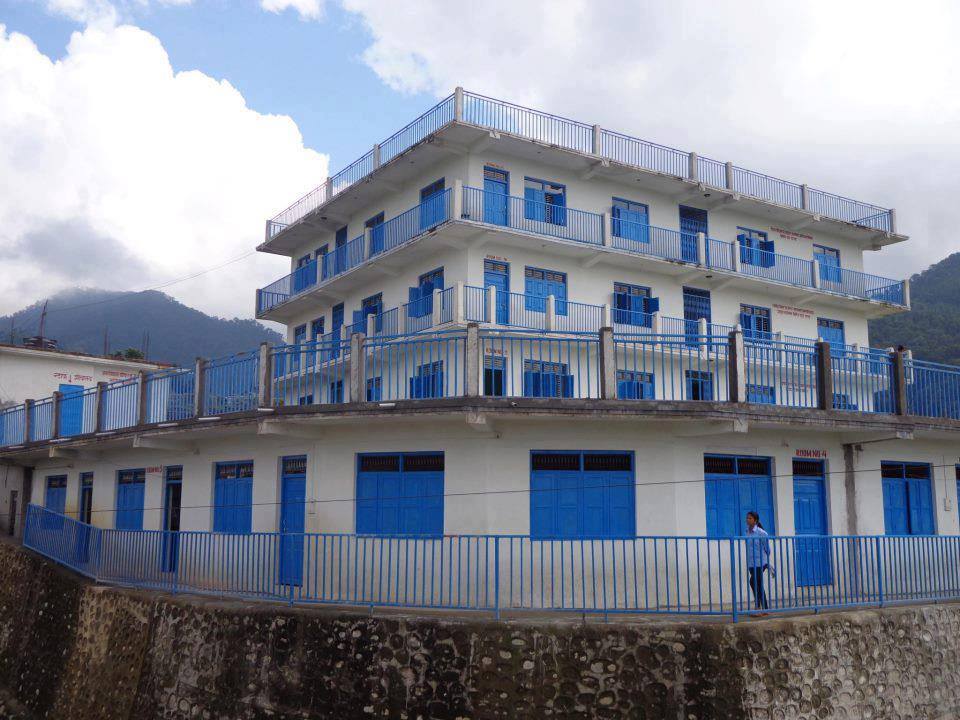
Sindhuli Multiple Campus was established with the contribution of the local community and has grown as an academic institution serving students from Sindhuli and surrounding areas. The campus has maintained classes up to the master’s level and has continued to broaden its academic scope in response to educational demand. Its stated direction includes maintaining strong teaching programs, building a supportive learning environment, increasing student enrollment and support services, improving faculty and staff capacity, and preparing infrastructure for additional programs.
The campus has also linked its growth to academic quality assurance and educational reform initiatives. It entered the QAA process and later acquired QAA certification following UGC recommendations. It was selected in the Higher Education Reform Project (HERP) in 2072 B.S. among 45 national-level public campuses. The campus was also selected in SHEP Scheme-B under UGC and later in NEHEP in 2079 B.S. These developments show a pattern of participation in institutional strengthening and reform-based support programs.
Its academic identity is built around community access, structured teaching, and gradual institutional development. The campus also reflects an interest in local relevance by aiming to align teaching programs with community needs and by supporting educational activities beyond the classroom.
Sindhuli Multiple Campus offers academic programs under both NEB and TU - Ten Plus Two Science, Ten Plus Two Humanities, Ten Plus Two Management, BBA, B.Ed, BBS, BA, M.Ed Nepali Language Education, M.Ed in Population Education, MA Sociology, M.Ed Education Planning and Management, and MBS.
The campus runs +2 programs under NEB in the following streams:
+2 Science
+2 Humanities
+2 Management
These programs follow the two-year NEB framework. Class 11 admission, enrollment, and subject registration are completed through the college under the NEB system, while Class 12 is the final national board examination stage.
The campus offers the following bachelor’s programs under Tribhuvan University:
Bachelor of Arts (BA): 4 years, annual system, Faculty of Humanities and Social Sciences
Bachelor of Business Studies (BBS): 4 years, annual system, Faculty of Management
Bachelor of Education (B.Ed.): 4 years, annual system, Faculty of Education
Bachelor of Business Administration (BBA): 4 years, semester system, Faculty of Management, TU CMAT required
The BA program under TU follows a four-year structure. It is interdisciplinary in nature and allows students to study compulsory and major subjects within the humanities and social sciences stream. The B.Ed. program follows TU’s four-year annual system and is structured around communication skills, professional core courses, specialization major courses, specialization minor courses, and teaching practicum. BBA is the semester-based bachelor’s program at the campus and requires TU CMAT for admission.
The campus offers the following master’s programs:
M.Ed. in Education Planning and Management: 2 years, semester system, TU Faculty of Education, CEAT required
M.Ed. in Nepali Language Education: 2 years, semester system, TU Faculty of Education, CEAT required
M.Ed. in Population Education: 2 years, semester system, TU Faculty of Education, CEAT required
MA in Sociology: 2 years, annual system, TU Faculty of Humanities and Social Sciences
Master of Business Studies (MBS): 2 years, semester system, TU Faculty of Management, TU CMAT required
The M.Ed. programs at the campus follow the TU semester system. Under the broader TU framework, these programs are structured across four semesters and combine core education courses, specialization courses, practical components, and thesis-related work. MBS is also semester-based under TU. MA in Sociology is listed by the campus as a two-year annual-system program.
This combination of NEB, bachelor’s, and master’s programs allows the campus to serve students at multiple academic stages within the same institution.
Admission at Sindhuli Multiple Campus follows the relevant rules of NEB and Tribhuvan University, along with campus procedures.
NEB +2 admission: Admission to Class 11 generally begins after SEE results are published. Students submit the required application form and academic records. Depending on the stream and campus process, admission may include an entrance examination, interview, or merit-based selection. After fee payment, enrollment and subject registration are completed under the NEB framework.
TU bachelor’s admission: After the admission notice is published, eligible applicants submit the prescribed form and required academic documents. Depending on the course and campus rules, admission may include merit-based selection, an entrance test, or both.
TU master’s admission: Admission notices are issued by the concerned campus or faculty structure. Eligible applicants submit the prescribed form and required records. Selection may include an entrance examination depending on the program.
Program-specific entrance requirements: BBA requires TU CMAT. MBS also requires TU CMAT. The M.Ed. programs require the Tribhuvan University Common Education Admission Test (CEAT).
For annual-system TU programs, final examinations are conducted through the Office of the Controller of Examinations. For semester-system programs, semester-end examinations are conducted by the respective Dean’s Office.
The campus offers multiple academic levels, so document requirements vary by level and system.
For NEB Class 11: SEE marksheet, SEE character certificate or school leaving certificate, transfer certificate, migration certificate if applicable, citizenship or birth certificate copy, passport-size photographs, and NEB Class 11 registration or subject registration form
For TU bachelor’s admission: Class 12 or equivalent transcript, character certificate, migration certificate if applicable, transfer certificate, citizenship or birth certificate copy, passport-size photographs, entrance scorecard if required, completed application form, admission fee receipt, and equivalence certificate if applicable
For TU master’s admission: Bachelor’s transcript or marksheet, bachelor’s certificate or provisional certificate, character certificate, migration certificate if applicable, transfer certificate, citizenship or birth certificate copy, passport-size photographs, entrance scorecard if required, completed application form, admission fee receipt, and equivalence certificate if applicable
Program-specific documents such as CMAT or CEAT score records apply where those entrance tests are required.
The campus identifies highly qualified faculty members as one of its core academic features. Its teaching approach is described as interactive and student-oriented. Students are expected to take an active part in lessons, and the learning process is shaped to encourage participation, subject choice, and practical engagement.
The campus also presents its classroom method as one in which teachers guide learning through practice. Learners are encouraged to participate actively rather than remain passive recipients of instruction. This approach fits the campus’s broader academic direction of supporting student development in competence, conscience, compassion, and commitment.
Faculty and staff development also appears in the campus goals. The institution has stated that it seeks to improve the professional efficiency of faculty and staff through further study and promotion-related development. This suggests that academic improvement is viewed not only in terms of student learning but also in terms of strengthening the people responsible for teaching and support services.
Sindhuli Multiple Campus lists a wide range of academic and student-support facilities.
Classrooms: Spacious classrooms
Library: Library with reference support and updated books
Internet: Internet access and internet facilities
Laboratories: Science lab and computer lab
Digital Support: Multimedia resources
Academic Support: Journal publication and counseling
Campus Amenities: Canteen and transportation
Co-curricular Space: Sports, conference hall, dance, music, tour, and ECA-related resources
The campus also records infrastructure and educational support progress in recent years. It reports physical development support in 2077 and 2078 with the help of UGC. Three laptops were distributed to teachers and staff through a contribution structure involving UGC and campus personnel. The library was expanded with more than 200 updated books and teaching materials, and the campus published a research journal in 2077/078.
Student life at Sindhuli Multiple Campus extends beyond regular classes. The campus connects academic life with extracurricular participation, awareness activities, social engagement, and community interaction. Students take part in activities such as sports, workshops, orientations, conferences, tours, dance, and music. These activities contribute to a campus environment that includes both formal study and broader student participation.
The social side of student life is also visible in the campus’s outreach activities. Students have been involved in road-drama programs for awareness, environmental campaigns, and practical training or employment-related programs. The campus also maintains contact with nearby educational institutions through annual programs focused on discussion and progress in education.
Community connection is a visible part of campus life. Guardians and local stakeholders are described as participants in campus progress, and the institution records community support in areas such as land contribution, advice, economic support in earlier periods, and participation in blood donation programs. This creates a campus atmosphere shaped not only by internal academic activity but also by local engagement.
Sports activities
Workshops
Orientation programs
Conferences
Dance and music activities
Educational tours
Road-drama awareness activities
Environmental campaigns
Blood donation program participation
Annual discussion programs with nearby educational institutions
Sindhuli Multiple Campus provides scholarships to enrolled students through a scholarship committee operating under campus guidelines.
Scholarships may be considered for excellent and talented students
Special consideration may apply to women, students with disabilities, Dalit students, and orphans
Scholarship selection considers academic level, conduct, and behavior
The monthly fee of a level may be waived for the student who secures the best marks in that level
Fee waiver may also apply in cases where three members of the same household are studying
Scholarship support may be connected with UGC requests and other associations
A student receiving a scholarship may lose it if campus code of conduct rules are repeatedly violated
The campus also defines an excellent student as one who has obtained 70 percent in the transcript at admission or has secured that level while studying at the campus.
Established in 1984 (2041 B.S.)
Expanded from intermediate-level study to bachelor’s and master’s level education
Acquired QAA certification following UGC recommendations
Selected in SHEP Scheme-B under UGC
Selected among 45 national-level public campuses in HERP in 2072 B.S.
Selected in NEHEP in 2079 B.S.
Introduced the BBA program in 2077 B.S.
Published a research journal in 2077/078
Added more than 200 books and reference materials to the library
Recorded infrastructure progress in 2077 and 2078 with UGC support
Community-based campus with long-standing local educational service
TU and NEB affiliation across multiple academic levels
+2, bachelor’s, and master’s programs in the same institution
QAA-certified and recognized by UGC
Scholarship support through campus guidelines
Library, labs, multimedia, counseling, sports, and conference facilities
Interactive and student-oriented teaching approach
Community-linked campus life with awareness and outreach activities
The available leadership messages from Chairman Upendra Kumar Pokhrel and Campus Chief Bhanu Bhakta Gurung place emphasis on quality teaching, student skill development, self-confidence, and the growth of positive and critical thinking. The central idea in these messages is that the campus should serve as a meaningful academic platform for students preparing for their future study and work.
This leadership direction matches the campus’s broader academic identity: structured teaching, student support, and a learning environment that values both classroom study and personal development.
Sindhuli Multiple Campus is an established community-based institution in Sindhuli that offers NEB and TU-affiliated education from +2 to the master’s level. Its academic profile combines humanities, education, management, and business-related programs with scholarship support, faculty development goals, library and lab facilities, and student activities beyond the classroom.
The campus also shows a record of quality assurance work, project-based institutional support, and gradual infrastructure improvement. For students seeking local access to secondary and higher education in Sindhuli, it stands as a multi-level academic institution with a broad program base and a clear community connection.
Contact Sindhuli Multiple Campus's administrative office for detailed information on the course, admissions, location, fees, scholarships, facilities, counseling, or eligibility.
Sindhuli Multiple Campus
Email Address: info@sindhulicampus.edu.np
Phone Number: +977-47-520066
Website: http://sindhulicampus.edu.np
Location: Kamalamai Municipality-9, Dhungrebas, Sindhuli, Bagmati Province, Nepal
Sindhuli Multiple Campus is affiliated with Tribhuvan University for higher education programs and with the National Examinations Board for +2 programs.
The campus is located at Kamalamai Municipality-9, Dhungrebas, Sindhuli, Bagmati Province, Nepal.
The campus offers +2 Science, +2 Humanities, and +2 Management under NEB. At the bachelor’s level it offers BA, BBS, B.Ed., and BBA. At the master’s level it offers M.Ed. in Education Planning and Management, M.Ed. in Nepali Language Education, M.Ed. in Population Education, MA in Sociology, and MBS.
Yes. The campus holds QAA certification and is recognized by the University Grants Commission.
BBA requires TU CMAT. MBS also requires TU CMAT. The M.Ed. programs require CEAT. Other admissions follow the applicable NEB or TU process and may include entrance procedures where required.
The campus lists spacious classrooms, library and internet access, science lab, computer lab, multimedia resources, counseling, sports facilities, conference hall, canteen, transportation, and journal-related academic support.
Yes. The campus offers scholarships through a scholarship committee. Support may be available for excellent and talented students, women, students with disabilities, Dalit students, orphans, and selected fee-waiver cases under campus guidelines.
Students can contact the campus through phone at +977-47-520066, email at info@sindhulicampus.edu.np, or visit its website at http://sindhulicampus.edu.np.