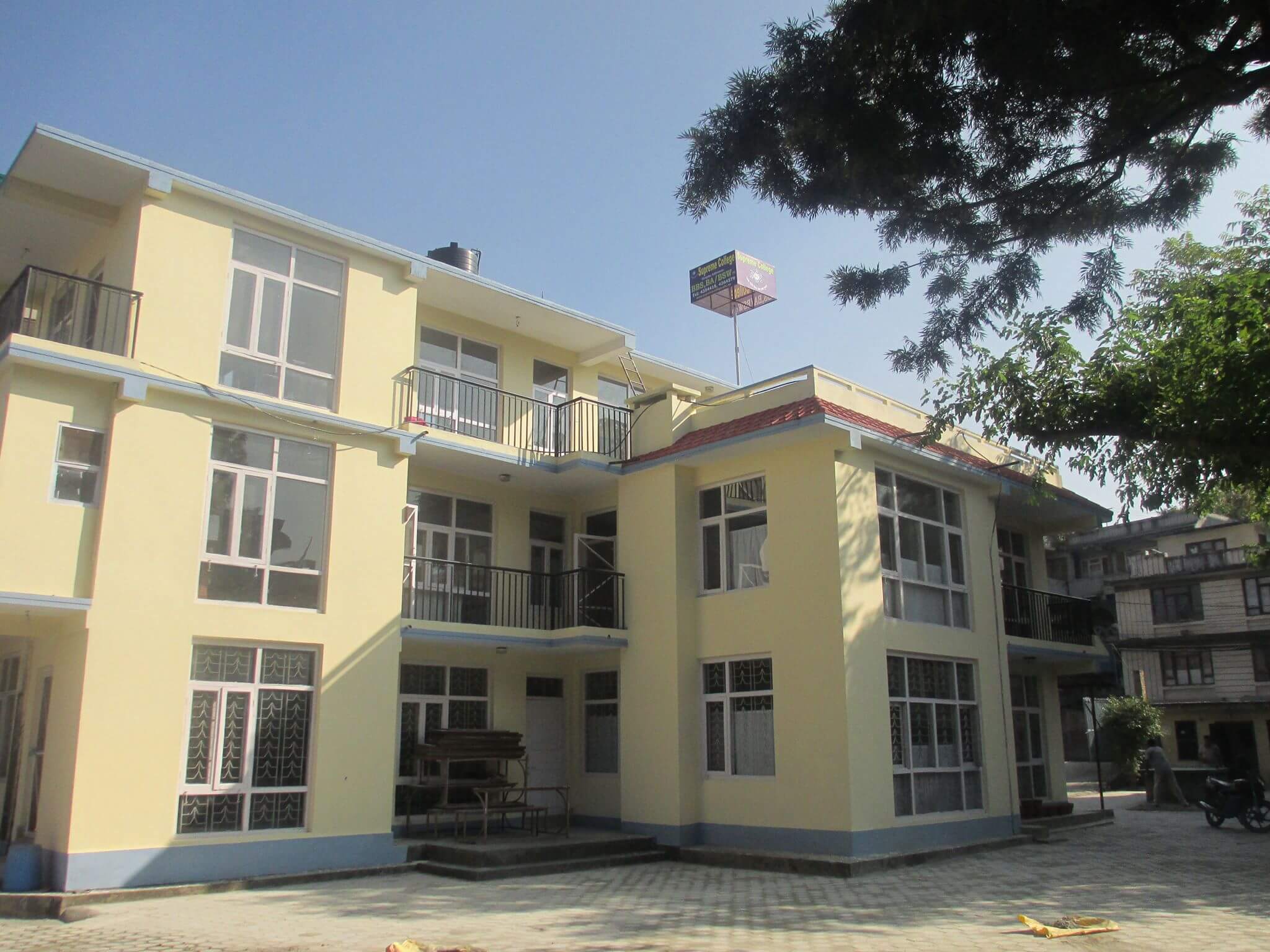
Supreme College is a Tribhuvan University–affiliated campus located at Samakhushi Chowk, Kathmandu. It was established in 2013 AD (2070 BS) with the aim of opening higher education opportunities for learners who had to pause or discontinue their studies earlier.
The college offers bachelor programs in Business Studies, Arts, Social Work, English and Journalism. It also works in coordination with Kamana Secondary School at Gongabu to run ten plus two (+2) classes, giving students a continuous route from secondary level to bachelor level under a connected academic team.
From its early years, Supreme College has been guided by experienced academicians and professionals. It pays particular attention to students from underprivileged and marginalised communities, linking its work with wider efforts to make higher education more inclusive in Nepal.
Established: 2013 AD (2070 BS)
Location: Samakhushi Chowk, Kathmandu, Nepal
Affiliation: Tribhuvan University (TU)
Bachelor programs: BBS, BA, BA in English, BA in Journalism, and BSW
+2 Programs: Ten plus two programs run with Kamana Secondary School, Gongabu
Student focus: Support for learners who previously missed or postponed formal study, including students from underprivileged and marginalised groups
Development areas: Academic learning, character, leadership, motivation, physical growth, and scholarship support
Key facilities: E-library, computer lab with internet, science lab, ECA, cafeteria, counselling, and transport support
Supreme College runs its academic programs under the regulations and curriculum of Tribhuvan University. Bachelor-level study covers management, humanities, social work and media fields, while the +2 partnership with Kamana Secondary School supports school-level education in the same academic network.
The BBS program follows the Tribhuvan University framework in management and business studies. It covers areas such as accounting, finance, organisational behaviour and basic economics through classroom teaching and regular assessment.
Graduates can move towards entry-level roles in business offices, banking, small enterprises or public organisations, or continue to postgraduate study in management and related areas.
The BA program introduces students to core subjects in the humanities and social sciences. Depending on the subject combinations allowed by Tribhuvan University, students may study areas such as sociology, population studies, language or other social science disciplines.
This route is suitable for learners who wish to understand social issues, culture, communication and public life, and who may later work in teaching, community organisations or public service.
The BA in English focuses on English language and literature. Students read literary texts, learn critical reading skills and develop written and spoken English for academic and professional use.
Graduates may seek work in teaching, content writing, editing, translation or communication-related roles where strong English skills are needed.
The BA in Journalism introduces students to news writing, media ethics, reporting, basic media production and communication theory. Classroom work is often linked with field tasks such as reporting practice, small media projects or observation of media organisations.
Students who complete this program may look for roles in newsrooms, media houses, online media, communication units of organisations or development agencies that require media and communication skills.
The BSW program focuses on social welfare, community engagement and basic social research. Students learn about social issues, social policy and methods of working with individuals, groups and communities.
Fieldwork and community visits are central parts of this course, helping students relate classroom learning to real social situations. Graduates often seek roles in NGOs, INGOs, community-based organisations, government projects and development programs.
Admission at Supreme College follows the rules of Tribhuvan University for bachelor programs and the national guidelines for higher education.
If you plan to join a bachelor program, you usually move through three simple steps:
Check your eligibility
You have completed ten plus two (or an equivalent qualification) from a recognised board.
You meet the minimum grade or percentage set by Tribhuvan University for the program you want to study.
Choose your program
Select one of the available courses: BBS, BA, BA in English, BA in Journalism or BSW.
Match your choice with your interests, previous studies and future goals.
Apply at the college
Visit the college campus to collect and fill in the application form.
Submit the required academic and identification documents at the admission desk.
Take part in any orientation, interview or counselling process that the college schedules for that intake year.
Supreme College was founded by experienced academicians and professionals who are actively involved in classroom teaching and college management.
Teaching usually includes:
Regular lectures linked with examples from Nepal’s social and economic context
Group assignments, class presentations and discussions
Field visits and practical tasks, especially for Social Work and Journalism students
Internal tests, written assignments and project work for ongoing evaluation
Supreme College has gradually developed academic and support facilities to match its programs and student needs.
E-library: An e-library with around 5,000 e-books gives students access to reading materials beyond printed textbooks.
Computer laboratory: A computer lab with internet access helps students prepare reports, presentations and basic research assignments.
Science laboratory: A science lab is available from junior to senior levels so that students can carry out experiments under the supervision of teachers and technical staff.
Classrooms and multimedia support: Classrooms are supported by multimedia facilities that help teachers use visual content and slides during lessons.
Cafeteria: A campus cafeteria provides meals and refreshments and acts as an informal meeting space for students during breaks.
Transport and basic services: The college mentions transportation support and related services to ease daily travel for students from different parts of Kathmandu.
Counselling: Counselling services support academic guidance and basic personal advice when students need help with study plans or future choices.
Supreme College recognises extracurricular activities as a regular part of student life.
Through ECA, students take part in events and programs that encourage teamwork, communication and confidence. These activities are particularly relevant for Social Work and Journalism, where interaction with communities and public events supports the learning goals of each program.
Scholarship opportunities are an important part of Supreme College’s approach.
The college gives special attention to learners from underprivileged and marginalised backgrounds and aims to reduce financial barriers for capable students. Scholarship schemes may consider:
Academic performance
Economic condition of the family
Social background and special circumstances
When students and parents look for higher study options in Kathmandu, Supreme College can be one of the campuses they consider. The college may appeal to them for reasons like the following:
TU affiliation - All bachelor programs run under Tribhuvan University. This helps students who plan to continue to master’s level or prepare for public service exams within Nepal.
Location that is easy to reach - The campus stands at Samakhushi Chowk, which is connected to different parts of Kathmandu. This can be helpful for students who commute from nearby areas of the city.
Chance to return to study - The college was started with a clear focus on students who had to stop or delay their education earlier. It gives such learners a structured path to continue formal study at bachelor level.
Choice of different disciplines - Management, humanities, social work, English and journalism are taught under the same institution. This allows students to select a course that matches both their interest and the kind of work they hope to do later, whether in offices, social fields or media.
Focus on both study and personal growth - Along with classroom teaching and exams, the college gives space to character building, leadership and personal motivation. Students are encouraged to think about their role in family, community and workplace life.
Facilities that support learning - The e-library, computer and science labs, multimedia classrooms, extracurricular activities, scholarships, counselling and transport support make it easier for students to study regularly and stay engaged in campus life.
Supreme College at Samakhushi Chowk is a Tribhuvan University–affiliated campus that links bachelor-level study with a clear concern for wider access to higher education. Through its programs in BBS, BA, BA in English, BA in Journalism and BSW, and its link with Kamana Secondary School for +2 classes, it offers a steady route from school level to undergraduate study for students in Kathmandu and surrounding areas.
1. Where is Supreme College located?
Supreme College is located at Samakhushi Chowk, near Gongabu in Kathmandu, Nepal.
2. Which university is Supreme College affiliated with?
The college is affiliated with Tribhuvan University (TU), Nepal’s largest public university.
3. Which bachelor programs are available at Supreme College?
Supreme College offers Bachelor of Business Studies (BBS), Bachelor of Arts (BA), Bachelor of Arts in English, Bachelor of Arts in Journalism and Bachelor of Social Work (BSW).
4. Does Supreme College also offer ten plus two (+2) programs?
Yes. The academic team of Supreme College runs ten plus two (+2) classes in collaboration with Kamana Secondary School at Gongabu, Kathmandu.
5. Are scholarships and basic facilities available for students?
The college mentions scholarship facilities with particular attention to students from underprivileged and marginalised backgrounds, as well as facilities such as an e-library, computer and science labs, multimedia-supported classrooms, ECA, cafeteria, counselling and transport support.