BA in Journalism at Supreme College, Samakhushi, is a four-year Bachelor of Arts program run under the Faculty of Humanities and Social Sciences of Tribhuvan University. Supreme College lists Bachelor of Arts in Journalism among its core programs, together with BA, BA in English, BSW and BBS.
The campus is located at Samakhushi Chowk, Kathmandu, and was established in 2013 AD with the goal of serving learners who had previously been unable to continue their studies. The college pays special attention to students from underprivileged and marginalised communities and connects its academic work with wider social inclusion.
If you are curious about how media work, want to learn how news is gathered and written, and plan to take part in public communication in Nepal, this course offers a structured route inside the Tribhuvan University system. Students study core concepts of journalism and mass communication, learn about the history and role of media, and practise reporting and writing for print and digital platforms.
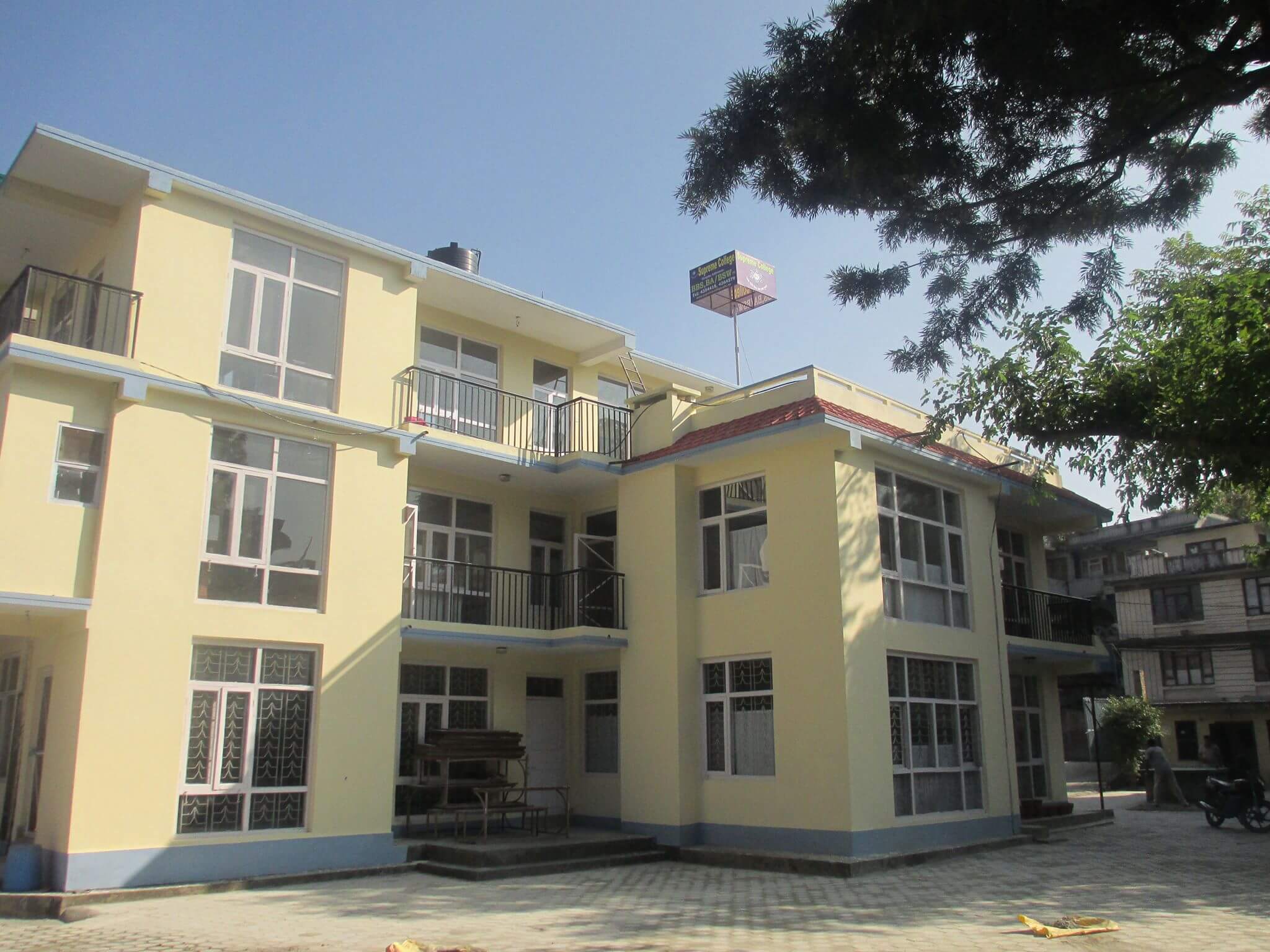
Four-year BA program with Journalism and Mass Communication as a major subject under Tribhuvan University
Offered at Supreme College, Samakhushi (Gongabu), Kathmandu, established in 2013 AD
Bachelor of Arts in Journalism listed among the college’s official courses
Focus on reporting, media writing, editing, media law and ethics, and Nepal-focused communication issues
Classroom learning combined with practical assignments and field-based activities as per the four-year BA Journalism and Mass Communication syllabus
Access to e-library (around five thousand e-books), computer lab with internet, multimedia facilities and counselling support
Scholarship focus for students from underprivileged and marginalised communities
The BA in Journalism at Supreme College follows the four-year BA structure approved by Tribhuvan University. Under this framework, students study:
Compulsory subjects such as English, Nepali and Nepal Studies across the BA years
Journalism and Mass Communication as a major subject
Another major or supporting subjects as guided by the BA regulations and the college
This structure allows you to combine journalism with other humanities or social science areas, for example English, Social Work or Rural Development (depending on availability and TU rules), and to understand media within a wider social context.
The four-year BA Journalism and Mass Communication curriculum under Tribhuvan University includes courses that:
Introduce basic concepts and theories of journalism and mass communication
Trace the development of media in Nepal and internationally
Cover news reporting, feature writing and editorial practices
Address media law, ethics and professional standards
Include radio, television, online and social media content
Build basic research skills for media studies and audience analysis
As a student, you typically move from foundation courses in communication and media history to more specialised papers in news writing, editing, broadcasting and new media. Fieldwork, practical projects and report writing are built into the course so that you can connect theory with practice.
The BA in Journalism at Supreme College works within objectives set for the four-year Journalism and Mass Communication stream under Tribhuvan University. The main aims are to:
Help students understand key ideas and principles of journalism and mass communication
Explain how media shape public opinion, culture and policy in Nepal
Develop skills for news gathering, verification, writing and editing
Introduce ethical and legal foundations for responsible journalism
Prepare graduates who can join media organisations or communication units with a clear awareness of social responsibility
For you as a learner, this means engaging with both the technical side of media work and the social questions that arise around information, representation and public interest.
Graduates of BA in Journalism from Supreme College join the broader pool of Tribhuvan University journalism graduates.
The degree opens options such as:
Entry-level roles in newspapers, online news portals and radio or television stations
Communication and documentation work in NGOs, INGOs and development projects
Media support roles in schools, colleges and training centres
Public information, social media handling and outreach work in organisations
Many students later apply for MA in Journalism and Mass Communication, Media Studies or related fields, subject to the rules of the admitting university.
By the end of BA in Journalism at Supreme College, students are expected to:
Explain core concepts of journalism and mass communication in clear language
Report and write basic news stories, features and opinion pieces that follow accepted formats
Edit short texts for clarity, accuracy and style
Describe key developments in Nepali and global media history
Identify ethical dilemmas in media practice and discuss possible responses
Prepare field reports, assignments and simple research-based papers using appropriate references
These outcomes support your growth from interested media consumer to an entry-level media worker who can handle tasks with care and accountability.
Experience in the BA in Journalism stream helps you build several practical skill sets:
Reporting skills: news gathering, interviewing, note-taking and fact-checking
Writing skills: news style, feature structure, headlines, captions and basic copy editing
Technical skills: handling simple audio or video tools, preparing scripts and supporting digital content
Research skills: reading policy and legal documents, conducting small surveys or interviews, and summarising findings
Communication skills: speaking in front of groups, working in teams and coordinating with sources and editors
Supreme College’s e-library, internet-supported computer lab and multimedia facilities give you spaces to practise these skills beyond the classroom.
Teaching in BA in Journalism at Supreme College follows Tribhuvan University standards and the college’s own academic culture. Students usually experience:
Lectures on media theory, history and current issues
Close reading of news texts, features and analytical articles
Classroom and group discussions on media coverage of social, political and cultural topics
Practical assignments such as writing news, preparing short reports or producing simple media content
Use of multimedia and internet resources for case studies, examples and background research
The college is run by experienced academicians and professionals, which helps maintain continuity in teaching and student support.
Admission to BA in Journalism at Supreme College follows the general eligibility rules of the four-year BA program under Tribhuvan University.
In broad terms, applicants are expected to:
Complete ten plus two, PCL or an equivalent qualification in any stream from a board or institution recognised by Tribhuvan University
Meet the minimum grade or percentage set for BA admission
Follow any merit or entrance process decided by the Faculty of Humanities and Social Sciences or the college for the relevant academic year
Some campuses offering Journalism and Mass Communication as a major require students to have studied Journalism or Mass Communication at ten plus two level. You should contact Supreme College directly at Samakhushi Chowk for the latest admission notice, detailed eligibility, and any specific subject requirements for selecting Journalism as a major.
BA in Journalism from Supreme College provides a base for roles where clear communication and media awareness are important.
Graduates may explore:
Reporter, sub-editor or desk assistant roles in print and online media
Radio or television production support, news reading or programme assistance (subject to audition and organisational criteria)
Communication, documentation and outreach posts in NGOs and community projects
Content writing, social media handling and basic public relations tasks in institutions that need regular public communication
Further training, internships and language skills strongly influence how you move within these fields.
Supreme College mentions scholarship support among its core features and gives attention to students from underprivileged and marginalised communities.
Scholarships for BA in Journalism may consider:
Performance in previous examinations
Economic background and special circumstances
Internal rules and categories fixed by the college for that intake
You should ask the college office for the latest scholarship information, required documents and deadlines when you plan your application.
Students and parents may look at BA in Journalism at Supreme College for several grounded reasons:
The program runs under Tribhuvan University, giving national recognition within the BA framework.
Supreme College clearly lists Bachelor of Arts in Journalism among its offered courses and has experience running BA programs with English and Social Work as specialisations.
The campus is situated at Samakhushi Chowk, which is reachable from different parts of Kathmandu.
The institution focuses on students who had earlier gaps in study and on those from underprivileged and marginalised groups, which matches the social responsibility spirit of journalism education.
Facilities such as e-library, computer lab with internet, multimedia, ECA and counselling support both academic and personal development.
If you wish to study media while staying close to community issues and everyday life in Kathmandu, this course offers a clear and structured path.
BA in Journalism at Supreme College, Samakhushi, links the Tribhuvan University four-year Journalism and Mass Communication curriculum with a college environment that values inclusion, access and community engagement.
You work through theory, writing practice, media analysis and field-based tasks while using the college’s learning facilities to handle assignments and examinations. For Nepali students who want to move towards media, communication or related social fields, BA in Journalism at Supreme College stands as a realistic option within the Tribhuvan University humanities system.
1. What is the duration of BA in Journalism at Supreme College?
BA in Journalism at Supreme College is a four-year Bachelor of Arts program under Tribhuvan University, following the updated BA framework.
2. Is BA in Journalism at Supreme College a separate degree or part of BA?
The course runs within the four-year BA structure of the Faculty of Humanities and Social Sciences, with Journalism and Mass Communication taken as a major subject.
3. Do I need prior Journalism study in ten plus two to choose this major?
Tribhuvan University guidelines mention that some campuses ask for Journalism or Mass Communication at ten plus two level for the Journalism major. You should confirm the current requirement directly with Supreme College.
4. What kind of practical work will I do during the course?
Students practise news and feature writing, simple editing tasks, basic media production activities and field-based assignments based on the four-year BA Journalism and Mass Communication syllabus.
5. What facilities support BA in Journalism students at Supreme College?
Students have access to an e-library with around five thousand e-books, a computer lab with internet, multimedia-supported classrooms, ECA opportunities, cafeteria, transport support and counselling services.