



Masters in Security, Development and Peace Studies (MSDPS) at APF Command and Staff College (APFCSC), Kathmandu is a graduate program for in-service officers of the Armed Police Force, Nepal and selected officers from other security organizations. The course is affiliated with the Faculty of Humanities and Social Sciences at Tribhuvan University and runs alongside the APF Command and Staff Course.
If you are an APF officer working at mid-level command or staff positions, this course gives you structured academic study on security, development and peace while you continue your professional training. The program focuses on national security, regional and global security trends, governance, conflict and peace studies, and development concerns that directly relate to Nepal’s security responsibilities.
MSDPS is spread over four semesters (two academic years) and carries 63 credit hours. It combines theoretical study with applied subjects such as border management, disaster risk reduction, industrial security and security laws of Nepal, so that your classroom learning consistently links back to field realities.
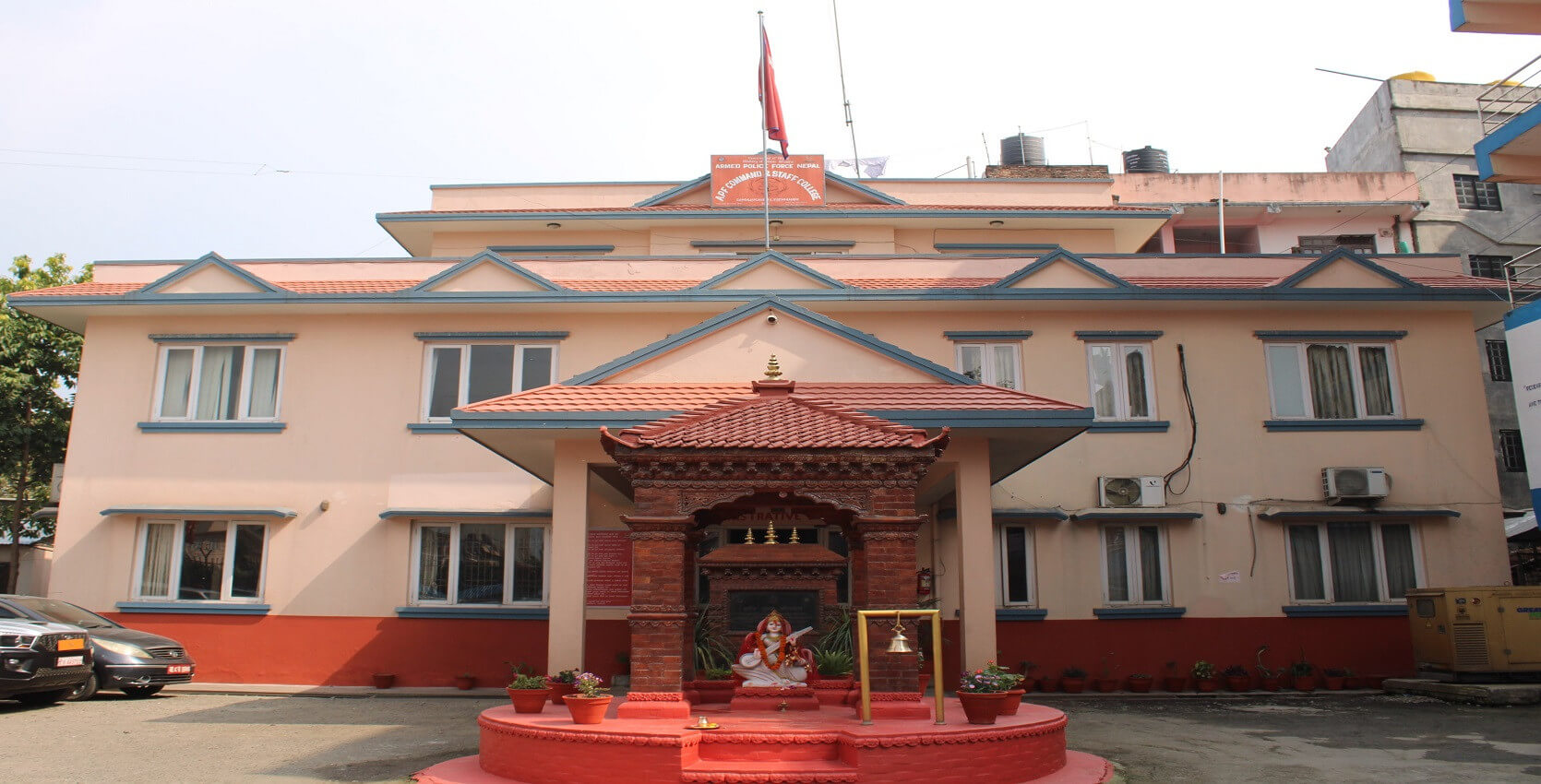
Affiliation with Tribhuvan University, Faculty of Humanities and Social Sciences
Four-semester, two-year academic structure with 63 credit hours
Core focus on security, development and peace, supported by applied security subjects
Intake drawn from APF officers in the ranks of Inspector, Deputy Superintendent and Superintendent, with provision for officers from other security organizations as approved
Integrated academic and professional studies with the APF Command and Staff Course
Strong research component including research methodology, term papers and a master’s thesis
MSDPS is a four-semester program, where each semester is of six months. The total duration is two years and the program carries 63 credit hours.
First Semester (15 credits)
Strategic Thought
Regional and Global Security
Security Management
Conflict and Peace Studies
Dimensions of Development
This semester introduces you to strategic thinking, security environments beyond Nepal, and key concepts in development and peace studies.
Second Semester (18 credits)
Governance and Statecraft
Border Management and Security
National Security
Security Laws of Nepal
Communication English
Research Methodology
Students study how the state functions, how borders are managed, how national security is framed, and what legal instruments guide security forces. Research methodology prepares you for academic writing, thesis work and evidence-based analysis.
Third Semester (18 credits)
Human Rights Law
Human Resource Management
Conflict Resolution and Practices
Disaster Risk Reduction
Industrial Security
One course from:
Nepalese Economy
Social and Cultural Dimensions of Nepal
This semester deepens your understanding of rights-based frameworks, organizational management, conflict resolution, disaster risk reduction and industrial security. The elective on Nepal’s economy or social and cultural dimensions helps you connect security questions with broader national realities.
Fourth Semester (12 credits)
Course group on:
Development Planning and Practices
Non-Traditional Security
International Humanitarian Law
Course group on:
Foreign Policy and Diplomacy of Nepal
Foreign Aid and Development
Information and Communication Technology
Thesis (6 credits)
The last semester brings focus to non-traditional security issues, development planning and foreign policy. You complete a thesis that requires independent research on a topic related to security, development or peace under Tribhuvan University regulations.
The MSDPS program aims to:
Study and analyze security challenges faced by security forces in Nepal and suggest practical responses.
Strengthen operational and administrative competencies of officers for their duties.
Help officers understand strategic security at global, regional and national levels.
Link development and peace concerns with security planning and operations.
Build capacity for research, policy analysis and informed decision-making.
If you are planning a long career in APF or related security institutions, these objectives speak directly to the responsibilities you carry at mid-level and higher command.
MSDPS is most relevant for:
APF officers preparing for mid-level command and staff roles
Officers who need a stronger grounding in security policy, governance and development
Personnel working in border management, disaster management, industrial security and peacekeeping
Security professionals who interact with government ministries, development partners and local communities
The course sits within Nepal’s wider security and development context, so your learning connects to national plans, public safety, disaster risk reduction and international cooperation.
After completing MSDPS, students are expected to:
Analyze national, regional and global security environments using established concepts.
Relate development and peace perspectives to security planning and practice.
Interpret Nepal’s security laws, human rights law and international humanitarian law in professional contexts.
Plan and review security operations with an understanding of governance, statecraft and public accountability.
Conduct research using qualitative and quantitative tools, and present findings in academic and professional formats.
Communicate ideas clearly in written and spoken English in professional forums.
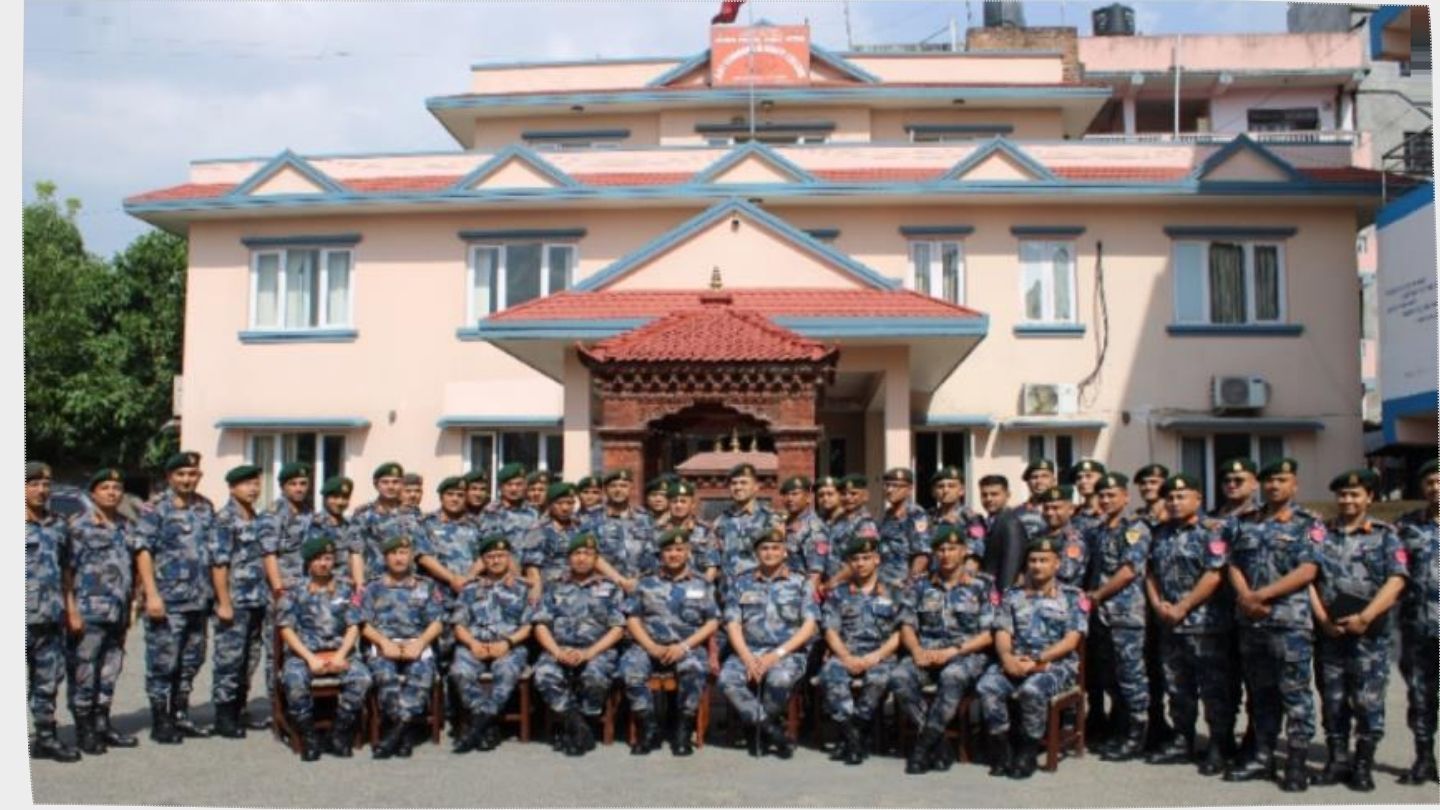
You develop a range of skills through both academic and professional components:
Analytical skills through courses such as Strategic Thought, Regional and Global Security, and National Security.
Legal and normative understanding through Security Laws of Nepal, Human Rights Law and International Humanitarian Law.
Research skills through Research Methodology, term papers and the final thesis.
Management skills through Human Resource Management, Governance and Statecraft, and management-related topics in professional studies.
Operational planning skills through disaster risk reduction, industrial security, border security and related subjects.
Communication and presentation skills through Communication English, class presentations, seminars and conferences.
These skill areas respond to the demands placed on APF officers in planning rooms, field units and inter-agency coordination platforms.
Professional studies are conducted in syndicates, guided by Directing Staff (DS). Syndicate work includes map exercises, intelligence preparation for the battlefield, disaster management exercises, campaign planning and UN peacekeeping-related activities. English is used as the medium of instruction.
Academic studies are carried out in plenary sessions by professors and subject experts. Teaching methods include:
Lectures
Student presentations
Workshops
Panel discussions
Seminars and conferences
You can expect an environment that combines classroom learning, group work and research supervision. This approach supports both your academic growth and your day-to-day responsibilities as a security professional.
Eligibility for MSDPS includes academic and service conditions:
Bachelor’s degree (10+2+3 or 4) in any discipline from a university recognized by Tribhuvan University.
In-service officer of Armed Police Force, Nepal.
Rank of Inspector, Deputy Superintendent or Superintendent at the time of application.
Provision for officers from other national and international security organizations, as decided by APF and Tribhuvan University procedures.
Selection is based on an entrance examination conducted under rules approved by Tribhuvan University and APF Command and Staff College. Candidates are admitted according to merit within the approved intake capacity.
MSDPS supports your professional growth inside the security sector rather than serving as a general open-market degree. Graduates typically:
Take up mid-level command and staff postings in APF units and headquarters.
Work in planning, operations, training and research cells within APF.
Contribute to units that handle border security, disaster risk reduction, industrial security and public order management.
Participate in UN peacekeeping and international deployments where academic grounding in security, development and peace is required.
The program strengthens the knowledge base and analytical ability that APF and other security organizations look for in officers entrusted with wider responsibilities.
MSDPS at APF Command and Staff College is an in-service program. Student officers remain under APF, Nepal and follow government rules for salary, allowances and training-related support. Any financial arrangements for officers from other organizations follow their parent institution’s rules and relevant agreements. For precise and updated information, officers are expected to consult APF Headquarters or official notices from the college.
Integration of academic degree and professional Command and Staff Course in a single residential program.
Direct relevance to the roles and duties of APF officers in Nepal.
Curriculum that covers strategic security, development, peace, disaster risk reduction, industrial and border security, and legal frameworks.
Strong emphasis on research, including term papers and a master’s thesis evaluated by faculty members and Tribhuvan University professors.
Learning environment that brings together APF instructors and university scholars in one setting.
If you see your future in higher command, staff planning or policy roles within the security sector, this course offers a structured path that combines experience, reflection and academic study.
Masters in Security, Development and Peace Studies at APF Command and Staff College offers a focused path for APF and other security officers who need deeper academic grounding in security, development and peace while continuing professional training. The program’s four-semester structure, applied curriculum, research requirement and close connection with the Command and Staff Course give you a clear framework for growth as a security professional in Nepal and beyond.
1. Who is MSDPS intended for?
MSDPS is intended for in-service officers of the Armed Police Force, Nepal, in the ranks of Inspector, Deputy Superintendent and Superintendent. Seats may also open for officers from other national and international security organizations, subject to approval and entrance examination.
2. How long is the MSDPS program and how many credits does it have?
The program runs for two academic years, divided into four semesters of six months each. It carries a total of 63 credit hours under Tribhuvan University.
3. How is the course evaluated?
Students are evaluated through semester exams, internal assessments, term papers and a thesis. Research methodology in the second semester and the thesis in the fourth semester build your research capacity step by step, and evaluation involves both APF faculty and Tribhuvan University professors.
4. Is MSDPS linked to the APF Command and Staff Course?
Yes. MSDPS runs in conjunction with the APF Command and Staff Course. Student officers attend academic classes for MSDPS and professional studies for the Command and Staff Course in the same college, under a coordinated structure.
5. Are there opportunities for exposure beyond the classroom?
Student officers take part in internal study tours to APF units and foreign study tours to security organizations in neighboring countries. Workshops, seminars, panel discussions and conferences on current security topics are conducted regularly.






