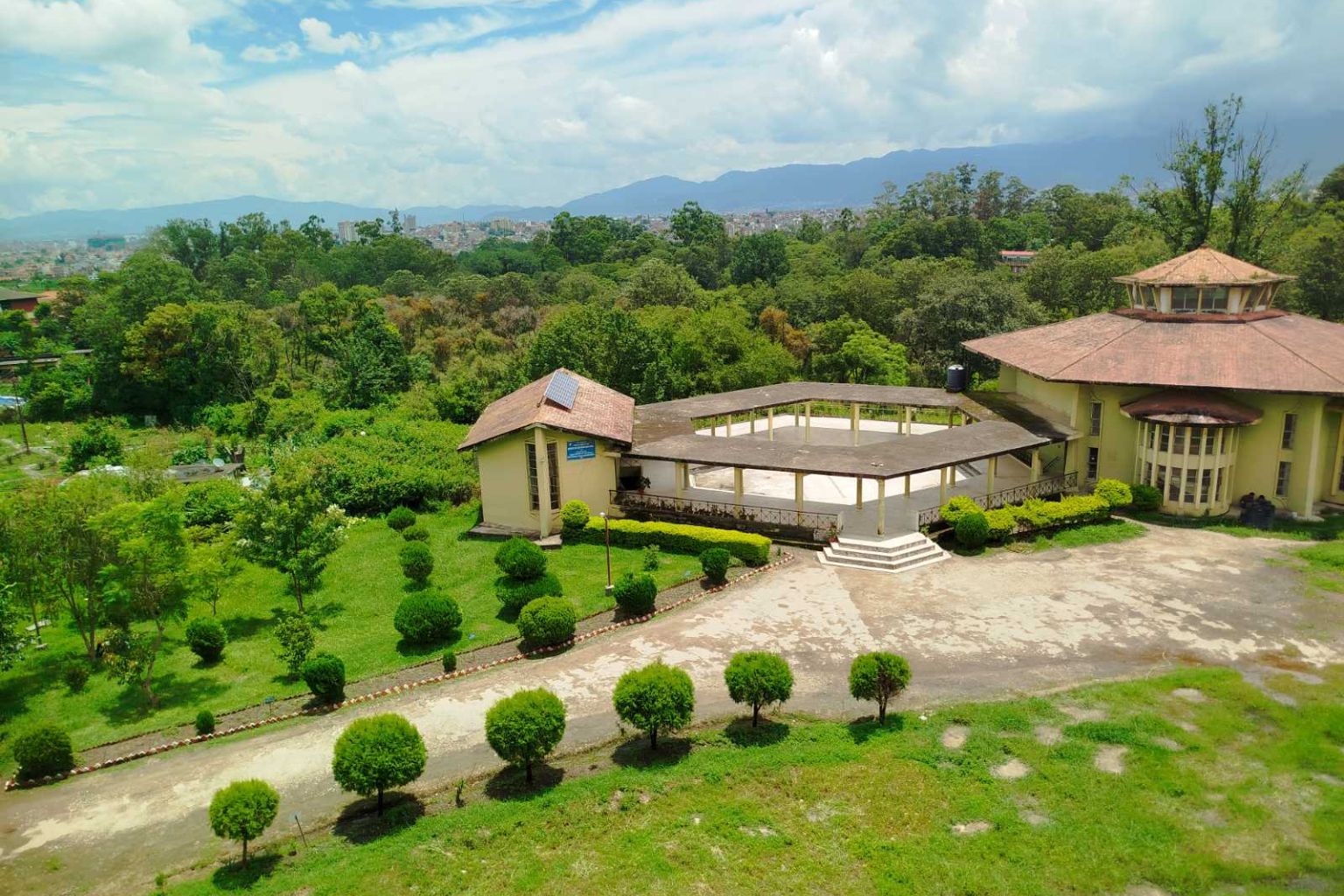
The Master's Degree in Library and Information Science (MLISc.) is a four-semester postgraduate program conducted by the Central Department of Library and Information Science (CDLIS), Faculty of Humanities and Social Sciences, Tribhuvan University, at University Campus, Kirtipur, Kathmandu.
The program covers the organization, management, retrieval, preservation, and use of information across libraries and information centres. Its academic scope combines established areas of librarianship with information and communication technology, computer networks, information retrieval, research methods, quantitative techniques, information services, library automation, internship experience, and thesis work.
Students complete 63 credit hours over four semesters. The fourth semester includes a three-credit internship and a six-credit compulsory thesis, giving the program both professional practice and research components.
Four-semester Master's program in Library and Information Science.
Conducted by the Central Department of Library and Information Science, Tribhuvan University.
Operates under the Faculty of Humanities and Social Sciences.
Carries a total of 63 credit hours.
Combines theory and practical courses in information organization, cataloguing, information retrieval, ICT, and library management.
Includes Research Methodology and Quantitative Techniques in Library and Information Science.
Provides specialization options during the third semester.
Includes a three-credit internship in the fourth semester.
Requires a six-credit compulsory thesis.
Uses written, practical, semester, and internal assessment components.
MLISc is structured around the professional and academic work involved in managing libraries, information centres, and information services.
Students begin with subjects dealing with the relationship between libraries, information, and society. They also study management, information control, cataloguing, indexing, computer networks, information retrieval, ICT, information sources and services, and research.
The later stages of the program place greater attention on research, quantitative methods, specialized areas of Library and Information Science, professional field experience, and thesis writing.
The curriculum also addresses electronic information sources and technology-based library services. Students study ways of locating and organizing information, retrieving relevant material, working with information services, and applying information technology within library and information environments.
The academic objectives of MLISc include developing knowledge of the principles, theories, and practices of Library and Information Science.
The program also addresses:
the social, cultural, educational, and communication environments in which libraries and information centres operate;
interdisciplinary knowledge relevant to Library and Information Science research;
the use of information technology in the management of libraries and information centres;
management knowledge applicable to different types and sizes of libraries and information centres;
research and analytical abilities connected with information services and professional practice.
Applicants seeking admission to the Master's Degree in Library and Information Science must have a Bachelor's degree or its equivalent from a university recognized by Tribhuvan University.
The admission requirements also include:
proficiency in English;
basic knowledge of computers.
Special consideration is given to eligible applicants from Library and Information Science and Science and Technology backgrounds, as well as employees working in libraries and information centres or applicants with basic qualifications in Library and Information Science education.
Admission to MLISc requires applicants to sit for and pass an entrance examination. The entrance examination carries 100 marks.
The available academic materials contain different minimum pass-mark figures for the entrance examination. For this reason, the course profile does not state a fixed entrance pass percentage.
The program consists of four semesters and 63 credit hours. The first two semesters carry 18 credits each, the third semester carries 15 credits, and the fourth semester carries 12 credits.
| Semester | Courses | Credits |
|---|---|---|
| First | Library and Information Society; Library and Information Management-I; Information Control Technique [Theory]; Information Control Technique [Practical]; Cataloguing and Indexing [Theory]; Cataloguing and Indexing [Practical] | 18 |
| Second | Data Communication and Computer Network in Library Services; Library and Information Management-II; Information Processing and Retrieval [Theory]; Information Processing and Retrieval [Practical]; Information and Communication Technology [Theory]; Information and Communication Technology [Practical] | 18 |
| Third | Information Sources and Services-I; Research Methodology in LIS; Quantitative Techniques in LIS; two specialization papers | 15 |
| Fourth | Information Sources and Services-II; Internship; Thesis | 12 |
Total Credits: 63
The first semester establishes the academic foundation for understanding libraries, information systems, organization, and management.
Students study:
LISc. 551: Library and Information Society – 3 credits
LISc. 552: Library and Information Management-I – 3 credits
LISc. 553: Information Control Technique [Theory] – 3 credits
LISc. 554: Information Control Technique [Practical] – 3 credits
LISc. 555: Cataloguing and Indexing [Theory] – 3 credits
LISc. 556: Cataloguing and Indexing [Practical] – 3 credits
The semester gives students both conceptual and practical exposure to information organization and library operations.
The second semester moves further into information technology, networking, management, and information retrieval.
Courses include:
LISc. 557: Data Communication and Computer Network in Library Services – 3 credits
LISc. 558: Library and Information Management-II – 3 credits
LISc. 559: Information Processing and Retrieval [Theory] – 3 credits
LISc. 560: Information Processing and Retrieval [Practical] – 3 credits
LISc. 561: Information and Communication Technology [Theory] – 3 credits
LISc. 562: Information and Communication Technology [Practical] – 3 credits
The combination of theory and practical work allows students to study the technical processes involved in organizing, retrieving, and managing information.
The third semester develops research, quantitative analysis, information services, and specialization.
Core courses are:
LISc. 563: Information Sources and Services-I – 3 credits
LISc. 564: Research Methodology in LIS – 3 credits
LISc. 565: Quantitative Techniques in LIS – 3 credits
Students also complete two specialization papers carrying three credits each.
The curriculum provides paired specialization papers in the following areas:
Computer Programming in Library Automation
Comparative and International Librarianship
Non-book Materials and Library Services
Bibliographic Control
Education for Library and Information Science
Preservation and Conservation of Documents
The specialization papers form part of the third-semester structure and are selected with the approval of the Central Department.
The fourth semester combines advanced information services, field experience, and independent research.
It consists of:
MLISc. 568: Information Sources and Services-II – 3 credits
MLISc. 569: Internship in Library and Information Science – 3 credits
MLISc. 570: Thesis – 6 credits
This semester accounts for 12 of the program's 63 credit hours.
The internship is a three-credit component completed during the fourth semester. It is intended to place students in a professional library, information centre, or related institution where they can observe and participate in practical work.
Students work in a professional setting under appropriate supervision while connecting classroom knowledge with actual library and information practices.
The internship generally lasts one month. After completing the placement, students prepare an internship report according to the required format.
Internship assessment involves the institution where the student completes the placement, a supervisor from the Central Department, and departmental evaluation following presentation of the report.
Every MLISc student must complete a six-credit thesis.
Thesis work is intended to develop research and analytical abilities in Library and Information Science. Students prepare the thesis according to the format prescribed by the Central Department and submit it before the fourth-semester examination.
Research preparation begins earlier in the course through subjects such as Research Methodology in LIS and Quantitative Techniques in LIS. These areas introduce students to research design, data collection, analysis, statistical techniques, and the preparation of academic research.
Student performance is assessed through written and practical examinations. The program follows the semester examination system.
The assessment structure uses a 60:40 division. The semester examination conducted at the end of the semester carries 60 marks, while 40 marks are allocated to internal assessment.
The internal 40 marks are divided as follows:
| Internal Assessment Component | Marks |
|---|---|
| Class interaction, presentation, and participation | 10 |
| Assignments | 10 |
| Internal examination or assessment | 20 |
The assessment system therefore considers both end-of-semester performance and academic work completed during the semester.
The course develops academic and practical abilities connected with Library and Information Science. Its curriculum covers areas such as:
library and information management;
cataloguing and indexing;
information organization and control;
information processing and retrieval;
information and communication technology;
computer networks used in library services;
library automation;
information sources and services;
research design and methodology;
quantitative analysis;
electronic information sources;
preparation and management of information services;
professional field practice through internship;
academic research and thesis writing.
These areas support work that involves organizing information, managing library operations, assisting information users, working with physical and electronic resources, and conducting Library and Information Science research.
MLISc may be relevant to graduates interested in libraries, information organization, information services, digital information resources, research support, and the management of library and information centres.
The admission provisions allow applicants with Bachelor's degrees or equivalent qualifications recognized by Tribhuvan University, making the program open to graduates from different academic backgrounds who meet the required admission conditions.
Applicants from Library and Information Science, Science and Technology, and those already working in libraries or information centres receive special consideration under the admission provisions.
The course prepares students for professional responsibilities related to libraries and information services rather than focusing only on book collection and circulation.
Its curriculum addresses the planning, organization, management, retrieval, and provision of information across traditional and technology-supported environments. Digital information, ICT, computer networking, automated library operations, information sources, research, and analytical work are included alongside established areas such as cataloguing and library management.
Graduates may apply their academic and practical training in library and information-related work, depending on the requirements of individual institutions and available positions.
The Central Department of Library and Information Science is located at University Campus, Tribhuvan University, Kirtipur, Kathmandu. The department was established in 1995 (2052 BS) under the Faculty of Humanities and Social Sciences.
CDLIS conducts postgraduate education in Library and Information Science and has developed its academic work to include information technology, digital library knowledge, research, practical training, and professional Library and Information Science studies.
Department: Central Department of Library and Information Science, Tribhuvan University
Location: University Campus, T.U., Kirtipur, Kathmandu, Nepal
Email: info@cdlis.tu.edu.np
Phone: +977-01-4331316
Website: cdlis.tu.edu.np