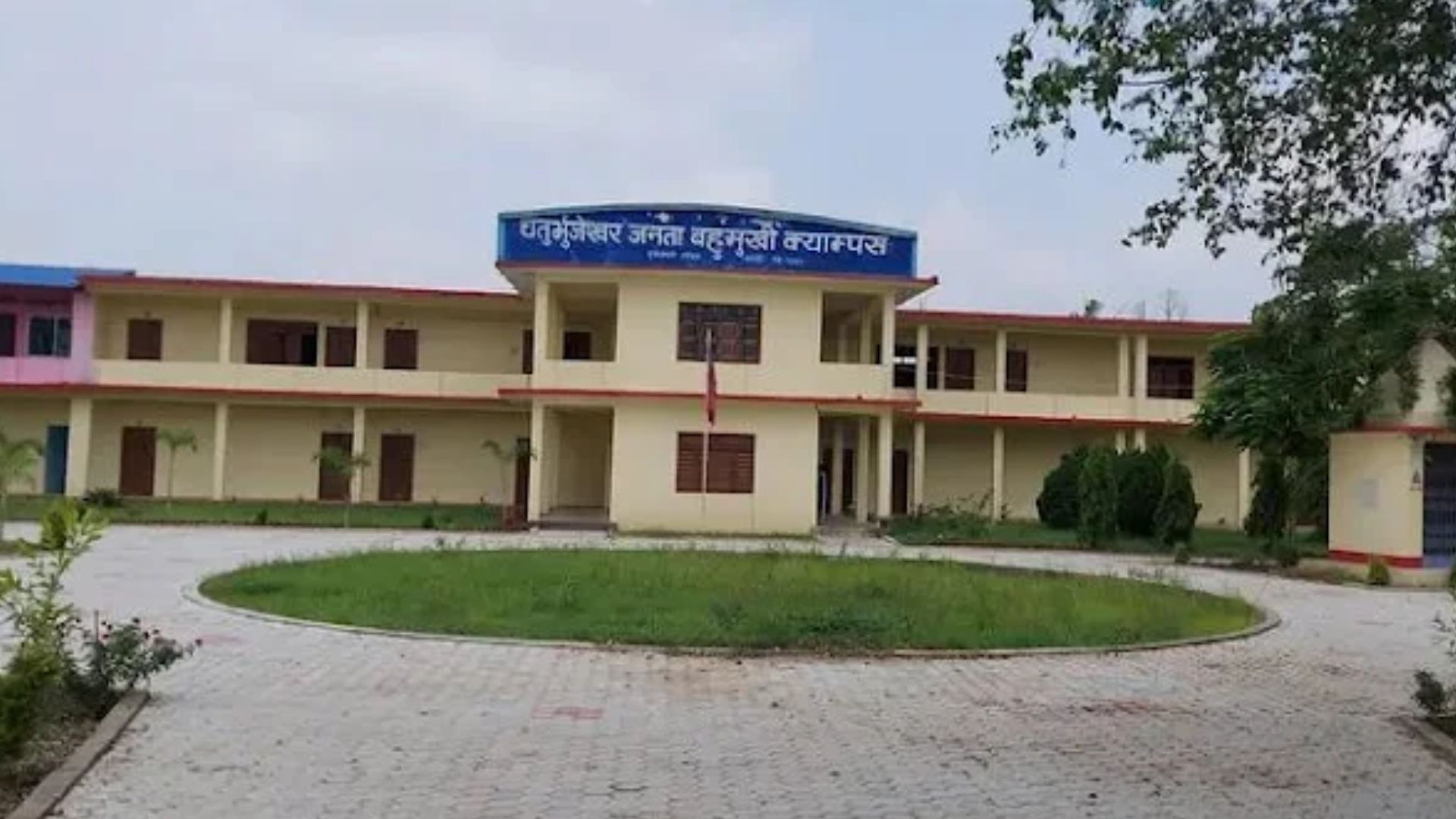
The B.Ed. program at Chaturbhujeshwar Janta Multiple Campus is a four-year annual-system bachelor’s program under the Faculty of Education, Tribhuvan University. Located at Hariban, Sukhepokhari, Sarlahi, the campus introduced B.Ed. classes in 2060 and runs the program within a community-campus setting that also offers library access, computer and science labs, multimedia support, counselling, scholarships, and regular academic monitoring.
The program is both academic and professional in orientation and is designed to prepare students to teach two subjects at the secondary level. At this campus, approved B.Ed. subject areas include English, Nepali, Economics, Population Education, and Health and Physical Education.
Course Name: Bachelor of Education (B.Ed.)
College: Chaturbhujeshwar Janta Multiple Campus, Hariban, Sukhepokhari, Sarlahi
Affiliation: Tribhuvan University, Faculty of Education
Duration: 4 years
Study System: Annual examination system
Campus B.Ed. Subject Areas: English, Nepali, Economics, Population Education, Health and Physical Education
The four-year B.Ed. structure carries 22 courses and 2,200 full marks. It is organized into Communication Skills, Professional Core Areas, Specialization Major Courses, Specialization Minor Courses, and Teaching Internship/Practicum. General Nepali and General English are compulsory. Core study areas include Philosophical and Sociological Foundations of Education, Educational Psychology, Curriculum and Evaluation, and one elective from Instructional Technology, ICT in Education, or ICT in Specialized Subject.
Tribhuvan University provides a wider B.Ed. specialization framework, but the approved B.Ed. subject areas running at this campus are English, Nepali, Economics, Population Education, and Health and Physical Education. The program also requires students to choose a minor specialization different from the major subject area.
The program is designed to prepare competent teachers who can teach two subjects at the secondary level. Its academic and professional structure gives students a foundation in communication, educational theory, curriculum, psychology, specialization subjects, and supervised practice. For students completing the degree, the program supports entry into secondary-level teaching and also provides an academic base for M.Ed. study under Tribhuvan University.
The skill-building side of the program comes from five main areas: communication skills, professional core studies, major specialization, minor specialization, and teaching internship or practicum. This combination supports subject knowledge, classroom understanding, curriculum awareness, and practical teaching experience within the course structure.
The campus uses problem-solving, project work, discussion, participatory learning, experimental work, question-answer methods, educational visits, and survey-based learning. ICT has also been introduced in teaching, training, and evaluation. The campus environment includes library services, science and computer labs, multimedia support, classrooms, conference hall facilities, counselling, and student support systems that connect well with teacher-education study.
Students with Higher Secondary Education Examination Pass Certificate, PCL, or an equivalent Grade 12 qualification are eligible for admission to the B.Ed. program. Subject-specific conditions apply according to the chosen specialization. English, Nepali, Population Education, Economics, and Health and Physical Education follow their respective TU eligibility patterns. Some subject areas may require an entrance test, including English or Health and Physical Education in the specified cases.
Common TU bachelor admission documents generally include:
Class 12 or equivalent transcript
Character certificate
Migration certificate if applicable
Transfer certificate
Citizenship or birth certificate copy
Passport-size photographs
Entrance scorecard if required
Completed application form
Admission fee receipt
Equivalence certificate for foreign qualifications
This course is structured for secondary-level teacher preparation. It also supports progression to M.Ed. study, where B.Ed. is a recognized entry qualification under TU.
The campus provides scholarship support for Dalit, Janajati, Madheshi, and other marginalized-group students. It also has a scholarship committee and student counselling support within its administrative structure.
At this campus, the B.Ed. program is linked with a community-based academic setting, full-time teaching presence, regular internal examinations, student progress evaluation, orientation programs, and ICT-supported teaching practices. The campus also holds UGC quality-assurance recognition and maintains facilities relevant to teacher education.
As an annual-system TU bachelor’s program, the B.Ed. final examinations are conducted by Tribhuvan University through the Office of the Controller of Examinations. Admission, academic registration, examinations, and results follow TU rules, guidelines, and the applicable academic calendar. At the campus level, regular internal examinations and student progress evaluation are also part of the academic process.
The B.Ed. program at Chaturbhujeshwar Janta Multiple Campus combines TU’s four-year annual structure with a community-campus academic environment in Sarlahi. Its approved subject areas, practical teaching component, scholarship support, and campus learning facilities make it a structured option for students seeking teacher education within the TU framework.
The B.Ed. program is four years in duration.
It runs under the annual examination system.
The approved B.Ed. subject areas are English, Nepali, Economics, Population Education, and Health and Physical Education.
Students with HSE, PCL, or an equivalent Grade 12 qualification are eligible, with subject-specific requirements depending on the chosen specialization.
Final examinations for the annual-system B.Ed. program are conducted by TU through the Office of the Controller of Examinations.
Yes. The campus provides scholarships for Dalit, Janajati, Madheshi, and other marginalized-group students.