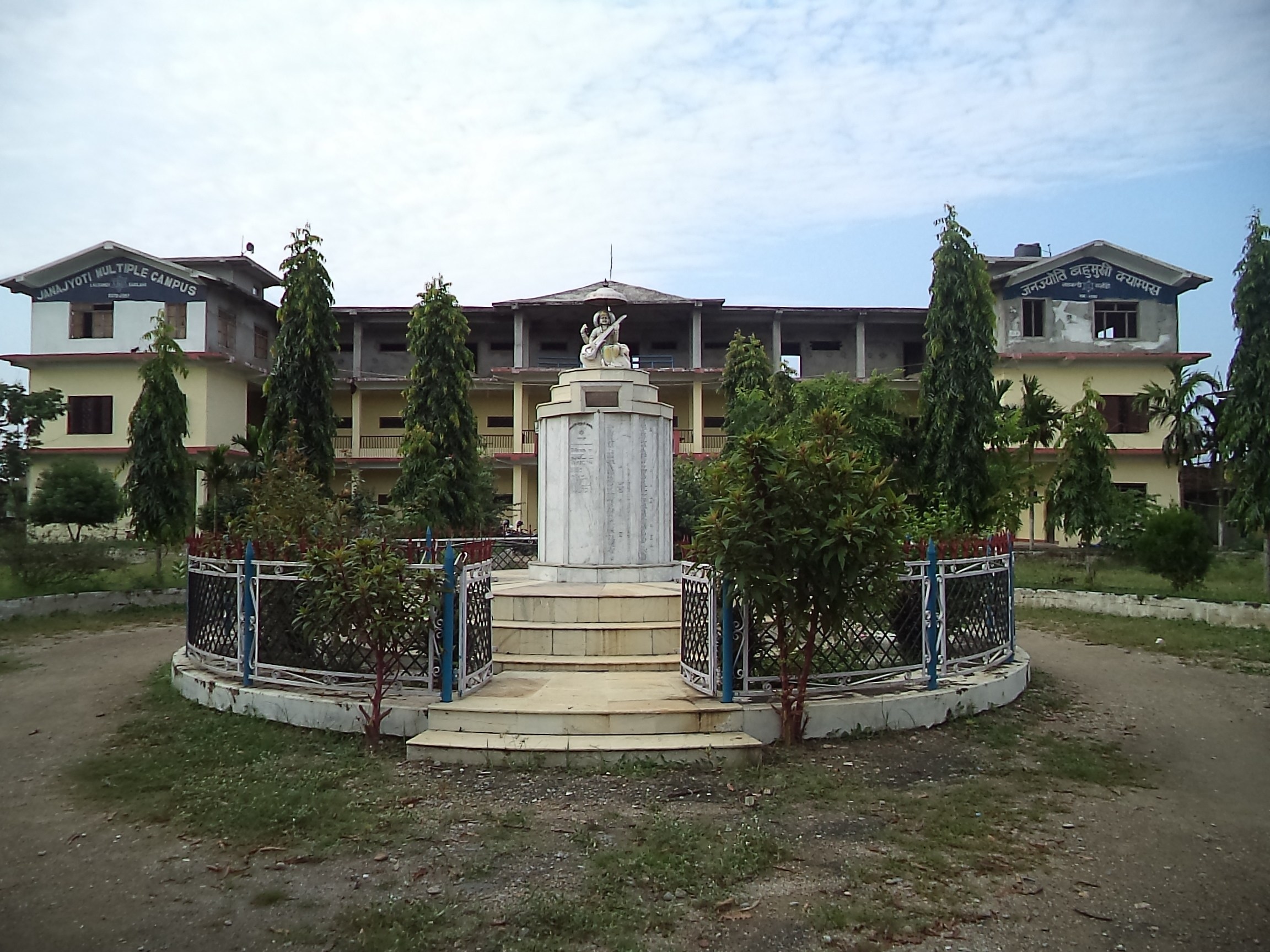
Janajyoti Multiple Campus (in Nepali: जनज्याेती बहुमुखी क्याम्पस, लालबन्दी, सर्लाही) is a community campus located in Lalbandi, Sarlahi, Madhesh Province, Nepal. Established in 2000 AD (2057 BS), the institution was founded to expand access to higher education for students of Lalbandi and nearby areas. Its location, about one minute south of the East-West Highway on foot, has supported its role as an accessible academic center for local communities. Over the years, the campus has developed into a multi-program institution offering education from Ten Plus Two to master’s level.
The campus is affiliated with Tribhuvan University for higher education programs and with the National Examinations Board for Ten Plus Two programs. It is also approved by the University Grants Commission of Nepal and has received QAA certification. Janajyoti Multiple Campus runs morning, day, and evening shifts and offers programs in Education, Management, and Humanities. Its institutional direction combines affordability, academic quality, student support, research engagement, and community connection within a structured teaching and learning environment.
Community campus established in 2000 AD (2057 BS)
Located in Lalbandi, Sarlahi, Madhesh Province, Nepal
Situated about one minute south of the East-West Highway on foot
Affiliated with Tribhuvan University for higher education programs
Affiliated with the National Examinations Board for Ten Plus Two programs
Approved by the University Grants Commission of Nepal
QAA certified
Offers academic pathways from Ten Plus Two to master’s level
Main academic streams include Education, Management, and Humanities
Runs morning, day, and evening shifts
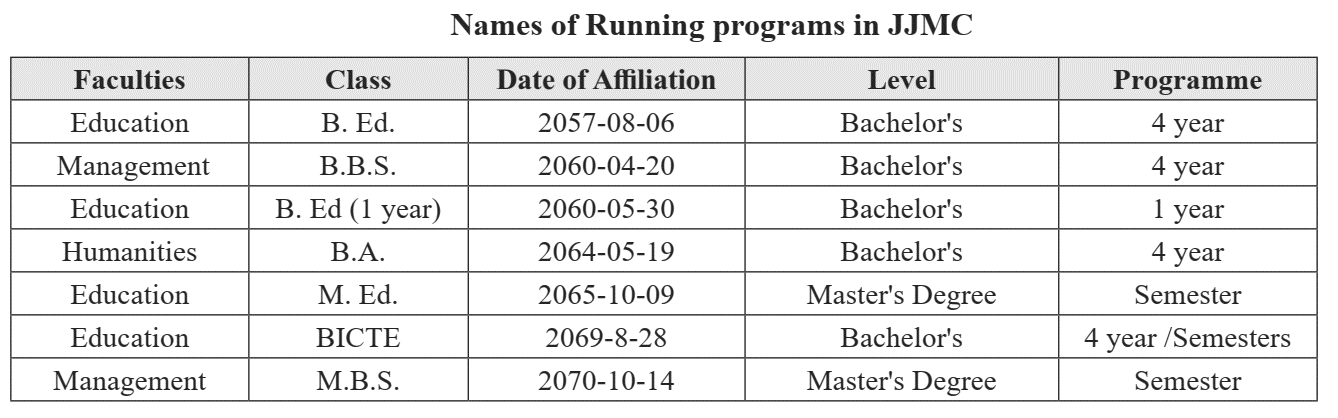
Current programs include Ten Plus Two, B.Ed., BA, BBS, BICTE, M.Ed., and MBS
Has 23 teaching staff, 6 administrative staff, and 8 helping staff
Operates library, e-library, computer labs, multipurpose hall, canteen, and transport support
Maintains student counseling support and an employment cell
Motto: “Affordable Quality Education, Our Dedication.”
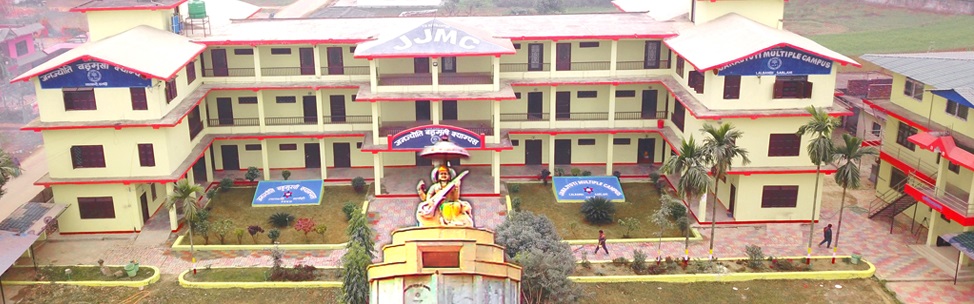
Janajyoti Multiple Campus was established through the collective effort of local education supporters who sought to create a higher education institution within reach of students in Lalbandi and surrounding areas. Its foundation reflects a community-based educational initiative rather than a purely institutional expansion. From the beginning, the campus was shaped by the participation of local stakeholders, social workers, and academic contributors who believed that access to higher education should not be limited by distance or cost.
The campus started with 116 students and a modest academic and administrative structure. Over time, it expanded its academic offerings, strengthened its physical infrastructure, and developed into a multi-level institution serving students across different streams and academic stages. This growth took place with continued support from the community, donors, public bodies, and institutional grants. The campus model therefore remains closely tied to public responsibility, local engagement, and educational inclusion.
Janajyoti Multiple Campus is affiliated with Tribhuvan University for BA, BBS, B.Ed., BICTE, MBS, and M.Ed. programs. It is also affiliated with the National Examinations Board for Ten Plus Two programs. These affiliations position the campus as a bridge between secondary and higher education for students who want to continue their studies within the same institution. Its recognition by the University Grants Commission and its QAA certification also reflect the campus’s efforts to build and maintain quality-related institutional systems.
The institution presents its work through a broader academic and social vision. Its direction includes accessible education, research culture, institutional transparency, accountability, and active engagement with students and stakeholders. The campus also places importance on service orientation, social responsibility, diversity of thought and culture, and collective effort. These values are consistent with its role as a community campus serving both academic needs and broader local development.
Through this background, Janajyoti Multiple Campus has grown as an institution rooted in locality but connected to national academic structures. Its identity is defined by continuity, community ownership, and the steady expansion of learning opportunities.
Janajyoti Multiple Campus offers programs under the National Examinations Board and Tribhuvan University. Its academic offerings are organized mainly across Education, Management, and Humanities.
Ten Plus Two in Education
NEB affiliated, Class 11 and Class 12, 2 years
Ten Plus Two in Management
NEB affiliated, Class 11 and Class 12, 2 years
Bachelor of Education (B.Ed.)
TU Faculty of Education, 4 years, annual system
Subject areas listed include English, Nepali, Population, and Mathematics
Bachelor of Arts (BA)
TU Faculty of Humanities and Social Sciences, 4 years, annual system
Subject areas listed include Sociology and Rural Development
Bachelor of Business Studies (BBS)
TU Faculty of Management, 4 years, annual system
Bachelor of Information and Communication Technology Education (BICTE)
TU Faculty of Education, 4 years, 8 semesters
Entrance required
Master of Education (M.Ed.)
TU Faculty of Education, 2 years, 4 semesters
Specialization areas listed include Nepali, Population Education, and Educational Planning and Management
Entrance required
Master of Business Studies (MBS)
TU Faculty of Management, 2 years, 4 semesters
CMAT required
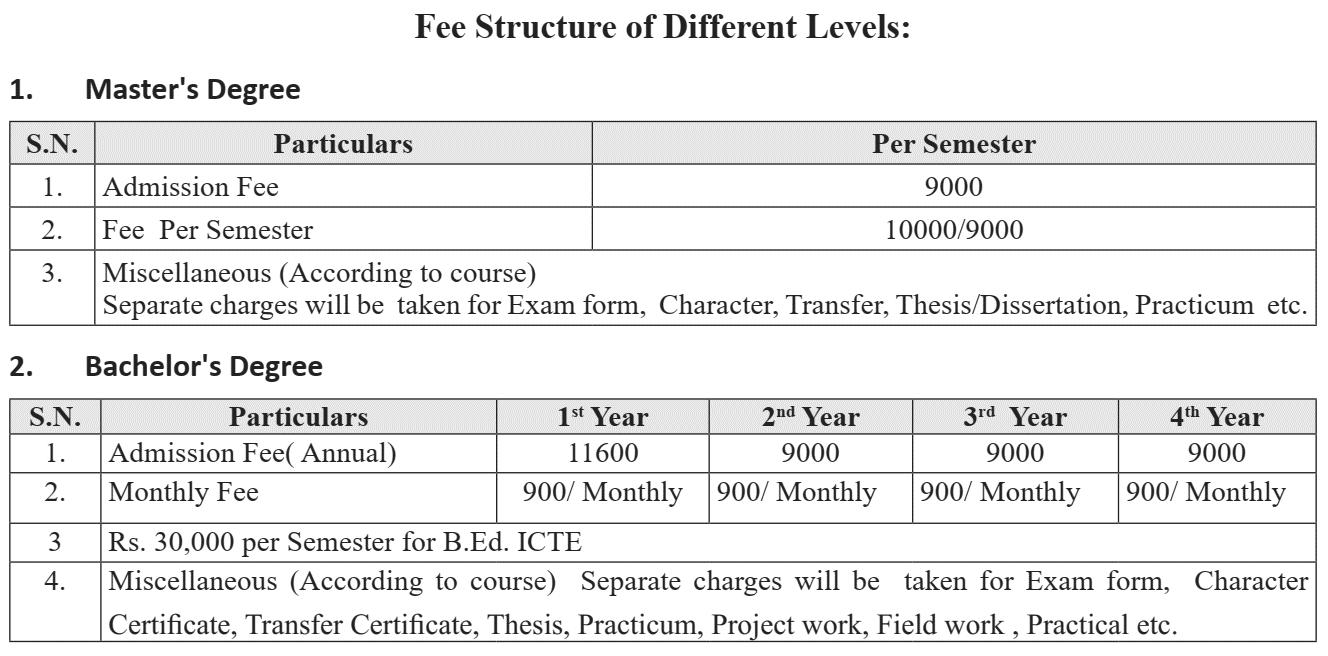
The campus provides continuity for students who want to begin at the Ten Plus Two level and continue into bachelor’s and master’s study within the same institution. This layered academic structure supports long-term study progression in a familiar academic environment.
Admission at Janajyoti Multiple Campus follows the academic level, faculty requirements, and the structure of the relevant program. The process is organized separately for NEB-level, annual-system TU programs, and semester-based or master’s programs.
Admission to NEB Class 11 generally begins after SEE results
Applicants submit the prescribed application form along with required academic documents
Admission may involve merit-based selection, interview, or entrance-related procedures depending on the stream and institutional process
Students complete enrollment after selection and fee payment
Subject registration is completed under the NEB framework after admission
For TU bachelor’s programs under the annual system, the campus follows an organized admission procedure linked with eligibility and academic records.
The campus publishes admission notices for the relevant programs
Eligible applicants submit the required form and academic documents
BA, BBS, and B.Ed. applicants sit for an entrance test conducted by the campus
Selected students complete admission through document verification and fee payment
Academic registration, examination processes, and results are managed under TU rules
For semester-based and master’s programs, admission is more closely tied to the relevant faculty entrance system.
MBS, M.Ed., and BICTE admissions are linked to entrance-based procedures
MBS requires CMAT
M.Ed. follows the relevant entrance process under the TU Faculty of Education
BICTE follows the Central Education Admission Test (CEAT)
BICTE admission also includes interview after qualifying in the entrance stage
Final enrollment is completed after submission of documents and payment of the prescribed fees
The examination system also differs by program structure.
TU annual-system final examinations are conducted through the Office of the Controller of Examinations
Semester-end examinations under the semester system are conducted by the respective Dean’s Office
NEB Class 12 serves as the final board examination stage under NEB
This admission pattern shows that the campus works within recognized academic systems while maintaining a merit-focused and program-specific intake process.
The required documents vary according to academic level and program. The following document groups align with the campus structure and the applicable NEB or TU procedures.
SEE marksheet or grade sheet
SEE character certificate or school leaving certificate
Transfer certificate from the previous school
Migration certificate, if applicable
Citizenship certificate or birth certificate copy
Passport-size photographs
NEB Class 11 registration or subject registration form
Class 12 or equivalent academic transcript
Character certificate from the previous institution
Migration certificate, if the previous board or university is different
Transfer certificate from the previous school or college
Citizenship certificate or birth certificate copy
Passport-size photographs
Entrance scorecard, if required by the program
Completed admission or application form
Admission fee payment receipt
Equivalence certificate, if the qualification is from a foreign board or university
Bachelor’s degree transcript or marksheet
Bachelor’s degree certificate or provisional certificate
Character certificate from the bachelor-level institution
Migration certificate, if the previous degree is from another university
Transfer certificate from the previous campus or college
Citizenship certificate or birth certificate copy
Passport-size photographs
Entrance scorecard, if required by the program
Completed admission or application form
Admission fee payment receipt
Equivalence certificate, if the bachelor’s degree is from a foreign university
NEB registration card or registration number issued in Class 11
Class 11 marksheet or transcript
Class 12 board examination application form
Passport-size photographs
Examination fee receipt
Admit card issued before the examination
Janajyoti Multiple Campus has 23 teaching staff, 6 administrative staff, and 8 helping staff. This staffing structure supports the operation of multiple academic programs across morning, day, and evening shifts. Faculty recruitment is presented as a selection-based process, and the campus places importance on qualified and experienced teachers who can handle both annual and semester system programs.
The teaching environment is not limited to routine classroom delivery. The campus combines lectures with discussion, debate, project work, report presentation, and activity-based learning according to the needs of different subjects. ICT-supported teaching has become part of classroom practice, and academic work is guided through integrated unit planning and periodic review meetings. This creates a teaching process that is planned, monitored, and linked to continuous classroom engagement.
The campus identifies several broad teaching approaches in its learning system:
Teacher-centered method
Learner-centered method
Content-focused method
Interactive method
These approaches are reflected in day-to-day teaching practices such as lecture delivery, group discussion, case study, and ICT-assisted classroom activities. The purpose is to balance subject delivery with participation, understanding, and practical engagement.
Assessment is also carried out through multiple stages rather than relying only on final examinations. Internal examinations, unit tests, assignments, practical work, and classroom activities are used to monitor student progress before final examinations are conducted by the relevant authority. Faculty performance is also reviewed through classroom presentation, student response, and examination results. This shows that academic supervision at the campus is tied to both student learning and teaching effectiveness.
For BICTE in particular, the learning model includes class lectures, demonstration, guest lectures, group work, field visits, seminars, case analysis, problem solving, and field work. The final semester includes teaching practicum and project-based work linked to assigned institutions. This adds a professional and applied dimension to the campus’s teaching structure.
Overall, the teaching methodology at Janajyoti Multiple Campus combines structured academic planning, internal evaluation, active classroom engagement, and practical learning methods. This approach supports students across general, professional, and technology-oriented programs.
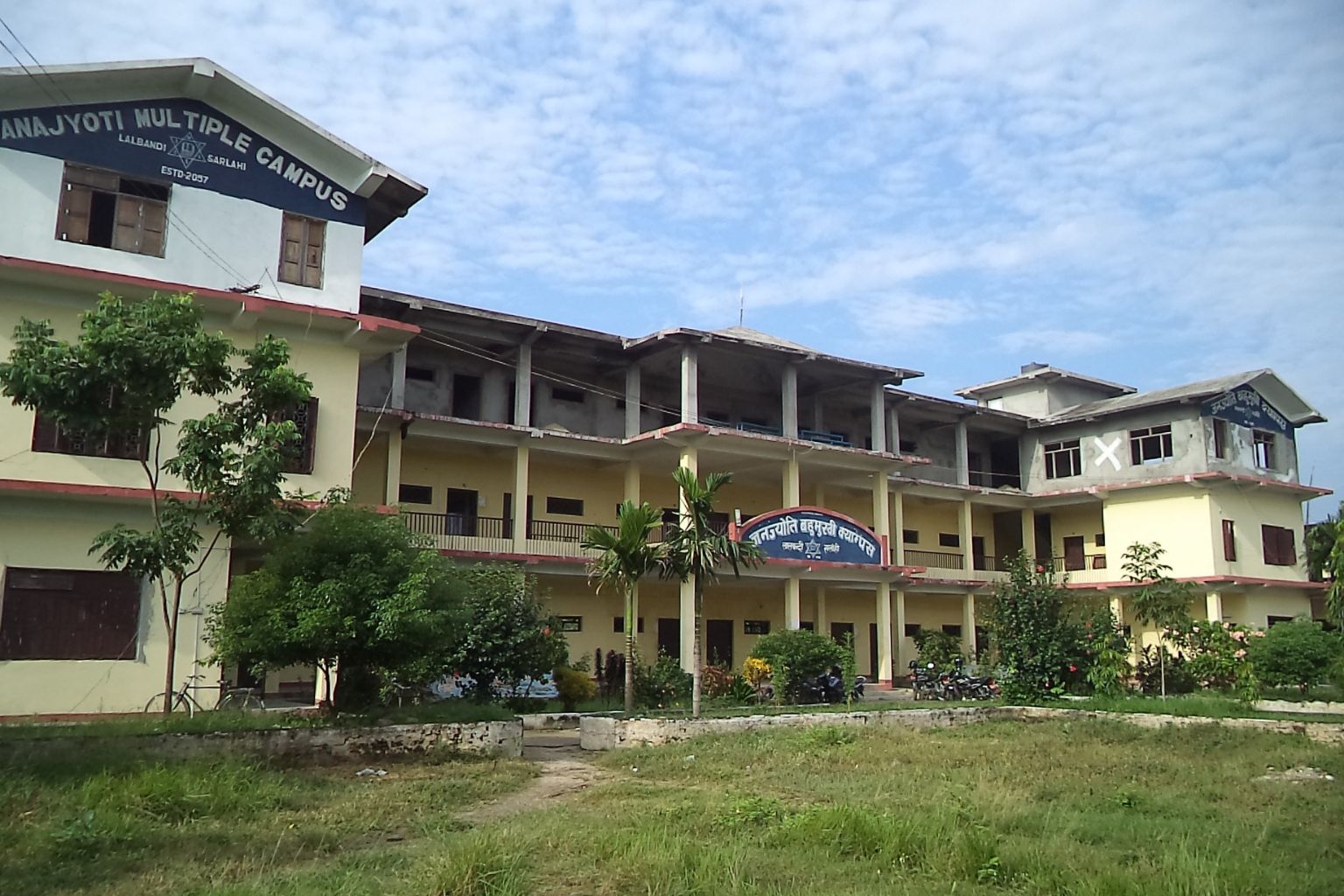
Janajyoti Multiple Campus has developed a broad set of physical and academic facilities to support its programs and student services.
Four RCC blocks including classroom, library and administration, and service spaces
Main classroom block with 39 rooms
Library and administration block with 6 rooms
Separate toilet block
Store hall
Multipurpose hall
Information and security section
Canteen
Spacious classrooms with whiteboards, podiums, furniture, and fans
Three rooms for heads of faculty or departments
Assistant campus chief office
Administration, examination, and account rooms
RMC room
IQAC room
Meeting hall
Guest room
Large library and e-library
Three computer labs
87 computers
11 projectors
2 e-attendance sets
10 printers and photocopy machines
About 30,296 course books
3,450 reference materials
57 journals
E-library with 10 computers
Drinking water system with tanks, tube wells, filters, Euro guards, and purified water plant
Toilet facilities for students and staff
Two college buses purchased in collaboration with Lalbandi Municipality
Road access up to the campus gate
Upgraded volleyball court, table tennis court, basketball court, and canteen
The library remains open on working days from 7:00 am to 10:30 am and from 11:30 am to 3:30 pm. The campus location and transport support also contribute to regular student access.
Student life at Janajyoti Multiple Campus is closely shaped by its community character and multi-shift academic structure. Because the campus runs morning, day, and evening classes, it serves students with different schedules and responsibilities. This arrangement supports access for learners from nearby towns and rural areas who may require more flexible study hours.
The campus emphasizes regular interaction among teachers, students, and parents as part of maintaining a healthy academic environment. Counseling support is available as part of student services, and an employment cell has also been established to guide students in relation to future opportunities. Career guidance, self-employment training, and social responsibility programs contribute to a wider student experience that extends beyond formal instruction.
Campus life also reflects values such as discipline, accountability, participation, and civic awareness. Students study in an environment where library use, computer access, internet support, internal assessment, and co-curricular involvement form part of the broader academic routine. The campus setting therefore combines structured academic life with community connection.
Attendance and conduct are treated seriously. The stated requirement of at least 75 percent attendance for board examinations indicates that the campus gives importance to regular participation and academic discipline. Identity card use, classwork, and campus rules are also part of daily student responsibility.
Taken together, these features create a campus experience that is academically organized, socially connected, and responsive to the needs of students in the region.
Janajyoti Multiple Campus includes co-curricular and extracurricular participation as part of student development.
Internal assessment activities and project work
Field visits
Educational tours and excursions
Essay competition
Poem recitation
Debate
Oratory or elocution
Quiz contests
Dance competition
Games and sports
Annual ECA week with awards for strong performers
Environment awareness programs
Blood donation programs
Eye checkup camps
Earthquake mock-drill activities
Participation in activities with NGOs and government bodies
These activities connect classroom learning with communication, teamwork, social participation, and broader student engagement.
Janajyoti Multiple Campus operates within a community-campus framework that emphasizes affordable education and collective institutional support. Its financial foundation reflects a combination of student fees, public backing, local support, and development assistance connected to campus growth.
The campus motto emphasizes affordable quality education
Student fees are a major regular source of income
Lalbandi Municipality has provided annual support
Municipal support also contributed to the purchase of college buses
UGC grants have supported infrastructure expansion at different stages
Donor and community support contributed to land purchase and early development
Public and institutional support has helped strengthen buildings, transport, library space, and campus services
This pattern of support reflects the campus’s community-oriented structure and its effort to maintain access while continuing to strengthen academic facilities.
Established in 2000 AD (2057 BS) as a community campus
Began with 116 students
Developed its own infrastructure over time
BBS classes began in 2060 BS
BA classes began in 2064 BS
M.Ed. in Nepali began in 2065 BS
M.Ed. in Population Education and EPM began in 2066 BS
BICTE was introduced in 2069 BS
MBS affiliation was received in 2070 BS
Received QAA certification in 2022
Participated in UGC-supported NEHEP
Published Janajyoti Journal in 2024 (2080), including peer-reviewed research articles
Completed meeting hall, parking shed, and sports-court upgrading work under the second phase of HERP
Expanded to 1023 enrolled students
Community-based institution with a long local presence
Accessible location in Lalbandi near the East-West Highway
NEB and TU affiliations across multiple academic levels
Study options from Ten Plus Two to master’s level
Programs in Education, Management, and Humanities
Combination of annual and semester system programs
Morning, day, and evening shifts
Merit-focused admission process
Library, e-library, computer labs, internet access, and projectors
Counseling support and employment cell
Active co-curricular and social participation
UGC approval and QAA certification
Research engagement through Janajyoti Journal
Continued infrastructure development and community support
It is with a sense of responsibility and satisfaction that the leadership of Janajyoti Multiple Campus presents its message to students, parents, and stakeholders. As a QAA-certified community campus in Lalbandi, Sarlahi, the institution remains committed to widening access to higher education for the youth of Lalbandi, Sarlahi, and nearby regions. The campus continues to pursue education that is academically rigorous, socially responsive, and ethically grounded so that students are prepared for professional growth as well as responsible citizenship.
The campus leadership also highlights the institution’s steady progress in strengthening academic quality, improving physical and technological infrastructure, and expanding academic opportunities. Student-centered pedagogy, modern teaching methods, and research-oriented academic engagement remain important areas of institutional focus. The role of the faculty is central in maintaining an inclusive, disciplined, and intellectually supportive learning environment.
Community engagement is also treated as an important part of the campus mission. The institution recognizes that academic responsibility extends beyond classroom instruction into meaningful participation in social development. Outreach programs, seminars, and awareness activities reflect this wider role, while preparations for a national conference indicate continued interest in current questions, challenges, and opportunities in Nepali academia.
The message also conveys appreciation to faculty members, students, parents, and stakeholders whose trust and cooperation continue to support the institution’s academic direction and institutional progress.
Chairperson
Janajyoti Multiple Campus
The Campus Chief extends a formal welcome to students and the wider academic community on behalf of Janajyoti Multiple Campus. Established in 2000 AD, the institution is presented as a community-oriented campus with a continuing commitment to quality education that remains accessible to a broad section of society.
The message reflects confidence in the campus’s academic environment, which is supported by a dedicated teaching and administrative team and a student population exceeding one thousand. It also expresses appreciation to students, faculty, staff, parents, and the management committee for their continued trust and cooperation in strengthening the institution.
Special acknowledgment is given to the support of the University Grants Commission, which has contributed to the campus’s quality-related progress and its attainment of QAA certification. The message also invites prospective students to consider the campus’s academic programs, including BICTE alongside its established offerings, as pathways for further study and professional development.
The Campus Chief’s message presents Janajyoti Multiple Campus as an institution committed to a disciplined, supportive, and academically focused learning journey for its students.
Mr. Birendra Chaudhary
Campus Chief
Janajyoti Multiple Campus has developed from a local community initiative into a multi-level academic institution serving students of Lalbandi, Sarlahi, and nearby areas. Its growth reflects a sustained commitment to educational access, institutional development, and public academic service. The campus combines NEB and TU academic pathways with student support services, structured teaching processes, ICT-assisted learning, and ongoing infrastructure expansion.
For students seeking study opportunities in Education, Management, and Humanities from Class 11 through master’s level, the campus provides a structured and locally grounded environment. Its community roots, recognized affiliations, quality-oriented development, and expanding academic facilities define its place as an important educational institution in the region.
Contact Janajyoti Multiple Campus's administrative office for detailed information on the course, admissions, location, fees, scholarships, facilities, counseling, or eligibility.
Janajyoti Multiple Campus, Sarlahi
Location: Lalbandi, Sarlahi, Madhesh Province, Nepal
Email Address: info@jjmc.edu.np
Phone Number: +977-46-501436, +977-45-501550
Website: http://jjmc.edu.np
Janajyoti Multiple Campus is located in Lalbandi, Sarlahi, Madhesh Province, Nepal, about one minute south of the East-West Highway on foot.
The campus was established in 2000 AD (2057 BS).
The campus is affiliated with Tribhuvan University for higher education programs and with the National Examinations Board for Ten Plus Two programs. It is also approved by the University Grants Commission of Nepal and holds QAA certification.
The campus offers Ten Plus Two in Education and Management, B.Ed., BA, BBS, BICTE, M.Ed., and MBS.
Yes. BA, BBS, and B.Ed. follow the annual system, while BICTE, M.Ed., and MBS follow the semester system.
Semester-based admission is linked to entrance procedures. MBS requires CMAT, M.Ed. follows the relevant TU Faculty of Education entrance process, and BICTE follows CEAT with interview after qualification.
The campus has classrooms, a library, e-library, computer labs, internet access, projectors, a multipurpose hall, a canteen, drinking water arrangements, transport support, and sports facilities.
Yes. The campus provides counseling support, an employment cell, career guidance-related support, and regular interaction among teachers, students, and parents.
Janajyoti Multiple Campus runs morning, day, and evening shifts.
The campus states that at least 75 percent attendance is required to sit for board examinations.