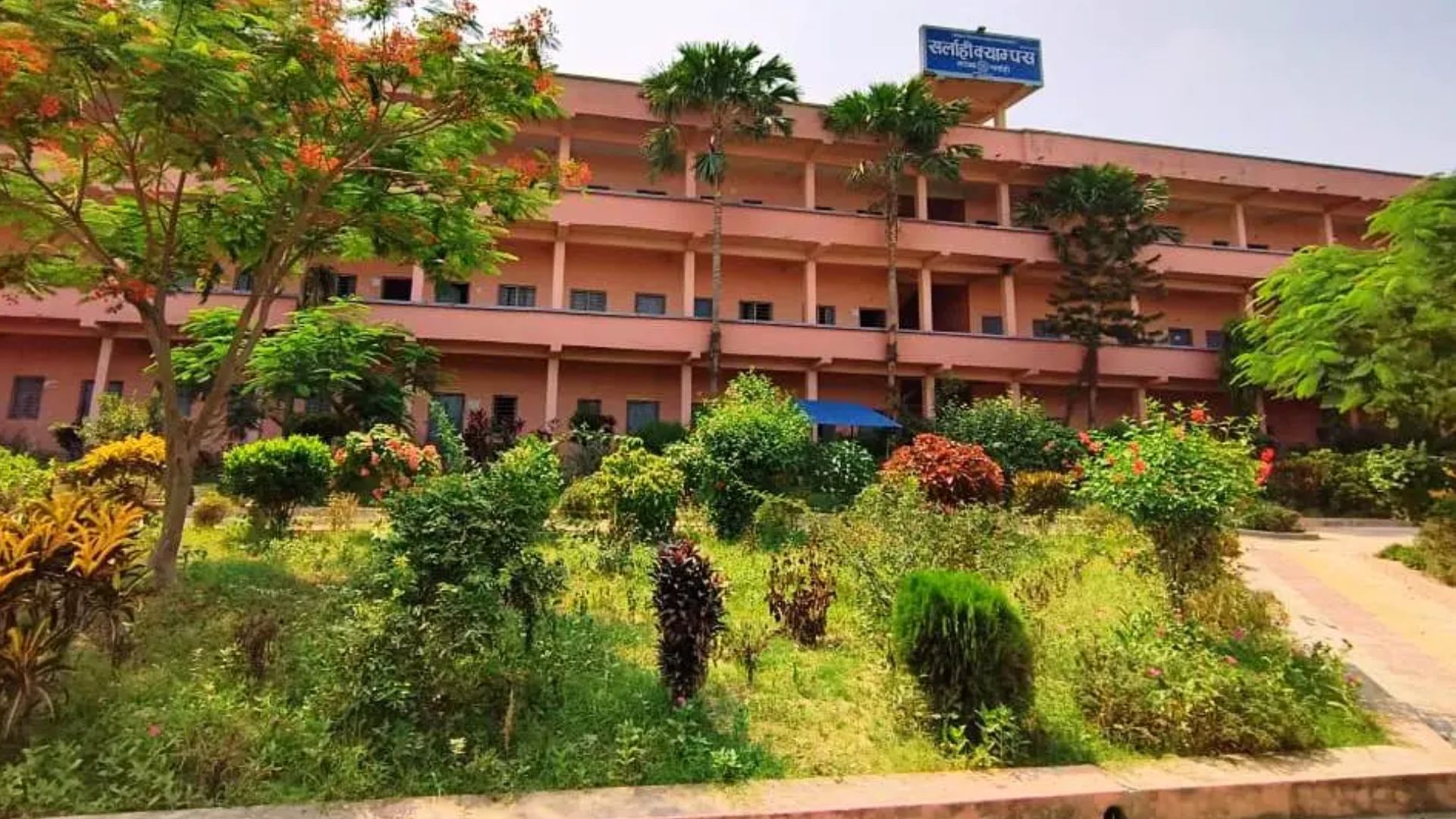
Sarlahi Campus (सर्लाही क्याम्पस, मलंगवा, सर्लाही) is a community-owned higher educational institution in Malangawa, Sarlahi, Madhesh Province, Nepal. Established in 1980 AD (2037 BS), it has grown from an intermediate-level institution into a campus that runs NEB and TU-affiliated programs from +2 to master’s level. The campus is affiliated with the National Examinations Board (NEB) for Ten Plus Two education and with Tribhuvan University (TU) for bachelor’s and master’s programs.
Over time, it expanded into bachelor’s level with B.Ed. and BBS, and later into master’s level with M.Ed. and MBS. Its academic setting combines community roots, multi-level teaching, exam-center responsibilities, and a long-standing role in widening access to education in the district. The campus also places emphasis on library use, classroom teaching support, hostel access, practical work, and student support measures such as scholarships for selected groups.
Quick Highlights
-
Established: 1980 AD (2037 BS)
-
Type: Community-owned higher educational institution
-
Location: Malangawa, Sarlahi, Madhesh Province, Nepal
-
Affiliation: Tribhuvan University (TU) and National Examinations Board (NEB)
-
NEB Programs: Ten Plus Two (+2) in Science, Management, and Education
-
TU Programs: Bachelor of Education (B.Ed.), Bachelor of Business Studies (BBS), Master of Education (M.Ed.), and Master of Business Studies (MBS)
-
Academic Range: +2 level to master’s level
-
Exam Role: Recognized as an exam center for TU and NEB
-
Key Facilities: Library building, reading room, hostel, computer lab, classrooms, conference hall, laboratory space, playground, canteen, cycle stands
-
Student Support: Scholarship schemes for underprivileged, disabled, marginalized, poor, and meritorious students
-
Contact: campussarlahi@gmail.com | +977-46-520373 | +977-9844153762
Institutional Background
Sarlahi Campus was established with the aim of spreading access to higher education in the district and surrounding area. Its development reflects a gradual academic expansion rather than a single-stage institutional launch. After beginning at the intermediate level, it moved into bachelor’s education with B.Ed. in 2057 BS and BBS in 2064 BS. It later added master’s programs, with M.Ed. in 2067 BS and MBS in 2074 BS. This growth placed the campus in a position to serve students from +2 education through postgraduate study within one institution.
The campus presents itself as an institution shaped by community participation, administrative coordination, teaching staff, and local support. Its stated vision focuses on becoming an economically self-sustained, socially responsible, and culturally harmonious academic center. Its mission emphasizes equal opportunity in quality education at an affordable fee structure, while its objectives include raising pass rates, improving graduate employment trends, supporting disadvantaged groups, strengthening academic credibility, and building broader educational linkages.
Its longer institutional direction also points toward academic and infrastructure growth. Within that direction, the campus has expressed interest in expanding science-related study opportunities, e-library development, and wider academic reach. Because the campus profile combines both academic history and community purpose, Sarlahi Campus stands as an example of a local institution that has widened its scope step by step while keeping its service area grounded in district-level educational demand.
Academic Programs Offered
Sarlahi Campus runs programs under both NEB and TU. Its academic portfolio spans school-leaving-stage higher secondary education, teacher education, business studies, and master’s study in education and management.
NEB Programs
-
Ten Plus Two (+2) Science
-
Ten Plus Two (+2) Management
-
Ten Plus Two (+2) Education
The +2 Science stream is suited to students who want a foundation for further study in science and technology fields. The program package centers on subjects such as Physics, Chemistry, Biology, and Mathematics, and supports progression into areas such as medicine, engineering, computer and IT-related study, and other science-based disciplines.
The +2 Management stream is designed to build a foundation in management studies. It introduces students to areas such as accountancy, finance, office practice, marketing, and general business understanding. It serves as a base for later management study at bachelor’s level, including routes such as BBS and other management-related degrees.
The +2 Education stream gives students a foundation in the field of education. It addresses topics such as the meaning and functions of education, curriculum, educational administration, guidance and counseling, and educational trends in Nepal. It also supports students who plan to move toward education-related higher study and roles that involve leadership, guidance, or educational understanding.
TU Bachelor’s Programs
The B.Ed. program is a four-year annual-system program under the Faculty of Education. TU defines it as both a professional and academic program designed to prepare competent teachers who can teach two subjects at the secondary level. The structure includes communication skills, professional core courses, specialization major courses, specialization minor courses, and teaching internship or practicum. At Sarlahi Campus, the B.Ed. subject areas listed in the campus profile include English, Nepali, Mathematics, Population, Health, Economics, History, and Political Science.
The BBS program is a four-year annual-system program under the Faculty of Management. Its broad aim is to develop students into competent managers for business, industry, and government settings. The program combines foundation courses, core business studies, and a concentration area in the final year. TU’s structure includes entrepreneurship, business research methods, and a final project, along with concentration options in Accounting, Finance, Management, and Marketing.
TU Master’s Programs
At Sarlahi Campus, M.Ed. is offered under the Faculty of Education. The campus profile lists subject areas such as English Education, Population Education, Nepali Education, and EPM Education. TU’s M.Ed. framework is a two-year, four-semester program carrying 69 credit hours. It includes core professional courses, specialization courses, teaching practice, and thesis writing. Semester teaching includes assignments, seminars, case studies, project work, and field study alongside lecture sessions.
The MBS program is offered under the Faculty of Management in semester system. The uploaded TU syllabus confirms a semester-based structure and includes courses such as Marketing Management, Managerial Economics, Statistical Methods, Organizational Behavior, and Managerial Communication in the first semester. At the campus level, admission for MBS is tied to the CMAT requirement mentioned in the institutional file.
Admission Process
Admission at Sarlahi Campus follows the level and affiliation of the program. For NEB, the process is tied to Class 11 admission after SEE results. For TU bachelor’s and master’s programs, admission follows the rules of the relevant faculty, Dean’s Office, and campus procedures.
-
For NEB Class 11, admission generally begins after SEE results are published.
-
Students submit the prescribed admission form and the required academic documents.
-
Depending on the institution and stream, admission may also involve an entrance examination, interview, or merit-based selection.
-
After selection and fee payment, enrollment is completed and subject registration is processed under the NEB framework.
-
For TU bachelor’s programs such as B.Ed. and BBS, admission generally starts after the admission notice is published.
-
Eligible applicants submit the prescribed application form along with academic records.
-
Depending on the program or campus policy, the process may involve merit-based selection, an entrance examination, or both.
-
Selected students complete admission through document submission and fee payment.
-
Academic registration, examinations, and results follow TU rules and the applicable calendar.
-
For TU master’s programs, the campus or concerned academic authority publishes the admission notice.
-
Applicants submit the prescribed form with the required documents.
-
M.Ed. admission includes an entrance examination.
-
MBS admission requires CMAT, as stated in the institutional profile.
-
Final enrollment is completed after selection and fee payment under TU rules.
At the campus level, the institutional file also shows a form-based procedure through the cash counter for admission, registration, examination form fill-up, and certificate-related processes.
Required Documents
The required documents vary by level, but the standard structure is clear across NEB and TU systems. The campus profile also records level-wise submission of forms, certificates, migration records, and photographs.
For NEB Class 11
-
SEE marksheet or grade sheet
-
SEE character certificate or school leaving certificate
-
Transfer Certificate (TC) from the previous school
-
Migration certificate, if applicable
-
Citizenship certificate or birth certificate copy
-
Passport-size photographs
-
NEB Class 11 registration or subject registration form
-
Campus admission form and registration form as required at the campus level
For TU Bachelor’s Admission
-
Class 12 / +2 transcript or equivalent academic record
-
Character certificate from the previous institution
-
Migration certificate, if applicable
-
Transfer certificate
-
Citizenship certificate or birth certificate copy
-
Passport-size photographs
-
Completed admission or application form
-
Admission fee payment receipt
-
Entrance scorecard, if required by the program or campus
-
Campus-level photocopies of leaving and character certificates during admission and registration procedures
For TU Master’s Admission
-
Bachelor’s degree transcript or marksheet
-
Bachelor’s degree certificate or provisional certificate
-
Character certificate from the bachelor-level institution
-
Migration certificate, if applicable
-
Transfer certificate
-
Citizenship certificate or birth certificate copy
-
Passport-size photographs
-
Completed admission or application form
-
Admission fee payment receipt
-
Entrance scorecard where required
-
Campus-level submission of earlier academic photocopies during admission and registration procedures
Teaching Faculty and Learning Methodology
Sarlahi Campus describes its teaching team as competent, experienced, and specialized, and pairs this with classroom support materials such as projectors and display boards. The campus profile also refers to a student-friendly academic environment supported by teaching staff, administrative staff, and departmental coordination. This gives the overall academic culture a structured but local character, especially for students studying from +2 through master’s level in the same institution.
The teaching approach varies by program. In BBS, TU expects a mix of lectures, group discussions, problem-solving exercises, guest lectures, practical work, and project work, with case method use where needed. In B.Ed., the annual structure includes communication skills, professional core study, specialization areas, and teaching practicum. In M.Ed., semester teaching includes assignments, seminars, case studies, project work, field study, teaching practice, and thesis writing. Across the campus profile, classroom use of multimedia projectors, workshops, and seminars also appears as part of the teaching environment.
This combination suggests that classroom learning at Sarlahi Campus is not limited to lecture-only delivery. It links theory with project work, practical work, teaching practice, and exam preparation under the rules of NEB and TU.
Infrastructure and Learning Facilities
-
Separate library building
-
Student reading room
-
Computer lab
-
Classroom buildings
-
Administrative building
-
Academic departments
-
Conference hall
-
Laboratory rooms and laboratory building
-
Student hostel
-
Playground
-
Canteen
-
Cycle stands
-
Guard room
-
Saraswati Temple
-
Cash counter and exam-related office spaces
-
Multimedia projector use in teaching
-
CCTV installation
-
Power backup installation
-
Ongoing emphasis on classroom and laboratory improvement
The campus also records multiple buildings and room allocations, including library rooms, reading rooms, class rooms, computer lab space, and conference facilities. These details show that the campus has built a multi-use academic layout rather than operating only from basic classroom blocks.
Student Life and Campus Experience
Student life at Sarlahi Campus appears to be shaped by accessibility, continuity, and local academic belonging. Because the campus runs programs from +2 to master’s level, students can continue their studies within one institution across different stages of education. This matters in a district setting where students often look for options that reduce the need to move away immediately after school-level study.
The campus chief’s message points to a learning environment intended for both students and parents, with emphasis on experienced teaching staff, student-friendly administration, and outdoor activities. The wider campus narrative also refers to mutual support between teachers and students, local public backing, and feeder schools that connect school graduates to further study at the campus. These elements suggest a campus experience tied closely to community links rather than a detached institutional model.
Access to a hostel, reading spaces, playground, library, lab, and conference hall broadens student life beyond classroom hours. Practical components such as teaching practice, project work, and examination processes also add a formal academic rhythm to campus life.
Extracurricular Activities (ECA)
-
Use of a large playground for student activities
-
Student-friendly outdoor activities
-
Workshops and seminars
-
Student union participation in campus life and discipline
-
Teaching practice and practicum-related school engagement
-
Project work and practical work in relevant programs
-
Conference hall use for academic gatherings and events
Scholarships and Financial Support
-
Scholarship schemes for underprivileged students
-
Scholarship support for disabled students
-
Scholarship support for marginalized students
-
Scholarship support for poor students
-
Scholarship support for intelligent or meritorious students
-
Institutional mission linked to affordable fee structure
-
UGC support appears in the institutional context for infrastructure and academic improvement, which contributes to the broader support environment of the campus
Achievements and Institutional Milestones
-
Established in 1980 AD (2037 BS) as a community-owned higher educational institution
-
Expanded to bachelor’s level with B.Ed. in 2057 BS and BBS in 2064 BS
-
Expanded to master’s level with M.Ed. in 2067 BS and MBS in 2074 BS
-
Recognized as an exam center for TU and NEB
-
Selected to participate in the Quality Assurance and Accreditation (QAA) process organized by UGC
-
Completed Letter of Intention (LOI) and moved into work related to the self-study process noted in the institutional file
-
Selected for the Higher Education Reform Project (HERP) conducted by UGC
-
Built a broader physical campus with academic, library, hostel, and laboratory spaces
-
Alumni have entered different organizations, and some have served as higher-level gazetted officers
Why Choose Sarlahi Campus?
-
Multi-level academic pathway from +2 to master’s study within one campus
-
Dual affiliation structure through NEB and TU
-
Programs in education and management, with science also available at +2 level
-
Exam center role for TU and NEB
-
Community-owned institutional base with district-level importance
-
Library, hostel, computer lab, laboratory, playground, and conference facilities
-
Scholarship support for selected student groups
-
Teacher education strength through B.Ed. and M.Ed.
-
Management study continuity through BBS and MBS
-
Institutional quality journey through QAA participation and HERP selection
Message from Chairman and Campus Chief
The message from Chairman Nageshwar Ray presents Sarlahi Campus as a public institution intended to widen educational access from +2 to master’s level through experienced teaching support, separate departmental management, and library-based academic study. His message also places weight on sending younger students into an academic setting that aims to combine discipline, access, and educational opportunity.
The message from Campus Chief Rajesh Kumar Yadav centers on a motivated learning environment for students and parents, supported by experienced teachers, administrative staff, and outdoor activity spaces. It also stresses cooperation among students, parents, the management committee, and the student union in the day-to-day life of the campus.
Conclusion
Sarlahi Campus has developed from a community-owned institution founded in 1980 into a campus that serves students across NEB and TU academic pathways. Its importance lies in its continuity of study, local access, teacher education presence, management programs, exam-center role, and steadily built academic infrastructure. The campus points to a district-based institution that combines formal university and board affiliation with a community-supported educational setting. For students seeking +2, bachelor’s, or master’s study in Malangawa and the wider Sarlahi area, it represents an established academic option within a single campus framework.
Contact Details
Contact Sarlahi Campus's administrative office for detailed information on the course, admissions, location, fees, scholarships, facilities, counseling, or eligibility.
Sarlahi Campus
Location: Malangawa, Sarlahi, Madhesh Province, Nepal
Email Address: campussarlahi@gmail.com
Website: https://sarlahicampus.edu.np
Phone Number: +977-46-520373, +977-46-520373, +977-9844153762
FAQ
Where is Sarlahi Campus located?
Sarlahi Campus is located in Malangawa, Sarlahi, Madhesh Province, Nepal.
What kind of institution is Sarlahi Campus?
It is a community-owned higher educational institution.
Which bodies is Sarlahi Campus affiliated with?
The campus is affiliated with Tribhuvan University (TU) and the National Examinations Board (NEB).
What programs are available at Sarlahi Campus?
The campus offers +2 Science, +2 Management, +2 Education, B.Ed., BBS, M.Ed., and MBS.
What is the examination system of the TU programs offered at the campus?
B.Ed. and BBS follow the annual system, while M.Ed. and MBS follow the semester system.
Does Sarlahi Campus function as an exam center?
Yes. Sarlahi Campus serves as an exam center for both TU and NEB.