



The Bachelor of Computer Application (BCA) at Doti Multiple Campus is a four-year undergraduate program under the Faculty of Humanities and Social Sciences, Tribhuvan University. It follows the semester system and combines computer application courses with mathematics, statistics, language, management, social science, project work, and internship experience.
Doti Multiple Campus introduced BCA in the academic year 2074/075 B.S. The program gives students in Doti access to computer application education through an eight-semester structure. Its curriculum covers programming, software development, databases, networking, web technology, system analysis, computer architecture, project management, and related academic areas.
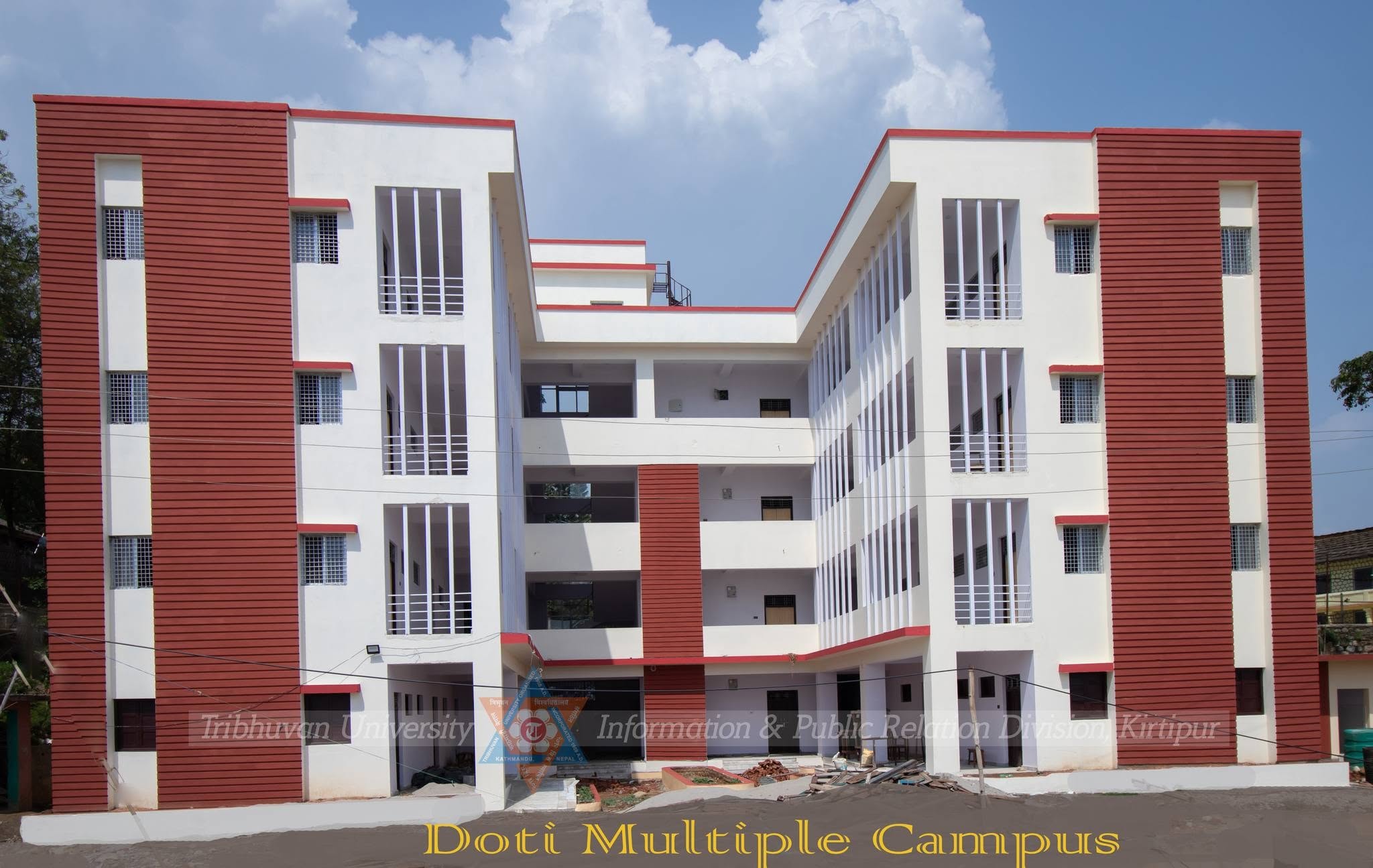
| Field | Details |
|---|---|
| Course Name | Bachelor of Computer Application |
| Abbreviation | BCA |
| College | Doti Multiple Campus |
| Affiliation | Tribhuvan University |
| Faculty | Faculty of Humanities and Social Sciences |
| Level | Bachelor’s degree |
| Duration | 4 academic years |
| Academic System | Semester |
| Number of Semesters | 8 |
| Total Credit Hours | 126 |
| Medium | English |
| Practical Components | Laboratory work, projects, and internship |
| Location | Silgadhi-6, Doti, Sudurpashchim Province, Nepal |
BCA is centred on the study and application of computing. It combines theoretical foundations with programming, practical assignments, software projects, and workplace-oriented learning.
The program is intended to develop students’ understanding of computer applications and application development. Its subject range begins with computer fundamentals, mathematics, digital logic, communication, and programming before moving into data structures, web technology, databases, networking, software engineering, graphics, project management, and other applied areas.
The curriculum also includes social science, management, accounting, and language courses. This gives students exposure to the organizational and communication settings in which computer applications are designed and used.
The program may suit students who are interested in computers, programming, application development, web systems, databases, networks, and practical technology work.
Students do not need to come from only one Grade 12 stream. The eligibility notice accepts applicants from any discipline who meet the stated academic requirements.
BCA study involves more than attending theory classes. Students are expected to participate in laboratory work, complete programming assignments, prepare project proposals, develop applications, maintain documentation, present their work, and complete an internship component.
An interest in logical reasoning, mathematics, problem-solving, regular practice, and independent learning can be useful throughout the program.
Eligibility differs according to when the applicant completed Grade 12.
Applicants may qualify through any one of the following conditions:
Minimum D grade in every subject of Grades 11 and 12 with a CGPA of 1.8 or above; or
Minimum second-division marks in 10+2, PCL, or an equivalent qualification in any discipline.
Students who have passed Grade 11 and are waiting for their Grade 12 results may also apply. They must submit the certificates for Grades 11 and 12 and the required admission documents at the time of enrolment.
Students who have passed A Level are also eligible to complete the application form.
Applicants may qualify through either of the following conditions:
Minimum D+ grade in every subject of Grades 11 and 12 with a CGPA of 2.0 or above; or
Minimum second-division marks in 10+2, PCL, or an equivalent qualification in any discipline.
BCA admission includes an entrance examination conducted by the concerned Dean’s Office. The curriculum assigns the following weightage to entrance subjects:
| Entrance Area | Weightage |
|---|---|
| English | 40% |
| Mathematics | 50% |
| General Knowledge | 10% |
Eligible candidates appear in the entrance examination, and admission is based on merit. The campus may also conduct an interview before making the final selection.
The program extends across four academic years and eight semesters. Students must complete 126 credit hours to fulfil the degree requirements.
| Course Component | Credit Hours |
|---|---|
| Computer Application Core Courses | 71 |
| Elective Courses | 12 |
| Mathematics and Statistics | 9 |
| Language Courses | 6 |
| Social Sciences and Management | 15 |
| Projects and Internship | 13 |
| Total | 126 |
Computer application courses make up the largest part of the curriculum. Projects and internship carry 13 credits, placing practical application within the formal degree structure.
The first year introduces the academic and technical foundation required for later semesters.
Computer Fundamentals and Applications
Society and Technology
English I
Mathematics I
Digital Logic
Computer Fundamentals and Applications introduces core computer concepts and practical use. Digital Logic covers number systems, logic gates, Boolean algebra, combinational circuits, and digital-system foundations.
Society and Technology places computing within its social context, while English and Mathematics support communication and analytical study.
C Programming
Financial Accounting
English II
Mathematics II
Microprocessor and Computer Architecture
C Programming introduces structured programming and problem-solving through code. Microprocessor and Computer Architecture develops understanding of processor organization and computer hardware foundations.
Financial Accounting adds an organizational and business component, while English II includes professional writing, communication, and critical reasoning.
The second year moves from introductory study toward application design, programming methods, software processes, databases, and project development.
Data Structures and Algorithms
Probability and Statistics
System Analysis and Design
Object-Oriented Programming in Java
Web Technology
Data Structures and Algorithms examines how information is organized and processed efficiently. Object-Oriented Programming in Java introduces class-based application development, while Web Technology addresses the foundations of web-based systems.
System Analysis and Design focuses on understanding requirements and planning information systems. Probability and Statistics supports data interpretation and analytical work.
Operating System
Numerical Methods
Software Engineering
Scripting Language
Database Management System
Project I
The fourth semester introduces major areas of software and system development. Students study operating systems, databases, software processes, numerical problem-solving, and scripting.
Project I is a practical course completed individually or in pairs. Students develop a computer application connected with a real-life situation, defend a proposal, present progress, submit a structured report, and attend a viva voce.
Later semesters deepen students’ work in application development, computing infrastructure, management, graphics, networks, databases, and software projects.
The curriculum includes subjects such as:
Introduction to Management;
Computer Graphics and Animation;
Network Programming;
Software Project Management;
Database Programming; and
elective computer application courses.
Introduction to Management connects computing with planning, organizational structures, communication, leadership, and managerial decision-making.
Computer Graphics and Animation covers graphics systems, two-dimensional and three-dimensional transformations, clipping, rendering, and computer-based visual applications.
Network Programming develops theoretical and practical understanding of client-server applications, internet addresses, HTTP, sockets, and related network programming areas.
Software Project Management addresses project planning, scheduling, effort estimation, costing, risk, quality, and configuration management. Database Programming extends database study into structured programming within relational systems.
Project II is included in the sixth semester and carries two credits. It requires students to develop an application using suitable programming platforms and tools.
The project work covers:
project idea and proposal preparation;
application development;
object-oriented programming;
frameworks and application programming interfaces;
programming design patterns;
project planning and implementation;
teamwork and collaboration;
documentation; and
project presentation.
Students may work with platforms and languages such as Java, Visual C++, PHP, Python, or another relevant application-development environment included within the project arrangement.
The internship connects academic learning with work completed in an organization. It requires students to prepare a proposal and maintain a structured record of their activities.
The internship report includes organizational information, work responsibilities, weekly activity logs, technical work, project involvement, references, and supporting appendices such as screenshots or source code where relevant.
This component gives students an opportunity to apply programming, documentation, communication, project, and organizational skills outside regular classroom exercises.
Academic performance is evaluated through internal and external assessment.
Internal assessment carries 40 percent.
The final semester examination generally carries 60 percent.
Internal evaluation is conducted by the concerned faculty member.
Final examinations are conducted at the end of each semester.
Practical work is assessed separately where applicable.
Students must obtain at least 40 percent in internal assessment and a minimum D grade in the final examination. Theory internal assessment, practical assessment, and the final examination must be passed separately where these components apply.
Students must maintain at least 80 percent attendance in the lectures, tutorials, and practical classes conducted for each subject. A student who does not meet the attendance requirement is not permitted to sit for the final examination in that subject.
The normal duration of the degree is four years. The maximum completion period is the regular duration plus two additional years.
Tribhuvan University awards the degree after the student completes all prescribed requirements and earns the required 126 credit hours. Semester performance is recorded through SGPA, while overall academic performance is calculated through CGPA.
BCA students study within a campus environment that includes a computer laboratory, library, electronic library, internet access, multimedia projectors, and computer equipment.
Doti Multiple Campus has 41 computers, four laptops, six multimedia projectors, printers, networking devices, and internet-connected computers. These resources support programming practice, practical assignments, presentations, project work, research, and digital study.
The electronic library is linked with Tribhuvan University Central Library and other library networks. Students can use academic materials for coursework, project documentation, reports, and independent study.
Scholarship support for BCA students has included assistance from K.I. Singh Rural Municipality and Bogtan Fudsil Rural Municipality.
The campus also has scholarship endowment funds established to support academic performance and students from economically disadvantaged backgrounds.
Through programming courses, laboratory work, projects, assessments, and internship activities, students may develop abilities in:
computer application development;
C and Java programming;
object-oriented programming;
web application concepts;
database design and programming;
data structures and algorithms;
software analysis and design;
networking and network programming;
application testing and documentation;
project planning and teamwork;
technical report writing;
oral presentation; and
problem-solving through computing.
The depth of these abilities depends on regular practice, project participation, independent study, internship experience, and academic performance.
Graduates may explore entry-level work connected with application development, web systems, database support, networking, software projects, computer operations, or general information technology services.
The degree can also support postgraduate study in computer application and related academic fields.
Career direction depends on technical competence, project work, communication ability, practical experience, additional learning, and the requirements of individual organizations.
The program runs for four academic years and is divided into eight semesters.
BCA at Doti Multiple Campus operates under the Faculty of Humanities and Social Sciences, Tribhuvan University.
Yes. Applicants from any discipline may apply when they meet the stated Grade 12, 10+2, PCL, or equivalent academic requirements.
Applicants need at least a D grade in every subject of Grades 11 and 12 with a CGPA of 1.8 or above, or second-division marks in 10+2, PCL, or an equivalent qualification.
Yes. The entrance examination covers English, Mathematics, and General Knowledge, and admission is based on merit.
Students must complete 126 credit hours.
Yes. The curriculum includes Project I, Project II, other practical work, and an internship component.
Students must maintain at least 80 percent attendance in each subject to qualify for the final examination.
Internal assessment generally carries 40 percent, while the final semester examination carries 60 percent.
The campus has a computer laboratory, computers, laptops, internet services, multimedia projectors, printers, and an electronic library.
College: Doti Multiple Campus
Location: Silgadhi-6, Doti, Sudurpashchim Province, Nepal
General Phone: +977-94-411110, +977-94-411159
BCA Inquiry: +977-9848432470
Email: info@domc.tu.edu.np
Website: https://domc.tu.edu.np






