



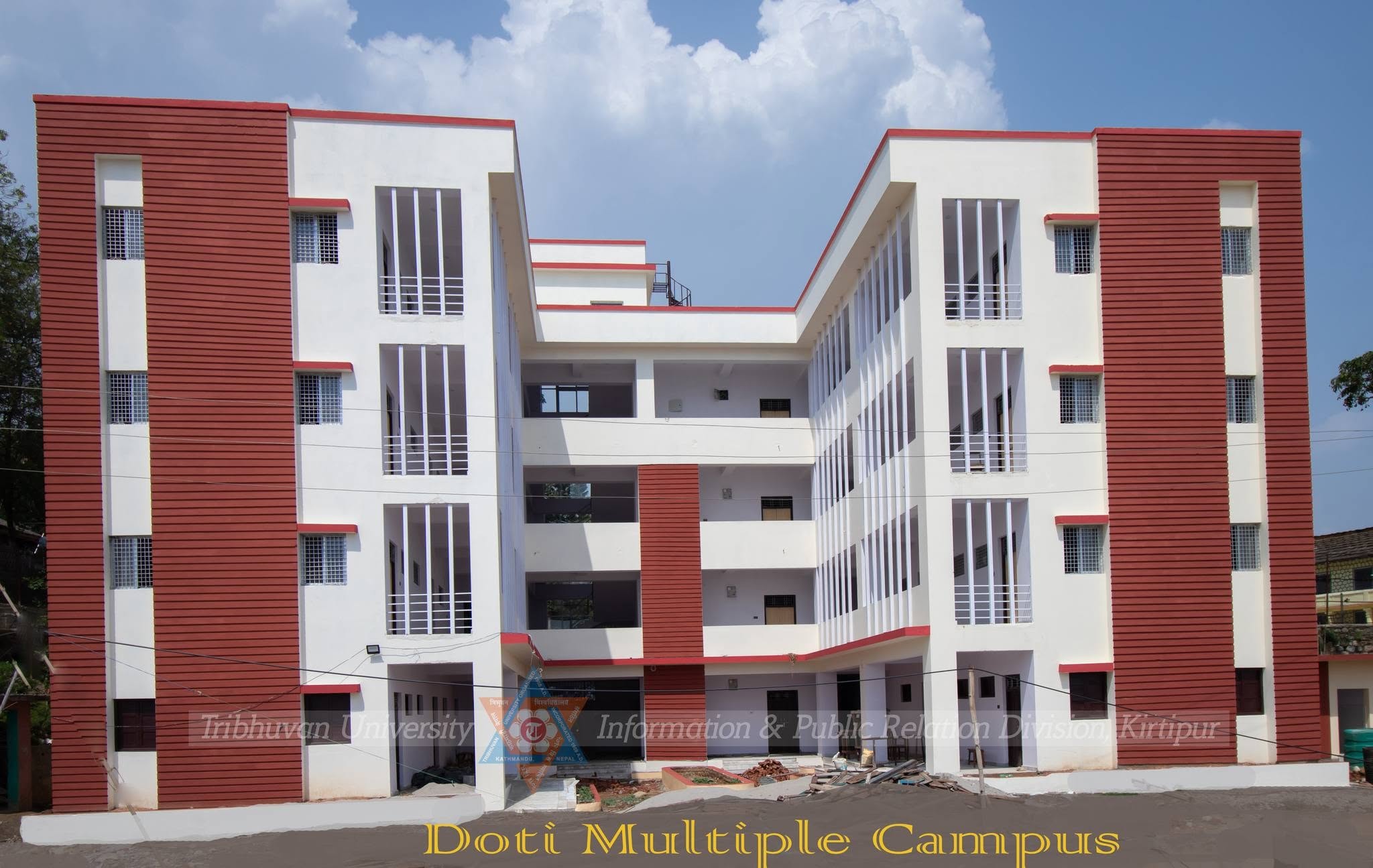
The Master of Arts in Nepali at Doti Multiple Campus is a two-year postgraduate program under the Faculty of Humanities and Social Sciences, Tribhuvan University. It follows the semester system and is divided into four semesters carrying 64 credits. The campus began master’s-level classes in Nepali in 2069 B.S.
The curriculum combines Nepali language, linguistics, literature, criticism, folk literature, philosophy, textual editing, research methodology, and creative writing. Students conclude the program through either a research paper or a creative writing paper.
| Field | Details |
|---|---|
| Course Name | Master of Arts in Nepali |
| Common Name | MA in Nepali |
| College | Doti Multiple Campus |
| Affiliation | Tribhuvan University |
| Faculty | Faculty of Humanities and Social Sciences |
| Level | Master’s degree |
| Duration | 2 academic years |
| Academic System | Semester |
| Number of Semesters | 4 |
| Total Credits | 64 |
| Credits per Semester | 16 |
| Final Requirement | Research Paper or Creative Writing Paper |
| Location | Dipayal Silgadhi, Doti, Sudurpashchim Province |
MA in Nepali provides advanced study of the Nepali language, literature, folk literature, literary theory, criticism, and research. It is structured for students who already have an academic background in Nepali and want to examine the discipline at the postgraduate level.
The language component includes historical linguistics, sociolinguistics, general linguistics, linguistic study traditions, and major approaches to linguistic analysis. The literary component covers poetry, essays, drama, film, short stories, novels, epics, literary history, and the study of selected Nepali writers.
Students also examine Sanskrit poetics, Eastern philosophy, Western literary theories, critical methods, textual editing, research design, and creative writing. The course therefore treats Nepali as a field of language study, literary scholarship, criticism, editing, research, and creative practice.
The curriculum is intended to develop advanced academic knowledge and practical abilities in Nepali studies. Its principal objectives include preparing students to:
teach Nepali in higher education institutions;
analyse and evaluate Nepali language, literature, and folk literature;
conduct research in Nepali language and literary studies;
work with organizations connected with Nepali language and literature;
edit Nepali literary journals, books, and related publications;
undertake creative writing in different literary genres; and
build an academic foundation for higher research degrees.
The program also develops the ability to interpret Nepali literary works in relation to society, culture, history, philosophy, language, and changing intellectual traditions.
The program may suit graduates who have studied Nepali as a principal subject and want to continue with advanced language, literature, criticism, research, or creative writing.
It requires sustained reading in Nepali, analytical writing, classroom discussion, presentations, literary interpretation, independent study, and research work. Students are also expected to engage with classical and modern theories and apply them to Nepali language and literary texts.
The course may be relevant to students interested in:
Nepali language and linguistics;
poetry, fiction, drama, essays, and folk literature;
literary criticism and theory;
academic research;
editing and textual study;
teaching and scholarly writing; or
structured creative writing.
Eligibility: Applicants must have completed a bachelor’s degree from Tribhuvan University or another recognized university with Nepali as a principal subject carrying at least 300 full marks.
Eligible applicants must complete the admission process prescribed for the MA level. Foreign students who have completed the Nepali study requirements prescribed by Tribhuvan University may also enter the program after completing the applicable admission process.
The program carries 16 credits in each semester, making a total of 64 credits across four semesters.
The first semester establishes a foundation in linguistics, classical poetics, criticism, essays, folk literature, and modern poetry.
| Code | Course | Credits |
|---|---|---|
| 551 | ऐतिहासिक तथा समाज भाषाविज्ञान — Historical and Sociolinguistics | 3 |
| 552 | संस्कृत काव्यशास्त्र — Sanskrit Poetics | 3 |
| 553 | पाश्चात्य समालोचना सिद्धान्त र नेपाली समालोचना — Western Critical Theory and Nepali Criticism | 3 |
| 554 | आधुनिक नेपाली निबन्ध र लोकसाहित्य — Modern Nepali Essays and Folk Literature | 4 |
| 555 | आधुनिक नेपाली फुटकर कविता — Modern Nepali Short Poetry | 3 |
| Total | 16 |
Historical and Sociolinguistics examines language development, language change, language families, the languages of Nepal, and sociolinguistic issues connected with Nepali. Sanskrit Poetics introduces classical literary theories, while the criticism course connects Western ideas with the development of Nepali criticism.
Modern Nepali Essays and Folk Literature combines written literary prose with oral and folk traditions. The poetry course develops close study of modern Nepali poetic works and their literary features.
The second semester extends linguistic study and introduces literary movements, pre-modern literature, drama, film, and the Nepali minor epic tradition.
| Code | Course | Credits |
|---|---|---|
| 556 | सामान्य भाषाविज्ञान — General Linguistics | 3 |
| 557 | पाश्चात्य साहित्यका वाद र समालोचना पद्धति — Western Literary Movements and Critical Methods | 3 |
| 558 | पूर्वआधुनिक नेपाली साहित्य — Pre-modern Nepali Literature | 3 |
| 559 | आधुनिक नेपाली नाटक र चलचित्र सिद्धान्त — Modern Nepali Drama and Film Theory | 4 |
| 560 | आधुनिक नेपाली खण्डकाव्य — Modern Nepali Minor Epic | 3 |
| Total | 16 |
General Linguistics covers the scientific study of language and major linguistic branches. The literary theory course examines Western literary movements and methods of criticism.
The drama and film course combines theoretical study with the development of modern Nepali drama and cinema. It includes dramatic structure, performance, film theory, and the study of Nepali dramatic and cinematic traditions.
The third semester focuses on fiction, epic poetry, literary historiography, specialized author or linguistic study, and research methodology.
| Code | Course | Credits |
|---|---|---|
| 561 | आधुनिक नेपाली कथा — Modern Nepali Short Story | 3 |
| 562 | आधुनिक नेपाली महाकाव्य — Modern Nepali Epic | 3 |
| 563 | साहित्येतिहास सिद्धान्त र नेपाली साहित्यको इतिहासलेखन — Literary History Theory and Nepali Literary Historiography | 3 |
| 564–568 | One specialized linguistic or author-based course | 3 |
| 569 | शोध तथा सृजनविधि — Research and Creative Method | 4 |
| Total | 16 |
Students select one course from the following third-semester options:
564: भाषिक अध्ययन परम्परा — Traditions of Linguistic Study
565: नाटककार बालकृष्ण सम र उनका नाट्यकृति — Playwright Balkrishna Sama and His Dramatic Works
566: महाकवि लक्ष्मीप्रसाद देवकोटा र उनका कविताकृति — Mahakavi Laxmi Prasad Devkota and His Poetry
567: नाटककार विजय मल्ल र उनका नाट्यकृति — Playwright Vijay Malla and His Dramatic Works
568: कवि मोहन कोइराला र उनका कविताकृति — Poet Mohan Koirala and His Poetry
Research and Creative Method introduces research questions, topic selection, proposal writing, source collection, analytical methods, report preparation, and the theoretical basis of creative writing. The course combines academic understanding with practical exercises in research and literary creation.
The fourth semester brings together the modern Nepali novel, Eastern philosophy, textual editing, specialized study, and an extended research or creative writing requirement.
| Code | Course | Credits |
|---|---|---|
| 570 | आधुनिक नेपाली उपन्यास — Modern Nepali Novel | 3 |
| 571 | पूर्वीय दर्शन र पाठसम्पादन — Eastern Philosophy and Textual Editing | 4 |
| 572–576 | One linguistic or author-based course | 3 |
| 577 or 578 | Research Paper or Creative Writing Paper | 6 |
| Total | 16 |
The fourth-semester specialized options are:
572: भाषिक अध्ययनका प्रमुख पद्धति — Major Methods of Linguistic Study
573: आख्यानकार विश्वेश्वरप्रसाद कोइराला र उनका आख्यान कृति — Fiction Writer Bishweshwar Prasad Koirala and His Works
574: आख्यानकार भवानी भिक्षु र उनका आख्यान कृति — Fiction Writer Bhawani Bhikshu and His Works
575: आख्यानकार पारिजात र उनका आख्यान कृति — Fiction Writer Parijat and Her Works
576: उपन्यासकार ध्रुवचन्द्र गौतम र उनका उपन्यास कृति — Novelist Dhruv Chandra Gautam and His Novels
Students who select Traditions of Linguistic Study in the third semester continue with Major Methods of Linguistic Study in the fourth semester. Students selecting an author-based course in the third semester choose from the available author-based options in the fourth semester.
The final six-credit requirement is completed through one of the following:
577: शोधपत्र लेखन — Research Paper Writing
578: सृजनपत्र लेखन — Creative Writing Paper
The research route requires structured investigation in Nepali language, literature, or folk literature. The creative route combines the study of a selected literary genre with the preparation of an original creative work.
Teaching methods include lectures, question-and-answer sessions, classroom discussion, homework, classwork, project activities, and presentations. Textbooks, reference books, charts, and other learning resources may be used according to the course.
Practical academic work may include:
individual and group study papers;
classroom presentations;
project work;
seminar papers;
discussion and critical response;
research proposal writing;
study based on secondary materials; and
creative writing exercises.
This combination is particularly relevant to a program where students must move between literary interpretation, linguistic study, criticism, editing, research, and creative production.
Academic evaluation is divided between internal assessment and the semester-end examination.
| Assessment Component | Marks |
|---|---|
| Attendance | 5 |
| Participation in teaching and learning | 5 |
| First internal assessment | 10 |
| Second internal assessment | 20 |
| Total internal assessment | 40 |
| Semester-end examination | 60 |
Internal assessment may involve homework, library work, book or article reviews, classroom tests, projects, case or event studies, seminars, fieldwork, individual or group reports, and research-based study papers.
The nature of the internal work depends on the course. Research and creative writing components require more sustained independent work than regular taught papers.
MA in Nepali students can use the campus library, electronic library, academic journals, master’s-level theses, and report-writing resources. The electronic library is equipped with computers and connected with Tribhuvan University Central Library and other library networks.
Teaching and academic work are also supported by internet services, multimedia projectors, computers, conference halls, and training space. These resources are relevant to presentations, research, reference study, thesis consultation, editing, and academic writing.
Through coursework, internal assessment, research, and creative practice, students may develop abilities in:
advanced Nepali academic writing;
literary interpretation and criticism;
linguistic analysis;
study of Nepali literary history;
research proposal preparation;
collection and analysis of research materials;
textual editing;
report and research-paper writing;
classroom presentation and discussion;
study of folk literature;
critical reading of poetry, fiction, drama, and essays; and
structured creative writing.
The level of development depends on regular reading, participation, independent study, writing practice, and the quality of the final research or creative paper.
The curriculum creates an academic base for teaching, research, editing, literary criticism, language-related work, publication, and creative writing.
Graduates may explore work connected with educational institutions, publishing, editing, language and literary organizations, research, or writing. Teaching and other positions may require additional qualifications or compliance with the recruitment conditions of the concerned institution.
The degree can also support further academic study in Nepali language, literature, linguistics, folk literature, criticism, and related research fields.
The program runs for two academic years and is divided into four semesters.
MA in Nepali at Doti Multiple Campus operates under the Faculty of Humanities and Social Sciences, Tribhuvan University.
Students complete 64 credits, with 16 credits assigned to each semester.
Applicants must have completed a bachelor’s degree with Nepali as a principal subject carrying at least 300 full marks from Tribhuvan University or another recognized university.
Yes. Students select specialized linguistic or author-based courses in the third and fourth semesters.
Students complete either a six-credit Research Paper or a six-credit Creative Writing Paper in the fourth semester.
Internal assessment carries 40 marks, while the semester-end examination carries 60 marks.
The curriculum covers Nepali language, linguistics, poetry, essays, folk literature, criticism, drama, film, short stories, novels, epics, literary history, philosophy, textual editing, research, and creative writing.
The campus began master’s-level classes in Nepali in 2069 B.S.
College: Doti Multiple Campus
Affiliation: Tribhuvan University
Location: Dipayal Silgadhi, Doti, Sudurpashchim Province, Nepal
Phone: +977-94-411110, +977-94-411159
Email: info@domc.tu.edu.np
Website: https://domc.tu.edu.np






