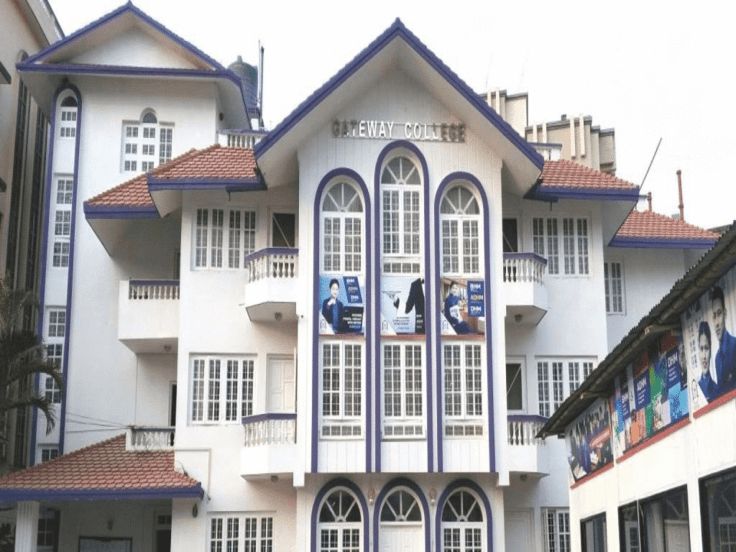
The Master of Hotel and Hospitality Management (MHHM) at Gateway College of Professional Studies, Basundhara, Kathmandu, is a two-year postgraduate program affiliated with Purbanchal University. The course is organized across four semesters and concentrates on hospitality management, leadership, accounting, marketing, tourism economics, research, human resources, strategic management, property management, and related managerial areas. Its academic structure also includes specialization subjects, hospitality seminars, and a thesis or internship component.
| Field | Details |
|---|---|
| Course: | Master of Hotel and Hospitality Management (MHHM) |
| College: | Gateway College of Professional Studies |
| Location: | Basundhara, Kathmandu |
| Affiliation: | Purbanchal University |
| Level: | Master's |
| Duration: | Two years |
| Academic Structure: | Four semesters |
| Course Components: | Major, specialization, seminar, thesis or internship |
| Thesis/Internship: | 6 credit hours |
| Foundation Study: | Non-credit courses for students entering from undergraduate courses other than Hotel Management |
MHHM is structured for advanced study of hotel and hospitality management rather than day-to-day operational training alone. The curriculum moves through managerial decision-making, hospitality logistics, finance, marketing, economics, leadership, policy, human resources, research, strategy, quality management, property management, and hospitality business development.
The program's stated academic aims include developing an understanding of managerial decision-making and leadership in the hotel sector, strengthening independent research and study skills, and developing knowledge relevant to hospitality entrepreneurship.
Students progress from management foundations in the first year to research, policy, specialization, seminars, and thesis or industry exposure during the later stages of the course.
The MHHM academic structure is divided into four main components:
| Component | Credit Hours |
|---|---|
| Major Subjects | 48 |
| Specialization Subjects | 6 |
| Seminar in Hospitality | 6 |
| Thesis or Internship | 6 |
Together, these components account for 66 credit hours.
The first semester establishes a management base for hospitality study through five courses:
MHHM 111 Tourism and Hospitality Management
MHHM 112 Hospitality Logistic Management
MHHM 113 Management Information System
MHHM 114 Hospitality Facility Planning and Development
MHHM 115 Entrepreneurship Development
These subjects introduce hospitality management alongside logistics, information systems, facility planning, and business development.
The second semester moves into accounting, marketing, organizational management, economics, and law:
MHHM 121 Managerial Accounting for Hospitality
MHHM 122 Hospitality Sales & Marketing Management
MHHM 123 Organization Behavior
MHHM 124 Tourism Economics
MHHM 125 Hospitality & Business Law
The semester gives greater attention to the financial, commercial, organizational, and legal dimensions of hospitality management.
Semester III adds research, leadership, tourism policy, human resources, and hospitality seminar work:
MHHM 131 Research Methodology
MHHM 132 Leadership Management in Hospitality
MHHM 133 Planning & Policy in Tourism & Hospitality
MHHM 134 Seminar in Hospitality Management
MHHM 135 Hospitality Human Resource Management
Specialization options listed within this stage include Product Innovation & Development and Hospitality Safety & Security Management.
Research Methodology is particularly relevant to the final-stage thesis option, while leadership, policy, and human resource study broaden the program beyond hotel operations into managerial planning.
The final semester concentrates on strategy, quality, destination development, property management, and independent academic or industry work.
The course cycle includes:
MHHM 141 Strategic Management
MHHM 142 Total Quality Management in Hospitality
Resort & Destination Development as a specialization area
Hotel Maintenance & Property Management as a specialization area
MHHM 144 Thesis or Internship
Seminar in Hospitality
The thesis or internship component carries six credit hours, with the internship identified as an eight-week industry exposure option.
The MHHM structure allows students to complete a thesis or undertake an internship as part of the final semester.
This six-credit component creates two different academic directions. The thesis route centers on independent research, while the internship route places the student in an industry setting for eight weeks. Both follow earlier study in Research Methodology and hospitality seminar work.
Students entering MHHM from undergraduate courses other than Hotel Management have mandatory non-credit foundation study within the course structure.
The foundation areas are:
Front Office Management
Housekeeping Management
Food & Beverage Service
Food Production
These subjects provide an operational hospitality base before or alongside the postgraduate management curriculum.
The progression of subjects gives MHHM several distinct academic areas. Financial and commercial study appears through Managerial Accounting, Hospitality Sales & Marketing Management, and Tourism Economics.
Organizational study includes Leadership Management in Hospitality, Hospitality Human Resource Management, and Strategic Management. Hospitality-specific planning is addressed through Facility Planning and Development, Tourism and Hospitality Policy, Resort and Destination Development, and Hotel Maintenance and Property Management.
Research Methodology, hospitality seminars, and the thesis option add an academic research dimension to the management curriculum.
Gateway College of Professional Studies has classrooms with multimedia and audiovisual equipment, a seminar hall with theatre-style seating for 75 people, a library, and a computer lab with internet access.
Its wider hospitality facilities include a practical and demonstration kitchen, training restaurant and bar, housekeeping lab, and front office lab. These operational facilities are also relevant to the foundation areas included for students whose undergraduate study was outside Hotel Management.
Through its subject structure, students engage with areas such as:
hospitality planning and management
managerial accounting
sales and marketing
organizational behavior
leadership
tourism economics
hospitality and business law
research methods
human resource management
hospitality safety and security
strategic management
quality management
resort and destination development
property management
entrepreneurship
The program also requires seminar work and either a thesis or internship, adding research, presentation, or industry-based learning to the academic sequence.
The curriculum is oriented toward managerial and analytical work within hospitality and related service organizations. Depending on previous experience, individual skills, and available opportunities, graduates may consider areas connected with hotel management, hospitality administration, sales and marketing, human resources, facility and property management, resort operations, hospitality entrepreneurship, and related management functions.
MHHM does not determine a particular job outcome. Employment progression depends on professional experience, performance, responsibilities handled, and the requirements of individual organizations.
Students entering postgraduate hospitality study after a bachelor's degree in hotel management can also review the Bachelor of Hotel Management (BHM) pathway offered at Gateway College.
The Master of Hotel and Hospitality Management is a two-year program organized across four semesters.
The MHHM program at Gateway College of Professional Studies is affiliated with Purbanchal University.
The course components account for 66 credit hours: 48 credits of major subjects, 6 credits of specialization subjects, 6 credits of hospitality seminars, and 6 credits for thesis or internship.
Yes. The final-semester structure provides a thesis or internship option. The internship is identified as an eight-week component carrying six credit hours.
Yes. Research Methodology is taught in Semester III, and the final course structure includes a thesis option. Hospitality seminars are also included in the later semesters.
The curriculum includes hospitality management, logistics, management information systems, facility planning, entrepreneurship, accounting, sales and marketing, economics, business law, research, leadership, tourism policy, human resources, strategic management, quality management, and specialization subjects.
Yes. Students entering from undergraduate courses other than Hotel Management have mandatory non-credit foundation courses in Front Office Management, Housekeeping Management, Food & Beverage Service, and Food Production.
Gateway College of Professional Studies is located at Gauri Tole, Mathur Marga, Basundhara - 3, Kathmandu.