



 B.Sc. Agriculture at Gokuleshwor Agriculture and Animal Science College
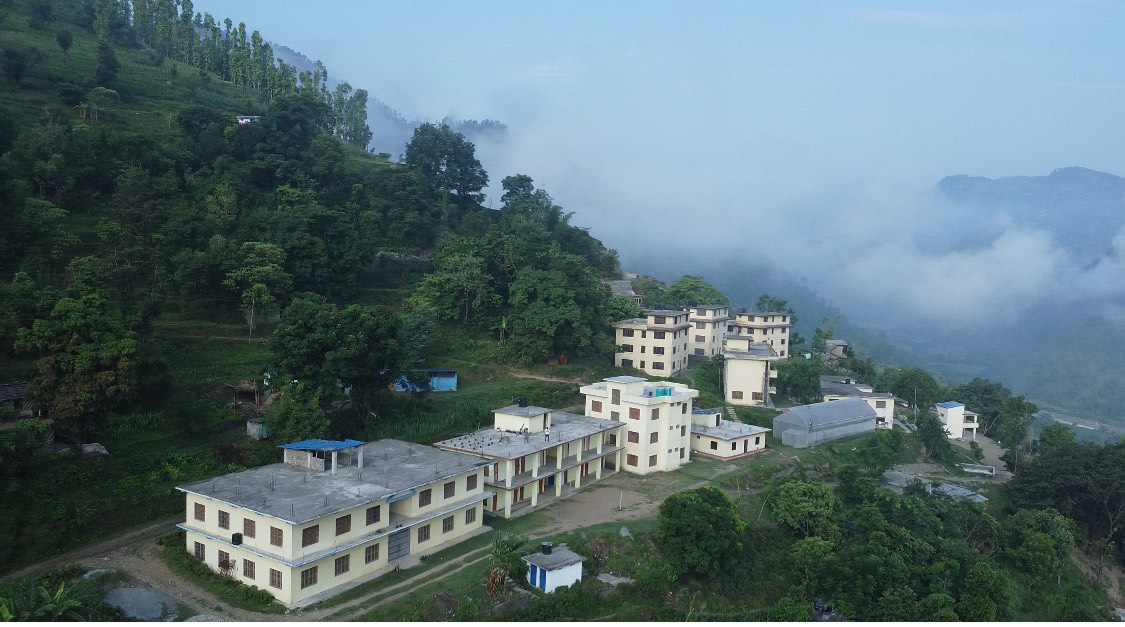
Gokuleshwor Agriculture and Animal Science College offers the B.Sc. Agriculture program in Gokuleshwor, Baitadi, Sudurpashchim Province, Nepal. The college was established in 2011 AD (2067 BS) under Tribhuvan University and is affiliated with the Institute of Agriculture and Animal Science.
The course follows the IAAS B.Sc.Ag. curriculum of Tribhuvan University. It is a four-year, eight-semester program with 167 credit hours, including classroom study, laboratory work, fieldwork, study visits, enterprise learning, and research-based academic work.
Course Name: Bachelor of Science in Agriculture
Common Name: B.Sc. Agriculture / B.Sc.Ag.
College: Gokuleshwor Agriculture and Animal Science College
Location: Gokuleshwor, Baitadi, Sudurpashchim Province, Nepal
Affiliation: Institute of Agriculture and Animal Science, Tribhuvan University
Duration: 4 years
Academic Structure: 8 semesters
Total Credit Hours: 167
Theory Credit Hours: 106
Practical Credit Hours: 61
Seat Capacity: 50 students
Admission Basis: Competitive entrance examination and merit
Instruction Medium: English
B.Sc. Agriculture at GAASC is structured around the TU IAAS undergraduate curriculum. The program is based in Gokuleshwor, Baitadi, a location associated with the Chameliya River area and an altitude of approximately 800 meters above sea level.
The college was established to provide technical education access for students from remote areas and to prepare skilled manpower in agriculture and allied disciplines. For B.Sc. Agriculture students, the academic setting combines subject-based classroom learning with laboratory sessions, field activities, educational tours, and research-related coursework.
The course covers agriculture through areas such as crop production, soil science, horticulture, livestock-related study, agricultural economics, plant protection, agricultural extension, farm machinery, enterprise learning, and research practice.
The B.Sc.Ag. curriculum includes 167 credit hours across eight semesters. The structure includes 106 theory credit hours and 61 practical credit hours.
| Semester | Total Credit Hours | Theory | Practical |
|---|---|---|---|
| First | 23 | 16 | 7 |
| Second | 22 | 14 | 8 |
| Third | 24 | 16 | 8 |
| Fourth | 21 | 13 | 8 |
| Fifth | 22 | 13 | 9 |
| Sixth | 23 | 15 | 8 |
| Seventh | 22 | 14 | 8 |
| Eighth | 10 | 5 | 5 |
| Total | 167 | 106 | 61 |
The curriculum includes courses from these academic areas:
Agricultural Economics
Agronomy
Horticulture
Soil Science and Agri-Engineering
Agricultural Botany and Ecology
Livestock Production and Management
Plant Breeding
Plant Pathology
Entomology
Agricultural Extension and Rural Sociology
Animal Breeding
Animal Nutrition and Fodder Production
Aquaculture and Fisheries
Agricultural Statistics
Agri-enterprise Learning Program
Research, Practices and Seminar
Agri-enterprise Learning Program courses are included in the fourth, fifth, and sixth semesters. The eighth semester includes Fundamental of Research, Practices and Seminar, a 4-credit course linked with production and marketing methods, data analysis, seminar presentation, and scientific report writing as a mini-thesis.
Prepare students in agriculture and allied disciplines through the IAAS undergraduate curriculum.
Build academic knowledge in crop, soil, horticulture, livestock, plant protection, farm, and extension-related subjects.
Connect students with laboratory work, fieldwork, study visits, enterprise learning, and research practice.
Prepare graduates for agriculture-related teaching, research, technical agriculture, agribusiness, extension, and rural development areas.
The program covers both technical and non-technical subjects in agriculture. Its academic scope includes crop production, farm management, soil science, horticulture, plant breeding, plant pathology, entomology, livestock production, agricultural engineering, agricultural economics, aquaculture, statistics, extension, and research practice.
The Baitadi location gives the course a rural agricultural context. Students study the TU IAAS curriculum while using laboratory facilities, field areas, farms, educational tours, and research-training facilities connected with the college.
Students completing the program work toward academic preparation in:
Core agricultural science subjects included in the IAAS curriculum
Laboratory and field methods used in agriculture education
Crop, soil, horticulture, livestock, plant protection, economics, and extension-related study
Agri-enterprise learning across the fourth, fifth, and sixth semesters
Research practice, data analysis, seminar presentation, and report writing in the final semester
Field observation and agriculture-related practical work
Laboratory practice in agriculture subjects
Farm management and production economics study
Soil, crop, horticulture, and plant protection-related academic skills
Agricultural communication and extension learning
Enterprise learning through the Agri-enterprise Learning Program
Research, data analysis, seminar, and scientific report-writing practice
The course follows the IAAS academic delivery structure. Courses are instructed in English and include classroom teaching, field and laboratory work, and study visits.
Learning activities include:
Lecture and discussion
Group-based assignments
Student presentations
Laboratory practicals
Fieldwork
Educational tours
Research, Practices and Seminar in the eighth semester
GAASC has full-time faculty and staff for the B.Sc. Agriculture program.
The course is connected with the following agriculture-related areas:
Technical agriculture work
Agricultural extension
Agricultural education
Agriculture research-related work
Agribusiness and farm management
Agricultural and rural development programs
Work involving agricultural equipment and technologies
Scholarships are available for deserving students.
Scholarship support is available for semester topper students.
Admission is based on a competitive entrance examination.
Selection is made on merit.
IAAS uses an optical mark reading system for entrance answer-sheet processing.
Applicants must meet the academic eligibility criteria for B.Sc. Agriculture.
The seat capacity for B.Sc. Agriculture at GAASC is 50 students.
Applicants must have completed I.Sc. Basic Science, I.Sc. Agriculture, or 10+2 Science/Agriculture Science from Tribhuvan University or another recognized board or university.
The required subject combination includes Biology, Chemistry, English, Mathematics, and Physics. The subject requirement includes Biology, Chemistry, and English of 100 marks each, Mathematics of at least 50 marks, and Physics of 50 marks. Applicants must have secured at least 50 percent marks in aggregate.
Entrance admit card or entrance admission letter
SEE or equivalent academic documents
10+2 or equivalent academic documents
10+2 graduation certificate
Provisional certificate
Two passport-size photographs
Citizenship certificate or birth certificate
The program follows the semester system. One academic year includes two semesters. Each semester includes 90 effective working days for teaching and about two weeks for final examinations.
For theory subjects, 20 percent of full marks is evaluated through internal assessment and 80 percent through the semester examination. Students must secure at least 40 percent in internal assessment to qualify for the final examination.
A student must secure at least 40 percent separately in theory and practical components to pass the final examination of a subject. A minimum of 70 percent attendance in each subject is required for eligibility to appear in the final examination.
The IAAS Examination Board declares semester examination results. The Controller of Examination of Tribhuvan University issues the transcript after mark sheets are submitted by the Examination Control Division of IAAS.
Laboratory block
Administrative block
Main tutorial block
Five individual laboratories, including Horticulture, Soil Science, and Agronomy
Research and training facility
Experimental fields and farms
Library with books and reference materials
Separate reading rooms
Computer laboratory
Wi-Fi access
Hostel facilities for male and female students
Canteen facilities
Sports court
Photocopy and stationery services
Earthquake-resistant infrastructure
Campus land area of 75 ropanis
College Name: Gokuleshwor Agriculture and Animal Science College
Location: Gokuleshwor, Baitadi, Sudurpashchim Province, Nepal
Phone: 093-400044 / 9848832539
Email: info@gaasc.edu.np
Website: www.gaasc.edu.np
B.Sc. Agriculture at Gokuleshwor Agriculture and Animal Science College follows the TU IAAS curriculum and is delivered in Baitadi with a mix of classroom, laboratory, field, enterprise, and research-based academic work. The course structure gives students a defined four-year pathway through 167 credit hours across agriculture and allied disciplines.
For students considering agriculture study in Sudurpashchim Province, GAASC provides a TU-affiliated B.Sc. Agriculture program with 50 seats, IAAS curriculum coverage, course-linked facilities, and a location connected with rural agricultural learning.
B.Sc. Agriculture at GAASC is a four-year program divided into eight semesters.
The program is affiliated with the Institute of Agriculture and Animal Science, Tribhuvan University.
The curriculum includes 167 total credit hours, with 106 theory credit hours and 61 practical credit hours.
The seat capacity for B.Sc. Agriculture at GAASC is 50 students.
Applicants must have completed I.Sc. Basic Science, I.Sc. Agriculture, or 10+2 Science/Agriculture Science with Biology, Chemistry, English, Mathematics, and Physics, and must have secured at least 50 percent marks in aggregate.
Required documents include the entrance admit card or entrance admission letter, SEE or equivalent academic documents, 10+2 or equivalent documents, 10+2 graduation certificate, provisional certificate, two passport-size photographs, and citizenship certificate or birth certificate.






