



Bachelor of Computer Engineering (BCE) at Imperial College of Engineering (ICE), Tathali, Bhaktapur, is a four-year undergraduate program under Tribhuvan University (TU) and the Institute of Engineering (IOE). The course builds a strong foundation in mathematics, programming, and electronics, then advances into computing systems, data structures and algorithms, operating systems, databases, web technologies, networks, cloud computing, cybersecurity, and applied AI.
Learning progresses through semester-wise coursework, practical lab work, a minor project, final-year projects, and an internship. Admission is through the TU IOE entrance examination, followed by merit-based selection.
| Item | Details |
|---|---|
| Course | Bachelor of Computer Engineering (BCE) |
| College | Imperial College of Engineering (ICE) |
| Location | Tathali, Bhaktapur, Nepal |
| Affiliation | Tribhuvan University (TU), Institute of Engineering (IOE) |
| Duration | 4 years (8 semesters) |
| Study Mode | Full-time |
| Seats | 48 |
| Entrance Exam | BE–B.Arch Entrance Exam (TU IOE) |
| Key Components | Minor Project, Project I, Project II, Internship, Electives (I–IV) |
| Contact | info@jec.edu.np • +977-1-5091615 / +977-1-5091616 / +977-9764577250 |
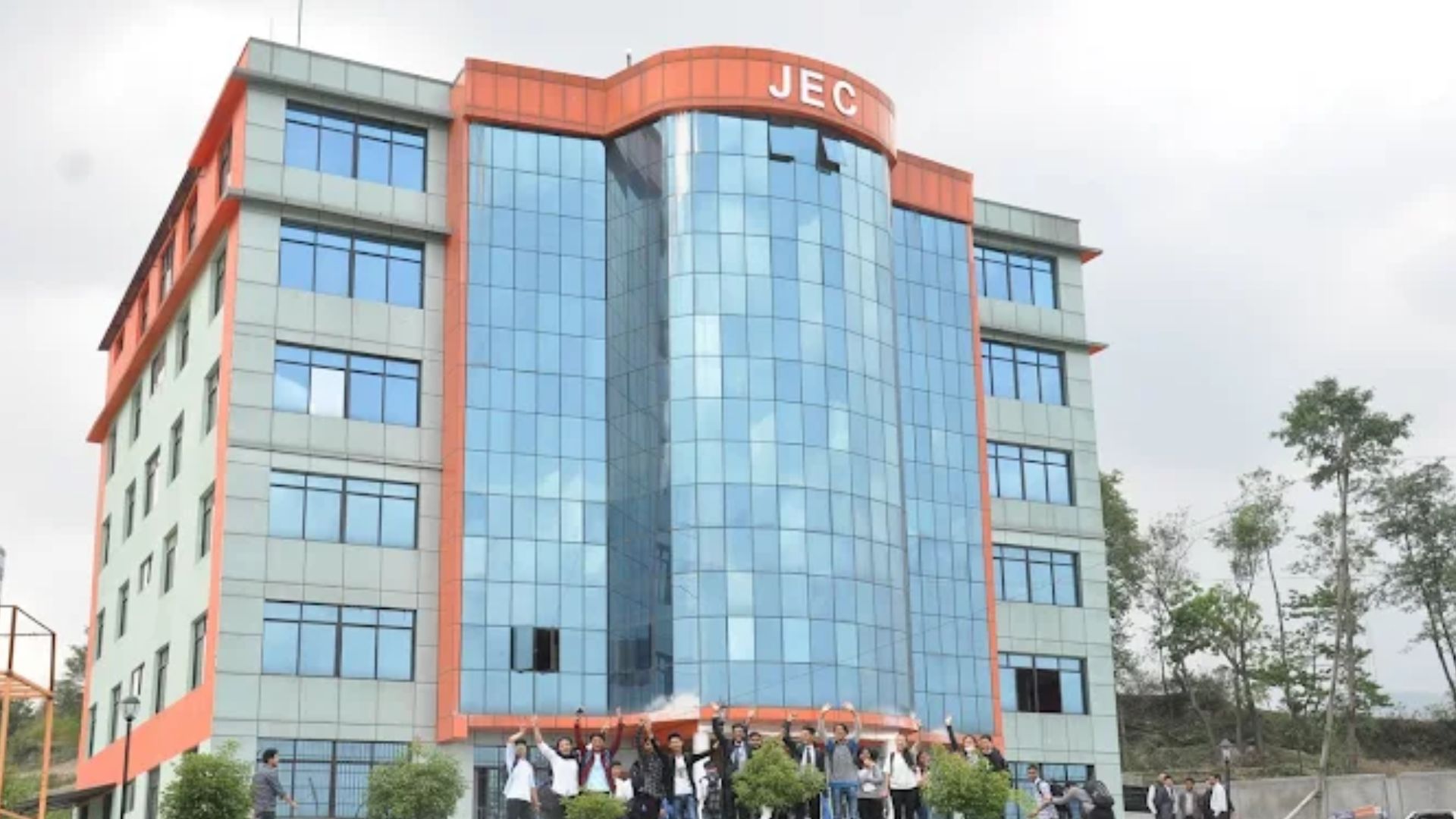
Computer engineering combines computing, electronics, and systems thinking to build reliable software and hardware-enabled solutions. The BCE curriculum covers programming, digital logic and circuits, microprocessors, computation theory, operating systems, databases, web development, computer networks, distributed and cloud computing, cybersecurity, and project management. The course supports practical problem-solving through labs and project work, leading to a supervised internship in the final semester.
Engineering mathematics and foundational sciences
Programming and object-oriented development
Digital logic, electronics, circuits, and microprocessor fundamentals
Data structures, algorithms, and computation theory
Operating systems, databases, and web application development
Computer networks, data communication, and cloud computing
Artificial intelligence and simulation/modeling
Cybersecurity and professional project management
SH 101 Engineering Mathematics I
CT 101 Computer Programming
ME 101 Engineering Drawing
EX 101 Fundamental of Electrical and Electronics Engineering
SH 102 Engineering Physics
ME 106 Engineering Workshop
SH 151 Engineering Mathematics II
CT 151 Object Oriented Programming
EX 152 Digital Logic
EX 151 Electronic Device and Circuits
SH 153 Engineering Chemistry
EE 154 Electrical Circuits and Machines
SH 201 Engineering Mathematics III
SH 204 Communication English
CT 201 Computer Graphics and Visualization
CT 202 Foundation of Data Science
CT 203 Theory of Computation
EX 201 Microprocessor
SH 252 Probability and Statistics
EX 252 Instrumentation
EX 254 Electromagnetics
CT 251 Discrete Structure and Algorithm
CT 253 Data Communication
CT 254 Operating System
SH 301 Numerical Methods
CT 301 Database Management System
CT 302 Web Application Programming
CT 303 Computer Organization and Architecture
CT 304 Computer Networks
CT 325 Elective I
CE 356 Engineering Economics
CT 351 Artificial Intelligence
CT 352 Software Engineering
CT 353 Simulation and Modeling
CT 354 Minor Project
CT 385 Elective II
EX 416 Digital Signal Analysis and Processing
CT 411 Distributed and Cloud Computing
CT 412 ICT Project Management
EX 417 Energy, Environment and Social Engineering
CT 435 Elective III
CT 413 Project I
CT 463 Network and Cyber Security
CT 465 Elective IV
CT 462 Internship
CT 461 Project II
Engineering Workshop builds foundational technical skills in the first year.
Minor Project (Semester VI) strengthens applied development and documentation skills.
Project I (Semester VII) and Project II (Semester VIII) provide capstone-level project experience.
Internship (Semester VIII) connects academic learning with professional practice.
Prepare graduates for software development, network design and implementation, troubleshooting of hardware/software systems, and network security work.
Build competency in engineering mathematics, computing foundations, and electronics principles used in real computing systems.
Develop structured problem-solving through progressive coursework, projects, and internship exposure.
Graduates of BCE develop academic and practical capability to:
Write, test, and maintain programs using structured and object-oriented approaches
Apply digital logic, electronics, and microprocessor basics in computing systems
Use algorithms and computation concepts for problem solving
Work with operating systems, databases, and web applications
Plan and manage networks, data communication, and distributed/cloud systems
Apply cybersecurity concepts in networked environments
Complete team-based projects with documentation, reporting, and presentation skills
Academic delivery follows the TU/IOE semester system. Learning is supported through labs, project work, seminars, workshops, and training conducted during the semester. ICE provides student learning facilities such as a library, computer room with internet access, and laboratories that support practical coursework. Hostel and transportation facilities are available for students.
Admission is conducted through the TU IOE BE–B.Arch Entrance Examination.
Selection is completed on a merit basis among eligible candidates.
Applicants for BCE meet the academic pathway through one of the following:
Letter grading: minimum “C” grade in all subjects in Grade 11 and 12, or
Twelve years of schooling in the science stream (or equivalent) recognized by TU, with minimum second division in +2 (or equivalent)
Entrance performance requirement is applied as part of the IOE entrance process for admission.
Entrance Score Card (IOE)
Mark sheet/transcript and character certificate of +2 (or equivalent)
Mark sheet and character certificate of SEE (or equivalent)
Migration certificate
Citizenship copy
Passport-size photographs (as required)
Course curriculum, examinations, and results follow TU rules, guidelines, and the TU IOE annual calendar.
Need-based and merit-based scholarships are available. Scholarships are awarded according to the aggregate score of the 10+2 examination and IOE score, with limited seats and conditions.
Aggregate score > 50 and < 55 — 50% scholarship
Aggregate score > 55 and < 60 — 55% scholarship
Aggregate score > 60 and < 65 — 65% scholarship
Aggregate score > 70 and < 75 — 70% scholarship
Aggregate score > 80 — 100% scholarship
Computer engineers work across software, hardware-integrated systems, networks, and information systems. Typical roles include:
Systems Analyst
Software Engineer
System Administrator
Network Administrator/Manager
Database Administrator/Manager
Web Developer/Administrator/Manager
Telecommunication Engineer
Computer & Information System Manager
The course also supports progression to higher studies in computing and related engineering fields.
TU/IOE affiliation with a defined semester curriculum and examination system
48-seat intake for BCE
Clear project pathway: minor project, final-year projects, and internship
Semester-based academic activities supported by workshops, seminars, and training
Access to library, computer facilities, and practical labs for coursework support
Hostel and transportation facilities available for students
Bachelor of Computer Engineering at Imperial College of Engineering provides a structured TU-affiliated pathway into computing systems, software development, networks, cloud computing, cybersecurity, and applied AI. The semester-wise curriculum builds from foundations in math, programming, and electronics into professional-level subjects supported by projects and an internship. The program suits students seeking an engineering route into software and systems work with strong academic grounding and applied learning.
The program runs for 4 years, delivered across 8 semesters.
BCE has 48 seats.
Admission is through the TU IOE BE–B.Arch Entrance Examination, followed by merit-based selection.
Eligibility includes minimum “C” grade in all Grade 11 and 12 subjects under letter grading, or completion of twelve years of schooling in the science stream (or equivalent) recognized by TU with minimum second division in +2 (or equivalent).
Yes. The course includes a Minor Project (Semester VI), Project I (Semester VII), Project II (Semester VIII), and an Internship (Semester VIII).
Key areas include programming, OOP, digital logic, microprocessor, computation theory, operating systems, databases, web application development, computer networks, cloud computing, cybersecurity, AI, and project management.
Yes. Need-based and merit-based scholarships are available, including aggregate-score and IOE-score-based scholarship ranges for the annual fee.
ICE is located in Tathali, Bhaktapur, Nepal.






