Bachelor of Civil Engineering (BE Civil) at Imperial College of Engineering (ICE), Tathali, Bhaktapur, is a four-year undergraduate program under Tribhuvan University (TU). The course prepares students for the planning, design, construction, and maintenance of physical and natural environments, covering infrastructure such as roads, bridges, canals, dams, buildings, and water and sanitation systems.
Teaching and learning follow TU/IOE rules, with semester-based study, project work, and internship components built into the program structure. The admission pathway is through the TU Institute of Engineering (IOE) entrance examination.
| Item | Details |
|---|---|
| Course | Bachelor of Civil Engineering (BE Civil) |
| College | Imperial College of Engineering (ICE) |
| Location | Tathali, Bhaktapur, Nepal |
| Affiliation | Tribhuvan University (TU), Institute of Engineering (IOE) |
| Duration | 4 years (8 semesters) |
| Study Mode | Full-time |
| Seats | 96 |
| Entrance Exam | BE–B.Arch Entrance Exam (Tribhuvan University) |
| License Exam | Civil Engineering: NEC Registration Examination |
| Key Components | Survey Camp, Project I, Project II, Internship |
| Contact | info@jec.edu.np • +977-1-5091615 / +977-1-5091616 / +977-9764577250 |
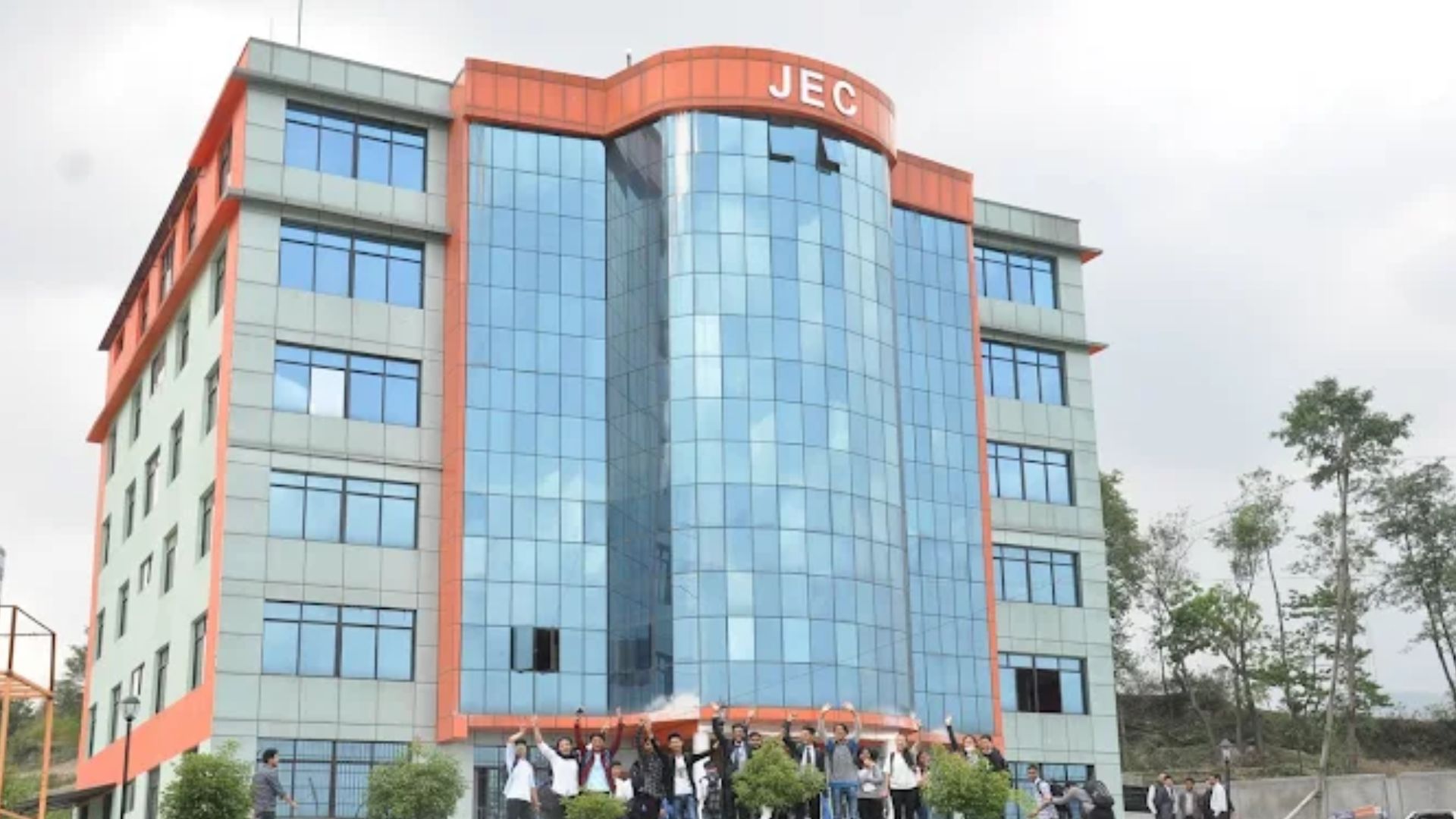
Civil engineering is a professional discipline focused on building and maintaining infrastructure and the built environment. The program covers structural behavior, construction materials, surveying, geotechnical fundamentals, hydraulics, water supply and sanitation, transportation systems, hydrology, and construction/project engineering. The curriculum also reflects changes in technology and materials that influence how structures are analyzed and how construction economics is managed.
The BE Civil curriculum is organized semester-wise with a progression from foundational sciences and engineering basics to specialized civil engineering applications.
SH 101 Engineering Mathematics I
SH 103 Engineering Chemistry
CT 101 Computer Programming
EE 103 Basic Electrical and Electronics Engineering
CE 101 Engineering Mechanics
CE 102 Engineering Geology I
CE 103 Civil Engineering Materials
SH 151 Engineering Mathematics II
SH 152 Engineering Physics
ME 158 Engineering Drawing
CE 151 Strength of Materials
CE 152 Engineering Geology II
CE 153 Engineering Survey I
SH 201 Engineering Mathematics III
SH 202 Numerical Methods
CE 201 Fluid Mechanics
CE 202 Theory of Structures I
CE 203 Engineering Survey II
CE 204 Computer Aided Civil Drawing
CE 205 Concrete Technology
SH 251 Communication English
SH 252 Probability and Statistics
CE 251 Hydraulics
CE 252 Theory of Structures II
CE 253 Soil Mechanics
CE 254 Water Supply Engineering
CE 255 Building Technology
CE 256 Survey Camp*
CE 301 Design of Timber and Masonry Structures
CE 302 Foundation Engineering
CE 303 Design of Steel Structures
CE 304 Transportation Engineering I
CE 305 Sanitary Engineering
CE 306 Engineering Hydrology
CE 307 Engineering Economics
CE 351 Estimating and Costing
CE 352 Design of RCC Structures
CE 353 Transportation Engineering II
CE 354 Irrigation and Drainage Engineering
CE 355 Professional and Social Engineering
CE 365 Elective I
CE 411 Operations Research
CE 412 Project and Construction Engineering
CE 413 Hydropower Engineering
CE 425 Elective II
CE 435 Elective III
CE 414 Project I
CE 461 Project II
CE 462 Internship**
Survey Camp (Semester IV) supports field-based surveying skills.
Project I (Semester VII) and Project II (Semester VIII) build problem-solving and applied engineering work.
Internship (Semester VIII) connects academic learning with workplace practice.
Semester teaching is supported by seminars, workshops, and training conducted during the academic term, along with field visits, project work, and field work. Campus facilities include laboratories for practical learning, a library with engineering-relevant books, a computer room with high-speed internet, cafeteria services, and student hostel and transportation facilities.
Admission is through the IOE entrance examination under Tribhuvan University. Candidates who pass the entrance examination are admitted on a merit basis as per IOE/TU procedures.
Minimum 45% or minimum “C” grade in +2 (Physical or Biological group with two paper mathematics), or
Diploma in engineering, or
Equivalent qualification recognized by TU
For letter grading, students must secure minimum “C” grade in all subjects in Grade 11 and 12.
Entrance score card (IOE, Pulchowk)
Mark sheet / transcript and character certificate of +2 (or equivalent)
Mark sheet and character certificate of SEE (or equivalent)
Migration certificate
Citizenship copy
Passport-size photographs (student; parents/guardians as required)
Attested copies of academic certificates are required at admission.
Course curriculum, examinations, and results follow TU rules, guidelines, and the TU IOE annual calendar.
Need-based and merit-based scholarships are available at ICE. The published percentage-scholarship schedule is specified for the annual fee of BE Computer and Electronics Engineering.
Civil engineers work across planning, design, construction, and maintenance of infrastructure such as roads, bridges, tunnels, buildings, and water and sanitation systems. Employment areas include design and development firms, government and non-government agencies and contractors, and engineering consultancies working on residential, commercial, and industrial projects, water and flood management, road infrastructure, and project management. The course also supports further study after graduation.
TU/IOE affiliation with a structured semester curriculum
Seat capacity of 96 in BE Civil Engineering
Field-linked learning through Survey Camp, project work, and internship
Regular academic activities supported by seminars, workshops, training, and field visits
Campus facilities supporting lab-based learning, library study, and computing access
Hostel and transportation facilities available for students
BE Civil Engineering at Imperial College of Engineering is a four-year TU-affiliated undergraduate program built around core civil engineering sciences, infrastructure-focused specialization, and applied learning through field components, projects, and internship. The semester-wise curriculum covers surveying, materials, structures, geotechnical engineering, hydraulics, water supply and sanitation, transportation, hydrology, and construction/project engineering, supporting a broad civil engineering foundation for professional practice and further study.
The program runs for 4 years, delivered across 8 semesters.
BE Civil Engineering has 96 seats.
Admission is through the TU IOE entrance examination, followed by merit-based selection among those who pass the entrance.
A minimum 45% or “C” grade in +2 (Physical or Biological group with two paper mathematics), or a diploma in engineering, or an equivalent qualification recognized by TU. Under letter grading, a minimum “C” grade in all Grade 11 and 12 subjects is required.
Yes. The structure includes Project I, Project II, and an Internship in the final year.
Civil Engineering lists the NEC Registration Examination as the license examination pathway.
The campus location is Tathali, Bhaktapur, Nepal.