Overview
Bachelor of Business Studies (BBS) at Kathmandu Campus, Kalimati
Bachelor of Business Studies (BBS) at Kathmandu Campus, Kalimati, runs under Tribhuvan University’s Faculty of Management. You study a four-year program that follows TU’s official curriculum and annual examination system.
BBS suits students who want grounded management knowledge with a Nepal context. The course structure covers allied areas (language, economics, law, quantitative methods), core business studies, and a focused area such as accounting, finance, human resource management, management science, or marketing.
Highlights
-
Affiliation: Tribhuvan University, Faculty of Management
-
Duration/Mode: Four academic years; annual exam system under TU
-
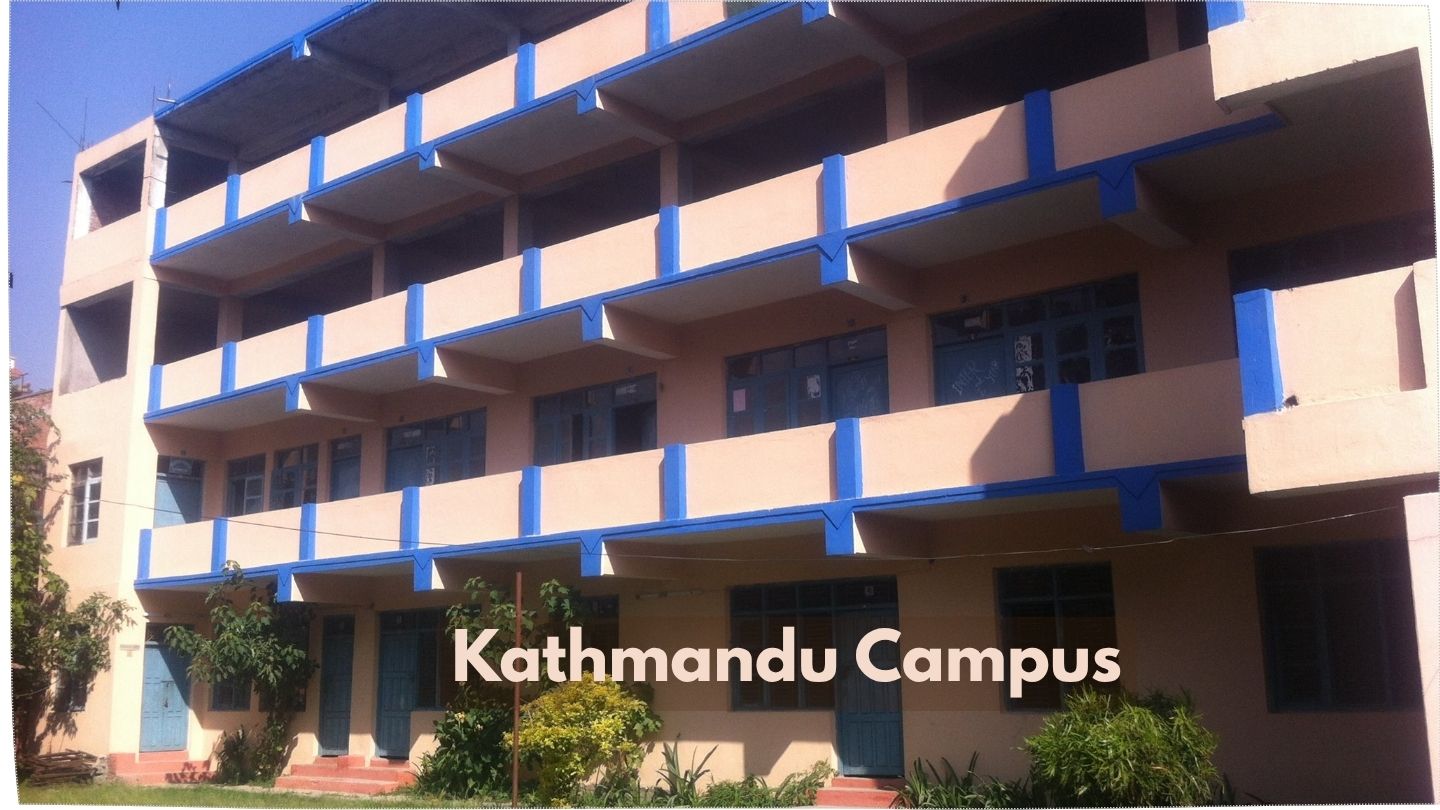
Location: Kalimati, Kathmandu (community campus setting)
-
Focus Areas: Allied courses, core business, one specialization
-
Class Routine: Minimum teaching days and hours set by TU guidelines
Curriculum Details
The framework includes:
-
Allied foundation: language/communication, economics, legal environment, quantitative and research methods.
-
Core business: integration of functional areas for a wide view of management.
-
Specialization: one area among accounting, finance, HRM, management science, or marketing.
Typical course examples across years include Business English (MGT 201), Business Statistics (MGT 202), Business Communication (MGT 205), Business Research Methods (MGT 221), and a Final Project (MGT 401). Subject availability follows TU prescriptions and campus scheduling.
Objectives
The program aims to help students grow into competent managers for organized sectors in Nepal. Goals include conceptual understanding of business and administration, practical skill growth, entrepreneurship mindset, and a base for higher studies and research.
Scope
Graduates enter roles in banking, accounting support, sales coordination, store/operations, office administration, and SME support. Students planning postgraduate pathways (MBS, MBA—per TU rules) also use BBS as preparation.
Learning Outcomes
Students should be able to:
-
read financial/operational information and prepare short decision notes;
-
apply quantitative tools for simple business problems;
-
write clear reports and business correspondence;
-
contribute to functional teams (accounts, marketing, admin);
-
plan a small field project and present findings.
Skill Development Modules
-
Numeracy and analytics: statistics, research basics.
-
Communication: business writing, presentations.
-
Functional practice: accounting cycles, cost basics, marketing plans.
-
Project work: topic selection, data collection, short report.
Teaching Methodology
Teaching uses lectures, group discussions, problem-solving, guest talks, practical tasks, and fieldwork. TU encourages case use when appropriate. TU requires a minimum share of teaching days/hours; final evaluation runs through the annual examinations. Attendance thresholds apply before students sit the exam.
Admission Requirements
-
Eligibility: PCL or 10+2 in business/commerce or an equivalent course recognized by TU.
-
English: studied as a full paper at 10+2/PCL level.
-
Minimum marks: as prescribed by the Faculty Board or campus; additional criteria may apply per campus notice.
Applicants should track the latest campus/TU circular for dates and forms.
Career Opportunities
Entry-level roles in accounts support, banking operations, sales/marketing assistance, admin coordination, and cooperative/business service centers. Students may also prepare for competitive exams that accept bachelor-level qualifications.
Scholarships and Financial Aid
Community campuses often publish merit/need-based support each intake. Kathmandu Campus informs students through official notices. Check forms, deadlines, and any quota rules during application.
Why Choose This Course?
You study a TU-mapped structure that balances foundation, core, and a focus area. The annual exam pathway is familiar to many students in Nepal and supports steady, year-by-year progress.
Conclusion
BBS at Kathmandu Campus offers a clear route into business studies with standard TU requirements, structured learning, and practical tasks that link to Nepal’s workplace needs. Students should verify yearly notices for seats, schedules, and subjects.
FAQ
1) Is BBS semester-based at TU?
No. The BBS program runs on an annual examination system under TU.
2) Does BBS include project work?
Yes. TU lists a Final Project (MGT 401) in the structure.
3) Can non-commerce students apply?
TU allows equivalent qualifications recognized by TU; see campus notices for any additional criteria.
4) What attendance is required?
TU sets a minimum attendance threshold before you can sit the annual exam.
5) Where can I review official course documents?
See TU/Faculty of Management syllabus listings and BBS program PDFs.