Overview
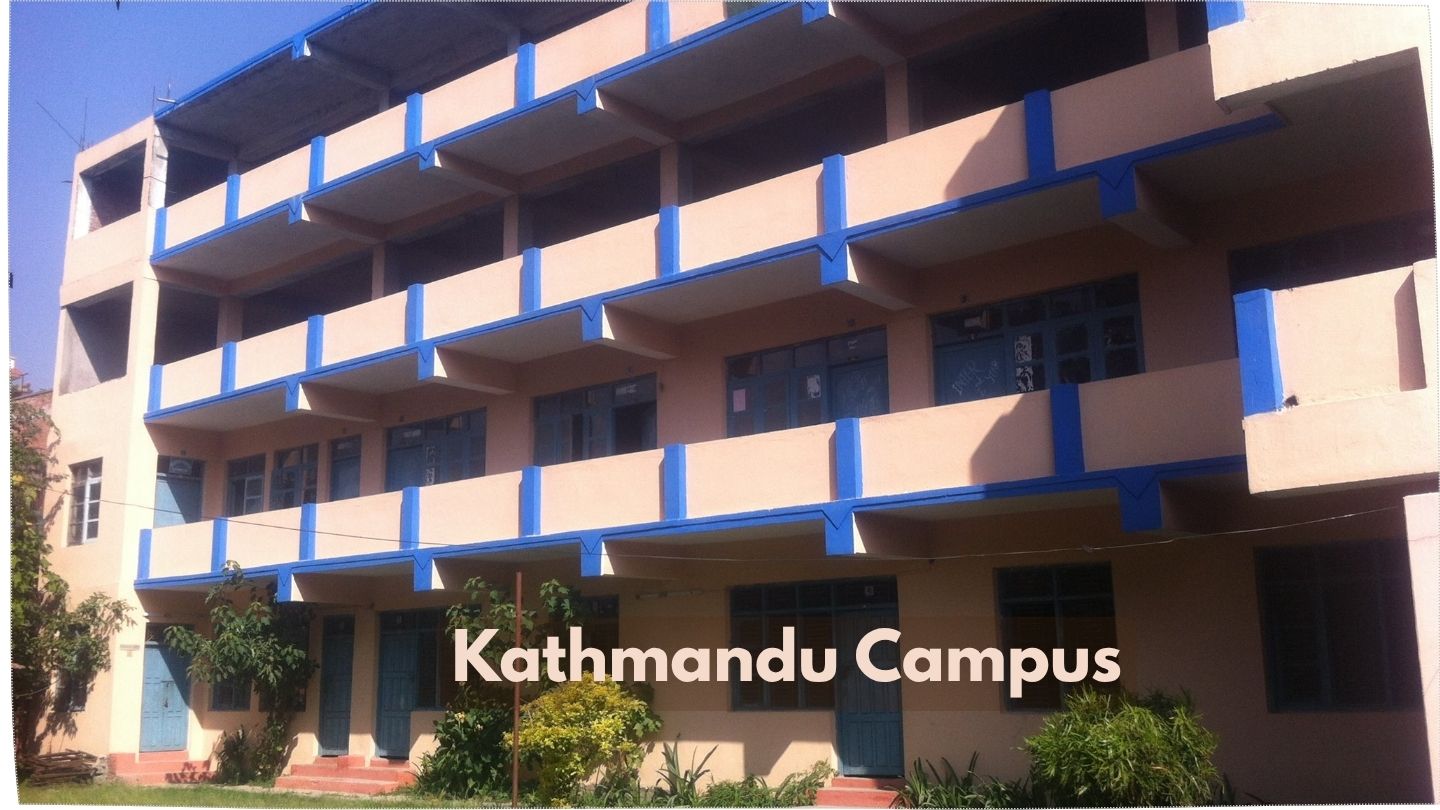
Kathmandu Campus is a Tribhuvan University–affiliated community campus located in Kalimati, Kathmandu. Established in 1980 (2037 BS), it serves learners in business, arts, and the humanities at the +2, bachelor’s, and master’s levels.
Programs follow official curricula set by the National Examination Board (NEB) and Tribhuvan University (TU), helping students plan study pathways that align with national academic standards.
The Kathmadnu Campus runs NEB Grade 11–12 (+2) programs and TU undergraduate/graduate studies. Undergraduate options include Bachelor of Arts (BA) and Bachelor of Business Studies (BBS). Postgraduate study includes the Master of Business Studies (MBS). All programs follow the frameworks issued by the respective authorities.
Quick Highlights
-
Location: Kalimati, Kathmandu
-
Affiliation: Tribhuvan University (Bachelor/Master), National Examination Board (Grade 11–12)
-
Founding Year: 1980 AD (2037 BS)
-
Academic Levels: +2, Bachelor (BA, BBS), Master (MBS)
-
Admission Windows: As announced by NEB/TU each academic year
Academic Programs Offered
+2 (Grade 11–12) under NEB
NEB operates a subject-based framework for Grades 11–12. English and Nepali are compulsory; Social Studies & Life Skills or Mathematics is chosen as per NEB guidelines, along with electives approved by the campus.
This structure replaces the older rigid “stream-only” approach and allows subject combinations often grouped as Management or Humanities in practice.
Typical focus areas
-
Management grouping: Accounting, Economics, Business Studies, Business Mathematics, Computer Science (as available).
-
Humanities grouping: Sociology, Psychology, Political Science, Mass Communication, Geography/History (as available). (Choose subjects per NEB catalog and campus offerings.)
Bachelor of Arts (BA) — Tribhuvan University
TU runs a four-year BA under the Faculty of Humanities and Social Sciences. Students combine majors/minors from approved subjects (e.g., English, Sociology, Rural Development, Journalism, Nepali, Geography, Political Science). Teaching and assessment follow the official FoHSS curricula and examination schedule.
Bachelor of Business Studies (BBS) — Tribhuvan University
BBS is a four-year program under TU’s Faculty of Management. The curriculum includes allied courses (language, economics, legal and quantitative methods), core business studies, and specialization in areas such as accounting, finance, marketing, or management. Assessment and progression follow the Faculty of Management plan.
Master of Business Studies (MBS) — Tribhuvan University
MBS is a two-year, four-semester program (60 credit-hours). It builds analytical, decision-making, and research skills across core management areas. Program structure and evaluation follow the Faculty of Management guidelines.
Admission Process
-
+2 (NEB): Eligibility and subject selection follow NEB rules for Grade 10 graduates transitioning to Grade 11. Applicants should review the current NEB curriculum and the campus subject list before form submission.
-
BA: Applicants must meet TU entry requirements for bachelor-level enrollment as announced by FoHSS and the campus.
Departmental notices outline any additional steps. -
BBS: Applicants require a 10+2 or equivalent qualification as per TU regulations for the BBS program. Detailed eligibility appears in the FoM BBS curriculum.
-
MBS: FoM requires an entrance exam (CMAT) and any other criteria specified by TU and the campus. Admission decisions consider entrance scores and prior academic records.
Note: Admission dates, forms, and seat availability are announced each year through official notices.
Follow the latest TU/NEB circulars and campus updates.
Teaching Faculty and Learning Methodology
Teaching is handled by subject-specific faculty aligned with TU and NEB syllabi. Learning methods include lectures, seminars, presentations, practical tasks, and internal assessments tied to the intended learning outcomes for each program. Department-level scheduling and evaluation follow FoHSS/FoM and NEB frameworks.
Infrastructure and Learning Facilities
Academic delivery relies on facilities expected at a TU-affiliated community campus: classrooms, library access, computer resources, and spaces for presentations or internal assessments.
Prospective students should confirm current facility details with the administration during admission counseling.
Student Life and Campus Experience
Students can expect a routine that balances coursework with assignments, short projects, and periodic evaluations. Peer learning, reading circles, and guided presentations are common within TU/NEB frameworks, supporting steady academic development and communication skills.
Extracurricular Activities (ECA)
Subject to the campus calendar, students may participate in clubs, guest sessions, and field-oriented tasks that support academic objectives. Examples include brief field notes in social sciences or simple business case discussions. Availability varies by year; check departmental notices.
Scholarships and Financial Support
Community campuses in Nepal often allocate need- or merit-based support according to institutional policies and national guidelines. Kathmandu Campus provides updates on eligibility, forms, and deadlines through official communications. Inquire during admission for the current list.
Achievements and Institutional Milestones
-
Community campus under TU, located in Kalimati, Kathmandu.
-
Four-year BA structure adopted nationally by TU; the campus follows this framework.
-
BBS four-year structure per the Faculty of Management; the campus follows the TU-prescribed plan.
-
MBS operates as a two-year, four-semester program under the Faculty of Management.
-
Established in 1980 (2037 BS); public updates available through campus communication channels.
Why Choose This Institution?
-
Community orientation: TU-affiliated campus serving local learners in central Kathmandu.
-
Aligned curricula: Programs mapped to NEB and TU standards with clear progression from +2 to master’s.
-
Focused pathways: BA and BBS provide broad academic grounding; MBS advances managerial study under Faculty of Management policy.
Conclusion
Kathmandu Campus offers NEB +2 and TU bachelor’s/master’s routes in humanities and management within a community campus setting. Applicants should match interests and subject choices to the official curricula, verify annual admission notices, and consult the campus for current seats, schedules, and support schemes.
FAQ
1) Is the BA program at Kathmandu Campus four years?
Yes. TU’s Faculty of Humanities and Social Sciences runs a four-year BA nationally, and the campus follows that structure.
2) Does BBS require an entrance exam?
BBS eligibility centers on 10+2 or equivalent under TU rules. Check the campus notice for any additional internal screening.
3) Is there an entrance test for MBS?
Yes. The Faculty of Management requires an entrance exam (CMAT) for MBS, with campus-specific procedures announced each intake.
4) How are subjects chosen in +2?
NEB operates a subject-based framework with compulsory English and Nepali, plus Social Studies & Life Skills or Mathematics, and electives approved by the campus.
5) Where can I see official academic syllabi?
Refer to TU Faculty websites for BA/BBS/MBS syllabi and to NEB for Grade 11–12 curriculum updates.
Contact Kathmandu Campus's administrative office for detailed information on the course, admissions, location, fees, scholarships, facilities, counseling, or eligibility.
Contact Details
Kathmandu Campus
Email Address: kathmanducampus2037@gmail.com
Website: http://www.kathmanducampus.edu.np/
Phone Number: +977-5165075, +977-9851158075
Location: Kalimati, Kathmandu