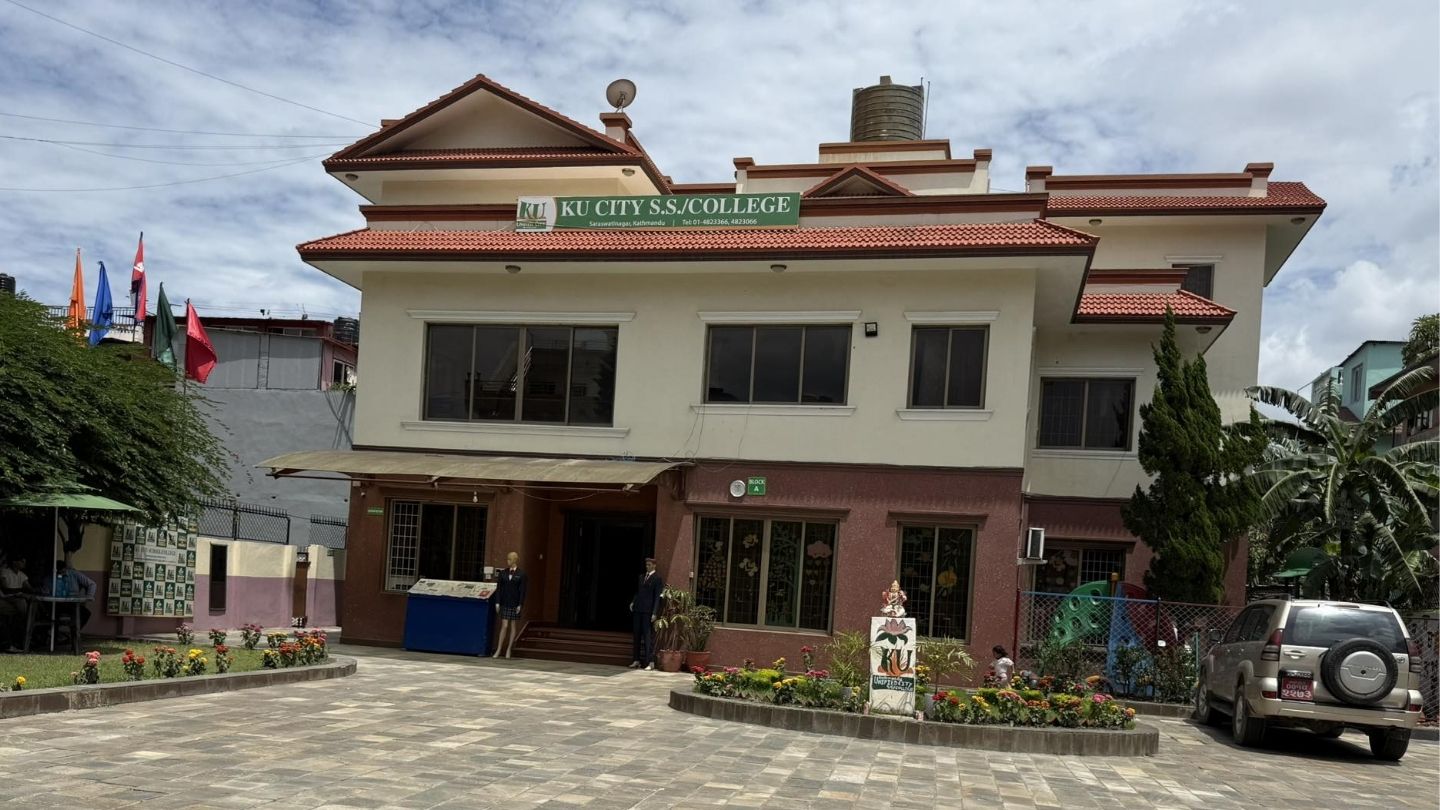
Ten Plus Two (10+2) Humanities at KU City School/College, Saraswatinagar, Chabahil, is a two-year secondary program under the National Examinations Board (NEB). NEB is the national body that conducts Grade 11 and 12 examinations in Nepal and oversees the 10+2 structure.
The Humanities stream at KU City School/College focuses on social sciences, language, media and contemporary society. You study how people, institutions and cultures function, while also strengthening your skills in reading, writing, analysis and communication. The program runs inside an integrated school–college campus that already hosts Science, Management and Law streams, as well as bachelor programs, so Grade 11 and 12 students learn in an environment that feels close to higher education.
Board: National Examinations Board (NEB), Nepal
Level: Ten Plus Two (Grades 11–12) – Humanities / Social Sciences
Location: KU City School/College, Saraswatinagar, Chabahil, Kathmandu
Duration: Two academic years after SEE or equivalent
Focus areas: Sociology, contemporary society, language, media, economics, mathematics and creative disciplines
Study mode: Full-time, school–college setting with access to library, laboratories, IT centre, seminar hall and playground
The college document lists the Humanities subject combination in the following way:
Grade XI (Humanities)
Compulsory English
Compulsory Nepali
Sociology
One group from: Mass Communication / Economics / Mathematics / Optional English / Computer Science / Music
Grade XII (Humanities)
Compulsory English
Contemporary Society
Sociology
One group from: Mass Communication / Economics / Mathematics / Optional English / Computer Science / Music
Compulsory English and Nepali help you handle academic reading and writing, while Sociology and Contemporary Society connect you with social structures, culture, inequality and change. The optional basket lets you shape your profile toward media, statistics, language, ICT or creative arts, depending on your interest and future plan.
NEB’s national framework positions Grade 11 and 12 as the final stage of school education, and certificates from this level are recognised for university entry across Nepal.
Humanities at KU City School/College aims to:
build a solid base in social science thinking through Sociology and Contemporary Society
develop language skills in English and Nepali for further study and future professions
introduce fields such as mass communication, economics, mathematics, ICT and music as structured options
help students understand social issues in Nepal, including diversity, power, gender, migration and development
support teenagers as they move from school learning toward more independent academic thinking
The Humanities stream is suitable if you are interested in people, media, society, culture or public affairs. After completing 10+2 Humanities and then a bachelor degree, students typically move toward:
journalism and media studies
sociology, rural development, social work and related social sciences
English, Nepali and other language and literature fields
economics, political science, history or population studies
law, public administration and civil service after appropriate higher study
Because the subject basket at KU City School/College includes mathematics, computer science and economics, motivated students can also open routes toward data-oriented roles and interdisciplinary programs later on.
By the end of Grade 12 Humanities, students are expected to:
explain core sociological concepts such as culture, socialisation, institutions, inequality and social change
interpret major trends in contemporary Nepali society, including political transitions, urbanisation and migration
read and write essays, articles and reports in English and Nepali with clearer structure and argument
analyse news, media texts and public debates in a more critical way where Mass Communication is chosen
handle basic quantitative work in economics or mathematics, such as graphs, tables and simple calculations
use computer applications, online resources and digital tools for assignments when Computer Science is part of the basket
These outcomes prepare you for bachelor-level humanities and social science programs, where independent reading and writing become central.
Skill growth in Humanities spreads across subjects and co-curricular activities rather than a single module:
Communication skills: classroom discussions, presentations, book reviews and written assignments in English and Nepali strengthen your ability to express ideas.
Analytical skills: Sociology and Contemporary Society ask you to connect everyday experiences with wider structures, which develops critical thinking.
Media and ICT skills: Mass Communication and Computer Science introduce basic concepts of media content, news writing, digital tools and office software.
Creative and cultural skills: Music and other creative subjects, along with school events, help students grow confidence, discipline and collaboration.
Participation in clubs, seminars, excursions and field visits further extends these skills beyond the classroom.
KU City School/College states that it follows student-centred teaching using ideas from behaviourism, cognitivism, constructivism and connectivism. In practical terms, Humanities classes usually include:
teacher-led explanation followed by question–answer sessions
group discussions on social issues, news and current affairs
reading of articles, essays and extracts, followed by reflection
project work, mini-surveys and presentations in Sociology and related subjects
use of the library, seminar hall and IT centre for reference and audio-visual materials
This approach aims to move you from passive note-taking toward active engagement with texts, ideas and communities.
The Humanities program follows NEB and school policies for Grade 11 entry. The college document for 10+2 Law states that any candidate who has passed SEE or equivalent from a recognised school and meets the admissible CGPA set by NEB can apply. The same principle applies to other streams, including Humanities.
In practice, you should expect:
SEE or equivalent completion from a recognised school
minimum GPA and subject-wise grades as per NEB rules for 10+2 enrolment
submission of application form, mark sheet, character certificate and photographs within the deadline
Some schools also run short interviews or counselling sessions to guide subject selection, especially when students are unsure about optional subjects.
Ten Plus Two Humanities itself is a school-level qualification, yet it strongly shapes your future path when combined with bachelor study. Common routes after +2 Humanities and a suitable bachelor degree include:
reporter, sub-editor, content writer or media researcher
NGO and development roles linked with community projects, gender, youth or rights issues
teaching and academic work in schools after additional training in education
positions in banks, insurance companies and offices where strong communication and documentation skills are needed
public service and local government roles after sitting relevant competitive exams
The subject mix at KU City School/College keeps options open across social science, media, language, law and management-related fields.
KU City School/College mentions scholarship and concession arrangements for deserving and needy students, and notes that fee structures remain within a moderate range for an urban campus.
Support for Humanities students usually relates to:
strong performance in SEE and internal examinations
good discipline and regular attendance
social or economic background as specified in the school’s scholarship policy
Exact criteria, number of seats and continuation rules change by intake, so you and your parents should check the latest scholarship notice or speak directly with the administration office.
Subject combination that links language, sociology, contemporary society and optional areas such as mass communication, economics, mathematics, computer science and music.
Campus environment where Humanities students share facilities with Science, Management, Law and bachelor programs, which gives early exposure to higher education culture.
Access to library, IT centre, laboratories, seminar hall, sports ground and arts facilities that support both academic and creative growth.
Teaching–learning focus on student activity, reflection and practice rather than only memorising notes, in line with the principal’s message on student-centred education.
For SEE graduates who enjoy reading, writing, observing people and thinking about society, this stream offers a structured path into humanities and social science studies in Kathmandu.
Ten Plus Two (10+2) Humanities at KU City School/College, Chabahil, is a two-year NEB program that introduces you to social sciences, languages, media and contemporary Nepali life. The subject combination, facilities and teaching approach help you build analytical, communicative and creative skills that carry forward into bachelor-level programs and a wide spectrum of careers linked with society, culture and public life.
The Humanities program is under the National Examinations Board (NEB), which supervises Grade 11 and 12 examinations in Nepal.
According to the college document, students study Compulsory English, Compulsory Nepali, Sociology and an optional group including Mass Communication, Economics, Mathematics, Optional English, Computer Science or Music in Grade XI, and Compulsory English, Contemporary Society, Sociology and the same optional group in Grade XII.
Any student who has passed SEE or an equivalent examination from a recognised school and meets the CGPA and grade requirements set by NEB and the school can apply.
Yes. Humanities students use the library, IT centre, seminar hall and, where relevant, laboratories and arts spaces for projects, presentations, media work and creative activities, in addition to regular theory classes.
After this program, you can apply for bachelor degrees in fields such as journalism and mass communication, sociology, social work, English, Nepali, economics, political science, law, rural development and related areas, depending on each university’s entry rules.
Scholarships and fee concessions are offered according to the school’s scholarship policy for each intake. Criteria usually relate to SEE performance, internal results and social background, so you should consult the latest official notice or the administration office for precise details.