



Master of Police Sciences (MPS) at Nepal Police Staff College, Maharajgunj, Kathmandu is an academic program conducted under the Police Leadership and Staff Course (PLSC). Nepal Police Staff College lists the MPS as a Tribhuvan University (TU) affiliated program delivered alongside a professional component called the Professional Leadership Course (PLC).
Students and information seekers often look for one clear answer before they invest time in any policing-related master’s program: “What will I study, how will I be assessed, and how does it connect to real police work?” The public course information published by Nepal Police Staff College gives a direct starting point: the MPS runs through semester-based subjects in policing, public administration, public policy, law, investigation, security studies, governance, strategy, research methods, and a thesis, with optional specialization pathways.
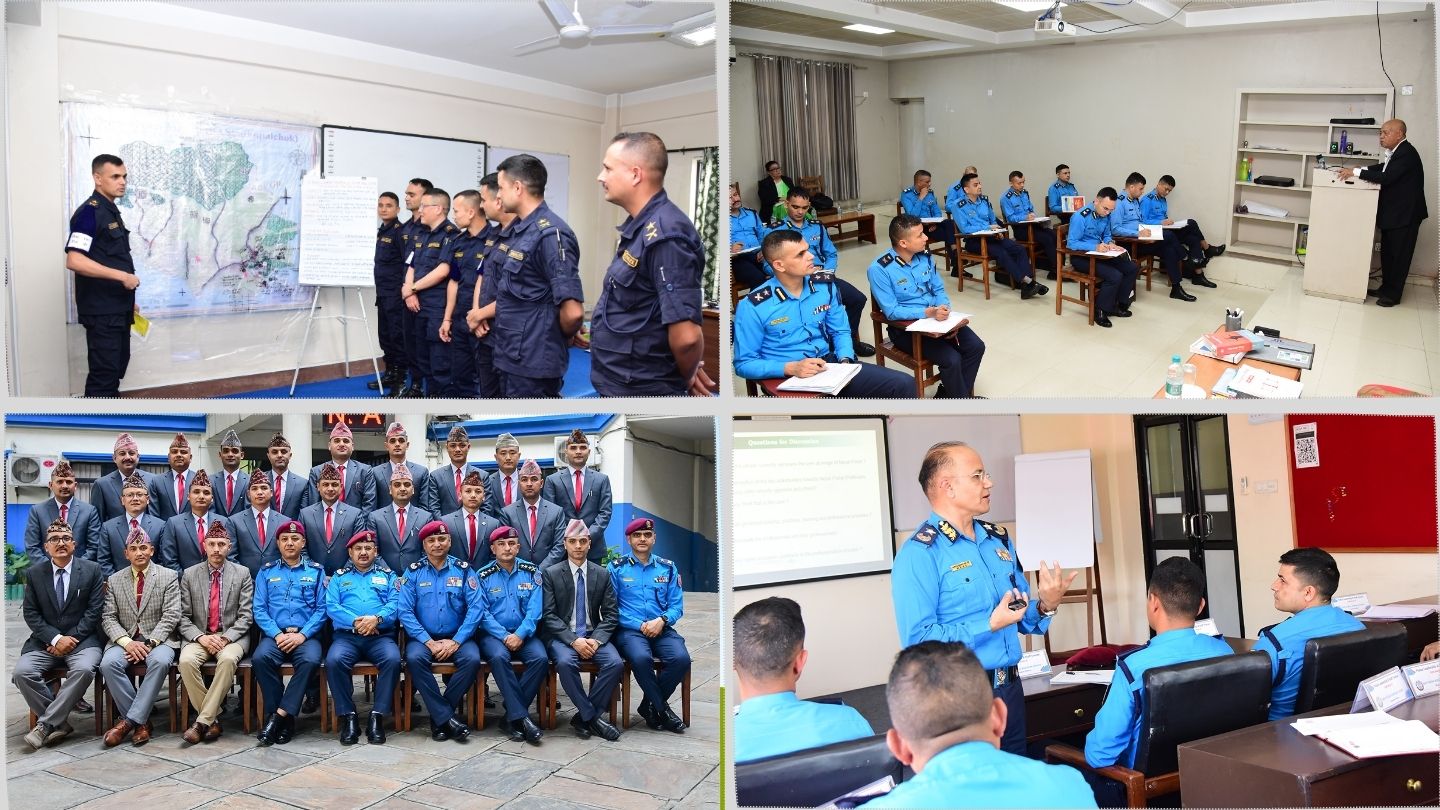
Institution: Nepal Police Staff College, Maharajgunj, Kathmandu
Program: Masters of Police Sciences (MPS), affiliated to Tribhuvan University (TU)
Course umbrella: Police Leadership and Staff Course (PLSC) includes MPS and PLC
Key academic areas: policing, public administration, public policy analysis, criminal law, legal system, criminology and psychology, investigation management, security studies, UN system, governance, strategic management, research methodology, forensic science/medicine
Research component: MGT 699 Thesis (12 credits)
Entry note (publicly stated): selection through Central Management Admission Test (CMAT) for the MPS
Nepal Police Staff College presents the Police Leadership and Staff Course (PLSC) as a combined structure: an academic component (MPS) and a professional component (PLC). The course page shows both streams side by side in “Term I, Term II, Term III,” indicating how academic subjects and professional staff-course learning move in parallel.
This structure matters for students because it explains the “two-track” reality of the program:
The MPS track focuses on TU-affiliated academic subjects and the thesis requirement.
The PLC track focuses on staff-course learning themes such as police operations and administration, crime investigation management, and leadership management as shown in the term headings.
Nepal Police Staff College publishes a “Detail Course Structure” table listing course codes, subjects, credits, and term/semester placement. The same public table also shows the specialization options and the thesis.
MPS 501: Police and Policing (2 credits)
MPA 501: Public Affairs Administration (3 credits)
MPS 502: Police Operations (3 credits)
MPS 502: Public Policy Analysis (3 credits)
MPS 503: Criminal Law (3 credits)
MPS 504: Legal System (2 credits)
MGT 551: Human Resource Management and Organizational Behavior (3 credits)
Research Methodology-I (IRP) appears under Term I in the course structure.
What these subjects usually mean for your learning (based on the published titles) is straightforward. Police and Policing frames core policing roles and the place of police within society. Public affairs administration and public policy analysis connect policing with government systems and decision processes. Criminal law and legal system link policing practice to legal standards. HRM and organizational behavior connect leadership decisions to people management inside police organizations.
STT 551: Statistical Methods (2 credits)
MPS 553: Criminology and Psychology (3 credits)
MPS 554: Criminal Investigation Management (3 credits)
MPS 555: Major Crime Investigation (3 credits)
MPS 556: Dimensions of Security Studies (2 credits)
United Nations System appears in the same second-semester block.
MPA 601: Political System and Governance (2 credits)
Research Methodology-II (GRP) appears under the second-semester structure.
For students, the second-semester block signals a shift from “rules and institutions” to “analysis and case-handling.” Statistical methods and criminology/psychology help you read patterns in crime and behavior. Investigation management and major crime investigation place that analysis into investigation planning, case coordination, evidence handling, and accountability inside legal procedures. Security studies and the UN system connect local policing with wider security practice and international norms. Governance helps you read how political systems shape police mandates and oversight.
Nepal Police Staff College lists the following coded academic subjects in the third-semester block:
MGT 601: Strategic Management (2 credits)
RCH 601: Research Methodology (3 credits)
MPS 603: Forensic Science and Forensic Medicine (3 credits)
The same Term III section also shows learning themes such as leadership and management, development studies, conflict management, and crisis management in the term layout. Those appear in the structure as part of the overall staff-course framing that runs beside the coded academic subjects.
Students often find Term III demanding for one reason: research and decision-making start to merge. Strategic management focuses on organizational direction and choices. Research methodology supports thesis planning and structured inquiry. Forensic science and forensic medicine connect investigation decisions to scientific and medical evidence standards.
Nepal Police Staff College lists a “Specialization: (Any one of A and B).”
A: Disaster & Conflict Management (6 credits), with items shown under this pathway:
MPS 641: Disaster Management
MGT 641: Perspective on Conflict Management (listed in the same specialization block)
B: Information Technology, with items shown under this pathway:
ITC 641: Information and Communication Technology (ICT)
MPS 642: Technology Based Crime Investigation
Internal Study Tour, Foreign Study Tour, and Peer’s Rating appear in the same specialization block.
A student-focused way to read these choices is simple: one option leans toward disaster response and conflict-related coordination inside policing; the other leans toward ICT and technology-linked investigation practice. The study tours and peer rating listed under the IT pathway suggest structured exposure and evaluation beyond classroom instruction.
Nepal Police Staff College lists:
MGT 699: Thesis (12 credits)
The thesis requirement matters because it forces you to move from “learning topics” to “producing evidence-based work.” Students usually do better when they select a thesis topic that connects to real organizational questions in policing: investigation management, service delivery, public trust, operational planning, inter-agency coordination, or policy execution. The exact thesis procedures and formatting should be checked through the official academic guidance used in your batch.
Nepal Police Staff College publishes a “Need for the Course” and “Objectives of the Course” section for the Police Leadership and Staff Course, which includes the MPS. The published points mention leadership and management skills for security challenges, ethical decision-making, accountability, operational effectiveness, adherence to Nepal Police Code of Conduct, technical capability in investigation and evidence management, community interaction, and understanding policing as a long-term service role.
Students can translate these statements into practical expectations:
You will be asked to justify policing decisions using law, policy, and evidence.
You will be expected to connect investigation practice to legal standards and evidence handling norms.
You will be expected to speak and write like a staff officer who can brief, plan, and explain actions to different stakeholders.
The public structure shows a broad scope that sits at the intersection of policing, governance, investigation, and security studies. The subject titles cover:
Police administration and operations, plus staff duties and administration (as shown in the term structure)
Public administration, public policy analysis, political system and governance
Criminal law, legal system, criminology and psychology
Criminal investigation management, major crime investigation, forensic science and forensic medicine
Dimensions of security studies and the UN system
Specialization in disaster/conflict or ICT/technology-based crime investigation
Students who want a narrow technical master’s often feel surprised by this scope. The published structure shows that the program expects police science students to read both “field realities” and “system realities,” then produce accountable work through research and thesis writing.
The college does not publish a line-by-line “learning outcomes list” in the course table, so the safest way is to state outcomes that follow directly from the published subjects and stated course objectives.
Students who complete the MPS should be able to:
Explain policing roles using established policing concepts and the legal framework (Police and Policing; Criminal Law; Legal System).
Read governance and policy environments and translate them into actionable policing plans (Public Affairs Administration; Public Policy Analysis; Political System and Governance).
Apply criminology, psychology, and statistical methods to interpret crime patterns and risk (Criminology and Psychology; Statistical Methods).
Plan investigation work for complex cases and maintain accountability in case handling (Criminal Investigation Management; Major Crime Investigation; Forensic Science and Forensic Medicine).
Produce a structured research output through the thesis requirement (Research Methodology subjects; Thesis).
The published structure points to several skill areas that students usually build during the MPS track:
Policy and administrative writing: public affairs administration, public policy analysis, governance subjects support memo writing, briefing notes, and policy interpretation.
Investigation planning and oversight: investigation management and major crime investigation support case planning, team coordination, and evidence pathways.
Legal reasoning: criminal law and legal system support legal reading, procedural compliance, and defensible decision records.
Research skills: research methodology and statistical methods support data handling, structured inquiry, and thesis execution.
Specialization practice: disaster/conflict or ICT/technology-based investigation supports domain focus according to your selection.
Nepal Police Staff College states that the course is conducted by subject matter experts (SMEs) from domains such as public administration/management, research methodology, crime investigation, criminology and legal studies, and police administration/management.
Students can also infer several delivery formats from the published structure:
Term-based learning that runs in parallel with the professional staff-course themes shown in the table.
Research work that progresses from research methodology components toward the thesis.
Study tours and peer rating in the IT specialization pathway, indicating supervised exposure and structured evaluation.
Nepal Police Staff College publicly lists several facilities that support academic delivery and officer learning:
Conference Hall
Syndicates
Senior Officers’ Mess and Mess Lounge
Sports Facilities and Gym Hall
Cafeteria
Library
Virtual Classroom
Syndicate-style spaces are especially relevant for staff-course learning because they support small-group planning work, structured discussion, and problem-solving practice that links closely to operational and policy tasks.
Nepal Police Staff College and Nepal Police public notices show CMAT as the entry gate for the MPS academic component. The uploaded official-linked material also states that candidates “must be selected on” the Central Management Admission Test (CMAT) entrance exam for the MPS.
Nepal Police Staff College’s history timeline shows that:
A Memorandum of Understanding to conduct the MPS under Nepal Police Staff College was signed on September 6, 2024 between the Chief of Nepal Police and the then Dean of TU Faculty of Management.
The Police Leadership and Staff Course entrance examination directive (2081) and operation procedure (2081) were approved in December 2024, and entrance exams for PLSC were conducted in March 2025.
Students who want exact eligibility rules should rely on the latest official notice for your intake year because seat numbers, internal nomination rules (if any), document checklists, and timelines can change batch to batch. Public pages do not publish a full eligibility checklist for civilians, so you should treat the program as primarily structured for officers and related security agencies as described in the PLSC overview.
The MPS subject list points toward roles and responsibilities that usually expand when an officer moves into staff, planning, investigation leadership, training coordination, or policy-linked work.
Your learning supports work such as:
Case oversight and investigation planning for serious or multi-actor cases (Criminal Investigation Management; Major Crime Investigation; Forensic Science and Forensic Medicine).
Policy interpretation and communication inside government systems (Public Affairs Administration; Public Policy Analysis; Political System and Governance).
Team management and organizational decision work (Human Resource Management and Organizational Behavior; Strategic Management).
Security and international coordination literacy (Dimensions of Security Studies; United Nations System).
Focused practice in disaster/conflict tasks or ICT/technology-based investigation tasks through the specialization pathway you select.
Students often feel pressure about “career value” when they compare a general master’s degree to a policing-focused degree. The MPS structure answers that pressure through subject titles that map to real staff work: policy reading, investigation oversight, legal compliance, and evidence-based writing through research and thesis work.
Nepal Police Staff College’s public pages and the course structure page do not list a scholarship scheme, tuition fee schedule, or financial aid policy for the MPS. Students and guardians should confirm cost, service conditions, and support mechanisms through the official notice for the relevant batch or through the college contact points published on the official site.
Master of Police Sciences at Nepal Police Staff College fits students and officers who want:
A TU-affiliated academic pathway that stays close to policing practice, governance, and investigation work.
Structured learning across law, policy, administration, investigation management, security studies, and research writing.
A thesis-based requirement that forces disciplined writing and accountable analysis rather than only classroom exams.
A specialization choice that matches your operational reality: disaster/conflict management or ICT/technology-based investigation.
If you are a student exploring policing and security education from outside the service, treat the official information cautiously. The PLSC description frames the course for mid-level and senior police officers and related security agencies. That framing shapes who gets access, how the schedule runs, and how learning is assessed.
Master of Police Sciences (MPS) at Nepal Police Staff College, Maharajgunj, Kathmandu is presented by the college as a TU-affiliated academic component delivered inside the Police Leadership and Staff Course structure. The published curriculum structure lists semester subjects across policing, administration, policy, law, investigation, security studies, governance, management, research methodology, specialization options, and a 12-credit thesis.
You will make the best use of this program when you treat it as an evidence-and-writing program, not only a subject program. The thesis and research pathway push you to write clearly, justify decisions, and connect learning to real policing questions using disciplined methods.
Nepal Police Staff College states that the Masters of Police Sciences (MPS) under PLSC is affiliated to Tribhuvan University (TU).
Nepal Police Staff College presents PLSC as a course that includes two major components: MPS and the Professional Leadership Course (PLC).
The published course structure lists MGT 699 Thesis with 12 credits.
The official structure lists two options: A) Disaster & Conflict Management and B) Information Technology, with items such as disaster management and conflict management under A, and ICT plus technology-based crime investigation plus study tours and peer rating under B.
Public Nepal Police and Nepal Police Staff College materials indicate selection through CMAT for the MPS academic component. You should verify the latest CMAT and PLSC notices for the intake year you target.
The Nepal Police Staff College site publishes its location (Maharajgunj, Kathmandu) and official contact details on its pages, which you can use for confirmation of batch-wise notices and requirements.






