



The Executive MBA (EMBA) at Nepal Tourism and Hotel Management College (NTHMC), Pokhara is a 1.5-year postgraduate management program affiliated with Pokhara University. It is conducted over three semesters and carries 48 credits.
The program is intended for participants who already hold a bachelor’s degree and have professional work experience. Its curriculum brings together data analysis, economics, financial decision-making, organizational management, marketing, human resources, operations, strategy, corporate governance, electives, and business development work.
| Particular | Details |
|---|---|
| Course: | Executive MBA (EMBA) |
| Level: | Master's Degree |
| Duration: | 1.5 Years |
| Semesters: | 3 |
| Total Credits: | 48 |
| Affiliation: | Pokhara University |
| College: | Nepal Tourism and Hotel Management College |
| Campus: | Gairapatan, Pokhara-4 |
| Seats: | 30 |
| Class Schedule: | Evenings / Weekends |
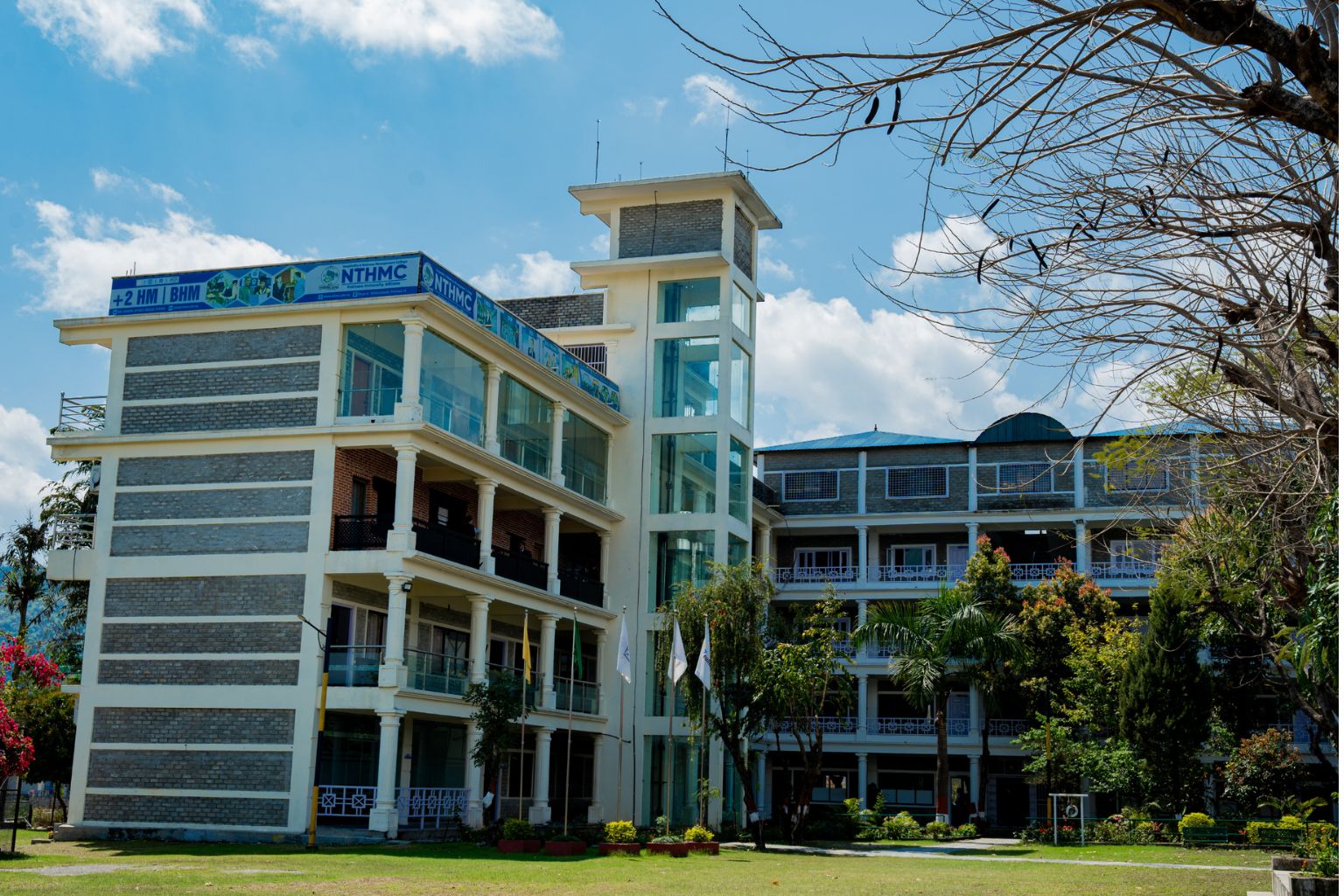
The program is associated with NTHMC's Business Management Center at Gairapatan, Pokhara-4. Its evening and weekend schedule is arranged around participants who are already engaged in professional work.
The EMBA is structured around management responsibilities that require analysis, decision-making, communication, financial understanding, and coordination of people and organizational processes.
Its academic objectives include strengthening strategic thinking, developing confidence across managerial functions, improving the ability to manage people and processes, and preparing participants for broader organizational responsibilities. The program also incorporates interaction among participants with professional backgrounds.
Rather than concentrating on a single management function, the three-semester structure connects finance, economics, organizational management, marketing, human resources, operations, information systems, strategy, international business, and governance.
Eligibility: Applicants need a minimum bachelor’s degree in any discipline or faculty from a recognized university and at least two years of work experience after completing the bachelor’s degree.
This requirement makes the EMBA different from a postgraduate program intended directly for fresh graduates. Professional experience forms part of the entry requirement.
The admission process begins with an online application form.
Applicants proceed to a personal interview as the final stage of selection. Selected applicants are issued an Offer of Admission after completion of the interview process.
Documents required for the application include scanned copies of:
SLC/SEE academic records
Higher Secondary academic records
Bachelor's degree qualifications and transcripts
CV detailing work history
The CV requirement is specifically included for EMBA applicants.
The 48-credit curriculum is completed across three semesters.
Semester I develops the analytical, economic, financial, organizational, and communication base of the program.
| Course | Course Code | Credits |
|---|---|---|
| Data Analysis - I | QT 301.3 | 3 |
| Managerial Economics | MGT 308.3 | 3 |
| Financial Reporting Systems | FIN 301.3 | 3 |
| Organizational Management | MGT 301.3 | 3 |
| Managerial Communication | MGT 302.1.5 | 1.5 |
| Organizational Behavior | MGT 303.1.5 | 1.5 |
Semester I carries 15 credits.
The second semester moves into financial decisions, human resource management, marketing, operations, information systems, business environment, accounting control, and contemporary management issues.
| Course | Course Code | Credits |
|---|---|---|
| Corporate Financial Decisions | FIN 322.3 | 3 |
| Seminars in Contemporary Management Issues | MGT 318.1.5 | 1.5 |
| Human Resource Management | MGT 304.1.5 | 1.5 |
| Marketing Management | MKT 301.1.5 | 1.5 |
| Data Analysis - II | QT 302.1.5 | 1.5 |
| Business Environment in Nepal | MGT 307.1.5 | 1.5 |
| Operations Management | MGT 305.1.5 | 1.5 |
| Management Information System | MIS 301.1.5 | 1.5 |
| Managerial Accounting and Control Systems | FIN 302.1.5 | 1.5 |
Semester II carries 15 credits.
The final semester places greater emphasis on strategic management, international business, marketing strategy, governance, elective study, and development of a business plan.
| Course | Course Code | Credits |
|---|---|---|
| Strategic Management | MGT 306.3 | 3 |
| International Business | MGT 321.1.5 | 1.5 |
| Economics Environment Analysis | MGT 312.15 | 1.5 |
| Strategic Marketing | MKT 303.1.5 | 1.5 |
| Corporate Governance | MGT 319.1.5 | 1.5 |
| Four Electives | — | 6 |
| Business Development Plan | MGT 325.3 | 3 |
Semester III carries 18 credits, bringing the program total to 48 credits.
Students take four electives of 1.5 credits each during the second half of Semester III. The elective pool covers leadership, organizational development, finance, investment, marketing, entrepreneurship, and project-related areas.
Available electives include:
Leadership
Entrepreneurship
Human Resource Development
Organizational Development and Change
Seminars in Contemporary Issues
Project Management
Marketing Research
Consumer Behavior
Promotion Management
New Product Development and Management
International Marketing
Services Marketing
Strategic Finance
Investment Analysis
Financial Institutions and Markets
The elective structure gives participants room to select subjects that correspond with their professional interests within the broader EMBA curriculum.
Two non-credit courses are also included:
Stock Market Analysis
Business Writing
These sit outside the 48-credit academic total.
Business Development Plan is a three-credit course in the final semester.
Its placement at the end of the curriculum brings together subjects studied earlier in the program, including financial analysis, marketing, organizational management, business environment, operations, strategy, and governance.
The combination of courses may support development in areas such as:
Strategic analysis and managerial decision-making
Data interpretation
Financial reporting and financial decisions
Organizational and people management
Managerial communication
Marketing analysis
Operations management
Business environment analysis
Corporate governance
Business planning
These areas are embedded in the formal course structure rather than presented as separate short-term training components.
The EMBA is designed for participants who already have professional experience and are seeking broader management study. The curriculum is relevant to responsibilities in general management, operations, business analysis, consulting, human resource management, finance, banking, business strategy, and entrepreneurship.
Career progression depends on prior experience, professional performance, organizational context, additional skills, and available opportunities. The degree itself does not determine a particular job title or career outcome.
The Executive MBA runs for 1.5 years and is divided into three semesters.
The program carries 48 credits across three semesters.
The Executive MBA at NTHMC is affiliated with Pokhara University.
Applicants need a bachelor’s degree in any discipline or faculty from a recognized university and at least two years of work experience after completing the bachelor's degree.
The program is conducted at NTHMC's Business Management Center in Gairapatan, Pokhara-4.
The stated intake for the Executive MBA is 30 seats.
Yes. Students select four 1.5-credit electives during Semester III. Options cover leadership, entrepreneurship, organizational development, marketing, finance, investment, project management, and related areas.
Applicants submit scanned academic qualifications and transcripts from SLC/SEE, Higher Secondary, and bachelor's level. EMBA applicants also submit a CV detailing their work history.






