The Ten Plus Two (+2) Management program at Nepal Tourism and Hotel Management College (NTHMC), Pokhara is a two-year higher secondary program for students who have completed SEE or SLC. It is conducted at the Hotel Management Campus in Chhinedanda, Pokhara-14, under the National Examinations Board (NEB).
At NTHMC, the +2 curriculum has a clear hospitality orientation. Students study food production, food and beverage service, front office operations, accommodation operations, communication, computer fundamentals, hotel accounting, tourism, and practical hospitality work across Grade 11 and Grade 12.
| Particular | Details |
|---|---|
| Program: | Ten Plus Two (+2) Management |
| Level: | Higher Secondary (+2) |
| Duration: | 2 Years |
| Entry Level: | SEE / SLC |
| Board: | National Examinations Board (NEB) |
| College: | Nepal Tourism and Hotel Management College |
| Campus: | Chhinedanda, Pokhara-14 |
| Medium: | Nepali and English |
| Examination: | NEB Board Examination in Grade 12 |
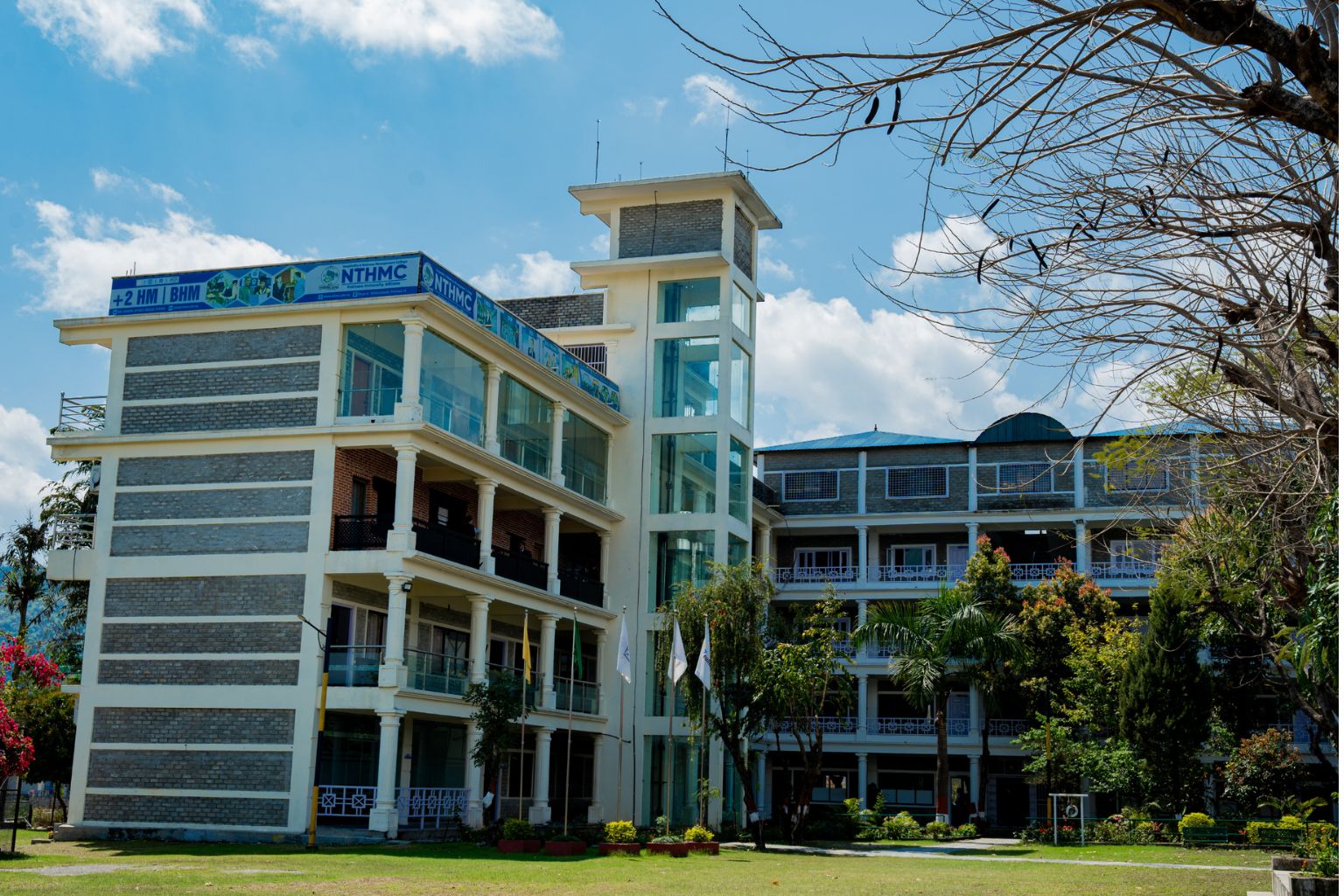
The program is based at the same Chhinedanda campus used for NTHMC's hospitality education, where practical facilities include food production, bakery, food and beverage service, and front office training areas.
The program introduces students to hotel and hospitality operations while they complete higher secondary education.
Instead of limiting study to classroom-based management subjects, the course includes operational areas commonly encountered in hotels and related hospitality settings. Grade 11 begins with foundational hotel-industry subjects, while Grade 12 moves into more developed food production, food and beverage service, accommodation, accounting, tourism, and industrial exposure.
The academic structure may suit students who want to begin hospitality-related study after SEE and who are considering further education in hotel management.
Eligibility: Applicants must have an SLC/SEE pass certificate from a recognized board.
The stated minimum academic requirement is:
Minimum Grade D in all subjects; or
32% marks in all subjects
Selection is through merit or an entrance interview. A written entrance examination is not required.
The first year introduces basic hotel operations together with communication, computing, and supporting academic study.
| Subject Area | Study Focus |
|---|---|
| Foundation of Hotel Industry | Introduction to hotel and hospitality operations |
| Food Production I | Basic Cookery |
| Food & Beverage Service I | Basic food and beverage service |
| Front Office Operations I | Front office operations |
| Accommodation Operations I | Accommodation operations |
| English Communication I | Communication |
| Computer Fundamentals | Basic computer study |
| Mathematics / Social Studies | Supporting academic study |
These subjects form the foundation for the more developed hospitality components studied in Grade 12.
Grade 12 continues the operational subjects while adding hotel accounting, tourism, and industrial exposure.
| Subject Area | Study Focus |
|---|---|
| Food Production II | Continental & Asian Cuisine |
| Food & Beverage Service II | Bar Operations |
| Front Office Operations II | Advanced front office study |
| Housekeeping & Accommodation | Accommodation-related operations |
| Hotel Accounting & Costing | Basic hotel accounting and costing |
| English Communication II | Communication |
| Tourism in Nepal | Tourism study |
| Industrial Exposure | Practical workplace exposure |
Grade 12 concludes with the NEB board examination.
The course is conducted at NTHMC's Hotel Management Campus in Chhinedanda, Pokhara-14. The location gives +2 students access to hospitality training spaces also used within the college's hotel management education.
Relevant practical facilities include:
Food Production Lab
Bakery facilities
Food and Beverage Service Lab
Front Office Lab
These spaces correspond with several core subjects in the +2 curriculum, particularly food production, food and beverage service, front office operations, and accommodation-related learning.
Food Production I begins with basic cookery, while Food Production II moves into Continental and Asian cuisine.
The two-year sequence gives students exposure to kitchen-related study from the beginning of the program rather than leaving food production entirely to later higher education.
This practical component is closely connected with the hospitality orientation of the program.
Food & Beverage Service is studied in both years.
Grade 11 introduces the service area, while Grade 12 includes Bar Operations. The subject gives students academic and practical exposure to food and beverage service within hospitality operations.
Front Office Operations is also taught across both Grade 11 and Grade 12.
Students begin with Front Office Operations I and continue with Front Office Operations II. Accommodation Operations appears in Grade 11, followed by Housekeeping & Accommodation in Grade 12.
Together, these subjects introduce service areas concerned with guest reception, accommodation, and hotel operations.
The second year introduces Hotel Accounting & Costing and Tourism in Nepal.
Hotel Accounting & Costing adds a business and financial element to the hospitality-focused curriculum, while Tourism in Nepal connects hotel management study with the broader tourism field.
This combination gives Grade 12 students exposure to operational hospitality subjects as well as supporting management-related study.
Industrial Exposure appears in Grade 12.
Its inclusion adds a practical component beyond regular classroom and laboratory study. Students are introduced to workplace-oriented hospitality learning alongside their academic subjects.
Through the combination of academic subjects, laboratory-based work, and industrial exposure, students may develop introductory abilities in areas such as:
Basic food preparation
Food and beverage service
Front office operations
Accommodation and housekeeping functions
Hospitality communication
Computer use
Hotel accounting and costing
Understanding of tourism-related operations
Workplace communication and service routines
These are foundation-level skills within a higher secondary program rather than advanced professional specializations.
Students completing the +2 program may continue to higher education in hotel management. NTHMC identifies the Bachelor of Hotel Management as a progression option after completing the higher secondary program.
The college also offers a four-year Bachelor of Hotel Management program affiliated with Pokhara University, allowing students interested in hospitality to continue into bachelor-level study within the institution.
Further study decisions depend on the eligibility and admission requirements of the bachelor’s program being considered.
The program provides introductory preparation for hospitality-related work as well as further education.
After completing the course, students may consider entry-level work connected with areas such as:
Hotel reception
Food and beverage service
Kitchen support
Housekeeping
Travel and tourism services
The range of roles available to an individual depends on practical competence, further training, employer requirements, work experience, and available positions. The +2 qualification can also serve as an academic base for continued hospitality study.
The program may be relevant to SEE graduates who are interested in learning how hotels and hospitality operations work while completing Grade 11 and Grade 12.
It places particular attention on operational subjects. Students encounter food production, service, front office work, accommodation, accounting, tourism, and industrial exposure rather than studying management only as a general academic stream.
For students already considering hotel management at the bachelor's level, the course also provides early exposure to several hospitality areas that appear again in advanced study.
The program has a duration of two years, covering Grade 11 and Grade 12.
The Ten Plus Two (+2) Management program at NTHMC is under the National Examinations Board (NEB).
The program is conducted at NTHMC's Hotel Management Campus in Chhinedanda, Pokhara-14.
Applicants must have passed SLC/SEE from a recognized board. The stated minimum academic requirement is Grade D or 32% marks in all subjects.
No written entrance examination is required. Selection is through merit or an entrance interview.
The curriculum includes Foundation of Hotel Industry, Food Production, Food & Beverage Service, Front Office Operations, Accommodation Operations, English Communication, Computer Fundamentals, Hotel Accounting & Costing, Tourism in Nepal, and Industrial Exposure.
Yes. The curriculum includes practical hospitality subjects and industrial exposure, supported by food production, bakery, food and beverage service, and front office facilities at the Chhinedanda campus.
Yes. Bachelor of Hotel Management is identified as a further-study pathway after completion of the +2 program.