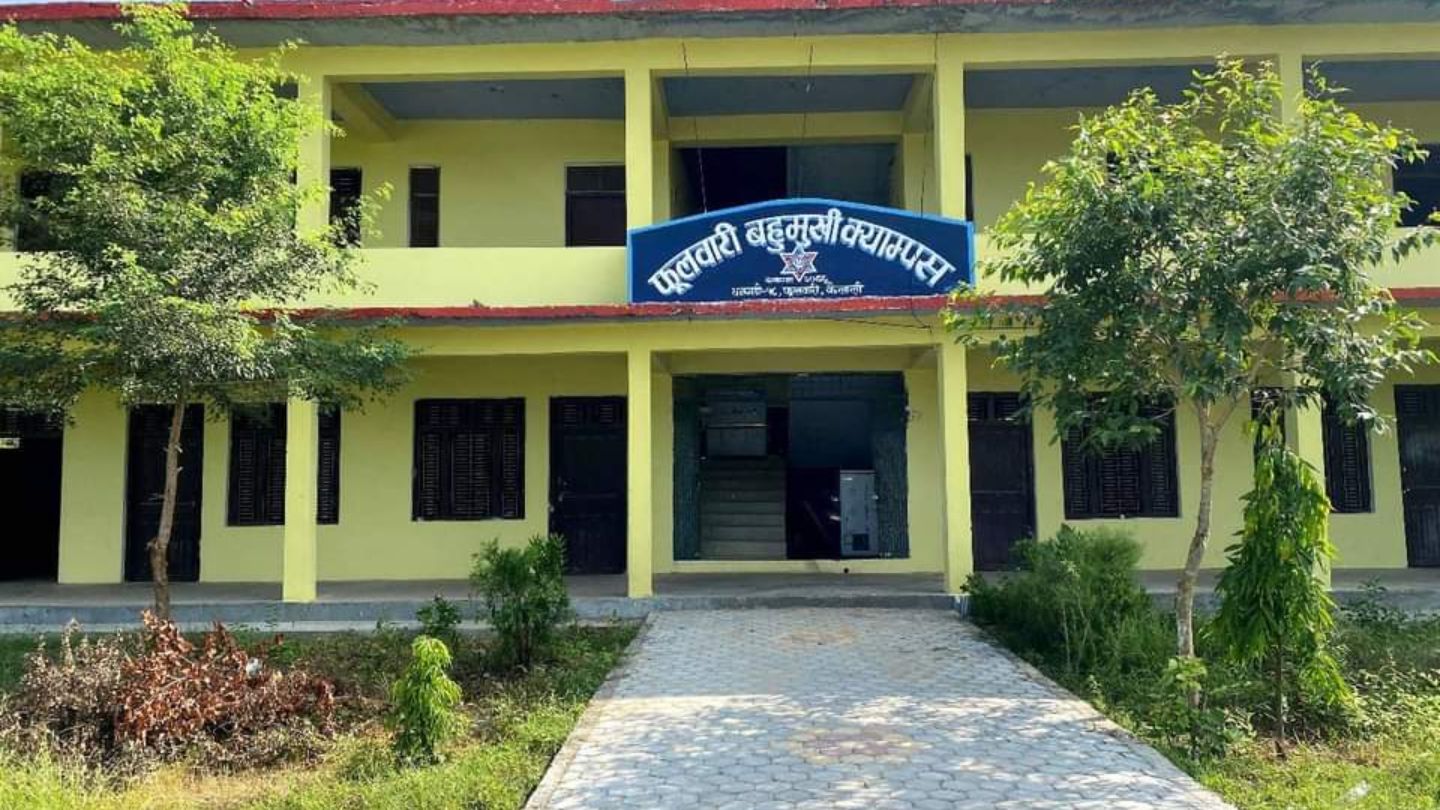
The Bachelor of Education (B.Ed.) at Phulbari Campus is a four-year bachelor’s program conducted under the Faculty of Education, Tribhuvan University. Phulbari Campus is a community-based, non-profit higher education institution located in Dhangadhi Sub-Metropolitan City–18, Kailali.
The B.Ed. program combines professional education courses, communication skills, subject specializations, and teaching practice. Students select one major and one different minor specialization, allowing them to develop knowledge and teaching competence in two subject areas.
Course: Bachelor of Education (B.Ed.)
Institution: Phulbari Campus
Affiliation: Tribhuvan University
Faculty: Faculty of Education
Duration: Four academic years
Study System: Annual system
Total Courses: 22
Full Marks: 2,200
Location: Dhangadhi-18, Kailali
Practical Component: Teaching internship or practicum
The four-year B.Ed. is both an academic and professional program. It is structured to prepare students to teach two subjects at the secondary level through a combination of education theory, subject knowledge, instructional methods, and classroom practice.
The curriculum includes communication courses, professional core courses, ten major-specialization courses, five minor-specialization courses, and a teaching practicum. Students complete General Nepali and General English as communication courses. Professional studies include Philosophical and Sociological Foundations of Education, Educational Psychology, Curriculum and Evaluation, and an elective related to instructional technology or ICT in education.
Applicants must have passed the Higher Secondary Education examination, Grade 12, the Proficiency Certificate Level of Tribhuvan University, or an equivalent qualification. Eligibility for the selected major specialization depends on the applicant’s previous subjects.
Key specialization requirements include:
Nepali Education: Nepali as a major subject carrying at least 200 marks.
English Education: English or Linguistics as a major, at least 50 percent in General English, or 50 percent in the entrance examination conducted by the concerned department.
Mathematics Education: Mathematics as a major subject carrying at least 200 marks.
Science Education: Physics, Chemistry, and Biology, each carrying at least 100 full marks.
Health and Physical Education: A background in Health and Physical Education or specified related subjects. Applicants without that background must pass a physical-fitness entrance test.
Population Education: Previous study in one of the specified areas, including Population Studies, Geography, Economics, Science, Mathematics, Health and Physical Education, Nursing, Commerce, or related subjects.
Geography, Economics, Political Science, and History Education: Grade 12, PCL, or an equivalent qualification from any faculty.
Students must pass 22 courses carrying 2,200 marks. The annual distribution is 600 marks in the first year, 600 marks in the second year, 500 marks in the third year, and 500 marks in the fourth year.
The curriculum is divided into five groups:
Communication Skills: 2 courses carrying 200 marks
Professional Core Areas: 4 courses carrying 400 marks
Specialization Major: 10 courses carrying 1,000 marks
Specialization Minor: 5 courses carrying 500 marks
Teaching Internship or Practicum: 1 course carrying 100 marks
Professional core subjects are distributed across the four years. The first three years include the foundations of education, educational psychology, and curriculum and evaluation. In the fourth year, students select Instructional Technology, ICT in Education, or ICT in a Specialized Subject.
Major specialization areas include Nepali Language Education, English Language Education, Mathematics Education, Science Education, Health and Physical Education, Population Education, Geography Education, Economics Education, History Education, and Political Science Education.
Students select ten courses from one major area and five courses from a different minor area. A student cannot select the same subject as both the major and minor. Students majoring in Physical Science Education are required to select Biological Science as their minor specialization.
Teaching practice is completed during the fourth year and carries 100 marks. It enables students to connect educational theory, subject knowledge, lesson planning, instructional methods, and classroom responsibilities with practical teaching experience.
The fourth year also includes advanced major and minor courses. Depending on the chosen specialization, these may address subject teaching methods, educational technology, research, literature, health promotion, sports training, population studies, environmental studies, or other subject-specific areas.
Phulbari Campus provides a library, computer laboratory, free Wi-Fi, digital learning materials, internal examinations, assessment and feedback, scholarships, academic orientation, practical examinations, educational tours, and extracurricular activities. The campus also uses group work, project work, presentations, case studies, and digital learning support through the Moodle Learning Management System.
The B.Ed. program is structured for students interested in subject teaching and education-related responsibilities. Its combination of major and minor specializations supports preparation in two teaching areas, while professional courses develop an understanding of learners, curriculum, evaluation, instructional technology, and educational foundations.
Professional opportunities depend on academic performance, subject specialization, teaching ability, experience, recruitment conditions, and applicable professional requirements.
The program runs for four academic years under the annual system.
It is affiliated with Tribhuvan University and conducted under the Faculty of Education.
Students must pass 22 courses carrying a total of 2,200 marks.
No. The minor specialization must be different from the major specialization.
Yes. The fourth year includes a 100-mark teaching internship or practicum.