BSc Environmental Science at Saptagandaki Multiple Campus (SMC), Bharatpur Metropolitan Ward No. 10, Chitwan, is offered under Tribhuvan University (TU) and conducted through the TU Institute of Science and Technology (IoST). The course follows a four-year structure, updated from a three-year format since 2012.
The overall BSc General framework is set at 2000 marks and combines theory and practical learning, including environmental science theory/practical papers from the first year, applied statistics in the second year, research methodology and electives in the third year, and project/field-oriented work in the fourth year.
Course Name: BSc Environmental Science (BSc Env.)
College: Saptagandaki Multiple Campus (SMC)
Location: Bharatpur Metropolitan Ward No. 10, Chitwan, Bagmati Province, Nepal
Affiliation / Conducting Body: Tribhuvan University (TU), Institute of Science and Technology (IoST)
Duration: 4 years
Total Program Marks (BSc General framework): 2000 marks
Assessment Format: Theory and practical components (commonly 100 and 50 marks, with field components in selected courses)
Admission (minimum): NEB Grade 12 Science with at least 1.6 GPA (minimum D in each subject), plus IoST entrance exam and campus interview; selection by merit list
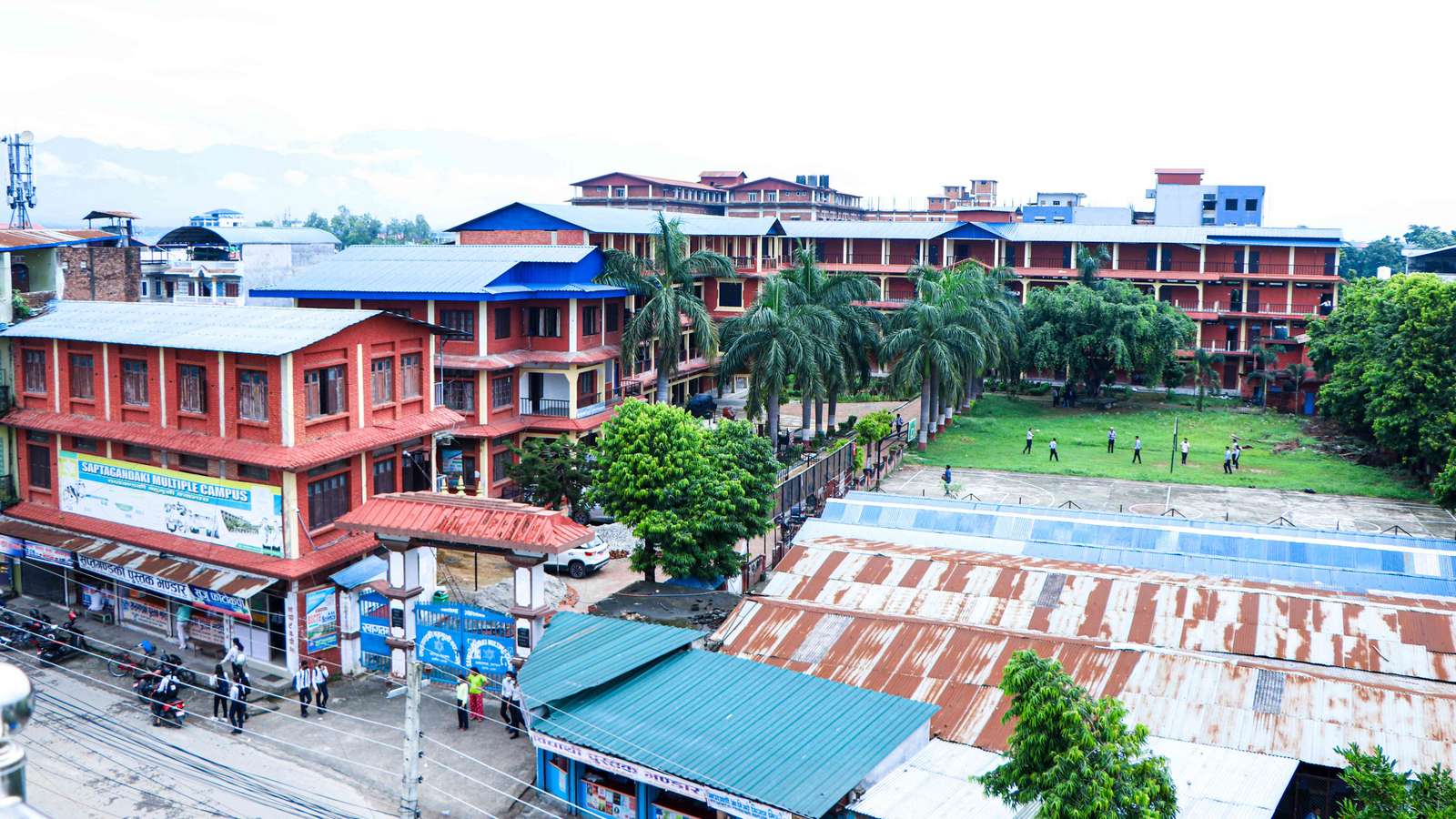
BSc Environmental Science at SMC sits within TU IoST’s BSc General structure and builds a science foundation alongside discipline-focused environmental studies. Students study environmental science theory and practical papers from the first year, progress to fundamentals and applied statistics in the second year, add research methodology and elective study in the third year, and complete advanced environmental management themes and project/field-oriented work in the fourth year. This structure supports academic readiness for science-based roles that require laboratory work, field engagement, and research writing.
Sc.Comu. 101 – Science Communication (50)
Environmental Science:
Env. 101 – Environment Science Theory (100)
Env. 102 – Environment Science Practical (50)
Supporting science courses are listed under Biology and Physical groups, including Chemistry, Botany, Physics, and Mathematics in the year-wise structure.
Appd. Stat 201 – Applied Statistics (50)
Environmental Science:
Env. 201 – Fundamentals of Environment Science Theory (100)
Env. 202 – Fundamentals of Environment Science Practical (50)
Supporting courses include Chemistry II and Botany theory/practical papers in the year-wise structure.
Rm 305 – Research Methodology (Th+Pr 80+20)
Environmental Science:
Env. 301 – Environmental Pollution & Resource Conservation Theory (100)
Env. 302 – Environmental Pollution & Resource Conservation Practical (50)
Env. 303 – Environmental Assessment & Project Management (Elective) (50)
Supporting courses include Botany papers listed in the same year block.
Env. 401 – Biodiversity Conservation & Management Theory (100)
Env. 402 – Biodiversity Conservation & Management: Practical (30) + Field (20)
Env. 403 – Pollution Control & Environmental Governance Theory (100)
Env. 404 – Pollution Control & Environmental Governance: Practical (30) + Field (20)
Env. 405 – Urbanization & Sustainable Development or Env. 406 – Project Work (100)
Env. 407 – Climate Change & Eco System Management (50)
Com 408 – Computational Course (50)
Practical papers are integrated across years, including Environmental Science practical courses in the first and second years.
Research Methodology includes theory and practical components in the third year.
Field components appear in the fourth-year biodiversity and pollution-control courses.
The fourth year includes a choice between Urbanization & Sustainable Development and Project Work.
Within the BSc General framework under TU IoST, the course aims to:
build understanding of science and technology through theory and practical learning
develop familiarity with research and project work, including its academic application
support progression toward postgraduate entrance preparation and employment readiness in science-related fields
After completing the four-year structure, students can:
explain key environmental science concepts and apply them in laboratory settings
use applied statistics and research methodology for academic work and reporting
engage in field-based learning in biodiversity conservation and pollution-control themes
complete project-oriented learning in the final year as required by the course structure
laboratory techniques through practical papers across multiple years
field learning and reporting through fourth-year field components
research writing and study design through Research Methodology
project planning exposure through the Environmental Assessment & Project Management elective and final-year project option
SMC supports science study through:
separate laboratories for Physics, Chemistry, Biology, and Environment Science
a three-storey library and a separate e-library adjoining the Master’s Degree library
classrooms equipped with multimedia projectors for regular instruction
NEB Grade 12 Science graduates with at least 1.6 GPA (minimum D in each subject)
Plus two Science / I.Sc / A-level or equivalent recognized by TU (subject criteria apply)
Applicants must secure a minimum pass score in the entrance examination conducted by the Dean Office of TU IoST and pass the selection interview conducted by the concerned department at the campus.
The TU IoST entrance exam is of two hours, and separate entrance exams are taken for physics and biology groups at separate times.
Admission is finalized through the merit list.
The BSc General framework uses theory and practical evaluation, commonly 100 marks for theory and 50 marks for practical, with field components included in selected fourth-year papers.
Graduates commonly pursue roles connected to:
teaching and training in schools or tuition settings
research support roles aligned with science disciplines
work across government and non-government organizations, corporate houses, and industries where science graduates are relevant (role and eligibility depend on employer requirements)
TU IoST-affiliated BSc General structure with Environmental Science theory, practical, field, and project-oriented learning across four years
dedicated Environment Science laboratory support along with Physics, Chemistry, and Biology labs
library and e-library access for reference and academic reading
BSc Environmental Science at Saptagandaki Multiple Campus (SMC), Chitwan, is delivered under Tribhuvan University’s Institute of Science and Technology (IoST) within a four-year structure. The course combines environmental science theory and practical papers from the first year, adds applied statistics and research methodology, and includes field components and a final-year project-oriented pathway. Admission follows NEB Grade 12 Science eligibility requirements, a TU IoST entrance exam, a campus interview, and merit-based selection.
The course follows a four-year structure under TU IoST.
The program is under Tribhuvan University (TU) and conducted through the TU Institute of Science and Technology (IoST).
Applicants must be NEB Grade 12 Science graduates with at least 1.6 GPA (minimum D in each subject).
Yes. Applicants must pass the IoST entrance exam and the campus selection interview, and admission is finalized through the merit list.
The TU IoST entrance exam is of two hours.
Yes. Practical papers are included across multiple years, and fourth-year courses include field components in biodiversity conservation and pollution-control themes.
The fourth year includes an option between Urbanization & Sustainable Development and Project Work.