Bachelor of Arts (BA) at Saptagandaki Multiple Campus (SMC), Bharatpur Metropolitan Ward No. 10, Chitwan, is a Tribhuvan University (TU) program under the Faculty of Humanities and Social Sciences (FOHSS). The course runs for four years and follows an annual examination system.
BA at SMC offers humanities and social science subject groups that include English, Sociology, Rural Development, Journalism and Mass Communication, and Social Work, with a mix of theory and practical components in selected papers. Students study in a campus environment supported by a three-storey library with an adjoining e-library, a mass communication lab for journalism practice, and multimedia-equipped classrooms.
Course Name: Bachelor of Arts (BA)
College: Saptagandaki Multiple Campus (SMC)
Location: Bharatpur Metropolitan Ward No. 10, Chitwan, Bagmati Province, Nepal
Affiliation: Tribhuwan University (TU)
Faculty: Faculty of Humanities and Social Sciences (FOHSS), TU
Duration: 4 years
Study Mode: Annual examination system
Subject Groups at SMC (shown in course list): English, Sociology, Rural Development, Journalism and Mass Communication, Social Work
Entrance Exam: Not required for BA
Campus Admission Requirement (listed): NEB Grade 12 with at least 1.8 GPA or equivalent (for BA)
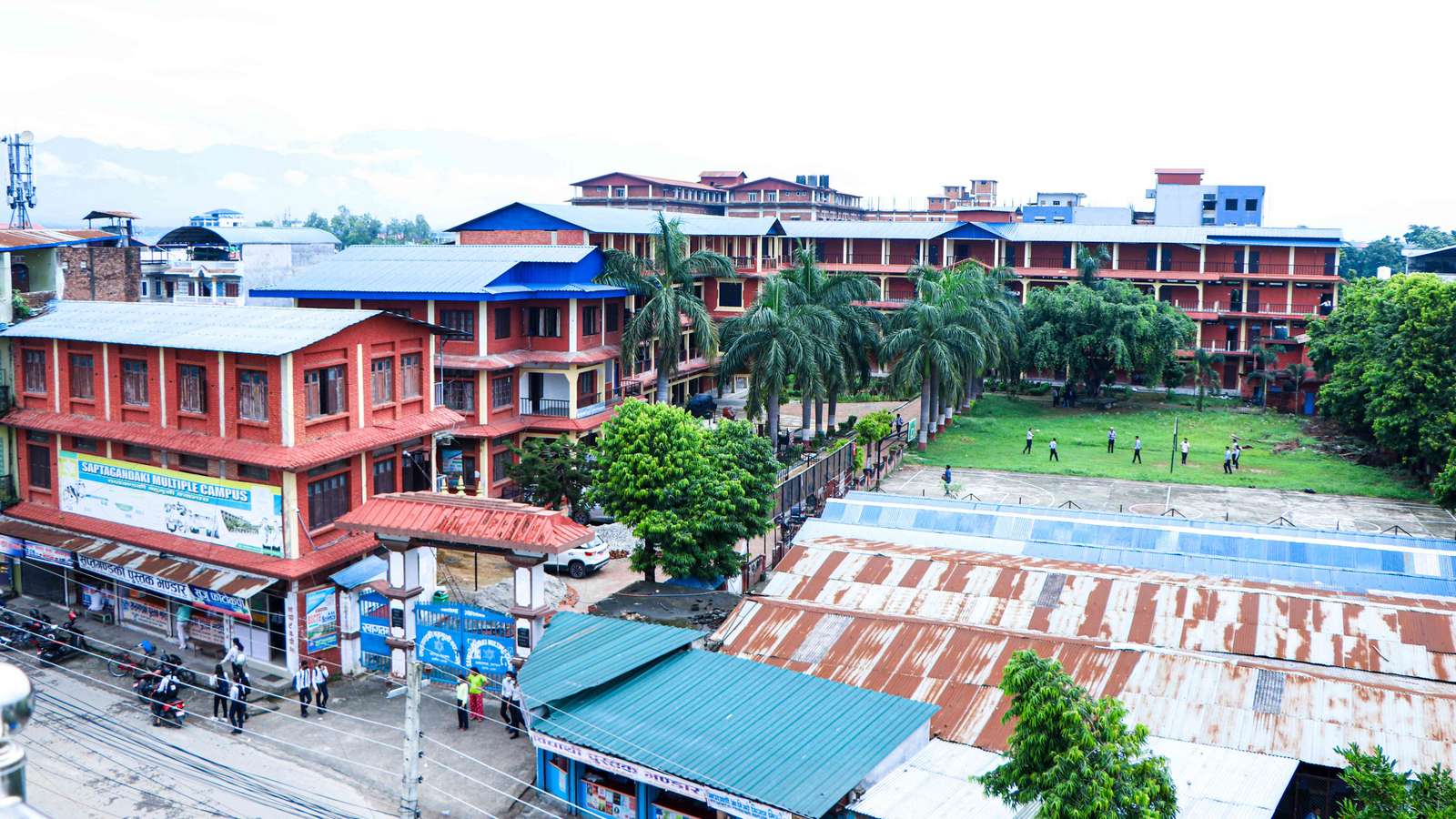
BA is an undergraduate program focused on humanities and social sciences. At SMC, students take compulsory language papers and then progress through subject-group specializations. Several papers include theory and practical evaluation patterns such as 80+20, 70+30, 60+40, and 50+50, depending on the subject group. The annual system is suited for students who prefer year-wise progression and structured subject coverage.
The BA course list at SMC shows multiple subject groups, including:
English
Sociology
Rural Development (RD)
Journalism and Mass Communication (JMC)
Social Work (SW)
Selected papers show combined theory and practical splits (for example, 80+20, 70+30, 60+40, 50+50).
Compulsory
Ceng 201 – Comp. English (100)
Cnep 301 – Comp. Nepali (100)
Major (subject-group entry papers)
Eng 311 – Western Intell. Tradi., Literacy Th (100)
So 401 – Introduction to Sociology (Th+Pr 80+20)
RD 311 – Rural Dev. Theories and Approaches (Th+Pr 80+20)
JMC 311 – Intro. to Jour. & Mass Comm. (Th+Pr 70+30)
SW 311 – Concepts & Principles of Social Work (60+40)
Compulsory
CENG 202 – Comp. English II (100)
Specialization (by group)
English Group: Eng 312 (100), Eng 313 (100)
Rural Development Group: RD 312 (80+20), RD 313 (80+20)
JMC Group: JMC 312 (70+30), JMC 313 (70+30)
Social Work Group: SW 312 (60+40), SW 313 (60+40)
Sociology Group: So 402 (80+20), So 403 (80+20)
English Group: English 314 (100), English 315 (100)
Rural Development Group: RD 314 (80+20), RD 315 (80+20)
JMC Group: JMC 314 (70+30), JMC 315 (70+30)
Social Work Group: SW 314 (60+40), SW 315 (60+40)
Sociology Group: So 404 (80+20), So 405 (80+20)
Functional Paper (listed): Nep 316 (Th+Pr 50+50), RD 316 (50+50)
BA aims to provide broad academic grounding in humanities and social sciences, develop subject knowledge and skills for professional and academic pathways, and support preparation for teaching, research, and social responsibilities across public and private sectors.
By the end of the program, students gain:
Subject knowledge in a chosen humanities or social science group
Communication skills through compulsory English and Nepali papers
Practical experience in subjects that include theory/practical evaluation components
Foundational preparation for roles in education, research, civil service, NGOs/INGOs, media, and related fields (based on individual specialization)
Academic writing and reading skills through compulsory language papers
Research and field-oriented learning in groups that include practical components
Communication and media practice support for journalism students through lab-based work on campus
Community and development-oriented perspective through Rural Development and Social Work group papers
SMC supports BA learning through:
Library and e-library: Three-storey Mrs. Krishna Kumari Gurung Library and a separate e-library with e-resources
Mass Communication Lab: Radio station and television set for journalism practice
Classrooms: Spacious, well-ventilated classrooms equipped with multimedia projectors
Eligibility includes completion of intermediate level (I.A) or +2 or an equivalent qualification recognized by TU.
BA admission does not require an entrance exam.
The campus admission requirement listed for BA is NEB Grade 12 with at least 1.8 GPA (or equivalent) in the relevant discipline.
BA follows an annual examination system under Tribhuvan University.
BA graduates commonly pursue pathways across:
Education sector roles in schools and colleges
Research and academic support roles
NGOs/INGOs and community organizations
Civil service and private organizations
Writing, editing, journalism, and related communication roles (based on specialization and experience)
TU-affiliated BA under FOHSS with annual examinations
Multiple humanities and social science subject groups listed in the course structure
Library and e-library support for reading and academic reference
Mass communication lab support for journalism practice
Multimedia-equipped classrooms for regular instruction
Bachelor of Arts (BA) at Saptagandaki Multiple Campus (SMC), Chitwan is a four-year Tribhuvan University program under FOHSS that follows an annual examination system.
The subject-group structure includes English, Sociology, Rural Development, Journalism and Mass Communication, and Social Work, with theory and practical components in selected papers. Students benefit from campus learning resources such as the library and e-library, a mass communication lab, and multimedia-equipped classrooms.
BA runs for four years.
BA at SMC is affiliated with Tribhuwan University (TU).
BA admission does not require an entrance exam.
BA follows an annual examination system.
The course list shows English, Sociology, Rural Development, Journalism and Mass Communication, and Social Work groups.
BA students have access to the library and e-library, multimedia-equipped classrooms, and a mass communication lab for journalism practice.