Master of Education (M.Ed.) at Saptagandaki Multiple Campus (SMC), Bharatpur Metropolitan Ward No. 10, Chitwan (Bagmati Province), is a Tribhuvan University (TU) Faculty of Education program. M.Ed. is a two-year master’s degree structured across four semesters with a total of 66 credit hours.
The course structure is organized into core courses and specialization-area courses, supported by elective components, teaching practice, and thesis work. The program builds advanced understanding of education, teaching-learning, and research, preparing graduates for professional roles in teaching, training, academic leadership, and education-sector services.
Course Name: Master of Education (M.Ed.)
College: Saptagandaki Multiple Campus (SMC)
Location: Bharatpur Metropolitan Ward No. 10, Chitwan, Bagmati Province, Nepal
University / Faculty: Tribhuvan University (TU), Faculty of Education
Duration: 2 years
System: Semester (4 semesters)
Total Credit Hours: 66
Credit Distribution: 18 credit hours each in Semesters I–III; 12 credit hours in Semester IV
Course Structure: Core courses, specialization, elective, teaching practice, thesis
Entrance Requirement: TU Faculty of Education entrance test; admission through merit list
Minimum Academic Eligibility: Bachelor’s degree in Education from TU-recognized colleges/universities (subject-specific requirements apply)
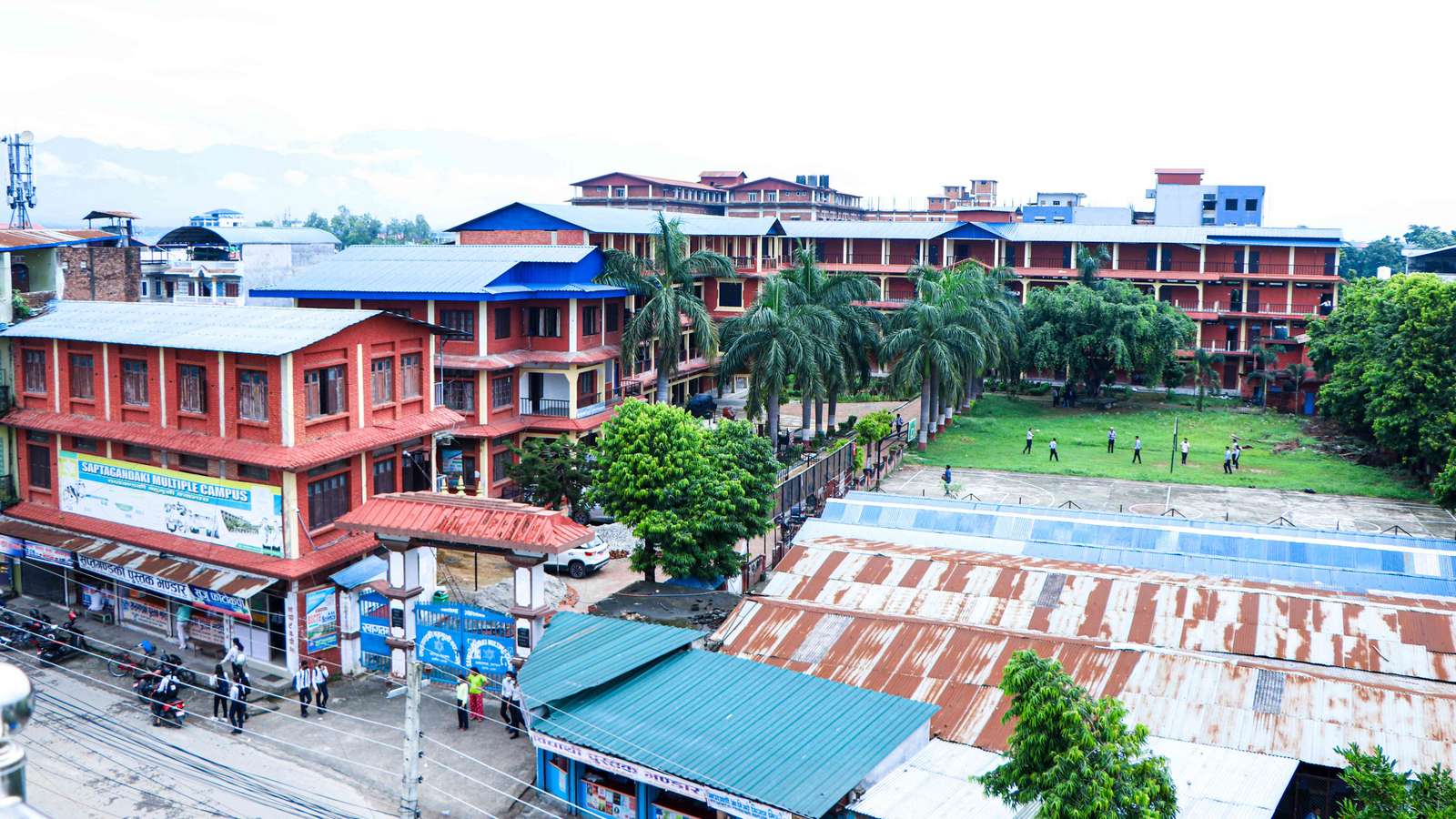
M.Ed. supports educators who want deeper academic and professional preparation in education. The program develops advanced knowledge in educational foundations, psychology, curriculum, measurement and evaluation, and research methodology. Students study within a specialization area such as English Education, Educational Planning and Management (EPM), Health Education, or Mathematics Education. The program also includes teaching practice and thesis work that strengthen professional competence and research skills.
Ed. 511: Foundation of Education (3 credit hours)
Ed. 513: Advanced Educational Psychology (3 credit hours)
Ed. 521: Curriculum Practices (3 credit hours)
Ed. 522: Education and Development (3 credit hours)
Ed. 532: Research Methodology in Education (3 credit hours)
Ed. 533: Measurement and Evaluation in Education (3 credit hours)
M.Ed. includes specialization-area courses each semester. Course titles vary by specialization. Examples available in the syllabus include:
Eng. Ed. 515: Phonetics and Phonology
Eng. Ed. 516: English Usage and Use
Eng. Ed. 518: Second Language Acquisition (Theory and Research)
Eng. Ed. 525: Linguistics in Application
Eng. Ed. 527: Critical Discourse Analysis
Eng. Ed. 535: English Language Teaching Pedagogy and Materials
Eng. Ed. 539: Dimensions of Teacher Development
Ed. PM 515: Planning Education for Change
Ed. PM 516: Theories of Education Management and Leadership
Ed. PM 517: Educational Administration and Supervision
Ed. PM 527: Educational Management Information System
Ed. PM 536: Financing of Education
Ed. PM 538: Schools Management
Ed. PM 539: Social Justice Education
H.Ed. 515: Advanced Health Education
H.Ed. 516: Fundamentals of Epidemiology
H.Ed. 518: Health Promotion
H.Ed. 526: Nutrition Education
H.Ed. 529: Health Promoting Schools
H.Ed. 535: Instructional Technology in Health Education
H.Ed. 538: Applied Health Education Research
Math. Ed. 515: Foundation of Mathematics Education
Math. Ed. 516: Abstract Algebra
Math. Ed. 525: Trends in Mathematics Education
Math. Ed. 526: Linear Algebra
Math. Ed. 528: Complex and Numerical Analysis
Math. Ed. 535: Teaching Undergraduate Mathematics
M.Ed. includes:
Elective components (as per specialization requirements)
Teaching practice
Thesis work
Semester IV carries 12 credit hours and includes these advanced and practical requirements within the program structure.
M.Ed. focuses on:
Strengthening skills and knowledge to identify, analyze, and address key educational problems
Extending academic and professional competence within a chosen specialization
Building capacity to diagnose learner needs and apply suitable instructional strategies
Supporting professional growth through research engagement and lifelong learning in education
After completing M.Ed., graduates are prepared to:
Apply advanced educational psychology and foundation knowledge in professional practice
Work with curriculum practices and education-development concepts in educational settings
Use research methodology and evaluation tools for academic and institutional work
Demonstrate specialization-area competence aligned with teaching, training, and academic roles
Complete teaching practice and thesis requirements within the program framework
Advanced academic reading and writing in education
Research skills: methodology, analysis, and reporting
Measurement and evaluation for learning and institutional assessment
Specialization-area expertise (English Education, EPM, Health Education, Mathematics Education)
Professional practice through teaching practice and thesis work
SMC supports M.Ed. study through:
A three-storey library with an adjoining e-library for academic reading and reference
Multimedia-supported classrooms for structured teaching-learning
Computer lab access available on campus for M.Ed. Mathematics-related academic work
Bachelor’s degree in Education from colleges/universities recognized by Tribhuvan University
Subject-specific eligibility requirements apply for admission to different specialization areas
Admission requires passing an entrance test conducted by the TU Faculty of Education
Admission is finalized through the published merit list after the entrance test
M.Ed. follows the semester system across four semesters
Credit distribution is 18 credit hours each in Semesters I–III and 12 credit hours in Semester IV
Teaching practice and thesis are part of program completion requirements
M.Ed. supports professional pathways in:
Teaching and teacher training
Academic leadership and education administration
Education-sector programs in NGOs/INGOs and community organizations
Research and education-focused projects and institutions
Career direction depends on specialization, experience, and sector requirements.
M.Ed. is a two-year program with four semesters.
The program requires 66 credit hours.
Core courses include Foundation of Education, Advanced Educational Psychology, Curriculum Practices, Education and Development, Research Methodology in Education, and Measurement and Evaluation in Education.
Specialization areas include English Education, Educational Planning and Management (EPM), Health Education, and Mathematics Education.
Yes. Admission requires passing the entrance test conducted by the TU Faculty of Education, followed by merit-list selection.
Yes. Teaching practice and thesis work are part of the program structure.