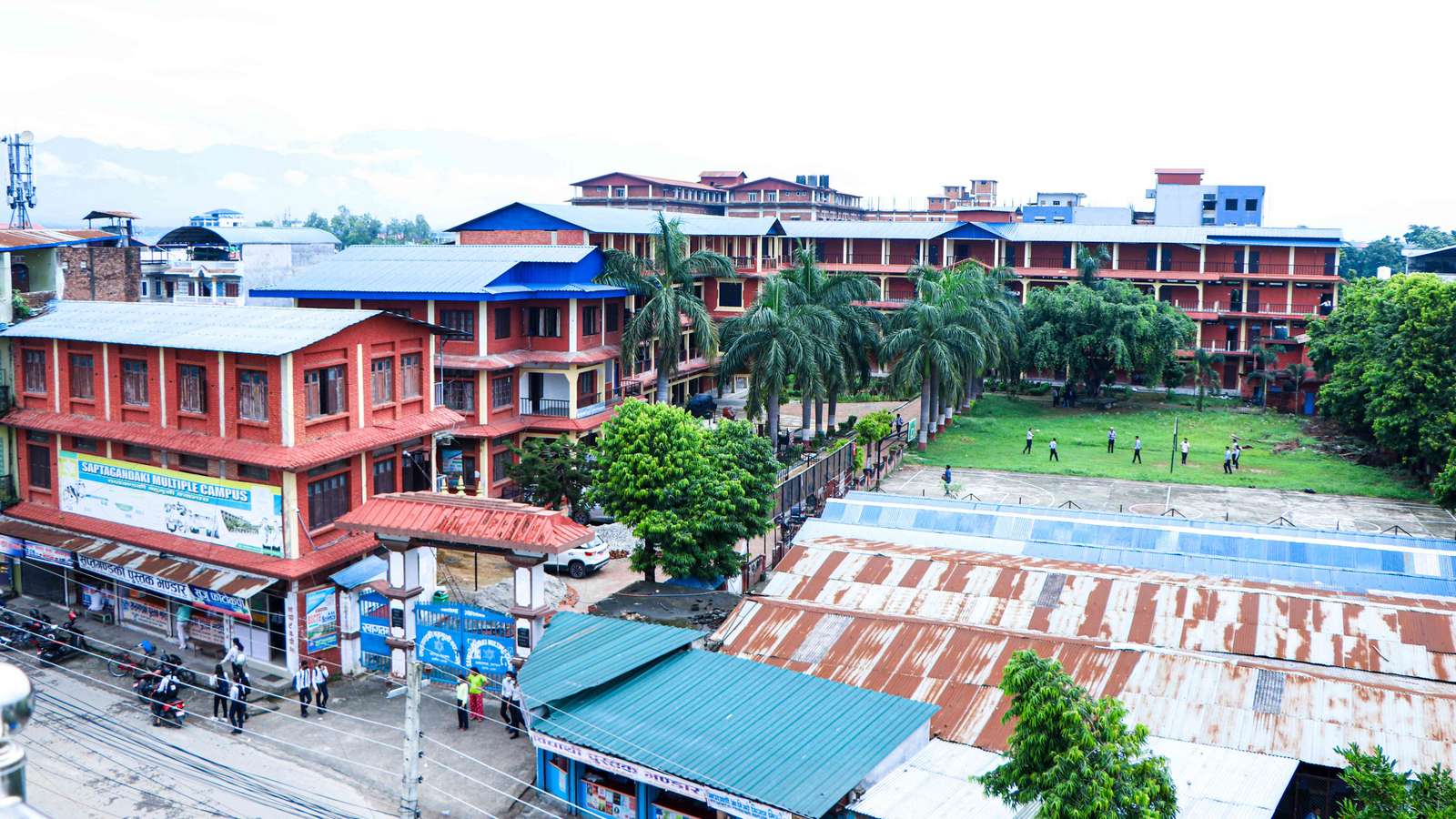
Bachelor of Computer Application (BCA) at Saptagandaki Multiple Campus (SMC), Bharatpur Metropolitan Ward No. 10, Chitwan, is a Tribhuvan University (TU) semester-based undergraduate program.
The course runs for four years and is structured to build strong foundations in core IT areas, with a primary academic focus on developing software developers and application-focused IT manpower.
The program combines computing fundamentals, programming, systems, databases, networking, web and cloud technologies, professional ethics, and projects across multiple semesters, ending with a major final project and electives.
Course Name: Bachelor of Computer Application (BCA)
College: Saptagandaki Multiple Campus (SMC)
Location: Bharatpur Metropolitan Ward No. 10, Chitwan, Bagmati Province, Nepal
Affiliation: Tribhuwan University (TU)
Duration: 4 years
Study Mode: Semester system; grade-based marking
Total Credits (4 years): 126
Computer Subject Credits: 96
Evaluation Weight: 60% final exam + 40% internal exam/internal evaluation
Projects/Internship: Project I (Semester 4), Project II (Semester 6), Internship (Semester 7), Project III (Semester 8)
BCA is designed for students who want a practical IT degree focused on application development and core computing skills. The program builds competence in programming, software engineering, databases, operating systems, networking, web technologies, cloud computing, professional ethics, and project work. Graduates commonly move into software development and other applied IT roles such as networking and security, database, design and multimedia, system administration, quality assurance, and related pathways.
Computer Fundamentals and Applications (CACS101) — 4
Society and Technology (CASO102) — 3
English I (CAEN103) — 3
Mathematics I (CAMT104) — 3
Digital Logic (CACS105) — 3
C Programming (CACS151) — 4
Financial Accounting (CAAC152) — 3
English II (CAEN153) — 3
Mathematics II (CAMT154) — 3
Microprocessor and Computer Architecture (CACS155) — 3
Data Structures and Algorithms (CACS201) — 3
Probability and Statistics (CAST202) — 3
System Analysis and Design (CACS203) — 3
OOP in Java (CACS204) — 3
Web Technology (CACS205) — 3
Operating System (CACS251) — 3
Numerical Methods (CACS252) — 3
Software Engineering (CACS253) — 3
Scripting Language (CACS254) — 3
Database Management System (CACS255) — 3
Project I (CAPJ256) — 2
MIS and E-Business (CACS301) — 3
DotNet Technology (CACS302) — 3
Computer Networking (CACS303) — 3
Introduction to Management (CAMG304) — 3
Computer Graphics and Animation (CACS305) — 3
Mobile Programming (CACS351) — 3
Distributed System (CACS352) — 3
Applied Economics (CAEC353) — 3
Advanced Java Programming (CACS354) — 3
Network Programming (CACS355) — 3
Project II (CAPJ356) — 2
Cyber Law and Professional Ethics (CACS401) — 3
Cloud Computing (CACS402) — 3
Internships (CAIN403) — 3
Elective I — 3
Elective II — 3
Operations Research (CAOR451) — 3
Project III (CAPJ452) — 6
Elective III — 3
Elective IV — 3
Applied Psychology (CAPS476)
Geographical Information System (CACS477)
IT in Banking (CACS478)
Hotel Information System (CACS479)
Enterprise Resource Planning (CAER480)
Knowledge Engineering (CACS482)
Advanced DotNet Technology (CACS483)
Database Programming (CACS484)
Database Administration (CACS485)
Network Programming (CACS486)
Develop software developers for the IT industry and application-focused IT manpower.
Build a foundation across core areas of the IT sector so students can progress into specific interest areas after graduation.
By completing the BCA program, students complete learning in:
programming and software development (C, Java, scripting, .NET, mobile programming)
software engineering and system analysis/design
databases and data management
operating systems and distributed systems
networking, cloud computing, and professional ethics
applied project work and internship exposure
Application development and software engineering workflow
Problem-solving using data structures, algorithms, statistics, and numerical methods
Database design and administration foundations
Network and cloud concepts
Professional responsibility through cyber law and ethics coursework
Project planning, documentation, and presentation through projects and internship components
SMC supports BCA students with:
Computer laboratories equipped for BCA and connected to high-speed internet (40 computers).
Library and e-library services for academic reading and reference resources.
Classrooms equipped with multimedia projectors.
Applicants who have passed PCL or +2 (or equivalent) with minimum 40% marks or 2 CGPA (not less than D+ in a single subject) are eligible for admission to BCA under Tribhuvan University.
Minimum D+ grade in each subject of Grade 11 and 12 with CGPA 2.0 or more, or
Minimum second division marks in 10+2, PCL, or equivalent in any discipline.
Duration: 2 hours
Total marks: 100
Sections: Mathematics (40), English (50), General Knowledge (10)
Format: Multiple-choice questions
BCA follows a semester system with grade-based marking. Total credits for four years are 126, including 96 credit hours in computer subjects. Final examination carries 60% weight, and internal exam/internal evaluation carries 40% weight.
Software/application developer
Game developer
Mobile application developer
Project manager
System analyst
Database developer
Multimedia expert
SEO/SMM expert
User interface designer
Software development, design and multimedia, network and security, database, system administration, quality assurance, artificial intelligence, data science, digital marketing, cloud, virtualization
Master of Computer Application (MCA)
Masters of Computer Science (for students planning to study abroad)
Semester-based TU-aligned BCA course structure with projects and internship components across later semesters.
Dedicated computer laboratories for BCA with high-speed internet access (40 computers).
Library and e-library access, plus multimedia-supported classrooms for regular instruction.
BCA at Saptagandaki Multiple Campus (SMC), Bharatpur–10, Chitwan, is a four-year semester program under Tribhuwan University (TU). The curriculum builds from fundamentals and programming to systems, databases, networking, cloud computing, and professional ethics, supported by staged projects and an internship. The program’s structure and course mix support application-focused IT development and a range of IT career pathways after graduation.
BCA runs for four years under the semester system.
The program has a total of 126 credits, including 96 credit hours in computer subjects.
Evaluation uses 60% weight for final exams and 40% for internal exam/internal evaluation.
Eligibility includes passing PCL or +2 (or equivalent) with minimum 40% marks or 2 CGPA (not less than D+ in a single subject).
The entrance exam is 2 hours, 100 marks, MCQ format: Mathematics (40), English (50), and General Knowledge (10).
Yes. Project I is in Semester 4, Project II in Semester 6, Internship in Semester 7, and Project III in Semester 8.
SMC has computer laboratories for BCA with 40 computers connected to high-speed internet, along with library and e-library services and multimedia-equipped classrooms.