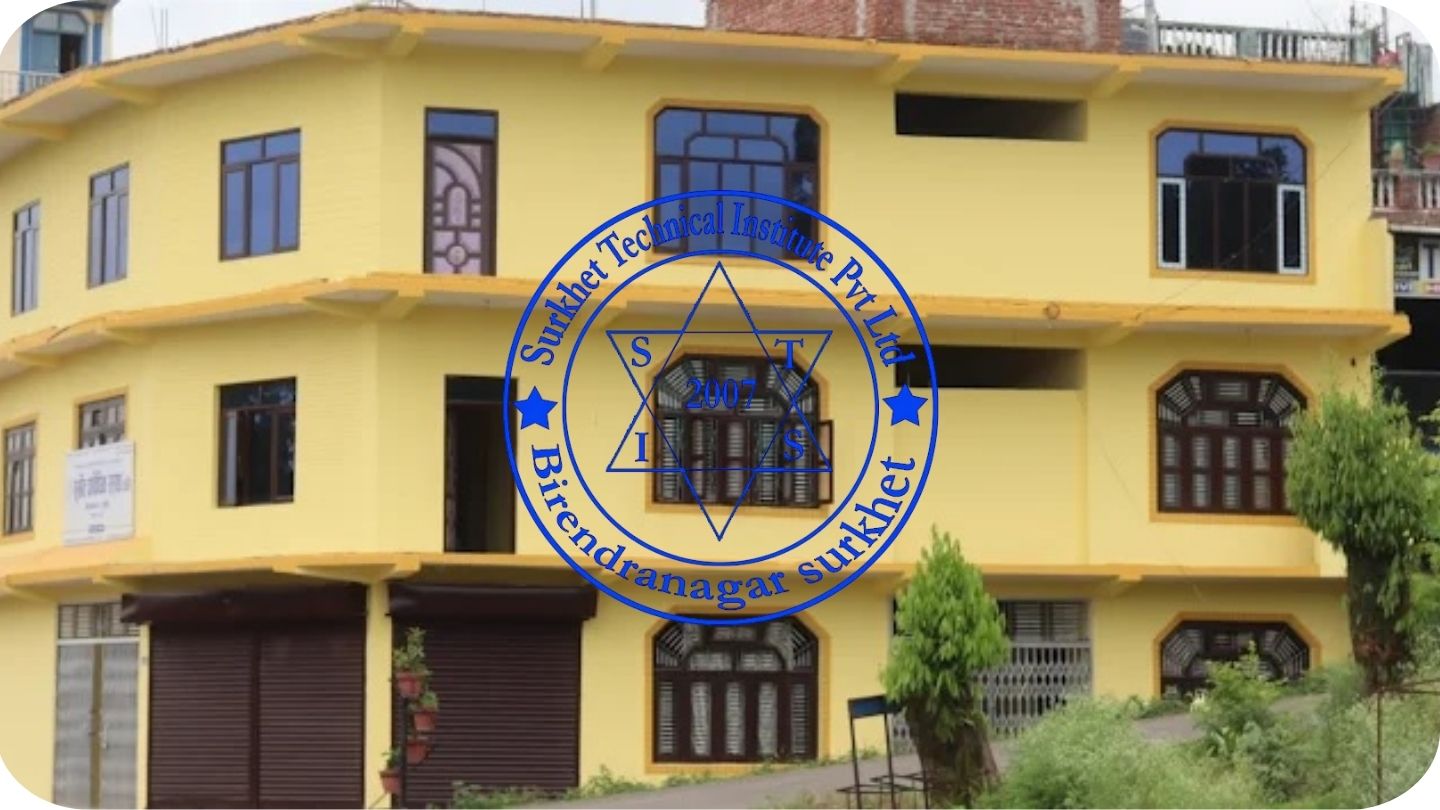
If you’re a science-stream SEE graduate from Karnali looking for a practical start in farming and agri-services, the Pre-Diploma in Agriculture JTA (Plant Science) at Surkhet Technical Institute (STI), Birendranagar, offers an 18-month CTEVT pathway.
Students often ask about duration, OJT, subjects, entry rules, and jobs. This guide answers those points clearly for you.
STI runs the CTEVT Pre-Diploma in Agriculture (Plant Science) structured as 12 months of institute classes + 6 months of On-the-Job Training (OJT).
The curriculum targets the Junior Technical Assistant (JTA) role and follows national standards for theory, lab, and field learning. The official group size in one batch is maximum 40 learners, and attendance rules apply.
Students want the key facts up front.
Duration: 18 months (12+6 OJT) under CTEVT.
Aim: Prepare Plant Science JTA for community-level services.
Group size: Up to 40 per batch.
Attendance: At least 90% in theory and practical to sit finals.
Here’s what you’ll study across the 12-month institute phase.
Agriculture Extension & Community Development
Entrepreneurship Development
Crop & Seed Production; Vegetable & Vegetable Seed Production
Plant Propagation & Ornamental Horticulture; Fruit Cultivation, Post-Harvest & Plantation Crops
Agriculture Ecology & Sustainable Soil Management; Plant Protection & IPM-FFS
Apiculture, Sericulture, Mushroom & Lac Culture
Farm Machinery, Structures & Irrigation; Aquaculture
You will learn to assist farmers, run field demonstrations, support seed and nursery work, handle plant protection tasks using IPM/FFS, and provide basic enterprise support in local markets.
Graduates work as JTA (Plant Science) in municipal agriculture sections, cooperatives, farms, agri-projects, and NGOs/INGOs. The qualification maps to non-gazetted 2nd class/Level 4 (technical) roles as per national provisions.
You will be able to:
Plan seasonal cropping and nursery schedules.
Produce seeds and seedlings; manage soils, water, and plant nutrition.
Apply safe plant protection and run FFS activities.
Keep records, report field work, and support local agri-extension.
Practical sessions cover seed production, grafting and layering, greenhouse basics, irrigation layout, composting, bio-fertilizer use, pest scouting, beekeeping, mushroom units, and small-scale post-harvest handling.
Learning at STI uses lectures, group work, demonstrations, simulations, guided practice, and supervised field tasks. Short community exercises and lab-based practicals build confidence before OJT.
Worried about the entrance test? Here’s the snapshot.
Eligibility (Pre-Diploma rule): SEE appeared and received the Grade Sheet.
Selection: CTEVT entrance examination and merit-based placement.
For non-health diploma info: CTEVT lists GPA 1.6 as the minimum for diploma tracks; pre-diploma follows the SEE-appeared rule noted above. Check the current year’s notice.
Typical roles include JTA (Plant Science) in wards/municipalities, cooperatives, contract farms, agri-input companies, and development projects. Many graduates support nursery units, seed ventures, vegetable groups, or farmer schools.
CTEVT and public bodies announce annual classified or special scholarship seats for diploma/pre-diploma categories. Requirements and quotas vary by notice and year; review current calls before applying. EdusanjalEducate Nepal
Not sure how the 18 months are structured? The balance of classroom, lab, and six-month OJT (960 hours) gives real farm exposure before graduation, with clear evaluation criteria and logbook-based supervision.
Students seeking a hands-on start in agriculture can enter the sector through STI’s Pre-Diploma in Agriculture JTA (Plant Science). A clear curriculum, defined assessments (theory 40% pass; practical 60% pass), 90% attendance rule, and structured OJT set a steady path into field jobs in Karnali and beyond. Prepare early for the entrance cycle and keep your practical records updated.