



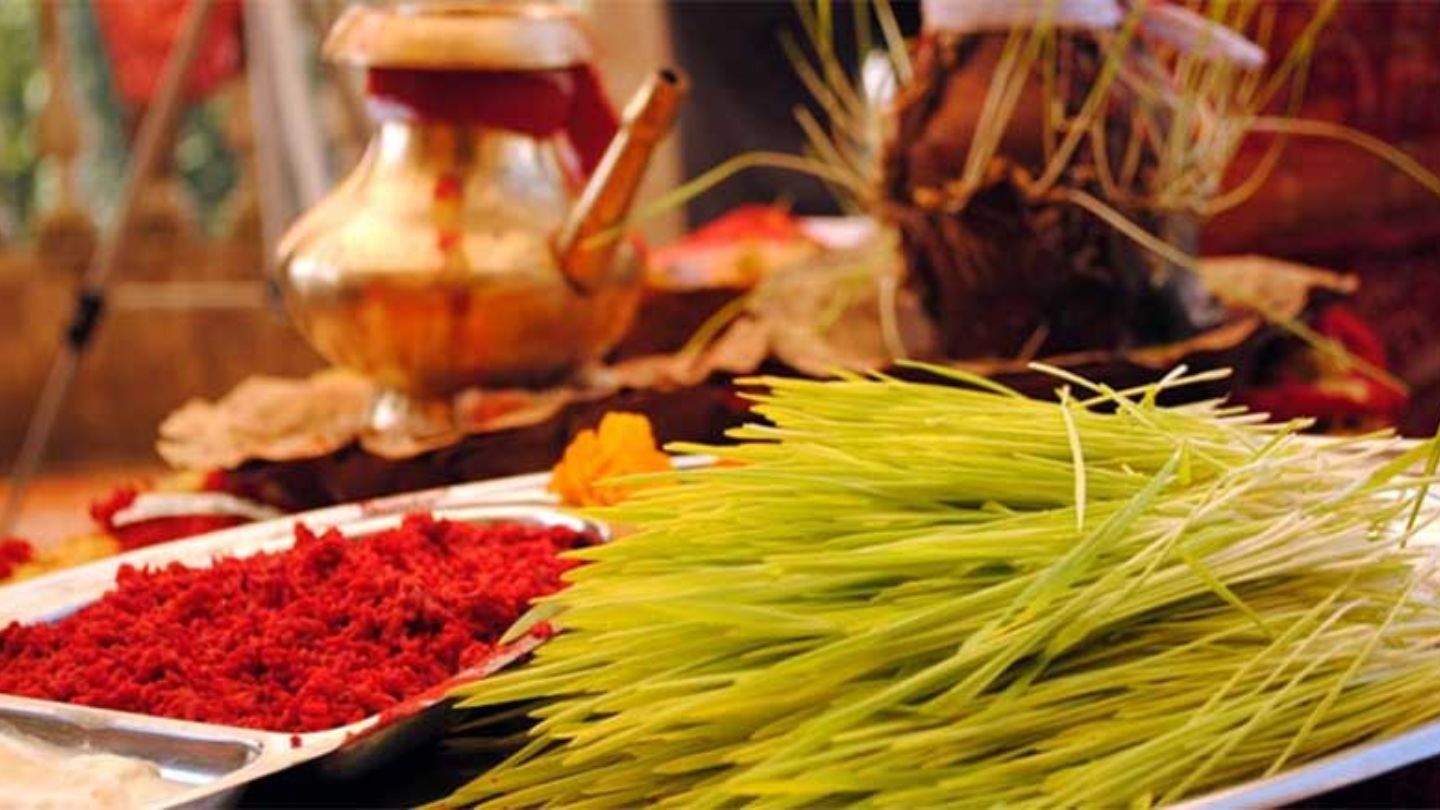
Bada Dashain, one of Nepal's most important festivals, is celebrated from Ashwin Shukla Pratipada to Ashwin Shukla Purnima, the full moon day of the bright lunar fortnight. More than a religious observance, the festival brings together seasonal traditions, cultural practices, and spiritual reflection.
The celebration begins with Ghatasthapana, followed by nine days of worship dedicated to different forms of Goddess Durga, collectively known as Navadurga. On the tenth day, Vijayadashami is celebrated by receiving tika and jamara from elders as symbols of blessings and respect.
Ghatasthapana and the Nine Days of Worship
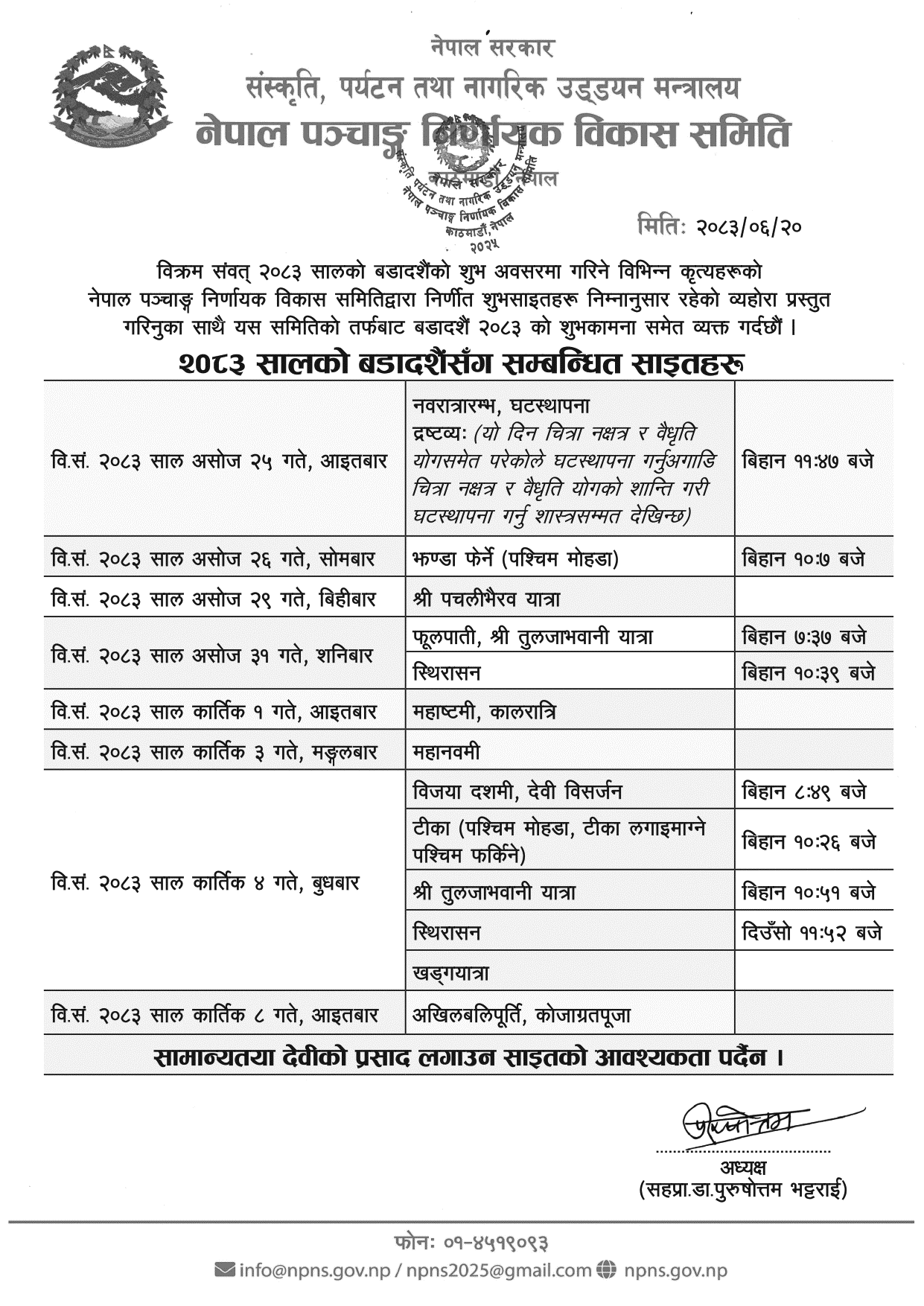
Bada Dashain begins on Sunday with Ghatasthapana. According to the Nepal Panchanga Nirnayak Bikas Samiti (Calendar Determination Development Committee), the auspicious time for Ghatasthapana this year is 11:47 a.m. on Sunday.
On this day, devotees traditionally prepare a copper or earthen vessel, apply cow dung, and sow barley, maize, and wheat seeds to grow jamara. The ritual is performed according to established religious customs. The first form of Navadurga, Goddess Shailaputri, is worshipped on this occasion.
The nine-day Navratri celebration involves worshipping nine distinct forms of Goddess Durga, each associated with particular spiritual qualities and religious beliefs.
- First Day (Pratipada) – Shailaputri: The first form of Goddess Durga is worshipped during Ghatasthapana, marking the beginning of Navratri and the traditional preparation of jamara.
- Second Day (Dwitiya) – Brahmacharini: Goddess Brahmacharini, associated with knowledge, penance, discipline, and detachment, is worshipped.
- Third Day (Tritiya) – Chandraghanta: Goddess Chandraghanta, depicted with a bell-shaped crescent moon on her forehead, is worshipped. She is traditionally believed to represent mental peace and courage.
- Fourth Day (Chaturthi) – Kushmanda: Goddess Kushmanda, regarded in Hindu tradition as the divine creative energy responsible for the origin of the universe, is worshipped. Special prayers are also offered to the growing jamara, along with the ritual offering of water.
- Fifth Day (Panchami) – Skandamata: Goddess Skandamata, the mother of Skanda (Kumar), the son of Lord Shiva, is worshipped. She represents maternal affection and the bond between mother and child.
- Sixth Day (Shashthi) – Katyayani: Goddess Katyayani, believed to have been born as the daughter of Sage Katyayana, is worshipped. From this day, Dashain celebrations become more prominent, and increasing numbers of devotees begin visiting temples and Shakti Peethas.
- Seventh Day (Saptami) – Kalaratri: Goddess Kalaratri, known for her fierce form, is worshipped. The day also marks Fulpati, when sacred flowers, leaves, and other ritual offerings brought from Gorkha Palace are ceremonially welcomed into the Dashain Ghar at Hanuman Dhoka in Kathmandu according to traditional religious procedures. Public holidays for government offices also begin from this stage of the festival.
- Eighth Day (Maha Ashtami) – Mahagauri: Goddess Mahagauri is worshipped. The night is also observed as Kalaratri, with special religious ceremonies continuing throughout the night. Animal sacrifice is practiced at some Shakti Peethas, where goats, buffaloes, chickens, or ducks may be offered. Devotees who do not practice animal sacrifice may instead make symbolic offerings using vegetables such as ash gourd and sponge gourd. Vehicles and traditional weapons are also worshipped on this day.
- Ninth Day (Maha Navami) – Siddhidatri: Goddess Siddhidatri, the ninth and final form of Navadurga, is worshipped. Special prayers are offered to industries, factories, machinery, tools, and equipment. Kathmandu's historic Taleju Bhawani Temple is traditionally opened to the general public on this occasion, once a year.
- Tenth Day (Vijayadashami): Vijayadashami commemorates the victory of Goddess Durga over the demon Mahishasura and Lord Rama's victory over Ravana, according to Hindu religious traditions. Families celebrate by receiving tika and jamara from respected elders, continuing one of the central family rituals associated with Dashain.
The Symbolic Meaning of Mahishasura and Navadurga
In the religious narratives associated with Dashain, Mahishasura can be understood not only as a mythological figure but also as a symbol of disorder, arrogance, anger, greed, and uncontrolled power.
From this perspective, the worship of Goddess Durga during Navratri carries a deeper message. It encourages individuals to recognize and overcome undesirable tendencies within themselves.
The symbolic Mahishasura represents the negative impulses that can influence human thoughts, decisions, and actions. Overcoming these tendencies requires self-awareness, restraint, and personal discipline.
Navadurga, in contrast, represents balanced, constructive, and responsible power.
This interpretation presents the festival as an opportunity for spiritual reflection rather than merely an occasion for external religious observances. The victory of the goddess can also be understood as a reminder of the importance of self-control, ethical conduct, and the responsible exercise of power.
Fasting, Diet and Personal Purification
Fasting during Navratri is traditionally understood as more than simply abstaining from food.
In Ayurveda and naturopathic traditions, seasonal transitions are associated with the importance of giving the body and mind adequate rest. Within this traditional understanding, fasting is connected with restraint, reflection, and personal purification.
In a contemporary setting, the broader idea of fasting can also be interpreted as an opportunity to distance oneself from activities that create unnecessary mental distractions.
These may include excessive consumption of news, unproductive arguments, compulsive screen use, and negative patterns of thinking.
Such practices are sometimes described metaphorically as a form of "detox" or purification. In this context, the term refers to reducing distractions and cultivating greater awareness rather than making a claim about physical detoxification.
The spiritual meaning of fasting therefore extends to the regulation of one's senses, thoughts, and behavior.
From this perspective, the central purpose of observing a fast is not simply dietary restriction but the development of greater mental discipline and awareness.
The Message Behind the Worship of Weapons and Tools
The traditional worship of weapons, tools, and equipment during Maha Ashtami and Maha Navami can also be understood through its symbolic significance.
Rather than representing an endorsement of violence, this interpretation emphasizes an individual's duties and responsibilities.
Worshipping a weapon or tool can symbolize a commitment not to misuse the power or capability associated with it. The practice encourages reflection on how resources, authority, and abilities should be exercised responsibly.
The underlying message is that power should be accompanied by restraint, accountability, and an awareness of its consequences.
Similarly, Kanya Puja, the traditional worship of young girls, conveys a message of respect for women and girls.
Beyond its religious significance, the practice can be interpreted as a reminder of the importance of dignity, safety, and respectful attitudes toward women, adolescent girls, and children in society.
These interpretations connect traditional religious observances with broader principles of ethical behavior and social responsibility.
Conclusion
On Vijayadashami, the ritual vessel established during Ghatasthapana is immersed as part of the concluding ceremonies. The jamara gradually withers, and the festive atmosphere begins to fade.
However, the spiritual teachings associated with Navratri extend beyond the days of celebration.
The festival offers an opportunity to reflect on personal discipline, inner awareness, constructive thinking, and responsibility toward others.
Its symbolic message is that overcoming negative tendencies within oneself is as meaningful as celebrating the victories described in religious traditions.
In this sense, Dashain encourages individuals to look beyond external displays of celebration and recognize the value of self-reflection, responsible conduct, and social awareness in everyday life.

.png)


Comments 0
No comments yet. Be the first to start the conversation.