



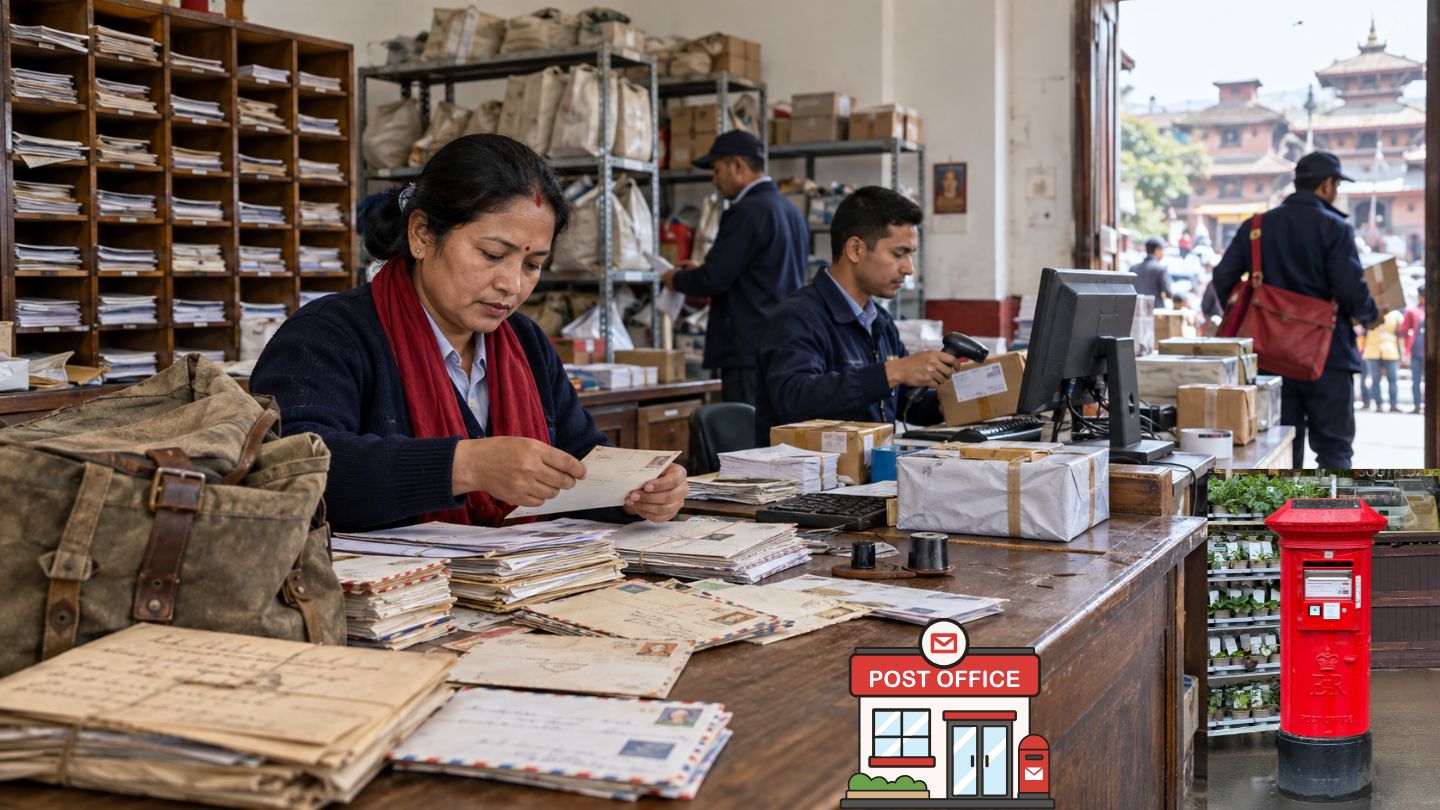
Kathmandu — World Post Day is observed every year on October 9 to recognize the contribution of postal services, one of the oldest public services connecting people, businesses, and communities worldwide. Nepal joins countries around the world in observing World Post Day today, Friday, October 9, 2026.
The Universal Postal Union (UPU) was established on October 9, 1874, in Bern, Switzerland. To commemorate this historic event, the Universal Postal Congress held in Tokyo, Japan, in 1969 declared October 9 as World Post Day.
The expansion of the internet, mobile phones, email, and digital messaging has reduced the use of personal letters. However, the role of postal services has not disappeared. Their responsibilities are expanding into new areas, including parcel delivery, e-commerce, government document distribution, financial services, and the delivery of essential services to remote communities.
World Post Day 2026 Theme
The theme of World Post Day 2026 is "One postal network, infinite possibilities."
In his message for World Post Day 2026, United Nations Secretary-General António Guterres stated that the global postal network includes more than 660,000 post offices and approximately 4.6 million employees. He described the postal network as a service that connects communities and helps people participate in economic and social activities.
Although access to digital communication is expanding, not every service can be delivered entirely online. The ability of postal networks to reach people physically therefore remains important.
Postal infrastructure can support access to digital banking, help small businesses deliver products to markets, distribute health-related supplies, and transport essential goods and information during disasters and emergencies.
The United Nations has recognized this role of postal services as a trusted connection between people and essential services.
Historical Background of World Post Day
An important step toward establishing an organized international postal system took place in 1874.
That year, the Swiss government hosted an international conference in Bern, attended by representatives from 22 countries. Following the signing of the Treaty of Bern on October 9, 1874, the General Postal Union was established. In 1878, the organization was renamed the Universal Postal Union.
The establishment of the UPU helped bring different countries' postal rules and procedures into a common system of international cooperation. It created a foundation for more organized exchanges of letters across national borders.
In 1948, the UPU became a specialized agency of the United Nations. It currently has 192 member countries and continues to support international postal exchange through common rules, standards, and cooperation among its members.
The Universal Postal Congress held in Tokyo in 1969 decided to observe October 9 as World Post Day to commemorate the establishment of the UPU.
Since then, the day has been observed to raise public awareness of the social and economic importance of postal services.
History of Postal Services in Nepal
Formal postal services in Nepal began in 1935 BS during the tenure of then Prime Minister Ranodip Singh.
According to Nepal's Department of Postal Service, the establishment of "Nepal Hulak Ghar" marked the beginning of an institutional system for exchanging news, information, and correspondence through letters.
Nepal subsequently became connected to the international postal network. According to official UPU records, Nepal joined the Universal Postal Union on October 11, 1956, and remains a member.
Before telephones, mobile phones, and the internet became widely available, letters were an important means of personal and institutional communication.
Postal services were used to exchange news between family members, conduct government correspondence, share literary materials, and maintain communication with various organizations.
As communication technologies developed and personal letter volumes declined, Nepal's postal services began adapting their operations.
According to the Department of Postal Service, services currently include traditional letters, parcels, philately and postage stamps, Express Mail Service (EMS), and postal tracking.
Changing Role of Postal Services in Nepal
Nepal's postal services are no longer limited to traditional letter delivery. The postal network is increasingly being used to distribute government documents, parcels, express mail, and other materials to citizens.
The Department of Postal Service operates under the government's communications and information technology administrative structure.
Services are delivered through the General Post Office, Postal Training Centre, postal directorates, district post offices, and local-level postal offices.
The department states that postal services are available through approximately 4,000 offices across the country.
In addition to domestic and international mail services, the postal system has expanded its responsibilities through cooperation with government agencies to transport official documents and other materials.
This expansion also demonstrates how existing postal infrastructure can contribute to public service delivery in Nepal.
Role of Postal Services in Driving License Distribution
Nepal has recently expanded the use of postal services to make driving license distribution more organized.
According to the official website of the Department of Postal Service, a tripartite agreement was signed on Ashoj 6, 2083 BS, among the Department of Postal Service, Department of Transport Management, and Security Printing Centre.
The agreement covers the transportation and distribution of letters, driving licenses, and other postal items.
Under the arrangement, driving license data generated through the Electronic Driving License and Vehicle Registration System is forwarded to the Security Printing Centre.
The licenses are printed at the centre, and postal services are used in the distribution process.
The arrangement also includes provisions for delivering driving licenses to addresses selected by service recipients.
This expansion shows the government's efforts to use postal infrastructure for distributing official documents.
Home Delivery of Passports Through Postal Services
In 2026, arrangements were also implemented in several districts to deliver passports to recipients' homes or preferred addresses through postal services.
According to notices issued by District Administration Offices, arrangements for passport delivery through the postal network have been introduced in Kathmandu, Lalitpur, Bardiya, Panchthar, and other districts.
The District Administration Office, Bardiya, stated that arrangements to deliver passports to recipients' home addresses had been implemented in accordance with a government decision.
This initiative demonstrates the potential to use existing postal networks to deliver official documents from district-level government offices directly to service recipients.
Digital Tracking and Express Mail Service
The use of digital technology in postal operations has also increased.
The Department of Postal Service lists tracking among its modern postal services.
According to official information published by some postal offices, Nepal Post has used the Postal Internal Tracking System (PITS) since 2073 BS.
The tracking system helps users check the movement and delivery-related information of registered postal items.
Alongside tracking facilities, Express Mail Service (EMS), parcel services, and international mail remain important components of Nepal's postal system.
In Bhadra 2083 BS, the Department of Postal Service issued a notice stating that floods had disrupted domestic and international mail transportation.
The department subsequently published another notice announcing the resumption of mail transportation.
These incidents demonstrate how natural disasters, road disruptions, and international transportation conditions can affect regular postal operations.
E-Commerce and the Changing Postal Economy
Although traditional letter volumes have declined, the growing demand for online shopping and goods transportation has created new areas of activity for postal services.
The World Post Day 2026 message also emphasizes the role of postal networks in helping small businesses reach wider markets.
Changes in online shopping trends and consumer behavior are closely connected to the wider demand for reliable product delivery.
In Nepal, the Department of Postal Service has been operating parcel, EMS, and other transportation services.
Previous departmental progress reports have also mentioned the testing and operation of services such as return transportation of goods associated with online commerce.
These developments indicate that postal systems traditionally based on letter delivery are becoming increasingly connected with goods transportation, government document distribution, and logistics services.
The shift also reflects the broader importance of international logistics in business and banking, particularly where businesses depend on the movement of goods across borders.
Postal Services, Sustainable Development, and Inclusive Access
The importance of postal networks extends beyond communication. Their physical presence can help improve access to social and economic services.
According to the Universal Postal Union, World Post Day aims to raise awareness of the role of postal services in everyday life and business, as well as their contribution to social and economic development.
In its 2026 message, the United Nations emphasized that postal networks connect communities, promote economic and social participation, and help prevent people from being excluded from essential services.
The United Nations also highlighted the importance of international postal cooperation in delivering messages, goods, and services during disasters and emergencies.
In this respect, postal infrastructure in remote and underserved areas can serve as a useful means of delivering public services.
How Is World Post Day Celebrated?
The UPU encourages member countries to celebrate World Post Day according to their national circumstances.
The nature of celebrations differs between countries.
Activities may include launching new postal services or products, organizing public events at post offices and postal museums, arranging postage stamp and philately exhibitions, and recognizing the contributions of postal employees.
International Letter-Writing Competition
The Universal Postal Union has been organizing the International Letter-Writing Competition for children and adolescents.
The competition aims to develop writing ability, creativity, and self-expression through letter writing.
Participating countries have traditionally recognized their national winners around World Post Day.
However, the dates and locations of award ceremonies may vary from year to year.
Philately and Postage Stamps
The collection and study of postage stamps is known as philately.
World Post Day activities may include exhibitions of historical postage stamps, the release of new stamps, or other stamp-related programs.
In Nepal, the Department of Postal Service also provides philately and postage stamp services.
Future of Postal Services
Digital communication has reduced the need for traditional correspondence, but the physical delivery of goods and official documents remains necessary.
This changing demand has connected the future of postal services with activities extending beyond letters.
The World Post Day 2026 theme, "One postal network, infinite possibilities," reflects this transformation.
Postal infrastructure established across the world can increasingly be used for parcel delivery, e-commerce, public service distribution, financial inclusion, and emergency services.
In Nepal, the use of postal services for delivering passports and driving licenses provides a practical example of this shift.
The expansion of digital tracking, EMS, parcel delivery, and cooperation with government agencies indicates that postal services are gradually changing from traditional mail carriers into broader service and logistics networks.
Conclusion
World Post Day is not only an occasion to remember the history of postal services but also an opportunity to examine their changing responsibilities.
Established in 1874 to organize international mail exchanges, the Universal Postal Union now connects 192 member countries through a common international postal system.
In Nepal, postal services that began in 1935 BS are also expanding beyond traditional correspondence to include parcels, EMS, tracking, and the distribution of government documents such as passports and driving licenses.
Digital communication has made it possible to send information within seconds. However, reliable physical distribution networks remain necessary to deliver documents, goods, and services directly to people.
World Post Day 2026 highlights this continuing importance through its theme, "One postal network, infinite possibilities."

.png)



Comments 0
No comments yet. Be the first to start the conversation.