



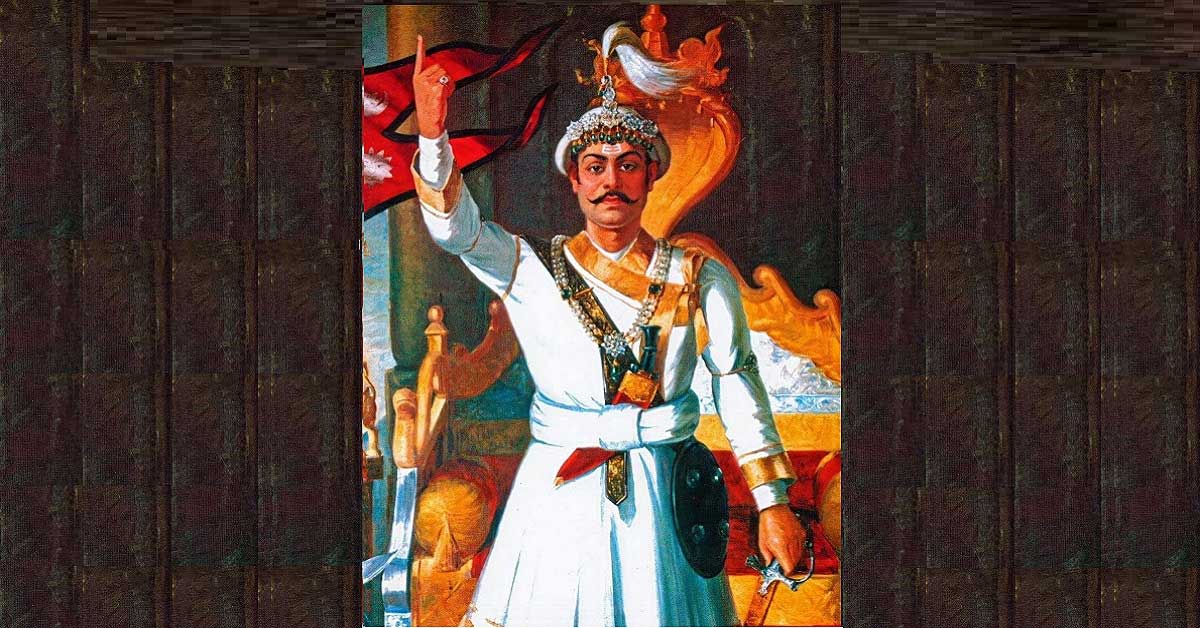
Prithvi Jayanti and National Unity Day in Nepal
Nepal observes Prithvi Jayanti and National Unity Day (Rastriya Ekta Diwas) on Poush 27, commemorating the birth anniversary of King Prithvi Narayan Shah. He is widely recognized for initiating the political unification that laid the foundation for the modern Nepalese state.
The day is marked by public remembrance, cultural programs, and discussions that reflect on national identity, unity, and Nepal’s diverse cultural heritage. Ceremonies often include garlanding statues, public speeches, and the recitation of teachings attributed to Prithvi Narayan Shah, commonly known as Dibya Upadesh.
Why the day matters
Prithvi Jayanti is observed not only as a historical commemoration but also as a civic reminder of national cohesion. Supporters view the day as an occasion to reflect on shared history and the idea of unity across Nepal’s many communities, languages, and cultural traditions.
At the same time, the unification era is a complex historical subject. The process involved diplomacy, alliances, and military campaigns, and its legacy continues to be discussed from different social and political perspectives. (If your article is for a general audience, it’s best to acknowledge this complexity briefly and avoid absolute claims.)
Historical background in brief
Prithvi Narayan Shah became king of Gorkha in the mid-18th century and began a campaign that ultimately brought the Kathmandu Valley under Gorkha control and led to the formation of a unified Kingdom of Nepal.
Before unification, the region that is present-day Nepal was politically fragmented. Many accounts describe numerous small kingdoms, including the Baise (22) and Chaubise (24) kingdoms, along with other states such as the Malla kingdoms in the Kathmandu Valley and Sen-ruled territories in parts of the Tarai.
This period also coincided with major power shifts in South Asia, including the expanding influence of the British East India Company—an external factor often discussed in historical interpretations of Nepal’s state-building and security concerns.
Dibya Upadesh and the idea of unity
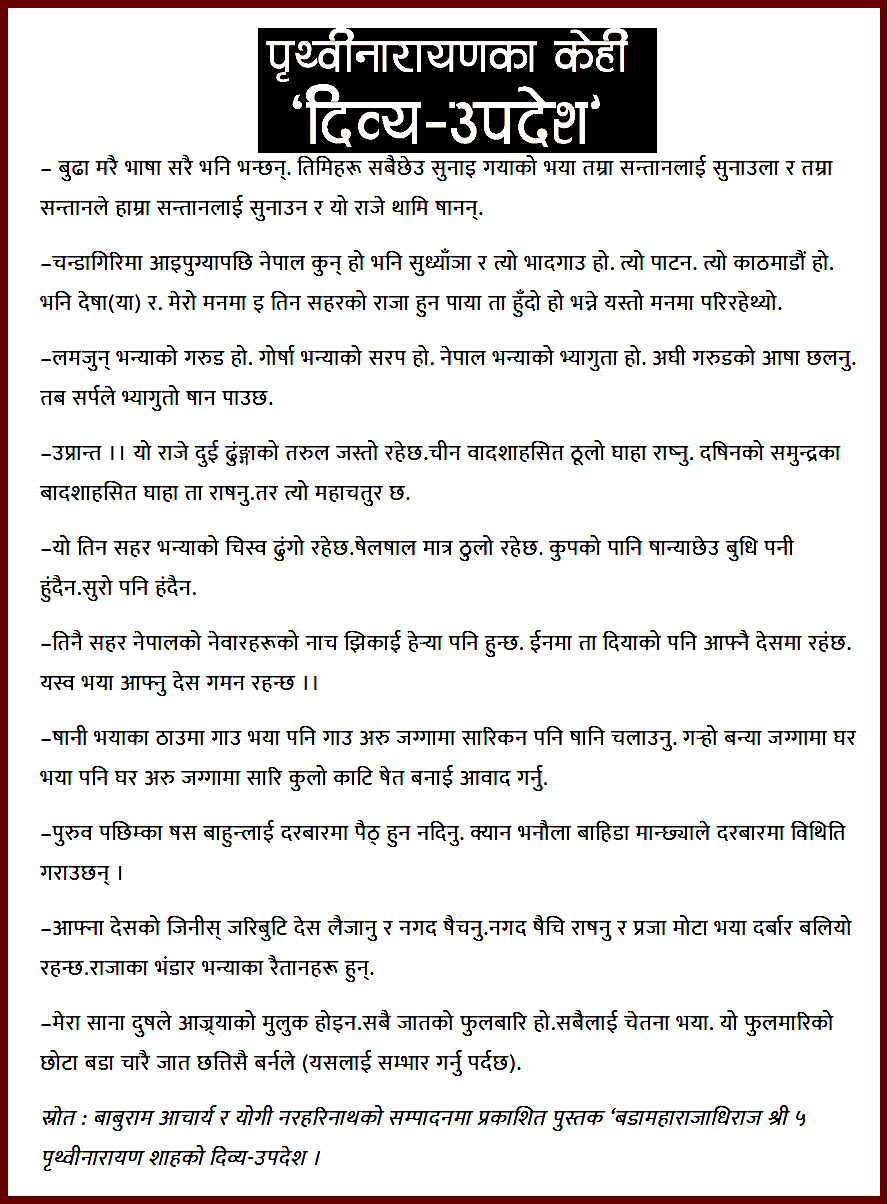
Dibya Upadesh is frequently referenced in public discourse about Nepal’s national identity and governance. One widely quoted line—“Yo desh char jaat chhattis barna ko phulbari ho”—is commonly translated as the idea that the country is like a garden of many varieties of flowers, often interpreted as a call for social harmony within diversity.
If you include this quote, it’s safer to present it as “widely cited and interpreted” rather than as proof of a fully “non-discriminatory policy,” unless you plan to add scholarly sources.
How it is observed
Observances commonly include:
-
official tributes and public programs
-
cultural performances and exhibitions
-
educational discussions on Nepal’s unification history and state formation
-
activities organized by public bodies, cultural institutions, and local organizations (program details vary by year and location)
Conclusion
Prithvi Jayanti and National Unity Day remains an important date in Nepal’s civic calendar. For many, it is a moment to revisit the country’s state-building history and reflect on unity, identity, and cultural preservation. A balanced presentation recognizes both the significance of Prithvi Narayan Shah in Nepal’s political consolidation and the fact that historical legacies are often debated and interpreted differently over time.


.png)

Comments 0
No comments yet. Be the first to start the conversation.