



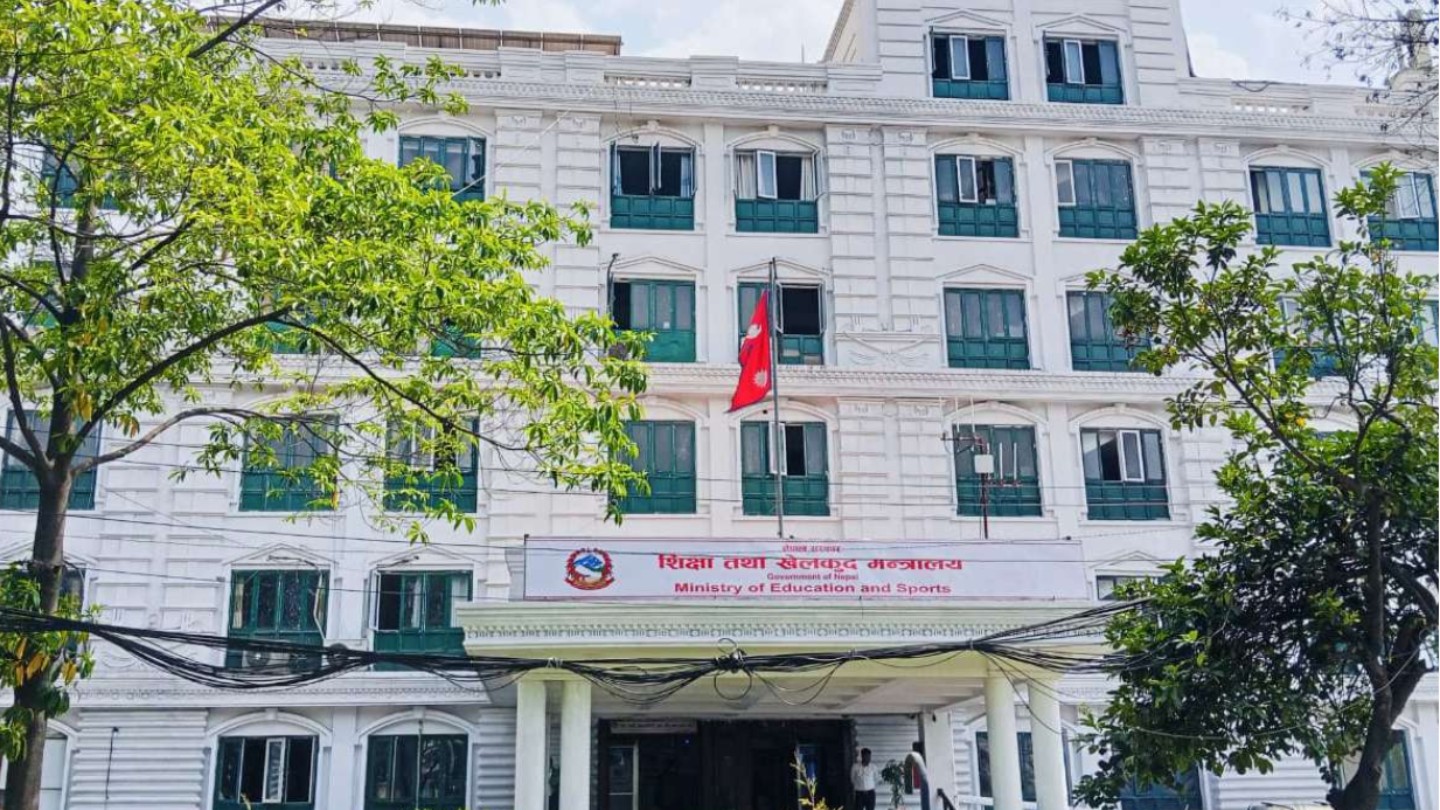
The Government of Nepal has begun preparations for the 11th amendment to the Education Rules, 2059 BS. The Ministry of Education and Sports has initiated another amendment just four months after the tenth amendment on Asar 25, 2083 BS, following concerns raised by stakeholders over provisions related to teacher transfers and school management.
Ministry officials stated that the proposed amendment aims to address suggestions and complaints received from the field and resolve inconsistencies between the Education Act and the Education Rules.
Following dissatisfaction among teachers over certain provisions introduced through the tenth amendment, Minister for Education and Sports Sasmit Pokharel had directed officials to complete the eleventh amendment process before Dashain.
According to Ministry Assistant Spokesperson Bir Bahadur Dhami, the draft amendment has been prepared and forwarded to the Ministry of Finance for concurrence.
After receiving approval from the Ministry of Finance, the draft will proceed through the Ministry of Law or directly to the Council of Ministers for approval.
Proposed Teacher Transfer Rules and Priority Arrangements
The proposed amendment seeks to reduce the minimum service period required for transferring regular permanent teachers from three years to one year.
Under the proposed provision, teachers who have completed one year of service and have more than one year remaining before mandatory retirement will be eligible to apply for transfers from one community school to another.
For mutual transfers, teachers must also have at least one year of service remaining.
The draft introduces priority arrangements for transfer applications based on humanitarian considerations and special circumstances.
First priority will be given to:
-
Teachers with disabilities classified under categories 'B' and 'C'.
-
Teachers with disabilities who cannot move around without assistance.
-
Pregnant female teachers.
-
Female teachers with children under two years of age.
Teachers suffering from serious illnesses specified by the government and teachers with disabilities recommended by a medical board will also be eligible for this priority.
For other teachers, the proposed rules allow the respective schools to determine the order of priority for transfers.
Proposed Interest Subsidy for Teachers Purchasing Vehicles
The draft amendment also proposes introducing Rule 104A after Rule 104 to provide financial assistance to teachers purchasing vehicles.
Under the proposed arrangement, first-class secondary-level teachers will be eligible to purchase four-wheeled vehicles costing up to NPR 5 million (Rs. 50 lakh), while second-class secondary-level teachers will be eligible to purchase vehicles costing up to NPR 4 million (Rs. 40 lakh).
Teachers will be required to arrange 20 percent of the total vehicle purchase price themselves.
The remaining 80 percent may be financed through banks, with the government covering the interest payable on the loan installments.
However, the interest subsidy will be available only while the teacher remains in active teaching service.
According to the Ministry, a total of 106,547 permanent teachers across Nepal are expected to benefit directly once the proposed arrangement is implemented.
History of Amendments to the Education Rules, 2059
The Education Rules, 2059, which came into effect following publication in the Nepal Gazette on Jestha 16, 2059 BS, have undergone ten amendments so far.
The amendment history is as follows:
-
First Amendment: Asar 24, 2060 BS
-
Second Amendment: Poush 16, 2060 BS
-
Third Amendment: Jestha 25, 2062 BS
-
Fourth Amendment: Bhadra 17, 2066 BS
-
Fifth Amendment: Bhadra 21, 2067 BS
-
Sixth Amendment: Magh 9, 2067 BS
-
Seventh Amendment: Poush 23, 2069 BS
-
Eighth Amendment: Baisakh 29, 2071 BS
-
Ninth Amendment: Falgun 3, 2077 BS
-
Tenth Amendment: Asar 25, 2083 BS


Comments 0
No comments yet. Be the first to start the conversation.