



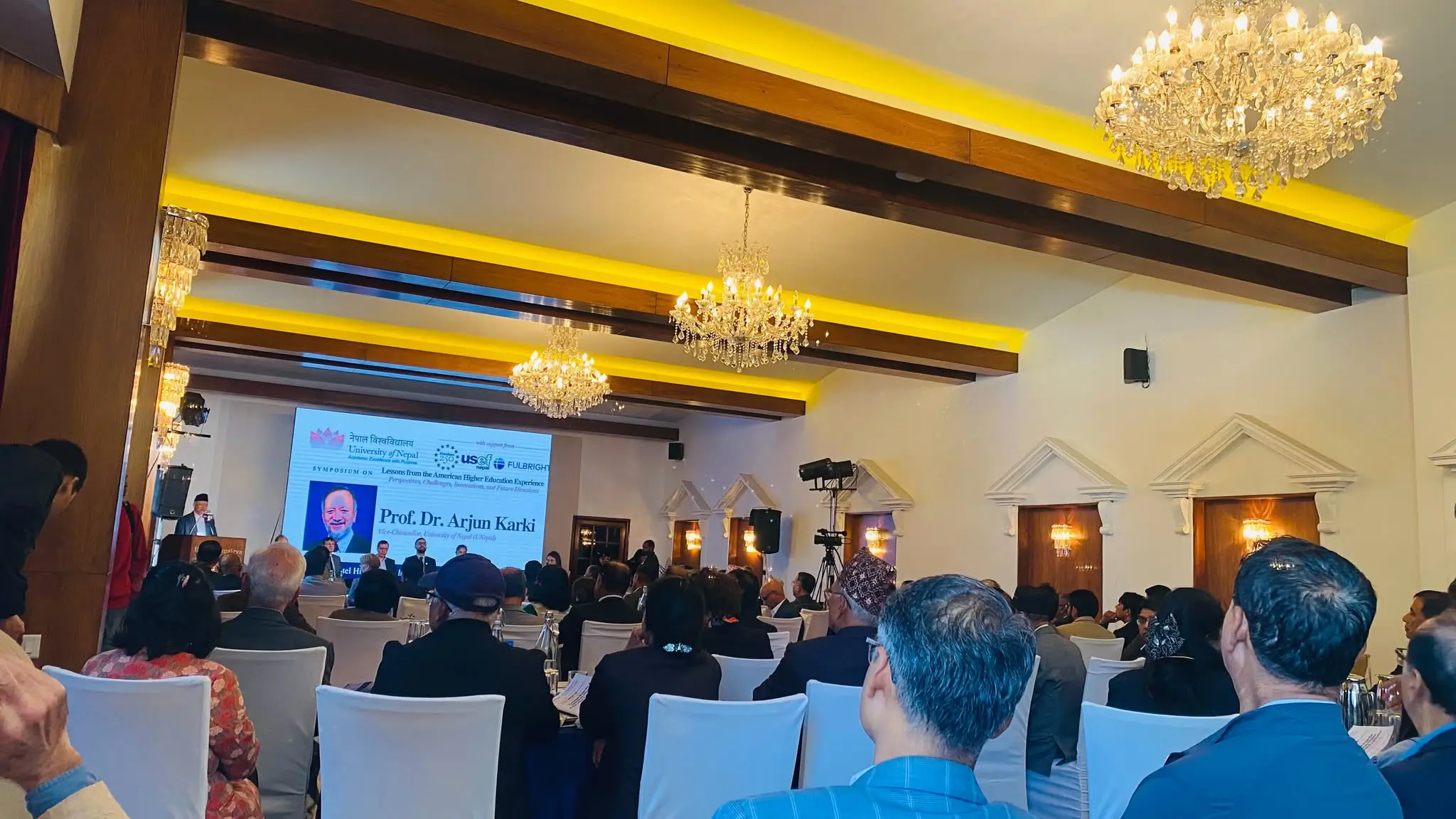
Minister for Education and Sports Sasmit Pokharel has stated that the government is committed to increasing investment in the education sector despite limited resources.
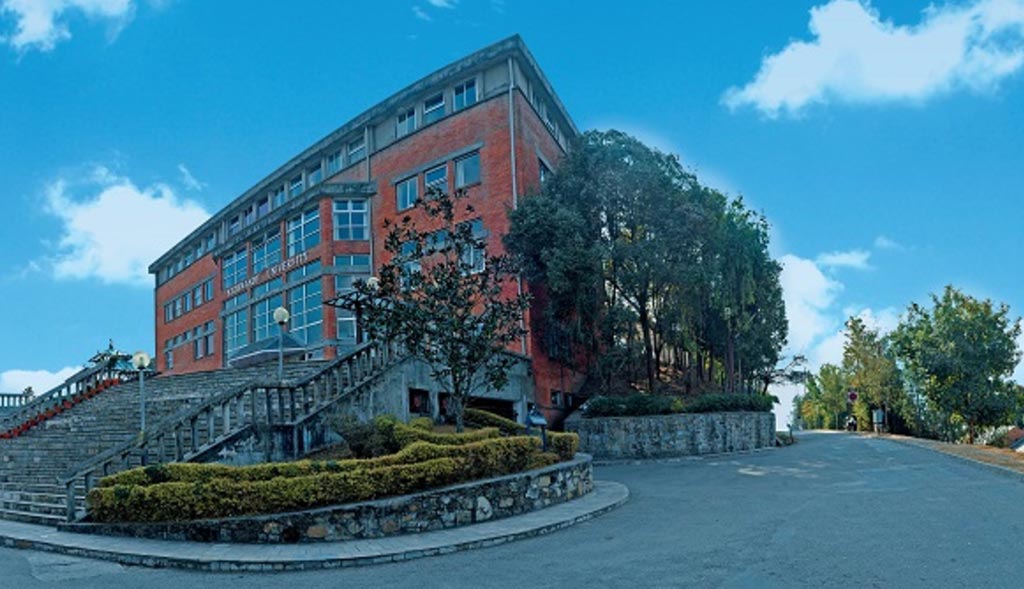
Addressing a two-day program titled "Learning from the American Higher Education System: Perspectives, Challenges, Innovations, and Future Directions," organized by the University of Nepal at Hotel Himalaya in Lalitpur on Wednesday, 4th November 2026, Minister Pokharel said the government would invest in education by making the best possible use of available resources.
Minister Pokharel emphasized the need to reform university education in response to changing times. He stated that developing teaching methods that reflect the interests and needs of younger generations has become a major challenge.
"We have only just begun to understand Gen Z, but the next generation is Gen Alpha. Gradually, Gen Beta will also emerge. Universities must therefore educate these new generations according to their needs and aspirations," he said.
He also acknowledged that the University of Nepal had introduced a new dimension to higher education by promoting the concept of liberal arts. He noted that the importance of liberal arts education is increasing in the changing educational environment.
Emphasis on Greater Investment in Innovation and Research
Speaking at the program, Prof. Dr. Khadga KC, Chairperson of the University Grants Commission, emphasized the need to develop universities as centers of knowledge production and innovation.
He stated that this was one of the most important lessons Nepal could learn from the American higher education system. He also stressed that providing adequate financial resources for research and innovation is the government's responsibility.
According to Prof. Dr. KC, limited government grants have enabled universities to produce graduates, but institutions continue to face shortages of skilled personnel, infrastructure, and resources necessary for research.
He highlighted that investment in higher education had been a major foundation of America's development and stressed that Nepal's political leadership must recognize its importance.
Quality Education Within Nepal Is a Current Priority
Professor Lal Krishna KC, Chairperson of the University of Nepal, stated that the growing number of students going abroad and the substantial financial outflow associated with overseas education have highlighted the need to improve the quality of higher education in Nepal.
He emphasized that rather than attempting to prevent students from studying abroad, Nepal should focus on creating quality educational opportunities and better prospects within the country.
Professor KC also stressed that higher education should not be limited to awarding academic certificates. Instead, universities should become institutions capable of contributing to solutions for social problems.
He explained that the University of Nepal has adopted merit-based appointments, intellectual freedom, and public accountability as its fundamental principles.
He also stated that the university is currently offering undergraduate and postgraduate programs in liberal arts, science, and technology.
Additionally, he suggested integrating AI-related digital literacy, disaster management, climate adaptation, and lifelong learning into university education.
Key Agendas of the Two-Day Program
Prof. Dr. Arjun Karki, Vice-Chancellor of the University of Nepal, expressed confidence that the program would help participants understand the challenges facing Nepal's higher education system, develop new perspectives, and identify possible solutions.
According to the university, the two-day program will cover lessons from the American higher education system, balancing access and quality in higher education, reforming academic programs, and strengthening research capacity.
The discussions will also address collaboration between universities and industries, entrepreneurship, partnerships with the private sector and communities, the role of young people, and the application of artificial intelligence and digital technologies in higher education.
Comments 0
No comments yet. Be the first to start the conversation.