



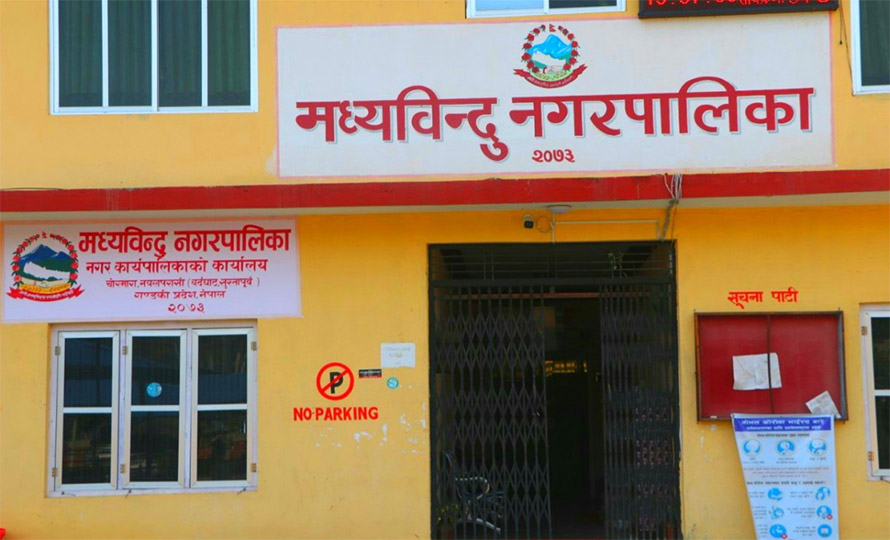
The “Happiness Curriculum,” introduced two years ago in Madhyabindu Municipality of Nawalpur, has brought notable positive changes in students’ behaviour and confidence. The curriculum has been found to play an important role in developing positive thinking, good values, and practical life skills among students.
First Period Dedicated to Happiness Classes in All 62 Schools
Happiness classes are currently being conducted in all 62 schools within Madhyabindu Municipality, including 44 community schools and 18 institutional schools. The first period of every school day has been allocated to this class.
The class does not follow the traditional practice of memorizing lessons or reading textbooks. Instead, students participate in various activities designed to help them apply human values, ethics, and practical life skills in their daily lives.
The class begins with five minutes of mindfulness. The next 15 minutes are spent discussing how to listen, speak, observe, walk, and act with awareness.
After this stage, students learn about a positive way of life through the exchange of experiences between teachers and students, inspirational storytelling, group discussions, and practical life exercises.
Experiences of Students and Parents
Both students and parents have noticed the effects of the Happiness Curriculum.
Aarushi Adhikari, a Grade 4 student at Navajagaran Model Secondary School in Chormara, has developed the confidence to express her views without hesitation, speak openly about her problems, and discuss her daily activities with her parents as a result of the Happiness Curriculum.
Another student from the same class, Aaron Pangeni, said he feels very happy to meditate, listen to stories, and discuss different activities during the first period.
Similarly, parent Laxmi Neupane said there had been a considerable change in her daughter’s habits and behaviour. According to her, her daughter previously spent a great deal of time using a mobile phone, avoided tasks she could complete herself, and did not follow instructions. She now listens to her parents, completes her own tasks, and spends less time on the phone.
Stakeholders’ Views and Future Plans
According to Madhyabindu Municipality Mayor Bhimlal Adhikari, the curriculum, which was first implemented in Nepal by Madhyabindu, is now being followed by other local governments across the country.
He said its main objective is to help children enjoy learning and develop good character.
“The main lesson it provides is that physical infrastructure alone does not bring happiness. Happiness classes are helping children experience human values, interact within society, and connect with nature,” Mayor Adhikari said.
Programme Coordinator Laxmi Pandey said students are being taught good values, a cooperative attitude, and self-confidence in an enjoyable manner through methods such as fun exercises, indoor and outdoor games, active questioning, storytelling, and group work.
Hariprasad Devkota, coordinator of the Happiness Curriculum Study and Research Centre and principal of Navajagaran Secondary School, said the curriculum had proved highly effective amid growing despair, negative thinking, and a lack of cooperation in society.
He explained that the programme has been highly successful in lower grades. Although it has been somewhat challenging in higher grades because older students have already developed certain mindsets, he said efforts are continuing to refine the curriculum and make it fully successful.
School News Education News