



Task Force Suggests 50% of Eighth-Level Starting Salary Scale as Subsistence Allowance for MBBS and BDS Interns
The task force formed to provide opinions and suggestions on the monthly subsistence allowance of MBBS and BDS intern doctors has recommended that students undergoing internship be provided half of the starting salary scale of the eighth level of the health service, or 50 percent, as a subsistence allowance. The report dated 2083/01/30 states that this provision should be implemented by both public and private educational institutions.
The report mentions that a one-year internship is an integral part of the curriculum of the MBBS and BDS programs under the undergraduate level of medical education. It concludes that fulfilling the minimum needs of students participating in internship programs is justified because they are mandatorily deployed in hospitals, involved in health services, and face working hours, levels of difficulty, night service, and additional workload.
The task force has stated that, in such a situation, arrangements for subsistence allowance are necessary for students undergoing internship, along with housing, food, transportation, and other essential facilities. The report recommends that it would be appropriate to provide MBBS and BDS intern students half of the starting salary scale of the eighth level of the health service, using the allowance provided to postgraduate resident doctors as the basis.
Seven-Member Task Force Formed
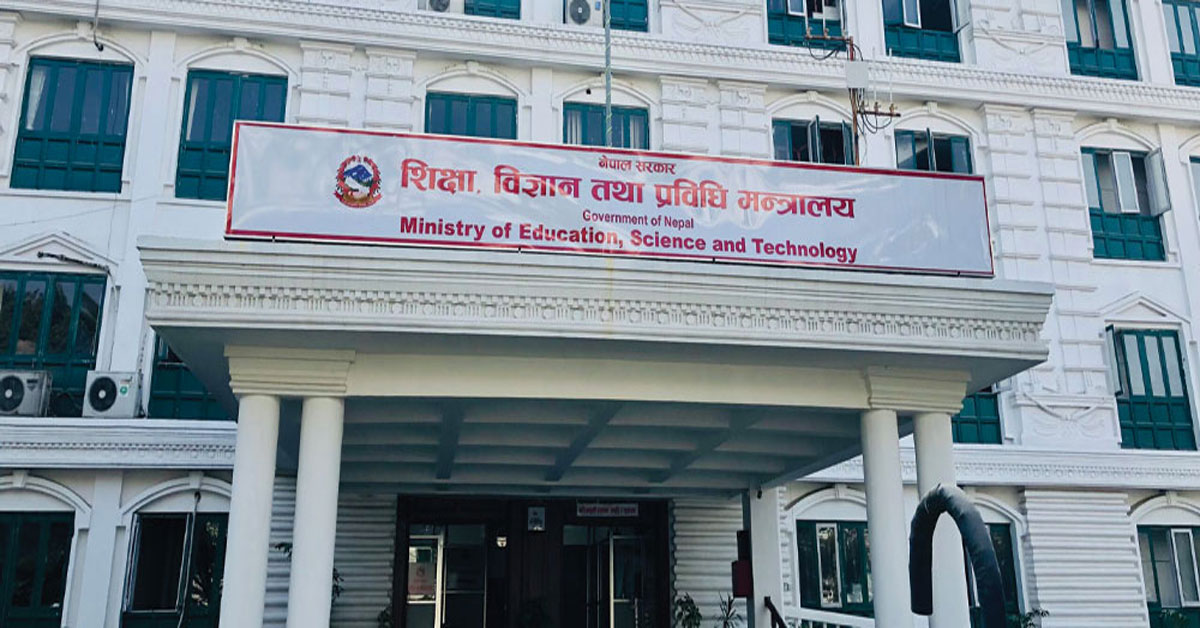
A seven-member task force was formed under the coordination of Chandrakanta Bhusal, Joint Secretary at the Ministry of Education, Science and Technology and Chief of the Technical Education Division, to provide necessary opinions and suggestions on the monthly subsistence allowance of MBBS and BDS intern doctors.
Joint Secretary Chandrakanta Bhusal of the Ministry of Education, Science and Technology served as the coordinator of the task force. Its members included Shakuntala Prajapati from the Ministry of Health and Population; Basanta Prasad Koirala, Member Secretary of the Medical Education Commission; the Dean of Patan Academy of Health Sciences; Prof. Dr. Abhimanyu Jha, Assistant Dean of the Institute of Medicine, Tribhuvan University; Dr. Deepak Kunwar, Associate Dean of Kathmandu University School of Medical Sciences; and Madhu Prasad Ghimire, Under Secretary at the Ministry of Education, Science and Technology, as member secretary.
The report states that the task force was formed as per the decision of the meeting held on 2083/01/14 under the chairpersonship of the Honorable Minister for Education, Science and Technology. The task force was assigned to study the subsistence expenses provided to MBBS and BDS intern students by constituent and affiliated educational institutions of universities and health science academies and to submit a report with opinions and suggestions.
Basis and Scope of the Study
In preparing the report, the task force used the National Medical Education Act, 2075; the National Medical Education Regulations, 2077; national and international practices; and the work carried out by the Ministry of Health and Population, the Medical Education Commission, and medical education provider institutions as its basis.
The report states that it is based on a qualitative study. During the study, negotiation reports, circulars from the Medical Education Commission and the Ministry of Labour, Employment and Social Security, the monthly subsistence allowances provided to intern doctors by various public and private medical colleges and health science academies, and the demands submitted by intern doctors were also analyzed as supporting bases.
The task force has also clarified the limitations of its study. According to the report, the opinions and suggestions were presented on the basis of the time limit given to complete the work, the information received by the task force, the availability of relevant stakeholders, suggestions, and documents received. The report states that the study was limited to preparing a report with opinions and suggestions on providing subsistence allowance to students participating in the one-year internship of the MBBS and BDS programs.
Study of Previous Agreements and Recommendations
The report also used as a basis the earlier agreement reached between the Safe Workplace Struggle Committee for Health Workers and the Government of Nepal. As per that agreement, a committee was formed to study and submit a report on aspects requiring immediate improvement regarding maintaining uniformity in the service facilities of all health workers, including intern doctors, medical officers, resident doctors, and other doctors, at least at par with the government standard.
The report states that a study committee was also formed in B.S. 2081 on the same subject and that the committee gave 49 recommendations. Those recommendations also included matters related to salary allowance, subsistence allowance, and other facilities.
According to the report, the Medical Education Commission had mentioned that, in the case of intern doctors, the standard should be set at 50 percent of the starting salary of an eighth-level medical officer, and in the case of resident MD/MDS doctors, the standard should include the starting salary of an eighth-level medical officer along with 13 months of subsistence allowance in a year, and that all universities, academies, and medical colleges should be instructed to implement it.
The report also states that fees being charged should not be increased on the grounds that the subsistence allowance has been made equivalent to the government standard, that the subsistence allowance should be provided regularly on a monthly basis, and that necessary action should be taken against educational institutions that do not fully comply. It also mentions amending the Medical Education Regulations to determine, in the case of intern doctors, a salary equal to 50 percent of the starting salary of an eighth-level medical officer.
Variation in Subsistence Allowance
The report states that the monthly subsistence allowance of MBBS and BDS intern doctors in Nepal ranges from Rs. 10,400 to Rs. 23,000. It notes that evidence, including examples and bank statements, was submitted showing that private medical colleges mainly provide very low subsistence allowances to intern doctors.
The report states that, representing public and affiliated private medical colleges and health science academies, repeated follow-ups were made at the ministry with the demand that the subsistence allowance of MBBS and BDS intern doctors be fixed at a minimum of 50 percent of the salary of an eighth-level medical officer.
The report also states that the Ministry of Health and Population wrote to the Medical Education Commission, noting variation in the subsistence allowances of health workers and asking that such facilities be maintained at least at the government standard. The report also includes a recommendation that, while registering and renewing health institutions, the ministry, and in the case of medical colleges, the Medical Education Commission during self-evaluation and regular monitoring, should mandatorily collect information related to working hours.
Labour Act and Social Security Issues
The report also includes the subject of the International Labour Organization and the press release of the Ministry of Labour, Employment and Social Security. It states that the Ministry of Labour issued a press release on 2083 Baishakh 4 saying its serious attention had been drawn to complaints and grievances received even from trainees.
The report states that Section 18, Sub-section 3 of the Labour Act, 2074 clearly provides that an employer must provide facilities to a person engaged in work as training in a manner that is not less than the minimum wage, sick leave, gratuity, provident fund, insurance, and social security. It also states that the Ministry of Labour, Employment and Social Security has repeatedly requested all employers to fully comply with provisions related to minimum remuneration and social security that must be provided under the Labour Act, 2074 and prevailing laws.
Situation at Maharajgunj and Patan
Regarding subsistence expenses, the report states that the Institute of Medicine, Maharajgunj Medical Campus, decided to send a recommendation to the Tribhuvan University Central Office for approval to provide MBBS and BDS intern students half of the starting salary scale of medical officers under the Government of Nepal’s health service.
The report states that the decision was made through Decision No. 5644 of the meeting of the Institute of Medicine Implementation Committee and that, accordingly, a letter was sent to the campuses to provide approval, as stated by Dean Prof. Dr. Mohan Raj Sharma of the Office of the Dean, Institute of Medicine, Tribhuvan University.
Similarly, the report also mentions that Patan Academy of Health Sciences and Maharajgunj Campus are prepared to provide 50 percent of the starting salary scale.
Commission Correspondence and Directives
The report states that information was received that various public and private medical colleges have been providing subsistence allowance to intern doctors on the basis of student fees. It mentions that the Ministry of Health and Population issued a circular to the Medical Education Commission on 2080 Magh 2, noting variation in health workers’ subsistence allowances and asking that such facilities be maintained at least at the government standard.
The report also states that an agreement reached with stakeholders on 2082 Kartik 15 regarding demands related to minimum remuneration and other service facilities for nurses and health workers in private medical and dental colleges and hospitals mentioned providing minimum remuneration to health workers.
The report states that the Ministry of Health and Population issued a circular to the Nepal Medical and Dental College Association, Kathmandu, on 2082 Chaitra 20, and that, as per the Medical Education Commission’s circular dated 2081 Magh 25, all universities teaching medical education and their affiliated private educational institutions were instructed regarding implementation of the decision.
The report states that the 16th meeting of the commission, held under the chairpersonship of the chairperson of the Medical Education Commission, directed that intern doctors be provided a subsistence allowance equivalent to the eighth level of the health service.
Main Opinions and Suggestions of the Task Force
As its first suggestion, the task force has taken as a basis the fact that the teaching and learning of the MBBS and BDS programs, based on the concept of bedside teaching-learning, also involve participation in health services. The report concludes that because students participating in the internship program, which is conducted as an integral part of the curriculum, are required to stay and serve in hospitals, their nature of work, service period, difficulty, night service, and additional workload must be taken into account.
On this basis, the task force has suggested that all public and private educational institutions should provide, as subsistence allowance, half of the starting salary scale of the eighth level of the health service, or 50 percent, to fulfill the minimum needs of students undergoing internship, along with housing, food, transportation, and other essential facilities.
The task force has suggested that this arrangement should not be limited only to MBBS and BDS but should also be applied to students studying in other medical education programs that have a one-year internship program.
As its second suggestion, the report states that an action plan should be prepared and implemented in consultation with stakeholders for the implementation of the subsistence allowance.
As its third suggestion, the report states that, under Section 6 of the National Medical Education Act, 2075, the Medical Education Commission has the authority, under its functions, duties, and powers, to issue necessary directives to universities, academies, and councils on matters of medical education. It has recommended that a decision be made by a meeting of the commission for implementation.
The report recommends that an appropriate decision on this matter be made by a meeting of the Medical Education Commission chaired by the Right Honorable Prime Minister and Chairperson of the Commission.
Download
MBBS, BDS Intern Allowance at 50 Percent Pay Scale.PDF - Official Document of Pratibedan (Report)

.jpg)


Comments 0
No comments yet. Be the first to start the conversation.