



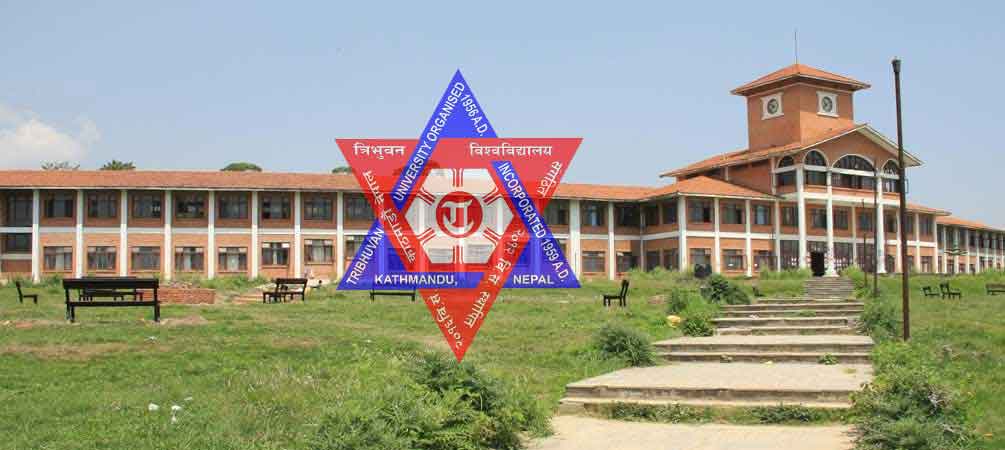
Tribhuvan University (TU) has announced plans to distribute examination question papers online for all academic levels and publish examination results within 60 days of completing the examinations.
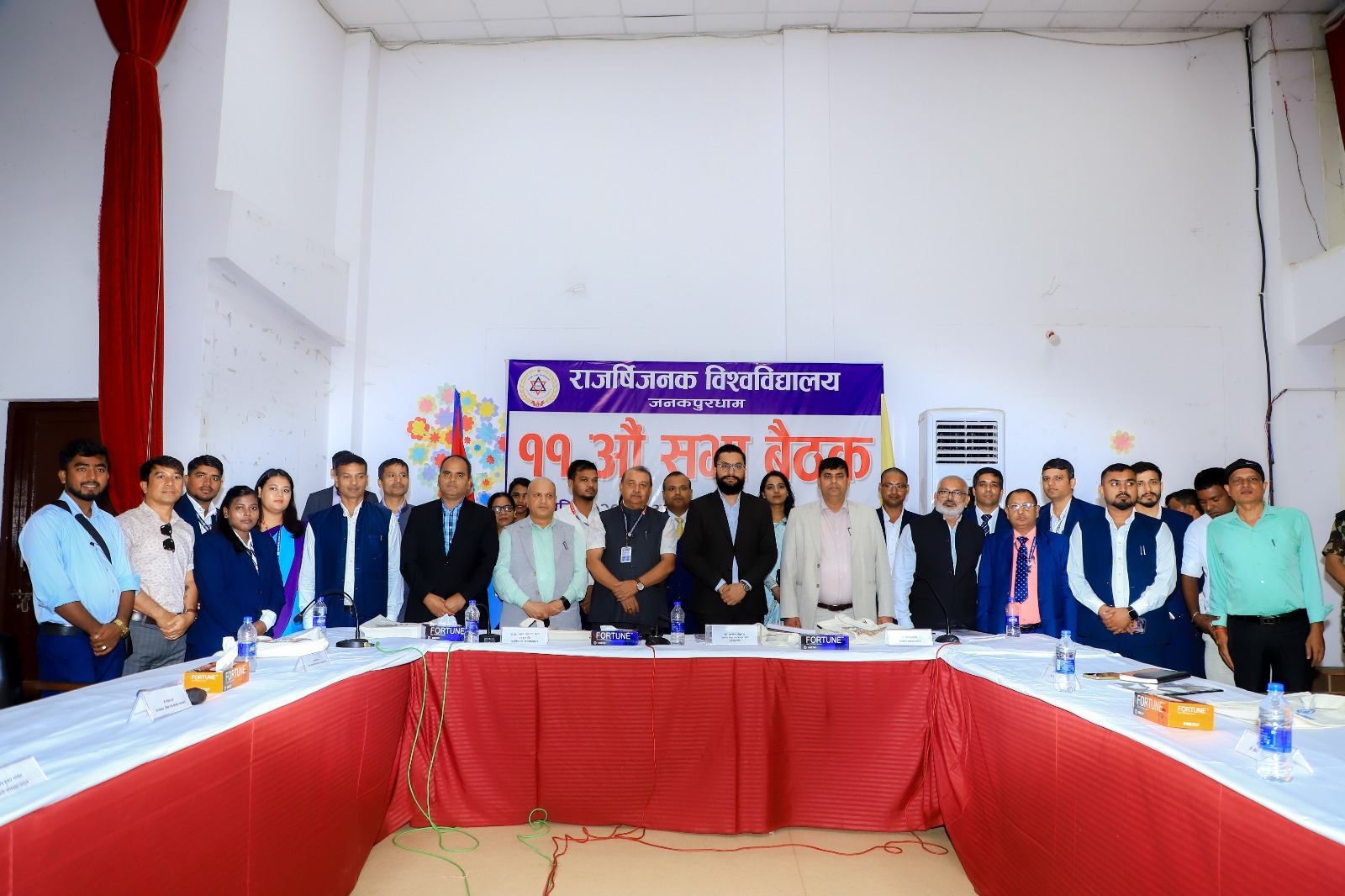
The announcement was made by Registrar Dr. Rabindra Siwakoti while presenting the university's policies, programs, and budget at a meeting of the TU Senate held on Thursday under the chairmanship of Education Minister and Pro-Chancellor Sasmit Pokharel.
The Senate also approved the university's budget, policies, and programs for the current fiscal year.
Examination Reforms and Results Within 60 Days
Tribhuvan University operates 1,053 campuses, 44 central departments, and 64 constituent campuses across Nepal.
Until now, the university has relied on the physical transportation and distribution of examination question papers. Under the new policy, question papers will be distributed electronically to reduce expenses and improve the use of technology in examination management.
The university has also announced a reduction in the time allowed for publishing examination results.
Although the existing academic calendar provides for results to be published within 90 days, some results have reportedly been delayed by as much as 18 months.
Registrar Siwakoti stated that the university would reduce the result publication period from 90 days to 60 days.
The announcement forms part of broader efforts to improve the Tribhuvan University examination system.
The university has also introduced technology-based improvements at the Office of the Controller of Examinations to provide students with faster services through online systems.
Minister Pokharel directed university officials to ensure the full implementation of the academic calendar and improve the timely delivery of student services.
Campuses With Fewer Than 15 Students to Be Merged
Tribhuvan University has introduced a policy to merge campuses with consistently low student enrollment.
According to the university's policies and programs for fiscal year 2083/84 BS, campuses with fewer than 15 students during the previous two academic sessions will be merged.
The policy is intended to address the operation of campuses with very low student numbers.
TU Approves Rs 30.87 Billion Budget
The TU Senate approved a budget of Rs 30.87 billion for the current fiscal year.
The budget, which should have been approved by the end of Asar, was endorsed approximately two and a half months late because of delays in appointing university officials.
The university's financial report indicates increasing pressure on its finances, including a substantial budget deficit, rising outstanding audit irregularities, and growing expenditure commitments.
Budget Deficit and Outstanding Audit Irregularities
The proposed budget includes a deficit of Rs 8.31 billion.
According to the Auditor General's annual report, the university's cumulative outstanding audit irregularities have increased to Rs 32,982,685,000.
During the Senate meeting, member Reshu Aryal Dhungana called for stricter measures to control outstanding audit irregularities and recommended disciplinary action against those responsible.
Government Grants and Projected Income
The government has allocated Rs 7,310,656,000 in grants to Tribhuvan University for the current fiscal year.
The university has stated that the allocated grant is insufficient to meet its financial requirements.
Minister Pokharel informed the Senate that discussions were underway with the Ministry of Finance to arrange the additional resources required.
According to the university's income projections:
-
Internal revenue: Rs 15,242,705,000, representing 49.38% of the total projected income.
-
Government funding: Rs 15,622,403,000, representing 50.62% of the total projected income.
Operating and Capital Expenditure
The university has allocated most of its budget to recurrent operations.
The approved expenditure distribution is:
-
Operating expenditure: 86.14% of the total budget.
-
Capital and development expenditure: 13.86% of the total budget.
Expenditure on pensions and medical treatment for professors and employees is also projected to increase.
The university spent Rs 4,038,243,339 on pensions and medical treatment in the previous fiscal year. This expenditure is estimated to reach Rs 5.20 billion in the current fiscal year.
Measures to Reduce Expenses and Strengthen Financial Discipline
To address its growing financial deficit and outstanding audit irregularities, Tribhuvan University has introduced measures aimed at improving financial discipline and reducing unnecessary expenditure.
The policies include:
-
Conducting meetings virtually where appropriate.
-
Restricting unnecessary foreign visits.
-
Prohibiting the purchase of vehicles.
-
Encouraging the use of green energy.
-
Discouraging budgets based on borrowing or deferred payments.
These measures are intended to control administrative expenses and improve the management of university resources.
Convocation Ceremonies to Be Held in All Seven Provinces
Tribhuvan University has announced plans to organize convocation ceremonies in all seven provinces instead of limiting the event to Kathmandu.
The TU Senate approved a grace list of 95,540 students for the convocation ceremonies scheduled for the coming month of Poush.
The approved list includes students who obtained their academic transcripts between 1 Asar 2082 BS and the end of Asar 2083 BS.
The university has also invited applications from students wishing to participate in the convocation ceremonies.
TU Convocation Grace List: Faculty-Wise Student Numbers
The Senate approved the following numbers of students from the university's faculties and institutes.
| Faculty or Institute | Students |
|---|---|
| Faculty of Management | 43,142 |
| Faculty of Education | 19,533 |
| Faculty of Humanities and Social Sciences | 15,441 |
| Faculty of Law | 3,001 |
| Institute of Science and Technology | 6,688 |
| Institute of Engineering | 5,160 |
| Institute of Medicine | 1,920 |
| Institute of Agriculture and Animal Science | 463 |
| Institute of Forestry | 192 |
| Total | 95,540 |
The Faculty of Management accounts for the largest number of students on the approved grace list, followed by the Faculty of Education and the Faculty of Humanities and Social Sciences.
TU Convocation Grace List: Academic Level-Wise Details
The 95,540 students included in the approved grace list are distributed across academic levels as follows:
| Academic Level | Students |
|---|---|
| Bachelor's Degree | 72,404 |
| Master's Degree | 22,533 |
| MPhil | 253 |
| PGDS | 184 |
| PhD | 166 |
| Total | 95,540 |
Bachelor's degree graduates account for the largest share of the approved list, followed by master's degree graduates.
The university's decisions cover examination management, result publication timelines, campus consolidation, financial management, and the organization of convocation ceremonies across Nepal.

.jpg)

Comments 0
No comments yet. Be the first to start the conversation.