



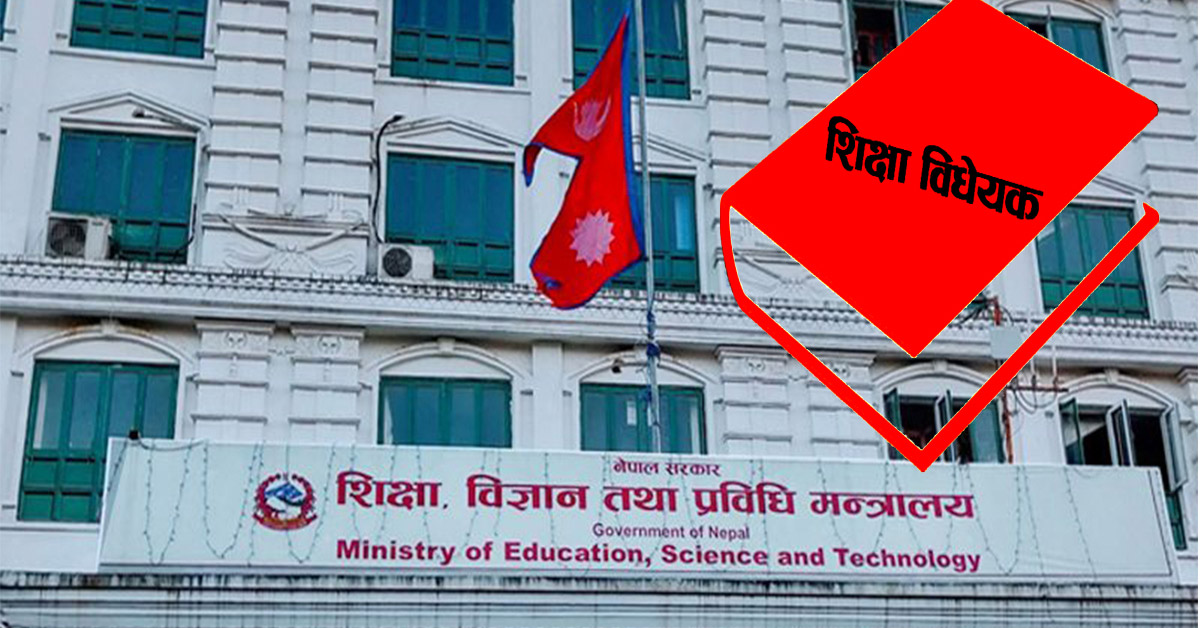
School Education Bill Revived, Feedback to Be Collected in All Seven Provinces
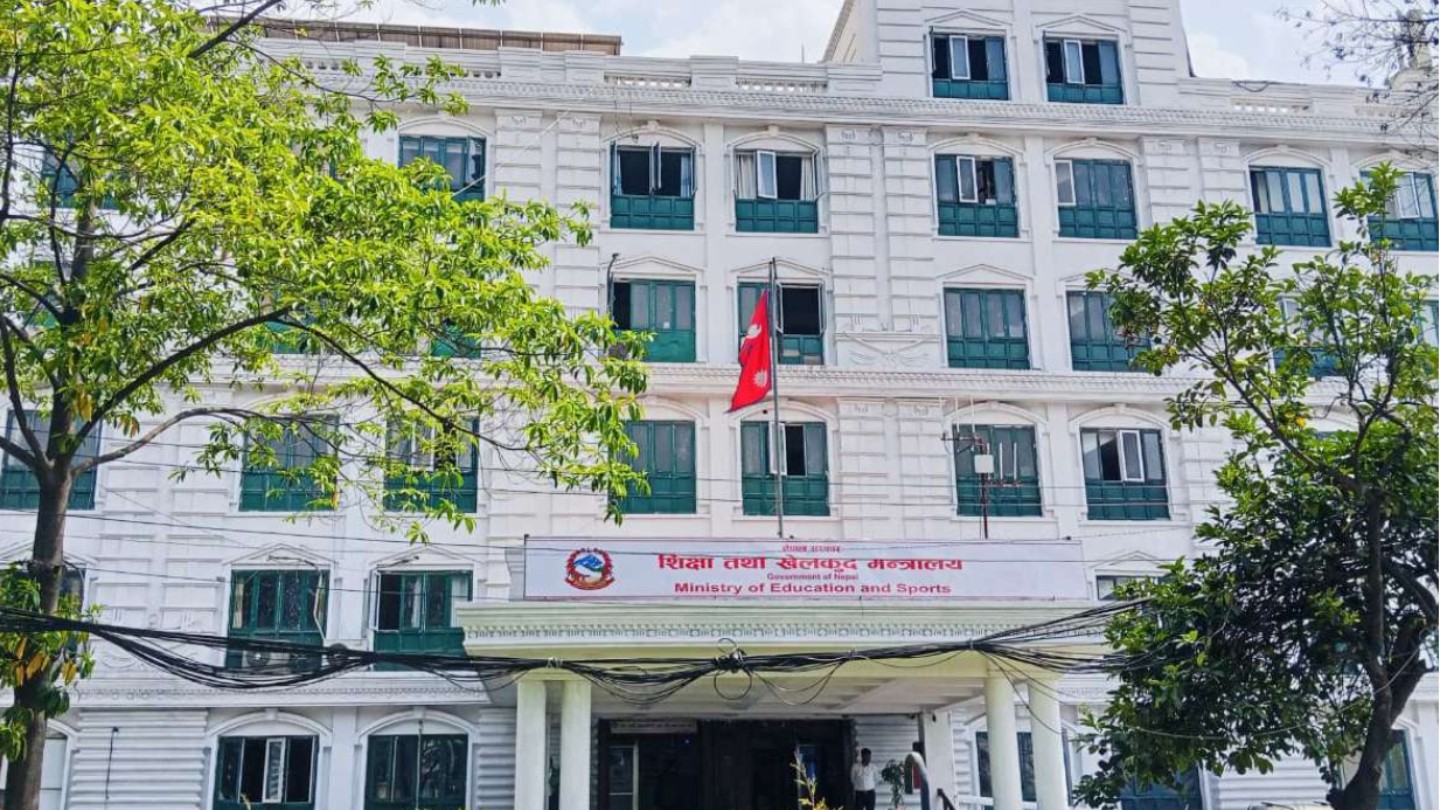
After a gap of nearly a year, the Ministry of Education and Sports has once again moved the School Education Bill forward. The bill had been left pending after the government and Parliament were dissolved following the Gen Z uprising last year. This time, the Ministry plans to finalize the bill in a form acceptable to all stakeholders. As part of the process, the Ministry began renewed discussions and collection of suggestions from stakeholders on Saturday regarding provisions that need to be added, removed, or amended.
Discussions with Stakeholders in All Seven Provinces
The Ministry has launched the campaign to make the process of drafting the Education Act more participatory and to incorporate suggestions received from provincial and local levels into policymaking. Accordingly, the first discussion was held in Biratnagar, Koshi Province, on Saturday. Views were collected from local-level education representatives, teachers, students, headteachers, and parents.
According to Ministry spokesperson Sriprasad Bhattarai, similar discussions will also be held in Janakpur, Madhesh Province; Hetauda, Bagmati Province; Pokhara, Gandaki Province; Butwal, Lumbini Province; Surkhet, Karnali Province; and Dhangadhi, Sudurpashchim Province.
At present, school education administration continues to operate under the Education Act enacted in 2028 BS, which has already been amended ten times.
Background of the Bill and Impact of the Gen Z Uprising
The bill, considered important for improving the overall quality and structure of school education, was first registered in the House of Representatives on 2080 Bhadra 27 by the then Minister for Education, Science and Technology, Ashok Rai. One month later, on Asoj 25, the bill was sent to the parliamentary Education Committee for clause-by-clause discussion. A total of 152 lawmakers registered 1,758 amendment proposals to the bill.
After nearly two years of continuous discussion in the parliamentary committee, a decision was made on Bhadra 5 last year to endorse the bill and send it to Parliament. However, as the committee was making its decision, stakeholders expressed dissatisfaction with several provisions of the bill and announced protests. The process was halted when the Gen Z uprising occurred around the same time and the government and Parliament were dissolved.
Complex Issues in Scholarships and Teacher Recruitment
One of the particularly contentious and complex issues in the bill concerns scholarships that private school operators are required to provide to children from poor, meritorious, and disadvantaged communities.
Under Section 27 of the “Compulsory and Free Education Act, 2075,” private schools enrolling 500, 800, and more than 800 students are required to provide scholarships to 10, 12, and 15 percent of students, respectively. At present, schools waive only monthly and admission fees for students selected for such scholarships.
Stakeholders and lawmakers, however, have been demanding a provision under which students receiving scholarships cannot be charged under any heading, including accommodation, uniforms, and textbooks. Reaching agreement on whether these items should be included in the scholarship has remained difficult. The issue of extra fees for scholarship students has therefore remained a key point of discussion.
When the committee endorsed the bill last year, an agreement was reached to retain the existing scholarship provision while providing facilities including accommodation to only 3 percent of students.
Similarly, an agreement was reached last year to select 60 percent of relief-quota, temporary, technical, and special teachers, as well as teachers in sanctioned posts for Grades 11 and 12, through internal competition and the remaining 40 percent through open competition.
Situation Over the Next 40/50 Years to Be Assessed
The Ministry plans to formulate the new Act by considering not only the present situation but also assessing conditions 40 to 50 years into the future. This approach is part of the broader discussion on education reform in Nepal.
During a discussion held a few days ago, Minister for Education and Sports Sasmit Pokharel stated that preparations are underway to formulate the Education Act by placing students at the center and anticipating the state of school education over the next 40/50 years.


Comments 0
No comments yet. Be the first to start the conversation.