



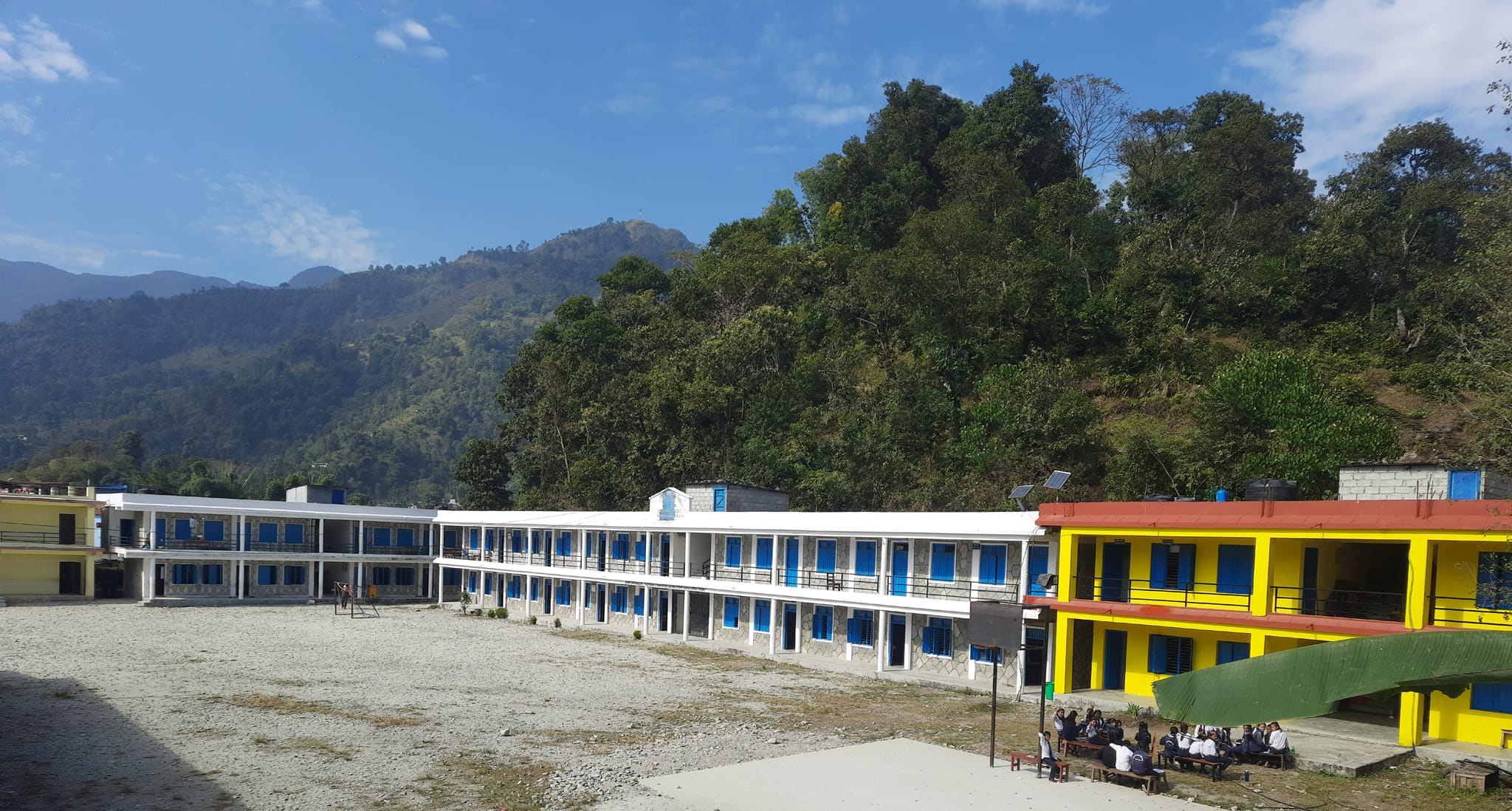
Pokhara is not only Nepal’s major tourist city; it is also a city with immense potential for education, research, skills, and intellectual development. Its mountains, lakes, natural beauty, cultural diversity, and social harmony have made Pokhara a destination of national pride. In recent years, the expansion of the educational environment, the development of universities, growing interest in research, and international academic collaboration have been moving Pokhara toward knowledge-based development.
Because of quality education, a safe environment, and an easy lifestyle, Pokhara is becoming an attractive destination for students. On this foundation, Pokhara has strong potential to be developed as a notable Student City, or educational hub, in South Asia.
Long Historical Background of Education
Pokhara and Kaski are known as leading areas in terms of access to education, educational awareness, and institutional development. The journey from traditional Sanskrit schools to modern universities has established Pokhara not only as a tourism destination but also as a center of knowledge, skills, and research.
In BS 1525, after Kaski’s King Kulmandan Shah granted Birta land on a slope near present-day Barpatan to Padmapani Padhya, whom he had appointed as Pyandi, and initiated Pindi education, Kaski developed as an important center of Sanskrit studies. Reflecting the educational prestige of that period, the saying “If learning is lost, go to Kaski” was in practice. In village Pindis, monasteries, shrines, and Gurukuls, education was provided in the Vedas, Sanskrit, astrology, philosophy, and moral education.
During the tenure of Rana Prime Minister Dev Shumsher, the first language school was established in the Bindhyabasini area in BS 1958. Later, it developed into a Sanskrit secondary school. In BS 2004, the second Bindhyabasini Pathshala was established in Batulechaur. Around the same time, local schools also came into operation at the Ganesh Temple Pindha in Bhairavtol and at Bhogeteni Patan in Nadipur. The Shishu Primary School, which began from a small Pauwa in Nadipur, later became known as Gyanbhumi School.
With the establishment of Public Middle School in Nadipur in BS 2006, modern school education began in Pokhara. This school was shifted to Tundikhel in BS 2009 under the name National High School. Bhadra Kali School was established in BS 2008, while Arunjyoti Library was established in Kundahar in BS 2009. Soldiers Board School, established in BS 2013, later became known as Amarsingh School. In BS 2014, Barahi School in Malepatan, Tal Barahi School in Baidam, and Kanya School were established. Kanya School, established with the active involvement of Dharmashila Guruma and others, played an important role in expanding women’s education. By BS 2016, nine schools had already been established in Pokhara.
Expansion of Higher Education
After Prithvi Narayan Campus was established in BS 2017, a new phase of higher education began in Pokhara. This campus has contributed to establishing Pokhara as a major educational center of western Nepal by producing thousands of human resources in various subjects.
Gandaki Boarding School, established by the Government of Nepal in BS 2023, added a new dimension to school education. After Manipal College of Medical Sciences was established in 1994, Pokhara began to be known as an international center for medical education. Pokhara University, established in 1997, the later-established Pokhara Academy of Health Sciences, and Gandaki University, established in 2019, have further accelerated the development of higher education and health education.
According to school-level educational data for 2082, 634 schools are operating in Kaski. Of them, 375 are community schools and 259 are institutional schools. Among the total schools, 452 are within Pokhara Metropolitan City. There are 377 early childhood development centers operating in the district. Around 141,000 students are studying at the school level, of whom 128,000 are in Pokhara itself.
At the higher education level, more than 51 colleges are operating under various universities. In some of these colleges, around 3,000 students are studying in Grades 11–12. Since the academic, administrative, and monitoring responsibilities for Grades 11–12 in such colleges are not clearly defined, challenges have appeared in coordination and regulation. For this, the Ministry of Education needs to develop a clear policy, coordination mechanism, and effective monitoring system.
Student City Concept and Pokhara’s Potential
The expansion of schools and colleges in Pokhara is an important achievement toward increasing social awareness and building a knowledge-based society. Because of its international airport, strong road network, developed urban infrastructure, natural beauty, and peaceful environment, Pokhara is becoming an attractive educational destination for education, research, and domestic and foreign students.
A Student City refers to a city developed by placing education, research, innovation, and youth energy at the center of urban development. In such a city, schools, colleges, and universities are not merely institutions for study; they serve as foundations that make social, economic, cultural, and intellectual life dynamic. The presence of students accelerates creativity, research, entrepreneurship, and technological development.
According to QS 2026, Seoul, Tokyo, London, Munich, Melbourne, Sydney, Berlin, Paris, Montreal, and Toronto are the world’s top 10 student cities. In India, cities such as Mumbai, Delhi, Bengaluru, and Chennai have also established themselves as important student cities by connecting education, technology, and modern lifestyles. This shows the deep relationship between education and urban development. In this context, Pokhara also has strong potential to become a Student City. A peaceful, safe, and study-friendly environment is Pokhara’s main strength. Its natural beauty, filled with mountains, lakes, and greenery, helps increase students’ creativity and concentration in study.
Higher Education Institutions and Subject-Based Identity
Having two universities in a single city is a distinctive feature of Pokhara. Today, Pokhara is developing as an important center of higher education. Along with institutions such as Pokhara University, Gandaki University, Prithvi Narayan Campus, Pokhara Academy of Health Sciences, and Manipal Medical College, Informatics College Pokhara is providing international-standard education in collaboration with London Metropolitan University.
Pokhara has gradually been building its distinct identity in medical, management, engineering, health science, tourism, agriculture, forestry, and information technology education. Campuses such as Janapriya, Janaprakash, Kanya, Kalika Campus, Gaurishankar, and Guleshwor Campus are providing accessible higher education. Western Regional Engineering Campus, Institute of Forestry, Gandaki College of Engineering and Science, Gandaki Medical College, Nursing Campus, and Polytechnic Institute have been contributing to the production of skilled human resources.
Research, Innovation, and Student-Friendly Infrastructure
To become a true student city, Pokhara needs the development of research centers, innovation laboratories, smart libraries, digital connectivity, and student-friendly infrastructure. Today, a university’s identity is determined not only by the degrees it provides but also by the knowledge, research, and solutions it produces for society. Therefore, educational institutions in Pokhara need to transform from an exam-centered system toward research, innovation, and skill-oriented education.
Pokhara, rich in geographical and environmental diversity, has great potential for research in areas such as Himalayan studies, climate change, biodiversity, sustainable tourism, agriculture, water resources, and disaster management. If modern laboratories, research centers, digital learning centers, and startup hubs can be developed, Pokhara can become an attractive educational and research center in South Asia.
Under the “15-minute city” concept, an environment should be created where education, health, transport, and other services are available within a short distance. Infrastructure such as safe roads, public transport, bicycle lanes, student housing, libraries, and open green spaces can make the city more student-friendly. If collaboration among universities, the private sector, and the community can be expanded, Pokhara can be established as a center of knowledge, technology, and opportunity.
Education, Employment, and Entrepreneurship
Industry–university collaboration is necessary to connect education with employment and entrepreneurship. Information technology parks, innovation centers, and startup programs can provide students with practical experience. If collaboration expands in tourism, health, agriculture, and information technology, the local economy will also become stronger.
If Pokhara’s natural beauty can be connected with education and research, a new possibility for “educational tourism” can open. International conferences, research seminars, student exchange programs, and science and technology exhibitions can attract foreign students and researchers to Pokhara.
Role of the Metropolitan City and Future Direction
Pokhara Metropolitan City has an important role in the journey of developing a student city. The Metropolitan City needs to view the education sector not only as a social service but also as a strategic sector connected with the city’s long-term development, innovation, and prosperity.
Student-friendly urban planning is indispensable for making the Student City concept successful. Safe and organized roads, reliable public transport, bicycle lanes, affordable and safe student housing, open green spaces, sports and cultural centers, public libraries, and safe study spaces that can be used 24 hours a day should be developed.
Pokhara is currently a world-famous tourist destination. With long-term vision, quality education, and attention to student-friendly infrastructure, this city can become one of South Asia’s attractive educational centers in the future. Tourism is Pokhara’s present identity, while education has the potential to become the foundation of its bright future.


Comments 0
No comments yet. Be the first to start the conversation.