



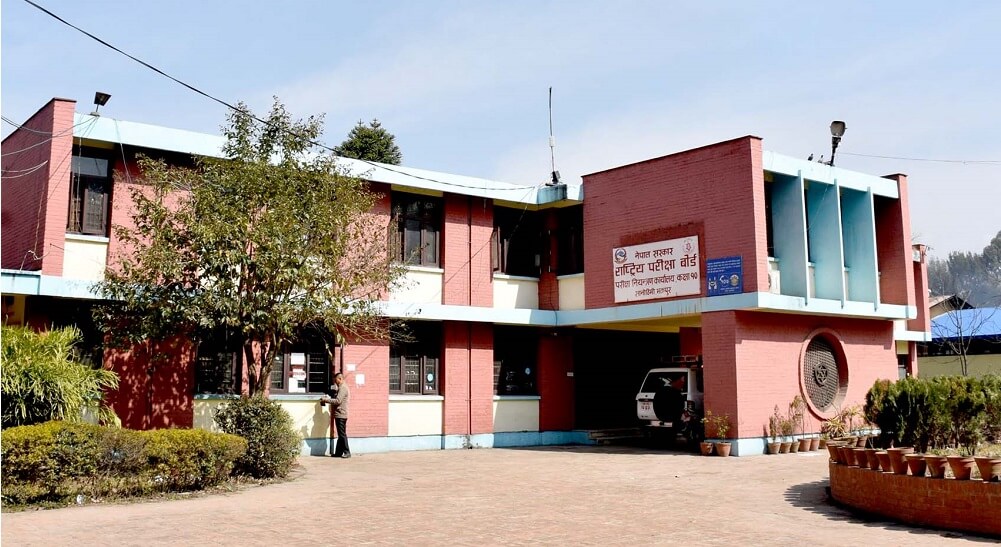
Board Preparing to Publish SEE Result by End of Baisakh
Kathmandu, Baisakh 13, 2083: The National Examinations Board is preparing to publish the result of the Secondary Education Examination (SEE) in the last week of Baisakh 2083 this time.
In previous years, the result was usually published only within three months after the examination ended. This year, however, the result is being prepared for publication within one month.
According to Board Member Secretary Jung Bahadur Aryal, the checking of SEE answer sheets has already been completed, and the process of entering candidates’ marks into the computer is currently underway.
If the work continues at the current pace, the Board also plans to publish the result toward the end of the third week. The marks entry work is expected to be completed within the next one to two days, after which one round of verification will be carried out.
If no technical problems are found during verification, the final process for publishing the result will begin.
Member Secretary Aryal said, “Our target is to publish the result within one month from the date the examination ended. Accordingly, we are working to make the result public by Baisakh 29, 2083.”
He said that, based on the progress made so far, the work is expected to be completed as targeted. The SEE examination was completed on Chaitra 29, 2082.
After the formation of the new government, there was initially discussion about publishing the result within 15 days. However, as excessive haste could create technical problems and errors, officials from the Ministry of Education and the Board agreed to publish it within a maximum of one month.
To make the result publication faster, SEE answer sheets were checked at the examination centers this time, and a large number of personnel were also mobilized for checking.
This year’s SEE examination was conducted from Chaitra 18 to Chaitra 29. A total of 512,421 candidates from across the country participated in the examination.
Among the participants, 257,613 were female students and 254,801 were male students.
A total of 1,966 examination centers were designated across the country to conduct the examination.
In addition, an examination center was also designated for a school in Japan where Nepali language is being taught. From that center, 23 candidates participated in the SEE.


Comments 0
No comments yet. Be the first to start the conversation.