



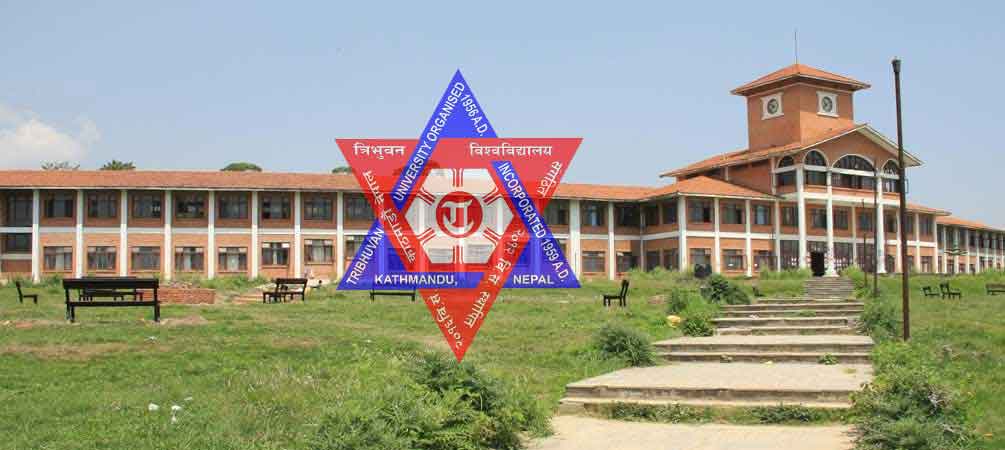
Tribhuvan University (TU) has unveiled its policy and programmes for the fiscal year 2083/84 BS, outlining plans to modernise its administrative, educational and academic structures. The university aims to transform itself into a digital university and a research-oriented institution.
The policy and programmes were presented at a meeting of the University Assembly chaired by TU Pro-Chancellor and Minister of Education and Sports Sasmit Pokharel.
The policy has been prepared in alignment with the university's Strategic Plan 2024–2028 and the findings of its Organisation and Management (O&M) Survey.
Fully Digital Examination System and Technology-Based Administration
According to TU Registrar Dr. Rabindra Shivakoti, the university plans to digitise its academic administration, administrative operations and service delivery.
An integrated mobile application will be introduced to make academic administration and university services more accessible and transparent.
The university also plans to develop a digital dashboard that will bring together institutional data, support monitoring and facilitate faster decision-making.
One of the major priorities is the implementation of an Examination Management Information System to fully digitise examination-related processes.
Under the proposed system, services such as answer-script evaluation, publication of examination results, academic record management and certificate distribution will be handled through digital platforms.
Focus on Research, Innovation and Knowledge Production
A major objective of the new policy is to develop Tribhuvan University from a primarily teaching-focused institution into a research university centred on research, innovation and knowledge production.
The university plans to provide competitive research grants to encourage studies aligned with national priorities, social needs and global developments in knowledge.
To promote innovation among faculty members, young researchers and students, TU will introduce an Intellectual Property Management System.
The system is intended to encourage patent registration, startup development and the creation of intellectual property.
The university also plans to protect technologies, products and ideas developed through research and pursue their commercial application wherever feasible.
Research findings will also be used to inform policymaking.
Integrated Student Services
The policy and programmes include plans to develop an Integrated Student Service System that places students at the centre of university services.
The proposed system will cover the following services:
- Student admission and enrolment.
- Examination-related services.
- Scholarship management.
- Student identity card distribution.
- Complaint and grievance management.
- Mental health counselling.
- Career development support.
- Entrepreneurship support and employment facilitation.
The university aims to bring these services together through an integrated system to improve students' access to academic and administrative support.
Curriculum Revision and Expansion of Digital Learning
Tribhuvan University also plans to revise its curricula in response to changing labour market needs and technological developments.
Entrepreneurship and innovation will be incorporated into academic programmes as part of the curriculum revision process.
To support technology-based teaching and learning, the university plans to develop a Learning Management System (LMS).
The policy also proposes expanding distance education, digital learning materials and blended learning approaches across TU's constituent campuses.
These measures form part of the university's plans to modernise teaching, strengthen research activities and expand digital academic and administrative services.

.jpg)

Comments 0
No comments yet. Be the first to start the conversation.