



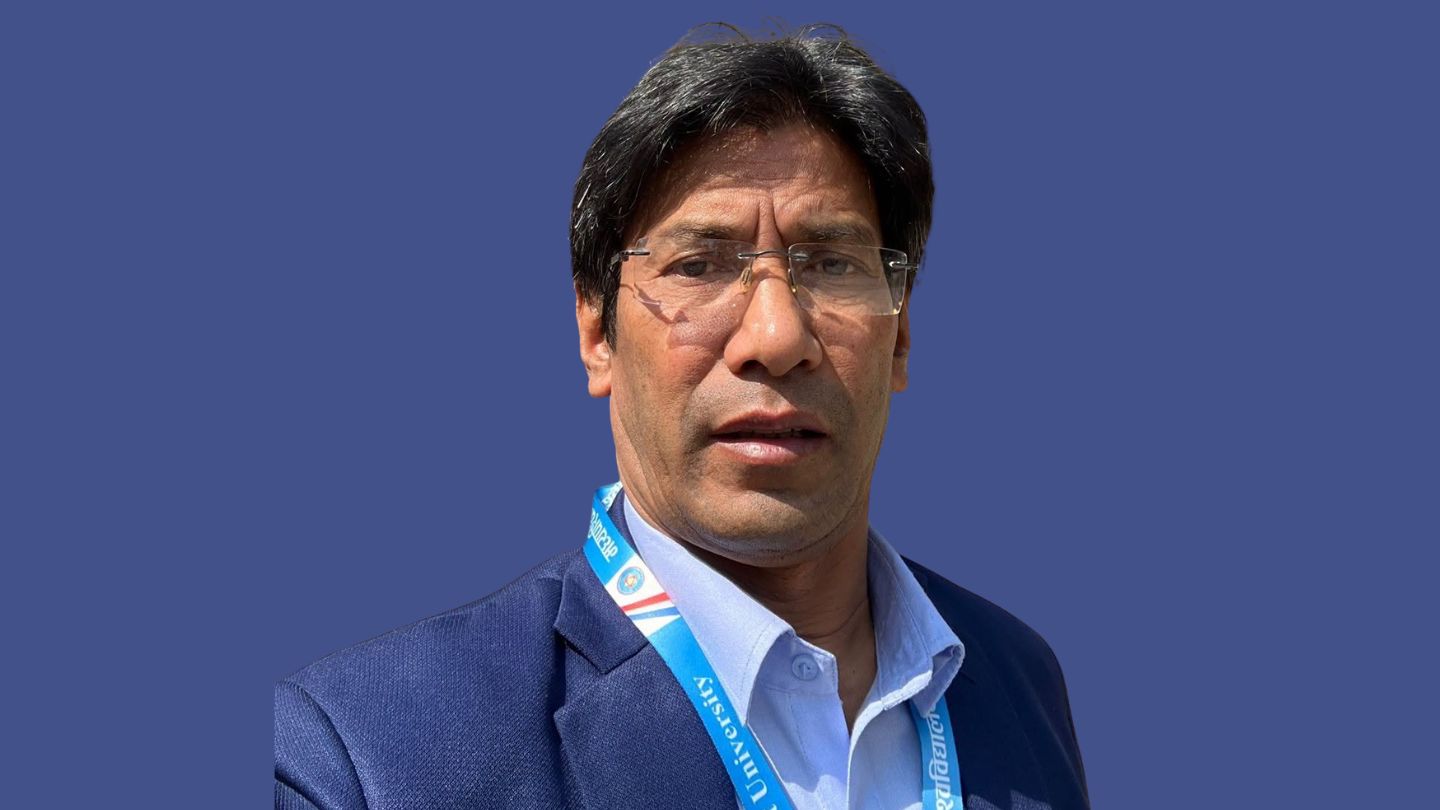
Vice-Chancellor Suwal Prioritizes Connecting Mid-West University with Research, Technology, and Enterprise
Expectations for higher education reform have increased after the government appointed new vice-chancellors in seven universities through open competition. In this context, the newly appointed Vice-Chancellor of Mid-West University, Associate Professor Dr. Rajan Suwal, has said that he will move the university forward by linking it with academic discipline, research, digitalization, need-based curriculum, and entrepreneurship.
In an interview, he emphasized that Mid-West University should be advanced in a way that matches the geographical, economic, and social needs of Karnali Province. According to him, university reform is not possible only through a change in leadership; it requires adherence to the academic calendar, good governance, a sense of responsibility among teachers, students, and employees, and an academic environment free from political influence.
Selected through Open Competition
According to Dr. Suwal, applications were invited openly this time for the selection of vice-chancellors. Initially, 20 people had applied for Mid-West University. After one applicant was found ineligible, a list of qualified candidates was prepared. He said the top 10 candidates were then selected on the basis of the prescribed criteria.
According to him, the evaluation included books, research papers, journal publications, teaching experience, work experience, vision paper, strategic plan, presentation, and interview, among other aspects. “I considered myself capable of this responsibility and participated in the competition,” he said.
Dr. Suwal had previously been working as a dean at Mid-West University. He said that during his tenure of about 14 months, he had the opportunity to closely understand the university’s condition, possibilities, and challenges.
Reason for Prioritizing Karnali
Suwal, who was born in Bhaktapur, said that although he studied abroad, he remained continuously involved in the education sector because he wanted to work in Nepal. He presented his experience in teaching, management, and institutional development at institutions including Pulchowk Campus, Khwopa College, Khwopa Engineering College, and Khwopa Polytechnic.
According to him, the main reason for prioritizing Karnali Province is that national development is linked with the development of that region. “If we stay only in places that have all facilities, how will less-developed areas move forward?” he asked. He said that if Karnali’s education, infrastructure, agriculture, tourism, and local potential can be linked with the university, it will contribute to overall regional development.
Major Problems of the University
Dr. Suwal identified political interference, weak academic discipline, problems in implementing the calendar, delays in the examination and result system, weak use of infrastructure, and the lack of a research culture as major challenges facing Nepali universities.
According to him, student organizations, teachers’ organizations, and employee organizations were initially formed for institutional interests, but in some cases, party-based influence has created obstacles in university operation. He said all sides should reconsider their roles so that the academic environment in the university does not deteriorate.
He said that because the academic calendar has not been followed, four-year programs have extended to four and a half years, five years, or sometimes even six years. In his view, this is connected not only with university leadership but also with weaknesses among teachers, students, examination management, and the overall administrative system.
Effective Use of Infrastructure and Resources
Suwal said infrastructure and asset management are also important areas that need improvement at Mid-West University. According to him, the university’s buildings, land, laboratories, and other assets should be used to the maximum extent.
He said the tendency to depend only on government grants would not be appropriate in the long term. He emphasized that the university should develop programs capable of generating its own revenue. For this, he said labor market-oriented curricula, cooperation with local and provincial governments, research projects, alumni support, endowment funds, and national and international projects could be useful.
Curriculum Suited to Karnali
Dr. Suwal said the university’s curriculum should be linked with local needs and the labor market. According to him, the earlier education system became overly theoretical and could not meet market needs. Therefore, he believes that a need-based and labor market-oriented curriculum should now be developed.
He said that instead of teaching only paddy or wheat farming in Karnali, education connected with fruits, medicinal herbs, agriculture, tourism, infrastructure, hydropower, and local industries suited to the hilly geography is necessary. He said special curricula matching the local geography and economy can also be included in engineering, agriculture, medicine, and other subjects.
At the same time, he said the university curriculum should not be entirely local. According to him, about 70 to 80 percent of the curriculum should be general and national in scope, while the remaining part can include special subjects according to the university’s geography and local needs.
Cooperation between Industry and University Needed
According to Dr. Suwal, the university should cooperate with industries, local governments, provincial governments, and development agencies. He said a policy is needed to produce human resources by understanding industry needs, make research useful, and connect students with employment and entrepreneurship.
He noted that the role of a university should not be limited only to teaching and conducting examinations. He said the university can become a development partner by connecting researchers, experts, students, and local bodies.
Alternative Role for Student Organizations
Saying that students have an important role in university reform, Suwal said students should focus on academic and constructive activities rather than party-based influence. According to him, political organizations are not the only option for addressing student problems. Students can also communicate and cooperate with university management through student clubs, subject-based societies, academic groups, and constructive forums.
He said students, teachers, and employees should all take university reform as a shared responsibility. He said activities that damage the academic environment should be discouraged, and a disciplined and cooperative environment should be built.
Three Main Priorities
Regarding the priority work during his tenure, Dr. Suwal mentioned three areas. First, to operate the university’s academic system effectively, maintain good governance, and implement the academic calendar with discipline.
Second, to provide quality education at an affordable fee so that not only students from Karnali but also students from across the country can study there. Third, to make the university research-based, develop specialized laboratories, advance digitalization, and strengthen the university’s identity at the national and international levels.
According to Dr. Suwal, if Mid-West University can link Karnali’s needs and possibilities with education, research, technology, and entrepreneurship, it can contribute not only to regional development but also to national development.


Comments 0
No comments yet. Be the first to start the conversation.