




Table of Content
- BBA Education in Nepal and Fee Structures Across Universities
- What Is BBA?
- BBA Fee Structure by University in Nepal
- Comparative BBA Fees in Nepal
- Why Do BBA Fees Vary So Much?
- Hidden and Additional Costs
- Scholarships and Fee Waivers
- Return on Investment: Is BBA Worth It in Nepal?
- How to Choose the Right BBA College
- Conclusion
BBA Education in Nepal and Fee Structures Across Universities
The Bachelor of Business Administration (BBA) has become one of Nepal’s most preferred undergraduate management programs. Since Kathmandu University introduced the BBA degree in Nepal in 1997, the program has gradually expanded across public universities, constituent campuses, and affiliated private colleges.
Unlike traditional theory-heavy management programs, BBA is designed to combine classroom learning with presentations, case studies, group work, research, and internships. This practical orientation is one reason many students interested in banking, finance, marketing, entrepreneurship, corporate management, and startups consider BBA after Grade 12.
However, one of the biggest concerns for students and parents is cost. In Nepal, the total cost of a BBA program may range from about NPR 250,000 to more than NPR 1,000,000, depending on the university, campus type, location, facilities, and additional charges.
The fee ranges below are indicative and may change by intake, campus, and university notice. Students should confirm the latest fee structure, scholarship policy, and examination charges directly with the concerned university or college before admission.
What Is BBA?
BBA is a 4-year undergraduate management degree generally taught over 8 semesters. In Nepal, most universities structure the program around 120 to 126 credit hours.
The course usually includes subjects related to management, accounting, economics, finance, marketing, business law, entrepreneurship, organizational behavior, research methods, and information systems. Many colleges also include presentations, group projects, fieldwork, and internships as part of the learning process.
Students planning to study BBA in Nepal should compare the curriculum, admission process, faculty profile, internship support, and total cost before choosing a college.
General Eligibility
Students who have completed 10+2 or equivalent from management, science, humanities, education, or another recognized stream may apply for BBA.
Most universities require:
-
Completion of Grade 12 or equivalent
-
Minimum GPA or grade requirement set by the university
-
Required grade in individual subjects where applicable
-
Successful completion of an entrance examination or college-level selection process
Specific eligibility criteria may vary by university and intake.
BBA Fee Structure by University in Nepal
BBA fees in Nepal differ mainly because of the type of institution. Constituent or public campuses are usually more affordable because they receive public support. Private affiliated colleges generally charge higher fees because they invest in facilities, management systems, student services, and additional academic activities.
.png)
1. Tribhuvan University (TU)
Tribhuvan University is one of the most widely chosen universities for BBA in Nepal. TU offers BBA through constituent campuses and affiliated private colleges.
Admission is generally based on the CMAT entrance examination and merit-based selection. Competitive public campuses may have limited seats, so strong entrance performance is important.
Students interested in the TU pathway can review more details about BBA at Tribhuvan University.
TU Constituent Campuses
Public campuses such as Shanker Dev Campus, Nepal Commerce Campus, and Patan Multiple Campus are comparatively affordable.
Estimated total fee: Around NPR 300,000 to NPR 400,000 for the full 4-year program.
These campuses are often preferred by students looking for lower tuition costs and recognized university affiliation. However, admission can be highly competitive because of limited seats.
TU-Affiliated Private Colleges
Private colleges affiliated with TU generally charge higher fees than public campuses.
Estimated total fee: Around NPR 500,000 to NPR 850,000.
The fee may vary depending on campus facilities, location, administrative charges, library access, computer labs, internal activities, and student support services.
2. Kathmandu University (KU)
Kathmandu University offers BBA through Kathmandu University School of Management (KUSOM) and affiliated colleges. KU’s management programs are often associated with structured academic delivery, case-based learning, and industry-focused activities.
Admission generally requires students to pass KUMAT or the applicable university-level selection process.
Estimated total fee: Around NPR 700,000 to more than NPR 1,000,000.
KU and its affiliated institutions are usually placed in the higher fee range compared with many public university options. The total cost may reflect academic systems, campus facilities, student development activities, and institutional services.
Students should verify the latest fee package directly from KUSOM or the concerned affiliated college.
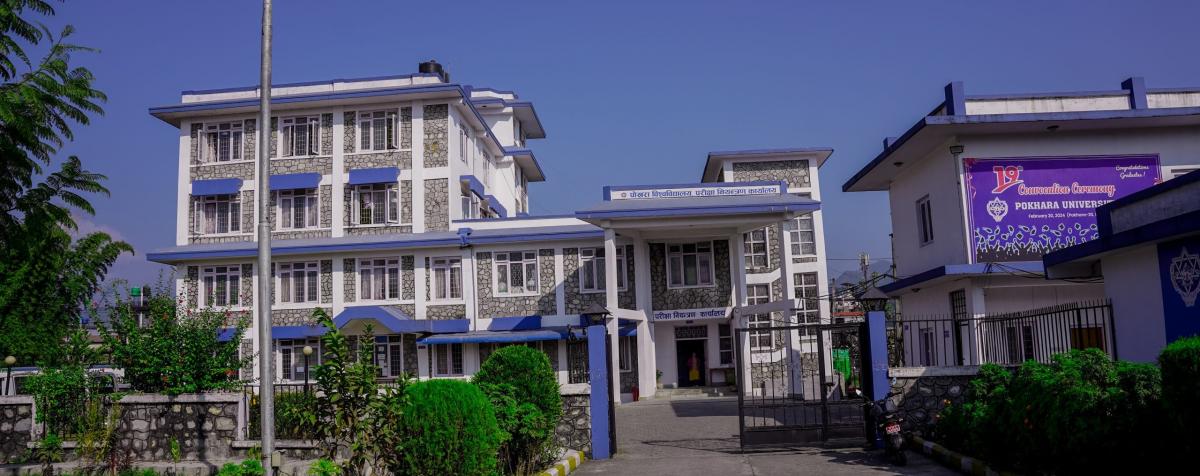
3. Pokhara University (PoU)
Pokhara University has a strong presence among private business schools in Nepal. Several colleges in Kathmandu and outside the Valley offer BBA under PU affiliation.
The admission process may vary by college, although students usually need to meet university eligibility criteria and pass the required entrance or selection process.
Estimated total fee: Around NPR 500,000 to NPR 850,000, with some premium colleges charging close to or above NPR 1,000,000.
Lower-cost private colleges may offer the program with basic facilities, while higher-fee colleges may include better infrastructure, additional workshops, industry exposure, placement support, and student development programs.
Students should compare the college’s academic record, internship network, faculty, and actual support services before judging value only by fee.
4. Purbanchal University (PU)
Purbanchal University offers BBA through its own management school and affiliated colleges. It is another option for students seeking BBA programs in eastern Nepal, Kathmandu, and other areas.
Estimated fee at public or lower-cost setups: Around NPR 350,000 to NPR 400,000.
Estimated fee at affiliated private colleges: Around NPR 500,000 to NPR 850,000.
PoU-affiliated colleges may be suitable for students looking for a mid-range BBA option. However, students should carefully review affiliation status, examination system, teaching quality, and total payable cost before admission.
5. Mid-West University (MU) and Far-Western University (FWU)
Mid-West University and Far-Western University have helped expand management education outside Kathmandu and other major urban centers.
These public universities may offer BBA at comparatively lower cost, especially for students from Karnali, Sudurpaschim, and nearby regions.
Estimated total fee: Around NPR 250,000 to NPR 450,000.
For students who want to reduce relocation, hostel, and living expenses, regional public universities can be a practical option. However, students should still verify course structure, faculty availability, internship opportunities, and campus resources before making a decision.
6. Rajarshi Janak University (RJU)
Rajarshi Janak University is an emerging public university based in Madhesh Province. It offers management education with a focus on accessibility for students from the region.
Estimated total fee: Around NPR 250,000 to NPR 350,000.
RJU can be an affordable option for students who want to study BBA without moving to Kathmandu or other larger cities. As with any newer or expanding institution, students should confirm current program approval, seat availability, academic calendar, and fee details from official sources.
Comparative BBA Fees in Nepal
| University / Campus Type | Estimated Total BBA Fee |
|---|---|
| Tribhuvan University constituent/public campuses | NPR 300,000–400,000 |
| Tribhuvan University affiliated private colleges | NPR 500,000–850,000 |
| Kathmandu University and affiliated colleges | NPR 700,000–1,000,000+ |
| Pokhara University affiliated private colleges | NPR 500,000–850,000; some near or above NPR 1,000,000 |
| Purbanchal University public/lower-cost setups | NPR 350,000–400,000 |
| Purbanchal University affiliated private colleges | NPR 500,000–850,000 |
| Mid-West University | NPR 250,000–450,000 |
| Far-Western University | NPR 250,000–450,000 |
| Rajarshi Janak University | NPR 250,000–350,000 |
Why Do BBA Fees Vary So Much?
The fee difference between public campuses and private colleges is mainly linked to funding, facilities, and operating costs.
Public or constituent campuses generally receive institutional or government support. This helps keep tuition lower. However, seats are limited, and admission is usually competitive.
Private colleges must cover their own operating costs. These may include building rent or infrastructure, faculty salaries, administrative staff, labs, libraries, software, student activities, guest sessions, training programs, and placement-related services.
A higher fee does not automatically mean better education. Students should evaluate:
-
University affiliation and recognition
-
Faculty quality
-
Academic calendar and exam system
-
Internship support
-
Alumni outcomes
-
Student services
-
Total payable fee, including hidden charges
-
Location and living cost
-
Scholarship availability
Hidden and Additional Costs
The tuition fee mentioned in brochures may not include every cost. Students should prepare for additional expenses throughout the 4-year program.
University Registration and Examination Fees
Students may need to pay registration, examination, and semester-related charges separately.
Estimated additional cost: Around NPR 20,000 to NPR 25,000 or more over 8 semesters, depending on the university and campus.
Formal Dress Code
Many BBA colleges require formal dress for presentations, events, viva sessions, or regular classes. Students may need to budget for formal shirts, trousers, suits, ties, shoes, or college uniforms.
Laptop and Technology
A laptop is often useful for assignments, presentations, spreadsheets, research reports, and data analysis.
Estimated cost: Around NPR 60,000 to NPR 80,000 or more, depending on the device.
Fieldwork, Reports, and Internships
Students may need to spend on field visits, surveys, report printing, transportation, internship mobility, and project work.
These costs vary by college requirement and student location.
Scholarships and Fee Waivers
Students with limited financial resources may still have access to BBA through scholarships and fee waivers.
Many universities and colleges offer scholarships under merit, inclusion, need-based, or performance-based categories. The exact number of seats, eligibility criteria, and waiver amount vary by university and college.
Entrance-Based Scholarships
Some universities and colleges provide scholarships to students who perform well in entrance examinations or meet targeted criteria, such as public school background, financial need, or reserved categories.
Students should check the official scholarship notice before applying.
Performance-Based Scholarships
Some private and affiliated colleges offer partial tuition waivers to students who perform well in semester examinations.
Possible waiver range: Around 25% to 100% of tuition fee for a semester, depending on college policy.
These scholarships are usually competitive and may require students to maintain a minimum SGPA or rank.
Return on Investment: Is BBA Worth It in Nepal?
The value of a BBA degree depends on the student’s skills, college quality, internship exposure, academic performance, communication ability, and career direction.
Entry-level BBA graduates in Nepal may work in roles such as:
-
Management trainee
-
Marketing associate
-
Junior HR officer
-
Brand assistant
-
Banking assistant
-
Sales or business development associate
-
Operations assistant
-
Startup team member
Indicative entry-level salary: Around NPR 25,000 to NPR 40,000 per month, depending on employer, location, skills, and competition.
BBA can offer better long-term value when students build practical skills in communication, data handling, presentation, teamwork, business writing, research, and problem-solving. Career growth may be stronger for students who combine the degree with internships, networking, digital skills, and professional discipline.
Students can also explore career paths for BBA graduates to understand possible options after graduation.
How to Choose the Right BBA College
Before choosing a college, students should not rely only on advertisements, buildings, or fee amounts. A careful comparison can help avoid unnecessary financial pressure.
Students should ask the following questions:
-
Is the college officially affiliated with the university?
-
Is the academic calendar regular?
-
Who teaches the major subjects?
-
What is the total 4-year payable fee?
-
Are examination and university fees included?
-
What scholarships are available?
-
Does the college provide internship support?
-
Are alumni working in relevant sectors?
-
What additional costs should be expected?
-
Is the location affordable for daily travel or accommodation?
A lower-cost public campus may be a good option for academically strong students who can secure admission. A higher-fee private college may be suitable if it provides strong teaching, mentoring, internships, and career support. The best choice depends on budget, goals, discipline, and verified institutional quality.
Conclusion
BBA in Nepal is available across several universities, including TU, KU, PU, PoU, MU, FWU, and RJU. The total cost can vary widely, from around NPR 250,000 at some public or regional universities to more than NPR 1,000,000 at higher-fee private institutions.
Students and parents should treat BBA as an educational investment, not just a degree purchase. A higher fee should be justified by teaching quality, academic support, internship access, student development, and transparent services.
At the same time, affordable public campuses can offer strong value for students who are prepared for competition and self-directed learning. The right decision should be based on verified fees, university recognition, academic quality, career goals, and family budget.






Comments 0
No comments yet. Be the first to start the conversation.