




Table of Content
- IT Education in Nepal and Its Fee Structure: The Reality Every Student and Parent Should Know
- The Attraction Toward IT Education and the Confusion Around It
- IT Education and Fees at Tribhuvan University (TU)
- Computer Engineering (B.E. Computer): The Gap Between Government and Private Colleges
- Other National Universities (Kathmandu, Pokhara, and Purbanchal Universities)
- IT Colleges Affiliated with Foreign Universities
- Hidden Costs and Additional Financial Burdens
- Scholarships, Student Competence, and Income from Employment (ROI)
- Quick Snapshot
- Conclusion and Suggestions
IT Education in Nepal and Its Fee Structure: The Reality Every Student and Parent Should Know
Over the past few years, the field of information technology (IT) in Nepal has made an unprecedented leap. Easy access to the international market, the possibility of earning in dollars through freelancing, and the continued digitalization of Nepal’s corporate sector have pushed the younger generation’s attraction toward IT to an extraordinary level. As a result, thousands of students who complete Grade 12 each year decide to make IT their first career choice.
However, just as many students are drawn to this field, there is equal confusion about the education system, the types of courses available, and especially the fee structure. Today, one IT course in Nepal may be completed for NPR 100,000, while another IT course affiliated with a foreign university may cost up to NPR 20 lakh. That is why this is not an ordinary matter of choice for students, nor is it a simple matter of financial planning for parents.
In this article, we will provide a fact-based and in-depth analysis of the major IT academic programs currently operating in Nepal, the fee structures set by national and international universities, various hidden costs, the scholarship situation, and the return on investment (ROI) students may expect from their studies.
The Attraction Toward IT Education and the Confusion Around It
First of all, there needs to be a clear understanding in Nepal that “computer-related subjects” do not refer to just one common degree. IT is a vast umbrella that includes pure technical coding, networking, data science, software development, as well as subjects that combine IT and management.
In Nepal’s academic market, programs such as BSc CSIT, BCA, and BIT in Nepal are especially popular:
-
BSc CSIT (Bachelor of Science in Computer Science and Information Technology)
-
BCA (Bachelor of Computer Application)
-
BIT (Bachelor of Information Technology)
-
BITM (Bachelor of Information Technology Management)
-
B.E. in Computer Engineering
These degrees differ significantly in nature, credit hours, teaching model, and especially fee structure. The differences are determined not only by the college but also by the policies of the university.
IT Education and Fees at Tribhuvan University (TU)
Under Tribhuvan University (TU), Nepal’s oldest and largest university by student population, various IT degrees are offered separately through the Institute of Science and Technology (IoST), the Institute of Engineering (IOE), and the faculties of Humanities and Management. TU’s strongest advantage is its widely recognized brand value, and another is the affordable cost at government and constituent campuses.
1. Fees for BSc CSIT
BSc CSIT is the first choice for students who studied Science in Grade 12, including Physics and Mathematics, or who passed an equivalent qualification. This four-year program consists of 8 semesters and 126 credit hours, and Tribhuvan University conducts a highly competitive entrance examination for admission. Getting selected and securing a place within the quota is difficult in itself.
Fee differences by college
Government/constituent campuses: At government colleges such as Patan Multiple Campus, Amrit Science Campus (ASCOL), and Bhaktapur Campus, the total four-year cost of CSIT, including tuition and internal fees, is estimated at around NPR 300,000 to 400,000. Due to government support, the cost is extremely low compared to the quality of education. However, seats are very limited, which creates intense competition among students.
Affiliated private colleges: This course is also taught at TU-affiliated private colleges in Kathmandu Valley and outside the valley, such as Kathmandu Model College, Deerwalk, and many others. Depending on physical infrastructure, modern labs, campus placement support, and related facilities, the cost of studying the same subject at private colleges generally ranges from NPR 600,000 to 800,000.
2. Fees for BCA and BIT
The main feature of BCA is that it can also be studied by students from Humanities or Management backgrounds, meaning those who did not study Science in +2 but scored above a C grade.
BCA fee structure: At government campuses, the total four-year cost of BCA usually reaches around NPR 360,000 to 500,000. However, at most TU-affiliated private colleges, the cost of studying BCA ranges from NPR 450,000 and, depending on the college brand, can go up to NPR 800,000 to 1 million. Since BCA is mainly focused on application and software development, students and parents should assess whether the increased fees are justified based on the additional software training a college actually provides.
TU BIT: This is a relatively emerging and highly preferred subject under TU. It focuses more on practical IT training. Even at government colleges, the fee starts from around NPR 350,000, while private colleges generally charge NPR 600,000 to 700,000.
University examination and registration fees (Service Charges & Exam Fees): These may not be fully included in the tuition fees mentioned above. Tribhuvan University generally charges around NPR 2,500 to 3,000 per semester as examination form fees.
Computer Engineering (B.E. Computer): The Gap Between Government and Private Colleges
For students who want to study the computer field in a fully hard-core way, from theory and hardware to microprocessors, software, and system design, the destination is B.E. in Computer Engineering under the Institute of Engineering (IOE). It is widely regarded as the most difficult and rigorous field of study within IT.
Competition in the IOE entrance examination is extremely intense. Until recently, the fee structure there had not been revised for nearly 25 years, which created serious internal management problems. Only after major controversy and student protests in 2023 was the system adjusted in a more systematic and scientific way.
Constituent campuses (Pulchowk, Thapathali, etc.): The government provides merit-based regular scholarship quotas. Under the regular quota, the entire four-year program can be completed for a nominal amount, approximately NPR 57,000, which is a major blessing for poor but exceptionally talented students.
Full-paying quota at constituent campuses: Even if a student does not secure a scholarship, they may still study at a constituent campus under the full-paying category. Since 2023–2024, the total full fee has reached around NPR 490,000. Previously, it remained fixed at NPR 318,000 for nearly two decades.
Private IOE colleges: Compared with government constituent campuses, studying Computer Engineering at TU-recognized private engineering colleges such as Advanced College, Kathford, Himalaya College, and others generally costs around NPR 12 lakh to 17 lakh. Although the fees are high, students still receive a government-recognized degree, and private campuses usually offer stronger infrastructure and facilities. For that reason, the investment is not generally considered unjustified.
Other National Universities (Kathmandu, Pokhara, and Purbanchal Universities)
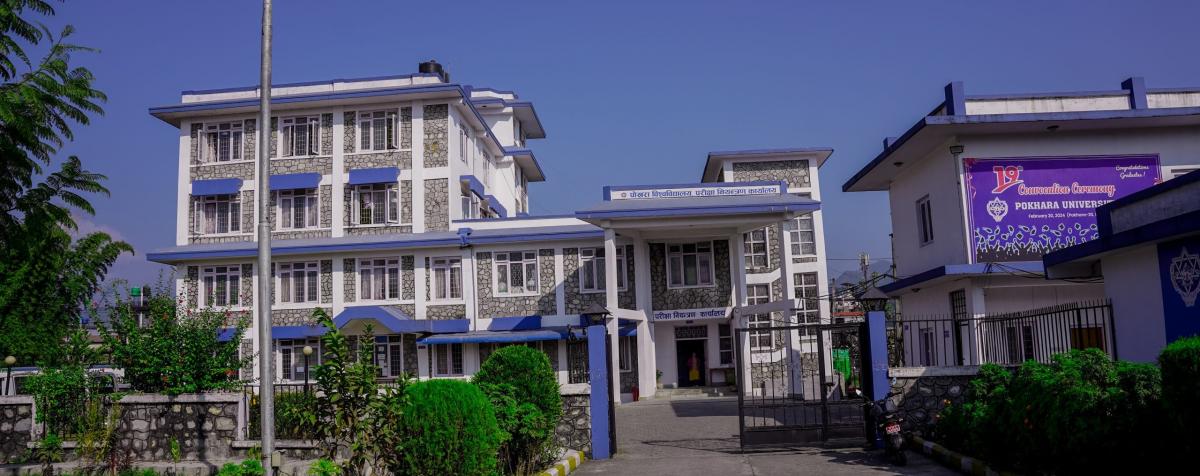
Tribhuvan University is not the only option. Universities such as Kathmandu University (KU), Pokhara University (PU), and Purbanchal University (PoU) have built a distinct reputation through course revision and faster semester result systems. When TU programs are criticized for delays caused by politics or internal administration, these universities often emerge as stronger alternatives.
Kathmandu University (KU)
Under Kathmandu University, programs such as B.E. Computer and B.Sc. Computer Science taught in Dhulikhel place strong emphasis on modern labs and research. Admission is based on the KUMAT/KUCAT entrance examination. Overall, Kathmandu University is relatively expensive, and the cost of engineering courses is estimated to range from around NPR 850,000 to 1 million.
Pokhara and Purbanchal Universities
Most of the presence of these two universities is seen not in their own government or institutional campuses, but in the large number of private colleges affiliated with them. Students can study IT degrees such as BCA and BIT under these universities as well.
For example, different colleges offering Pokhara University’s BCA charge around NPR 450,000 to 750,000. In Pokhara, institutions such as La Grandee have a four-year fee of approximately NPR 650,000 to 700,000. Similarly, while some programs under Purbanchal University may start from NPR 200,000 to 300,000 at its own campuses, affiliated private colleges may charge anywhere from NPR 300,000 to 600,000. These universities have a relatively better history of running classes regularly, completing examinations on time, and protecting the academic calendar.
IT Colleges Affiliated with Foreign Universities
At present, one of the most important groups shaping Nepal as an IT industry and education hub is foreign universities, especially from the United Kingdom and Malaysia. British degrees from institutions such as London Metropolitan University, Coventry University, Leeds Beckett University, and the University of Wolverhampton are currently being offered in Nepal by dozens of institutions including Islington College, Softwarica College, The British College (TBC), Herald College, and NAMI.
If you are considering this path, you need to understand its model and fee structure deeply. These degrees cost much more than local university degrees. The main reason is revenue sharing between the Nepali college and the British university.
What Does the Fee Structure Look Like Here?
The total fee at such colleges is usually divided into two parts:
1. Tuition and Academic (Local) Fees
Depending on the college, students usually have to pay between NPR 10 lakh and 16 lakh for 4 years, or sometimes for a fast-track 3-year program. Colleges claim that this amount is invested in modern classrooms, Apple/MacBook-equipped labs, seminars, startup incubator facilities, and related infrastructure.
2. British University Registration/Examination Fees
Even if you enroll in a college in Nepal, your final certificate and marksheet are issued directly by the affiliated university in London or Malaysia. For this, those universities charge an annual registration or examination fee.
According to a recent example from The British College, in addition to NPR 12 lakh to 14 lakh in tuition, students also have to pay around GBP 2,850 separately. At the current exchange rate, which can fluctuate, this translates to an additional NPR 400,000 to 500,000. Depending on the college, this amount may have to be paid in pounds or dollars.
In conclusion, studying a 3-year or 4-year practical computing degree such as BSc (Hons) Computing at a strong foreign-affiliated IT college can cost from around NPR 13 lakh to as much as NPR 18 to 20 lakh in total. The main advantage, however, is the strong practical syllabus, coursework- and project-based evaluation, and the opportunity for students to build an international-level portfolio even before graduation.
Hidden Costs and Additional Financial Burdens
Every parent and student needs to prepare a separate budget not only for the fee structure printed in brochures and prospectuses, but also for several unavoidable indirect expenses.
1. The Mandatory Need for a Computer or Laptop
If you study Arts or Humanities, it is possible to get through three or four years with notebooks and books, even without a laptop. But in IT, from the very first month, you need a capable laptop with good processing power, sufficient RAM, and the ability to handle everything from visual editing to code compilation. Today, even a basic professional-level laptop requires an investment of around NPR 80,000 to 150,000.
2. Semester Examination and Project Costs
In addition to the regular monthly or semester fees paid to the college, final examination fees every six months add another NPR 20,000 to 30,000 over a four-year period.
3. Resit or Retake Costs in Foreign-Affiliated Programs
If you are studying under the British model and fail a subject, it is not as simple or as cheap as paying NPR 400 for a form and reappearing for an exam, as happens in many Nepali colleges. In some cases, resitting or retaking even a single module can cost a large amount in dollars or pounds, and there are many examples of students and parents facing both mental and financial pressure because of this.
4. Tax and VAT
According to Nepal government tax policy, when taking specialized education from privately operated academic institutions, students may have to pay up to 15% additional education tax. In foreign-affiliated colleges, this may sometimes be shown separately as tax excluded. Therefore, it is essential to obtain written clarification about this at the time of admission.
Scholarships, Student Competence, and Income from Employment (ROI)
A high investment does not necessarily have to be a cause for worry. With the right planning and commitment, this burden can be reduced.
Access to Scholarships
National universities such as TU and PU have set a rule that every academic institution, including private ones, must allocate at least 10% full scholarships for poor, meritorious, and marginalized students. If you top the college entrance examination and secure strong grades in +2, you may receive tuition discounts ranging from nearly 100% to at least 20%.
Many private foreign-affiliated colleges have also adopted strategies under which part of the tuition fee in a bachelor’s program is refunded to top-performing students based on semester assessment performance.
The Need for Continuous Self-Upskilling
Many students and parents wrongly believe that paying a high fee means they have now become an IT expert and will immediately start earning a high salary. A college or university fee, whether NPR 500,000 or NPR 2 million, only pays for a formal examination system and a foundation-level course structure.
Today’s IT companies, especially those connected to the software market and the global economy, do not shortlist candidates based on college certificates or fee amounts. The final deciding factor for employment is your coding ability and your portfolio.
Employment and Return on Investment (ROI)
IT is a golden field in which students often begin internships or junior-level jobs by the third or fourth year of their degree. In Nepal, the starting salary for junior developers, QA analysts, or system managers is currently around NPR 25,000 to 40,000, while after two to four years of strong skill-based experience, salaries can exceed NPR 100,000.
In addition, if students take on freelance work for foreign companies through remote working, they may recover their educational investment very quickly.
Therefore, before choosing an expensive foreign college, it can also be a sound strategy to assess your own or your family’s financial condition and instead study TU’s BCA or government CSIT at a far lower cost of around NPR 300,000 to 400,000, provided that you remain disciplined and also focus on practical work and additional bootcamp courses such as cloud and data.
Quick Snapshot
| Course / Program | University / Type | Estimated Total Fee |
|---|---|---|
| BSc CSIT | TU government / constituent campuses | NPR 3–4 lakh |
| BSc CSIT | TU-affiliated private colleges | NPR 6–8 lakh |
| BCA | Government campuses | NPR 3.6–5 lakh |
| BCA | TU-affiliated private colleges | NPR 4.5–10 lakh |
| BIT | TU government colleges | From NPR 3.5 lakh+ |
| BIT | TU private colleges | NPR 6–7 lakh |
| B.E. Computer Engineering | IOE regular scholarship quota | About NPR 56,000–57,000 |
| B.E. Computer Engineering | IOE full-paying constituent quota | About NPR 4.9 lakh |
| B.E. Computer Engineering | Private IOE colleges | NPR 12–17 lakh |
| B.E. Computer / B.Sc. Computer Science | Kathmandu University | NPR 8.5–10 lakh |
| BCA / BIT | Pokhara University-affiliated colleges | NPR 4.5–7.5 lakh |
| Some IT programs | Purbanchal University own campuses | NPR 2–3 lakh |
| Some IT programs | Purbanchal private affiliated colleges | NPR 3–6 lakh |
| BSc (Hons) Computing / foreign-affiliated IT degrees | British / foreign-affiliated colleges in Nepal | NPR 13–20 lakh total |
Foreign-affiliated fee breakdown:
- Local tuition: NPR 10–16 lakh
- University registration/exam fee: about GBP 2,850
- Extra converted cost: about NPR 4–5 lakh
Extra costs to budget for:
- TU exam/service fees: around NPR 2,500–3,000 per semester
- Laptop: about NPR 80,000–1.5 lakh
- Project/exam extras over 4 years: about NPR 20,000–30,000
- Possible tax/VAT in some private or foreign-affiliated colleges: up to 15%
- Retake/resit fees can be high in foreign-affiliated programs
Conclusion and Suggestions
In the end, the answer to the question, “How much does IT education cost in Nepal?” depends entirely on which subject you choose, whether Engineering or General IT Computing, which umbrella university you study under, Nepali or foreign, and what type of institution you choose, government constituent or private facility-rich college.
In Nepal today, there are still government opportunities through which one can become an excellent computer engineer at a cost of less than around NPR 100,000. At the same time, there are equally abundant opportunities to receive British or Australian education while staying in Nepal, without a suitcase or passport, at a cost of around NPR 15 to 20 lakh.
The factual recommendation of this writer and researcher to students and parents is this: do not evaluate a college only on the basis of external physical infrastructure highlighted in advertisements. Instead, make the admission decision only after balancing the quality of the lab, the modern technical content taught by the course, the placement history, and your own real ability and financial condition.






Comments 0
No comments yet. Be the first to start the conversation.