



Machine learning is likely to become more capable, specialized, and deeply integrated into software, services, workplaces, and personal devices through 2030. Future systems will process combinations of text, images, audio, sensor information, and structured data. Some will also complete longer sequences of tasks.
The direction is clearer than the timing. Stanford’s 2026 AI Index reports continued technical gains, wider organizational adoption, and stronger computer-use agents. It also documents uneven performance, meaningful agent failure rates, limited responsible-AI measurement, and rising numbers of recorded incidents. These findings support a cautious forecast: machine learning will spread, but greater capability will not automatically produce dependable results.
The next phase will depend on more than model accuracy. Data quality, testing, human responsibility, electricity, computing hardware, cybersecurity, regulation, organizational capacity, and workforce skills will determine where machine learning is useful and where its risks remain unacceptable.
Answer Summary: Machine learning will probably become a standard component of ordinary digital systems. Broad general models and compact specialized models will serve different needs, while multimodal tools, task-performing agents, local processing, and stronger monitoring become more common. Human responsibility will remain necessary because model errors, biased data, security problems, infrastructure limits, legal duties, and unequal access will continue to restrict reliable deployment.
Table of Content
- Machine Learning’s Future at a Glance
- What Does Machine Learning Mean?
- 1. Machine Learning Will Become More Embedded
- 2. Broad and Specialized Models Will Serve Different Needs
- 3. Multimodal and Agentic Systems Will Do More Tasks
- 4. Evaluation, Monitoring, and MLOps Will Matter More
- 5. More Processing May Happen on Devices
- 6. Responsible Use and Regulation Will Shape Development
- 7. Energy, Chips, and Infrastructure Will Affect Adoption
- How Will Machine Learning Change Jobs?
- What Should Students Learn?
- What Will Machine Learning Still Struggle With?
- Likely, Possible, and Speculative Outcomes
- What the Period Through 2030 May Mean
Key Takeaways:
-
Machine learning will increasingly operate inside ordinary products and workflows.
-
Broad general systems and compact specialized systems will serve different purposes.
-
Agents will complete more multi-step tasks but will continue to make consequential errors.
-
Testing, monitoring, data governance, security, and human review will become more important.
-
Work will change at the task level, with different effects across occupations and regions.
-
Electricity, hardware, regulation, skills, and institutional capacity will affect adoption.
-
Students need technical foundations, domain knowledge, evaluation skills, and clear communication.
Machine Learning’s Future at a Glance
The near-term future consists of several connected developments rather than one dramatic event.
| Change | Evidence status in July 2026 | Likely direction through 2030 | Main limitation |
|---|---|---|---|
| Wider integration | Already happening across many AI-enabled business functions | More prediction, classification, search, assistance, and workflow support will operate as built-in features | Poor data, weak process design, and unclear accountability |
| Broad and specialized models | Different models already serve different cost, speed, privacy, and task requirements | Organizations will select systems according to purpose rather than size alone | Specialized models may fail outside their intended setting |
| Multimodal systems | Already present in leading systems | More workflows will combine text, images, audio, software tools, and structured records | Evaluation becomes harder when several components interact |
| Task-performing agents | Strong benchmark gains but limited reliability | Wider use in bounded office, research, software, and administrative processes | Errors may accumulate across several actions |
| Operational controls | Supported by current risk-management frameworks | More monitoring, documentation, access control, testing, and human review | Practices and resources vary among organizations |
| Local processing | A plausible direction for selected tasks | More inference may remain near users or data sources when privacy, delay, or connectivity matters | Device capacity, updates, energy use, and security |
| Greater governance | Already happening | Procurement, documentation, transparency, and accountability requirements will expand | Rules differ by country, sector, and system type |
| Higher infrastructure demand | Supported by current energy modelling | Greater pressure for efficient systems, hardware, grids, and cooling | Lower energy use per task may not reduce total demand |
| Task-level workplace change | Supported by labour and skills research | Some tasks will be assisted, redesigned, reduced, or newly created | Exposure does not prove automation or job loss |
 What Does Machine Learning Mean?
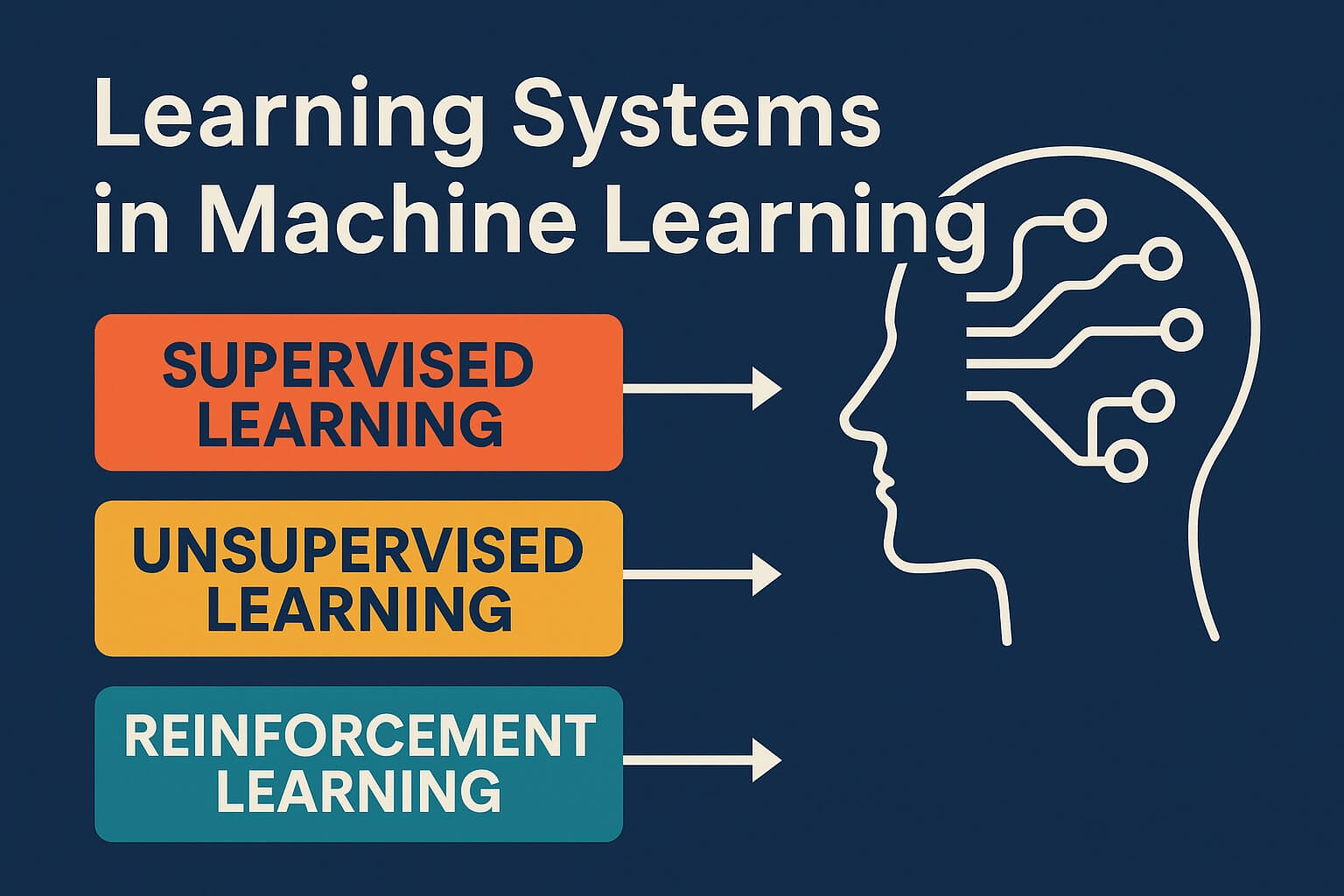
Machine learning is a branch of artificial intelligence in which models learn patterns from training data and use those patterns to make predictions or other inferences about new data.
Several related terms are often confused:
-
Artificial intelligence: The wider field of computer systems that perform tasks involving prediction, reasoning, perception, language, or decision support.
-
Machine learning: Methods that learn statistical relationships from data.
-
Deep learning: A branch of machine learning that uses layered neural-network structures to learn complex representations.
-
Generative AI: Systems that produce text, images, audio, video, code, or other material.
-
Agentic AI: Systems that combine models with planning, memory, tools, permissions, and action steps.
These terms overlap, but they are not interchangeable. An AI agent may use one or more machine-learning models, while a recommendation system may use machine learning without generating content or taking independent actions.
Readers who need a basic explanation of model training can review Collegenp’s Learning System in Machine Learning: Explained Simply.
1. Machine Learning Will Become More Embedded
Machine learning is likely to become less visible as it moves inside ordinary software and organizational processes. Users will often interact with its results without opening a separate AI application.
Stanford reports that 88% of surveyed organizations used AI in 2025. Agent deployment, however, remained in the single digits across nearly all business functions. These figures cover artificial intelligence broadly rather than machine learning alone, but they support two conclusions: organizational adoption is widespread, and autonomous task execution remains at an early stage.
Built-in applications may include:
-
sorting and ranking information;
-
detecting unusual activity;
-
forecasting demand;
-
filtering messages;
-
translating content;
-
supporting document review;
-
retrieving information;
-
recommending possible actions.
Why Embedded Use Requires Accountability
A model may influence an important result even when users do not see or directly control it. Organizations therefore need to identify:
-
what task the model performs;
-
which data it receives;
-
how performance is measured;
-
who may approve or reject its output;
-
what happens after a failure;
-
whether affected people can question a decision;
-
how the model and its data will be updated.
Adding a model to an unclear process does not repair that process. Incomplete records, weak security, ambiguous goals, and missing responsibility may become harder to detect once decisions happen faster.
2. Broad and Specialized Models Will Serve Different Needs
The most defensible forecast is coexistence rather than replacement. Broad models may suit tasks requiring flexibility across subjects and formats. Compact or specialized models may suit limited tasks where speed, privacy, local control, or operating cost matters.
This is a qualified planning forecast, not a confirmed global outcome. No single model size or design is likely to suit every organization or task.
How Organizations May Compare Models
A practical comparison should consider:
-
task complexity;
-
required accuracy;
-
data sensitivity;
-
acceptable response time;
-
available hardware;
-
expected user volume;
-
update frequency;
-
monitoring requirements;
-
consequences of an incorrect result.
A compact model is not automatically safer, fairer, or more accurate. A specialized system may perform well on familiar material and fail when the language, data, users, or operating conditions change.
3. Multimodal and Agentic Systems Will Do More Tasks
Machine-learning systems will increasingly combine several forms of information and complete longer sequences of work. One process may involve reading a document, interpreting an image, checking a structured record, using software, and preparing an output.
Stanford reports that performance on OSWorld, a benchmark for agents completing computer tasks across operating systems, increased from roughly 12% to about 66%. The report also states that agents still fail roughly one in three attempts on structured benchmarks. This shows substantial improvement under test conditions, not dependable autonomy in every real-world environment.
Where Agents May Be Useful
Bounded tasks with clear permissions and reversible actions are more suitable than open-ended or high-risk work. Potential uses include:
-
document processing;
-
software testing;
-
structured data retrieval;
-
scheduling;
-
repeated administrative steps;
-
limited research workflows.
Why Autonomy Will Remain Restricted
A multi-step system creates several opportunities for error. One incorrect assumption near the beginning may affect every later action.
Higher-risk agents need:
-
limited permissions;
-
approved data sources;
-
checks before irreversible actions;
-
records of tools and information used;
-
monitoring for repeated failures;
-
a method for stopping the process;
-
named human responsibility.
A benchmark score belongs to a defined test. It does not prove consistent performance across languages, organizations, software environments, or changing real-world conditions.
4. Evaluation, Monitoring, and MLOps Will Matter More
The future of machine learning will depend increasingly on what happens before and after release. Machine-learning operations, commonly called MLOps, covers data preparation, testing, controlled deployment, monitoring, updates, and documentation.
A model’s performance may weaken when user behaviour, data patterns, policies, software, or operating conditions change. Monitoring should therefore examine more than average accuracy.
Relevant checks include:
-
recurring failure patterns;
-
changes in incoming data;
-
security incidents;
-
fairness across affected groups;
-
response time;
-
human overrides;
-
complaints and appeals;
-
effects on users.
The NIST AI Risk Management Framework is a voluntary framework intended to incorporate trustworthiness considerations into the design, development, use, and evaluation of AI systems. NIST states that the first version of the framework is being revised.
A Readiness Check Before Adoption
An organization considering machine learning should answer five questions:
-
Problem: Is the task defined clearly enough to measure whether the system helps?
-
Data: Is the information accurate, relevant, lawful to use, and representative of the people or conditions involved?
-
Risk: What harm may follow from an incorrect, biased, delayed, or insecure result?
-
Oversight: Who reviews the output, and who may stop or override the system?
-
Maintenance: Who monitors changes, investigates failures, manages updates, and records decisions?
An organization that cannot answer these questions may need to improve its process before selecting a model.
5. More Processing May Happen on Devices
Some machine-learning inference may move to phones, laptops, vehicles, sensors, and local servers when privacy, response time, offline access, or data-transfer limits favour local processing.
This is a deployment direction rather than a universal shift. Cloud services will remain important for training, storage, demanding workloads, and updates. The more likely pattern is mixed: selected work happens near the user, while other processing remains in remote data centres.
Local processing may offer:
-
faster responses;
-
limited offline operation;
-
reduced transfer of selected sensitive data;
-
less dependence on a continuous connection;
-
greater local control over some information.
Its limits include device storage, battery use, hardware differences, update management, theft, tampering, and reduced capacity for demanding tasks.
6. Responsible Use and Regulation Will Shape Development
Privacy, fairness, transparency, security, accountability, accessibility, and human oversight will influence how machine-learning systems are designed, purchased, and monitored.
Stanford reports that responsible-AI benchmarking has not kept pace with capability benchmarking. It also records 362 documented AI incidents in 2025, compared with 233 in 2024. Incident counts depend on reporting and database coverage, so they should be read as documented cases rather than a complete measure of all harm.
The European Union AI Act Timeline
According to the European Commission’s AI Act overview, the Act entered into force on August 1, 2024. Prohibited practices and AI-literacy duties began applying on February 2, 2025, while governance rules and obligations for general-purpose AI models began applying on August 2, 2025.
Most provisions are scheduled to apply from August 2, 2026, with exceptions. Following the May 2026 political agreement described by the Commission, rules for systems used in certain high-risk areas—including education and employment—are scheduled for December 2, 2027. Rules for AI embedded in selected regulated products are scheduled for August 2, 2028.
Regulation will not produce one worldwide standard. Requirements will continue to differ across:
-
privacy and data protection;
-
documentation;
-
testing;
-
transparency;
-
human oversight;
-
employment and education decisions;
-
public procurement;
-
incident reporting;
-
cybersecurity.
This section provides general information rather than legal advice. Organizations must check current law and official guidance for the relevant country, sector, and system.
7. Energy, Chips, and Infrastructure Will Affect Adoption
Machine learning depends on electricity, data centres, cooling, networks, specialized processors, and supply chains. These requirements will affect where systems are developed and which organizations can operate them.
The International Energy Agency’s Energy and AI report estimates that data centres used about 415 terawatt-hours of electricity in 2024, approximately 1.5% of global electricity consumption. In its base case, the IEA projects data-centre electricity use to rise to around 945 terawatt-hours by 2030, with AI as the largest driver alongside other digital services.
These figures cover data centres as a whole, not machine learning alone. The 2030 figure is a modelled projection rather than a guaranteed outcome.
The IEA also notes that local effects can be more concentrated than the global share suggests. Grid connections, equipment lead times, and regional clusters may delay some projects.
Developers and operators may respond by:
-
choosing appropriately sized models;
-
reducing unnecessary computation;
-
improving hardware use;
-
locating facilities where grid capacity is available;
-
scheduling flexible workloads;
-
monitoring energy consumption.
Greater efficiency per task does not ensure lower total electricity demand. Lower costs and wider use may increase the number of tasks performed.
Infrastructure also affects access. Institutions with reliable electricity, strong networks, suitable hardware, quality data, skilled staff, and purchasing capacity will find adoption easier than organizations without those resources.
How Will Machine Learning Change Jobs?
Machine learning is more likely to change groups of tasks than to affect every occupation in the same way. Outcomes will vary by sector, region, employer, working conditions, skill level, regulation, and adoption.
The OECD AI Exposure Measure compares current AI capabilities with occupational requirements. It finds that AI capabilities are closer to routine information processing, administrative work, and codifiable tasks than to work requiring contextual judgment, interpersonal understanding, complex decisions, and responsibility.
Exposure Is Not the Same as Automation
Exposure indicates that current AI capabilities overlap with some requirements of an occupation. It does not show whether an employer will adopt the technology, whether the system will be dependable enough, or whether a position will disappear.
The OECD states that actual effects depend on adoption, regulation, organizational change, and social choice. Exposure should therefore not be treated as proof of automation or job loss.
Four Different Employment Outcomes
Employment effects should be separated into four categories:
-
Augmentation: A worker retains responsibility while a model assists with searching, drafting, classification, checking, or routine analysis.
-
Task substitution: A particular activity requires less human time while the occupation continues.
-
Displacement: Some positions are reduced after technical, organizational, and economic changes.
-
New or redesigned work: New tasks appear in evaluation, data management, security, integration, governance, training, and human review.
These outcomes may occur together within one industry. A system may reduce time spent on one activity while increasing the need for verification, technical maintenance, customer support, or regulatory documentation.
Technical and Human Skills Will Both Matter
Technical skills will matter, but they will not be sufficient for every role. Contextual judgment, communication, collaboration, subject knowledge, critical evaluation, and responsibility remain important because many real-world tasks cannot be reduced to pattern matching alone.
Readers interested in wider employment changes can review Collegenp’s Future of Work.
What Should Students Learn?
Students should focus on foundations that remain useful when software tools and model brands change.
A balanced learning plan includes:
-
Mathematics and statistics: Algebra, probability, sampling, distributions, uncertainty, and suitable calculus.
-
Programming: Clear code, testing, debugging, version control, and software libraries.
-
Data work: Collection, cleaning, labelling, databases, visualization, documentation, and privacy.
-
Model fundamentals: Training, validation, overfitting, generalization, features, objectives, and error analysis.
-
Evaluation: Meaningful metrics, baselines, unfamiliar cases, and analysis of who is affected by errors.
-
Domain knowledge: Understanding the field in which the system will operate.
-
Communication: Explaining assumptions, evidence, uncertainty, and limitations.
-
Responsible practice: Security, consent, fairness, accessibility, accountability, and compliance.
-
Project work: Showing how a problem was defined, how data was selected, how results were tested, and what limitations remain.
Different Paths Require Different Depth
A learner planning to research model methods needs stronger mathematics, experimentation, and academic reading. An application developer needs software engineering, integration, testing, and monitoring.
A policy, education, business, or social-science learner may need less model-building depth but stronger domain knowledge and the ability to evaluate claims and risks.
Students do not need to master every area before beginning. They should understand enough of the full process to avoid treating a model’s output as automatically correct.
Related Collegenp resources include Why Study Data Science and Analytics and Learning System in Machine Learning: Explained Simply.
What Will Machine Learning Still Struggle With?
Machine learning is likely to remain unreliable in situations involving unfamiliar context, incomplete goals, causal reasoning, consistent common sense, moral responsibility, or conditions that differ sharply from training data.
A system may:
-
produce a confident but unsupported answer;
-
learn irrelevant or discriminatory patterns;
-
perform differently across languages or groups;
-
expose confidential information;
-
follow a misleading instruction;
-
fail after a software or data change;
-
pursue a measurable target while missing the real purpose;
-
provide little explanation for a consequential result.
Stanford describes a jagged pattern of capability in which models perform strongly on some difficult evaluations while failing simpler tasks. This gap is one reason benchmark improvement should not be treated as evidence of dependable performance in every setting.
More data does not guarantee a fair or reliable system. Datasets may contain historical bias, duplication, errors, missing groups, unlawfully collected material, or patterns unrelated to the intended decision.
Human review also has limits. A reviewer who lacks time, authority, subject knowledge, or access to evidence may approve an incorrect output. Effective oversight requires clear responsibility, suitable training, accessible records, and permission to challenge or stop the system.
Likely, Possible, and Speculative Outcomes
Separating confidence levels prevents forecasts from becoming promises.
| Confidence level | Outcome | Qualification |
|---|---|---|
| Already happening | Machine learning is becoming more integrated into software and organizational processes | Adoption remains uneven |
| Likely through 2030 | Broad systems and specialized systems will coexist | This remains a qualified planning forecast |
| Likely through 2030 | Evaluation, monitoring, governance, and security will receive greater attention | Standards and organizational practices will differ |
| Likely through 2030 | More occupations will experience task-level change | Exposure does not establish job loss |
| Likely through 2030 | Technical and human skills will remain important | Skill needs vary by role and region |
| Possible | Agents will handle more bounded multi-step processes | Failure rates and permission risks will restrict autonomy |
| Possible | More inference will occur on personal and industrial devices | Cloud services will remain important |
| Possible | Infrastructure gaps will widen differences in adoption | Policy and investment choices will affect the size of the gap |
| Speculative | Human-level general intelligence will arrive by a fixed date | Current evidence does not support a dependable timetable |
| Speculative | Most jobs will disappear by 2030 | Available evidence supports uneven task change, not a uniform outcome |
| Speculative | Human review will become unnecessary | Reliability and accountability remain unresolved |
Available evidence does not support fixed dates for human-level general intelligence, predictions of uniform mass unemployment, or the removal of human oversight.
What the Period Through 2030 May Mean
The future of machine learning is likely to involve wider integration rather than one sudden arrival of perfect automation. Models will process more forms of information, assist with longer workflows, and operate across cloud services, local servers, and personal devices.
Their usefulness will depend on the systems around them. Reliable data, careful evaluation, secure access, human responsibility, adequate infrastructure, updated rules, and skilled workers will determine whether deployment provides value or creates unacceptable risk.
Students should learn principles rather than memorize one tool. Workers should examine which tasks are changing rather than assume that an occupation has one fixed future. Organizations should define the problem, evidence standard, and responsibility structure before selecting a model.
The most defensible forecast through 2030 is balanced: machine learning will perform more tasks and appear in more places, but it will remain fallible. People and institutions will still decide where it belongs, what evidence is sufficient, who checks its output, and who remains accountable when the system is wrong.






Comments 0
No comments yet. Be the first to start the conversation.