



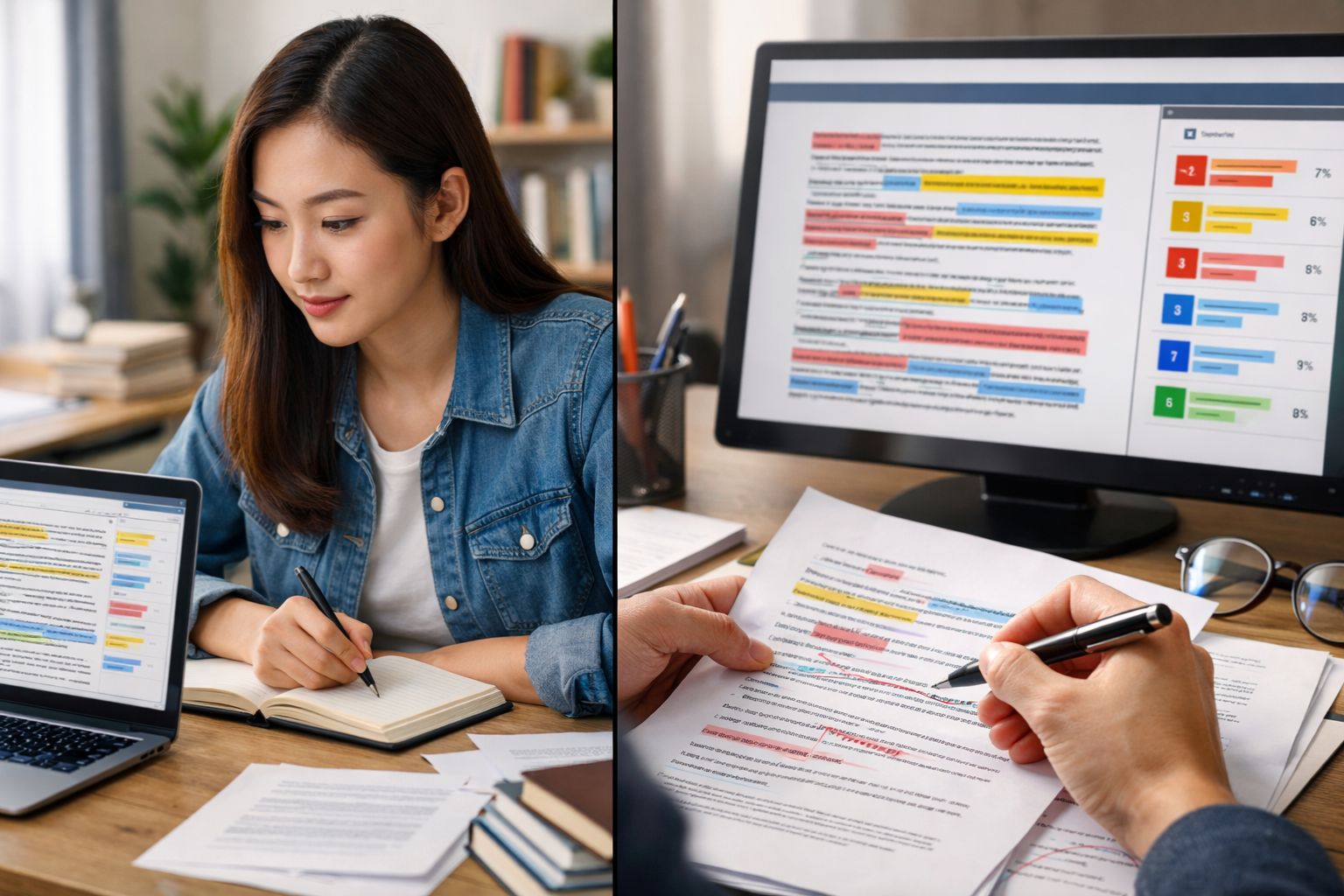
Plagiarism is a common concern, but it’s often misunderstood. Many people think it only means copying full paragraphs, when in reality it can take many forms—and even careful writers can make mistakes if they don’t know how to check their work properly.
As digital submissions and automated checks become standard, understanding how plagiarism detection works—and how to read the results—has become an essential academic skill. This guide explains practical ways to review your work, interpret similarity reports, and reduce plagiarism risk before submission.
Table of Content
- What Plagiarism Really Means Today
- Automated vs Manual Plagiarism Checks
- How Plagiarism Detection Tools Work
- Step-by-Step: How to Check for Plagiarism
- Understanding Similarity Reports
- Common Causes of Accidental Plagiarism
- How to Reduce Plagiarism Risk While Writing
- AI Writing and Plagiarism Checks
- When and How Often to Run Plagiarism Checks
- Conclusion
What Plagiarism Really Means Today
Plagiarism is often defined as presenting someone else’s work or ideas as your own without proper acknowledgment. In practice, this includes more than direct copy‑and‑paste.
Plagiarism can involve:
-
Reusing sentences with only minor word changes
-
Combining phrases from multiple sources without citation
-
Submitting work that is too close to a source’s structure
-
Forgetting to cite common‑looking but specific ideas
Why Checking for Plagiarism Matters
Plagiarism checks aren’t just about avoiding penalties—they’re also a learning tool. Reviewing a similarity report can show where writing leans too heavily on sources and where an author’s own voice could be clearer or stronger.
For students, plagiarism issues can affect grades, academic records, and trust with instructors. For researchers and educators, they can harm credibility. And beyond academia, originality still matters in publishing, content creation, and professional writing of all kinds.
Automated vs Manual Plagiarism Checks
Today, most plagiarism review starts with automated tools. These systems can compare a document against massive databases of academic papers, websites, and student submissions in seconds. For long assignments or research papers with many sources, automated checks make it possible to spot overlapping text quickly and consistently.
Many universities rely on tools such as a Turnitin academic plagiarism checker for this purpose. These tools highlight matching sections and generate similarity reports, helping instructors and writers identify areas that may need closer review.
Manual checking still plays an important role, though. Human review is especially useful for:
-
Verifying whether citations and references are used correctly
-
Evaluating paraphrases and quotations in context
-
Noticing shifts in tone, voice, or writing style
How Plagiarism Detection Tools Work
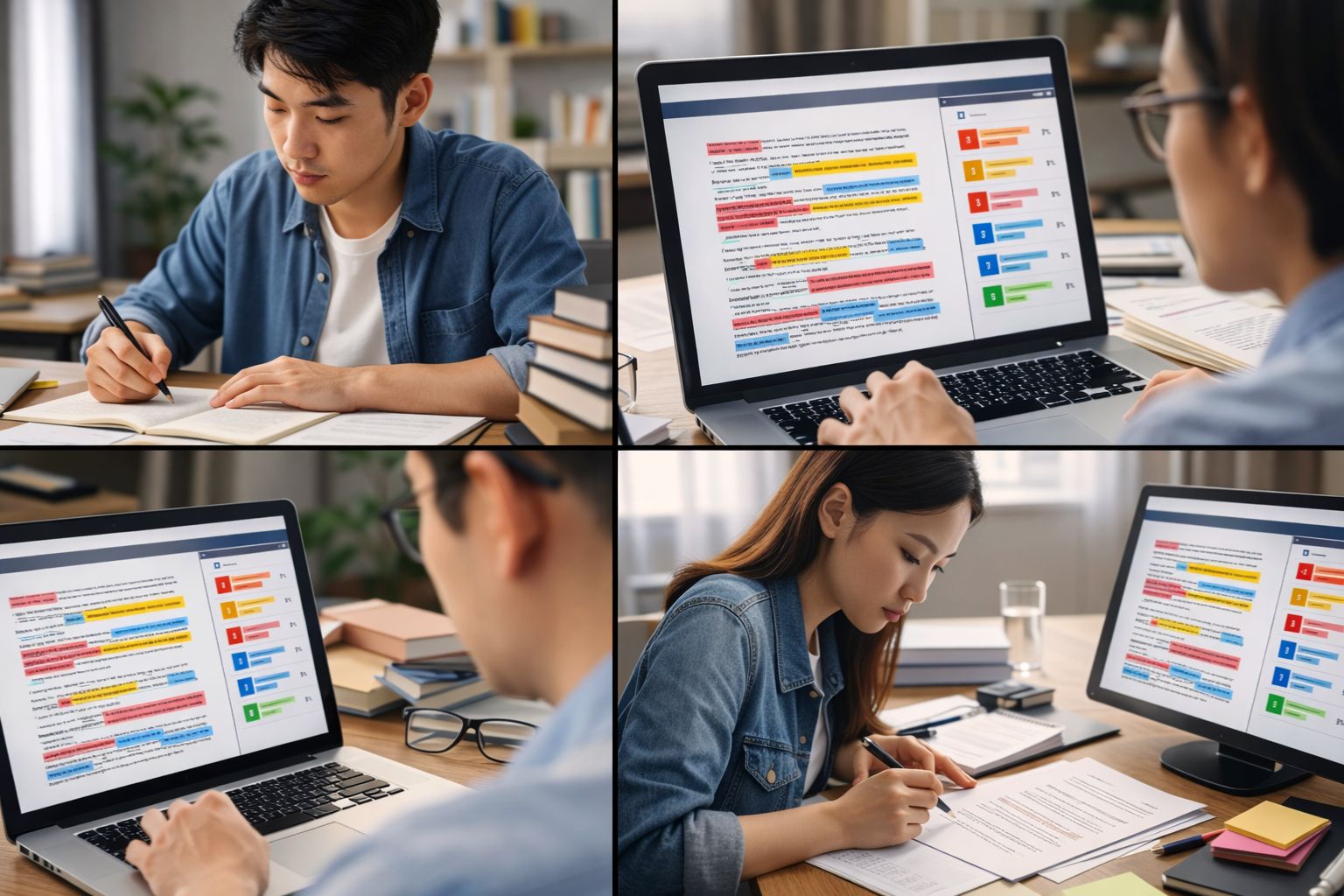
Most plagiarism checkers operate by comparing submitted text against large collections of sources. These may include academic publications, student papers, websites, and other documents.
The tools look for:
-
Exact text matches
-
Close paraphrasing
-
Similar sentence structures
The result is usually a similarity report expressed as a percentage. This number shows how much of your text matches other sources, not how much is plagiarized. Interpretation depends heavily on context.
For example, references, quoted material, and standard phrases can increase similarity without indicating a problem. Understanding this distinction is critical.
Step-by-Step: How to Check for Plagiarism
Checking for plagiarism is not just about uploading a file and reading a number. A careful, step‑by‑step approach makes the process far more useful.
1. Finish a Complete Draft First
Run plagiarism checks on a full draft, not scattered sections. Partial drafts often produce misleading results because context is missing.
2. Use a Reliable Plagiarism Checker
Choose a tool designed for academic writing rather than casual web content. Some platforms also include AI‑related indicators, which can be helpful if your institution screens for writing patterns as well.
3. Upload Your Document and Run the Scan
Once the scan completes, download or open the full similarity report. Avoid focusing only on the percentage at this stage.
4. Review Matched Sources Carefully
Click through each highlighted match. Look at how much text is matched and where it appears in your paper.
5. Categorize the Matches
Ask yourself:
-
Is this a properly cited quotation?
-
Is this common terminology?
-
Is this a paraphrase that is too close to the original?
This step requires judgment. Not all matches are problems.
6. Revise Where Needed
Rewrite sections that rely too closely on sources. Strengthen paraphrasing, add citations, or adjust sentence structure to reflect your own analysis.
7. Recheck If Necessary
After revisions, running a second check can confirm that changes addressed the main concerns.
Understanding Similarity Reports
Similarity reports can look intimidating at first, especially when they highlight large sections of text. The key is to read them strategically.
A similarity percentage reflects overlap, not wrongdoing. A paper with many quotations may show higher similarity than a poorly cited paper with fewer sources.
Pay attention to:
-
Large continuous matches
-
Matches without citations
-
Repeated patterns across multiple sources
Small matches scattered across references or commonly used phrases are usually not a concern.
Common Causes of Accidental Plagiarism
Most plagiarism issues are not intentional. They often happen during drafting and revision.
One common cause is patchwriting, where a writer follows the structure of a source too closely while changing only a few words. Another is poor note‑taking, where source text and original thoughts get mixed together.
Time pressure also plays a role. When deadlines approach, writers may rely too heavily on sources instead of rephrasing ideas properly.
Recognizing these patterns makes it easier to avoid them in future projects.
How to Reduce Plagiarism Risk While Writing
The best way to handle plagiarism is to prevent it from happening in the first place.
Start by reading sources thoroughly before writing. Then close the source and explain the idea in your own words. This reduces the chance of copying sentence structures.
Always keep track of sources during research. Even informal notes should include citations so you know where ideas came from later.
Using a plagiarism checker as a drafting tool—not just at the end—can also help. Early checks reveal habits you may not notice on your own.
AI Writing and Plagiarism Checks
As AI‑assisted writing tools become more common, many writers wonder how they affect plagiarism checks. AI‑generated text does not automatically equal plagiarism, but it can still raise questions about originality and authorship.
Some institutions now review both Turnitin similarity and AI writing indicators together. Understanding Turnitin’s AI writing indicator helps writers interpret these results responsibly and adjust their work if needed.
The safest approach is transparency and originality. Use AI tools, if allowed, for brainstorming or outlining rather than final wording, and always revise text to reflect your own thinking.
When and How Often to Run Plagiarism Checks
There is no single “correct” number of checks. Many experienced writers run one check after completing a draft and another after major revisions.
Avoid obsessively checking every paragraph. Overchecking can slow down writing and lead to unnecessary rewrites.
Think of plagiarism checks as quality control, not surveillance. Their purpose is to support good academic practice, not replace it.
Conclusion
Learning how to check for plagiarism is about more than avoiding trouble. It is about developing confidence in your writing and understanding how your work fits into the broader academic conversation.
By using plagiarism detection tools thoughtfully, reviewing similarity reports carefully, and focusing on clear paraphrasing and citation, you can submit work that truly reflects your own effort and ideas. Over time, these habits become second nature, making plagiarism checks a routine part of responsible writing rather than a source of anxiety.



Comments 0
No comments yet. Be the first to start the conversation.