



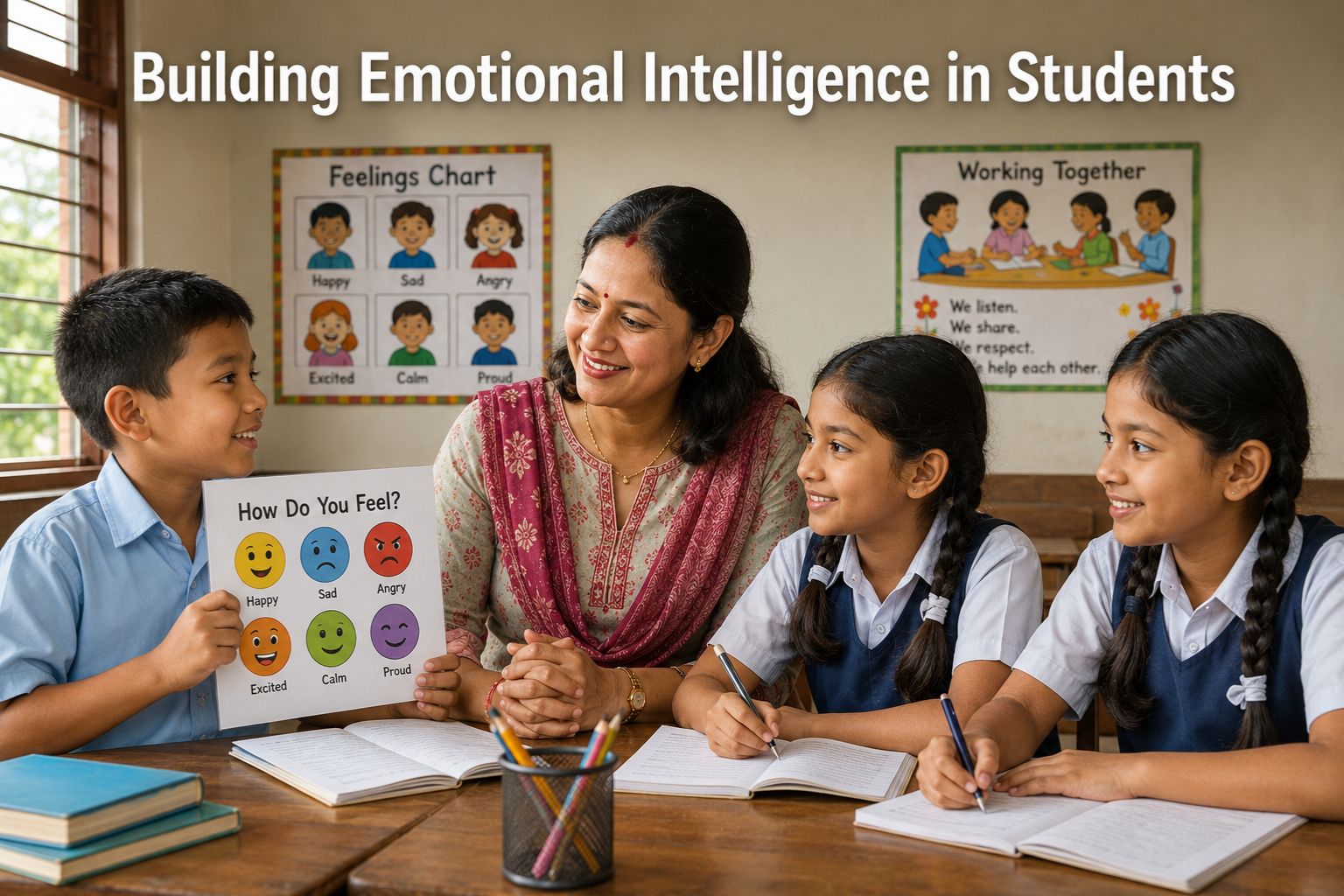
Emphasis on Making Emotional Intelligence an Essential Part of Education
Emotional intelligence has been presented as an important and essential aspect of today’s education. It has been stated that emotional intelligence is necessary for students’ social and emotional development along with their intellectual capacity.
Meaning of Emotional Intelligence
Emotional intelligence is the ability to understand, control, and positively use one’s own emotions and the emotions of others. It helps individuals manage their emotions properly, make better decisions, build healthy relationships, and solve problems.
Role in Motivation and Self-Confidence
The role of emotional intelligence in education is said to increase students’ internal motivation and self-confidence. It has been mentioned that when students are able to understand and accept their emotions, they develop a positive attitude toward learning, become more curious to learn new things, and develop the ability to take challenges as opportunities.
Positive Classroom Environment
Emotional intelligence is also considered important for creating a positive and supportive classroom environment. When there is mutual respect, trust, and understanding between teachers and students, learning becomes effective. Students also develop the skills to understand their friends’ emotions, support them, and work together in groups.
Decision-Making and Problem-Solving Skills
It has been stated that emotional intelligence also improves students’ decision-making ability and problem-solving skills. The view has been presented that students who can manage stress, fear, and pressure are able to accept failure not as a reason for disappointment but as an opportunity for learning.
Examples from the Mahabharata
The source material uses examples from the Mahabharata to show the importance of emotional balance, self-awareness, and relationship management. The character of Shri Krishna has been mentioned as an example of emotional intelligence, while the character of Duryodhana has been presented as an example of the lack of emotional intelligence.
Daniel Goleman’s View on Emotional Intelligence
In modern psychology, Daniel Goleman is mentioned as having made EI globally known through “Emotional Intelligence.” According to him, intellectual ability alone is not enough for a successful life, and emotional intelligence plays an important role in long-term success, leadership ability, and relationship building.
Peter Salovey and John D. Mayer’s View
American psychologists Peter Salovey and John D. Mayer are mentioned as having explained emotional intelligence as the basis of social and emotional capacity. According to their view, emotional intelligence directly affects a person’s behavior, decision-making process, and relationships, making its inclusion in education necessary and effective.
Global Practice in School Education
It has been mentioned that developed countries such as the United States and Finland have also prioritized life skills and civic behavior in school education. The practice of teaching students through practical experience with group work, counseling services, and activity-based learning is said to play a role in developing emotional intelligence.
Emotional Balance and Learning
Emotionally balanced students are said to be more effective in the learning process. The view has been presented that positive emotions such as enthusiasm, self-confidence, and curiosity make learning effective, while negative emotions such as fear, stress, anxiety, or disappointment create obstacles to learning.
Conclusion
The conclusion presented is that schools and universities should include emotional intelligence as an integral part of education. Such education is said to help make students not only capable but also sensitive, ethical, and responsible citizens.







Comments 0
No comments yet. Be the first to start the conversation.