




Academic success is not produced by knowledge alone. Students can understand course material and still underperform when stress, frustration, shame, conflict, or fear interrupts focus. That gap is one reason emotional intelligence attracts so much attention in education. In this context, emotional intelligence refers to how students identify, understand, and manage emotions in themselves and in their relationships with others. In classrooms and campuses, those skills matter during exams, feedback sessions, group projects, deadlines, social conflict, and the move into a new academic setting.
The current evidence points to a positive link between emotional intelligence and academic performance, though the size of that link changes across studies. MacCann and colleagues found an overall effect of ρ = .20 across 42,529 students and 1,246 effect sizes. Quílez-Robres and colleagues reported a moderate-high overall effect of r = .390 across 13,909 participants. In secondary education, Sánchez-Álvarez and colleagues found a significant average effect of .26 and stronger estimates for ability-based measures than for self-report measures. Taken together, those studies indicate that EI matters, but they also show that results depend on how EI is defined and measured.
For students, parents, and educators, the useful question is not whether EI matters in isolation. The stronger question is how much it matters, for whom, and beside which other conditions. A student with steady emotion regulation still needs subject knowledge, time on task, and good instruction. A student with strong academic ability can still struggle when pressure, feedback, or transition stress starts to shape daily study decisions. This guide explains what EI means, how it relates to academic success, where the evidence is strongest, and where caution is needed.
Summary: Emotional intelligence is linked with academic success because it shapes how students regulate stress, stay engaged, use feedback, and work with others. Large reviews show a positive average association between EI and academic performance, but effect sizes differ by model, measure, and setting. EI works best as one part of a wider academic picture that also includes subject knowledge, study habits, teaching quality, and school climate.
Table of Content
Key Takeaways:
-
EI is positively associated with academic performance, but it is not the sole driver of grades.
-
Ability EI, trait EI, and mixed EI are not identical constructs.
-
Emotion regulation, coping, motivation, and relationships are the main pathways in the research.
-
School-wide social and emotional learning can also raise academic outcomes.
-
Transition periods can make EI more visible in student performance.
-
Measurement limits and self-report bias require caution.
-
The practical value of EI appears in how students respond to setbacks, deadlines, feedback, and group work.
What is emotional intelligence in education?
Emotional intelligence in education refers to emotion-related capacities that shape how students perceive, understand, and manage feelings while they learn. These capacities matter because emotion affects attention, memory, persistence, and classroom relationships. Researchers agree that EI is relevant to learning, but they do not all define it in the same way.

Ability, trait, and mixed models
The main models of EI are ability, trait, and mixed models. Ability EI treats emotional intelligence as a set of mental abilities related to processing emotional information. Trait EI treats it as a pattern of self-perceived emotional tendencies. Mixed models combine emotional skills with broader competencies such as motivation or social functioning. A systematic review of EI measures found wide variation across instruments and psychometric properties, which means different studies are often measuring related but non-identical constructs.
This difference matters for interpretation. An ability measure asks whether a student can solve emotion-related tasks well. A trait measure asks how the student describes their own emotional style. A mixed measure reaches wider and may absorb other non-cognitive features. When research findings differ, part of the reason is often that the studies are not measuring the same version of EI.
Why measurement changes the findings
Measurement changes the findings because different EI models produce different effect sizes and different limits. MacCann and colleagues reported that the EI-performance association was stronger for ability EI (ρ = .24) than for self-rated EI (ρ = .12), with mixed EI at ρ = .19. Sánchez-Álvarez and colleagues reported a similar pattern in secondary education, with the highest average association for ability EI. These results indicate that articles on EI should not present the construct as one settled and uniform trait.
Official education sources point to a related caution. OECD materials on social and emotional skills note links with grades, attendance, and school experience, but they also reflect the challenge of assessing internal states across varied student groups and settings. That is one reason careful interpretation matters.
How does emotional intelligence affect academic success?
EI affects academic success through process rather than through direct academic content. The main pathways are emotion regulation, coping, motivation, persistence, and relationship quality. These pathways shape how students respond when work becomes stressful, uncertain, or socially demanding.
Attention, stress, and emotional regulation
Emotional regulation matters because attention is vulnerable to stress. Students who can identify rising anxiety, irritation, or discouragement early are more likely to return their attention to the task before a study session breaks down. OECD states that students who are curious, persistent, and better able to control their emotions outperform peers, and that higher levels of social and emotional skills are linked with stronger grades and lower rates of tardiness and skipping school.
This does not mean high-EI students avoid pressure. It means they may handle pressure in ways that preserve learning time. In academic life, that can look ordinary: pausing before reacting to feedback, recovering after a poor quiz, or keeping one difficult class from disrupting the rest of the week.
Motivation, coping, and persistence
Coping and persistence are central pathways between EI and performance. MacCann and colleagues found that coping variables mediated the relationship between EI and GPA, with problem-focused coping acting as the key single mediator in both study samples. Perera’s review also argues that the link between trait EI and achievement runs through regulation, motivation, and related processes rather than through emotion alone.
A 2024 university study adds similar detail. That study found that emotional intelligence was positively related to academic achievement and that self-efficacy, motivation, and resilience acted as mediating pathways. The practical meaning is straightforward: EI matters most when students return to the assignment, ask for help, revise a draft, or stay engaged after a setback.
Relationships, belonging, and classroom participation
Academic success also depends on relationships. Students learn through teacher interaction, peer explanation, group work, feedback exchange, and a sense of belonging in class. OECD reports that better teacher-student relationships are linked to higher social and emotional skills, while exposure to bullying is linked to lower levels of many of those skills. CASEL places self-management, social awareness, relationship skills, and responsible decision-making at the center of social and emotional learning.
In practice, EI-related skills can help students ask for clarification without withdrawing, work through disagreement in group tasks, and separate criticism of work from criticism of self. Those responses can affect participation, assignment quality, and willingness to stay engaged in a course.
What does the research say across schools and universities?
The research says that EI is positively related to academic success on average, but the size and meaning of that relationship vary. Strong reviews support a real association, yet they also show that EI is one piece of a wider academic picture.
What the meta-analyses report
The clearest starting point is the meta-analytic evidence. MacCann and colleagues found an overall effect of ρ = .20 across 42,529 students, with ability EI producing stronger estimates than self-rated EI. Quílez-Robres and colleagues reported r = .390 across 13,909 participants and identified differences by geographical region and type of performance measure. Sánchez-Álvarez and colleagues found a significant overall effect of .26 in secondary education and again reported stronger estimates for ability-based measures. Those studies agree on direction even when they differ on magnitude.
What school-wide SEL evidence adds
School-wide social and emotional learning adds another layer because EI overlaps with a wider set of learnable social and emotional capacities. Durlak and colleagues analyzed 213 school-based SEL programs involving 270,034 students and found gains in social and emotional skills, behavior, and academic performance, including an 11-percentile-point gain in achievement relative to controls. Cipriano and colleagues later reviewed 424 studies from 53 countries involving 575,361 students and found positive effects across skills, attitudes, behavior, school climate, peer relationships, school functioning, and academic achievement.
EI is not identical to SEL. CASEL defines SEL as a wider educational process through which students build knowledge, skills, and attitudes for identity, emotion management, empathy, relationships, and decision-making. That broader field helps explain why emotion-related skills matter in regular classrooms and not only in counseling settings.
What happens during transition periods
Transition periods can make EI more visible because they combine new workload, weak routines, social uncertainty, and identity strain. Parker and colleagues studied the move from high school to university and found that EI was linked with academic success in that setting, though the results changed depending on how academic success was defined. That finding is useful because it shows why transition stress can change the visibility of non-cognitive factors.
Petrides, Frederickson, and Furnham reported that trait EI moderated the relationship between cognitive ability and academic performance in British secondary students. Their study also found that students with higher trait EI scores were less likely to have unauthorized absences and less likely to have been excluded from school. This points to context: EI may matter most where students are managing stress, adjustment strain, or school disengagement.
What are the limits of emotional intelligence as an academic factor?
EI has limits because it explains only part of academic success. Overstating EI can distract from teaching quality, family circumstances, disability support, language barriers, sleep, health, or access to study time and materials.
EI does not replace knowledge or study time
EI does not replace subject knowledge, practice, or feedback. A calm student who has not learned the material is still underprepared. A student with strong emotional awareness can still struggle in a course that requires background knowledge they do not yet have. The most accurate reading of the research is that EI shapes how students engage with academic demands rather than replacing those demands.
Correlation is not causation
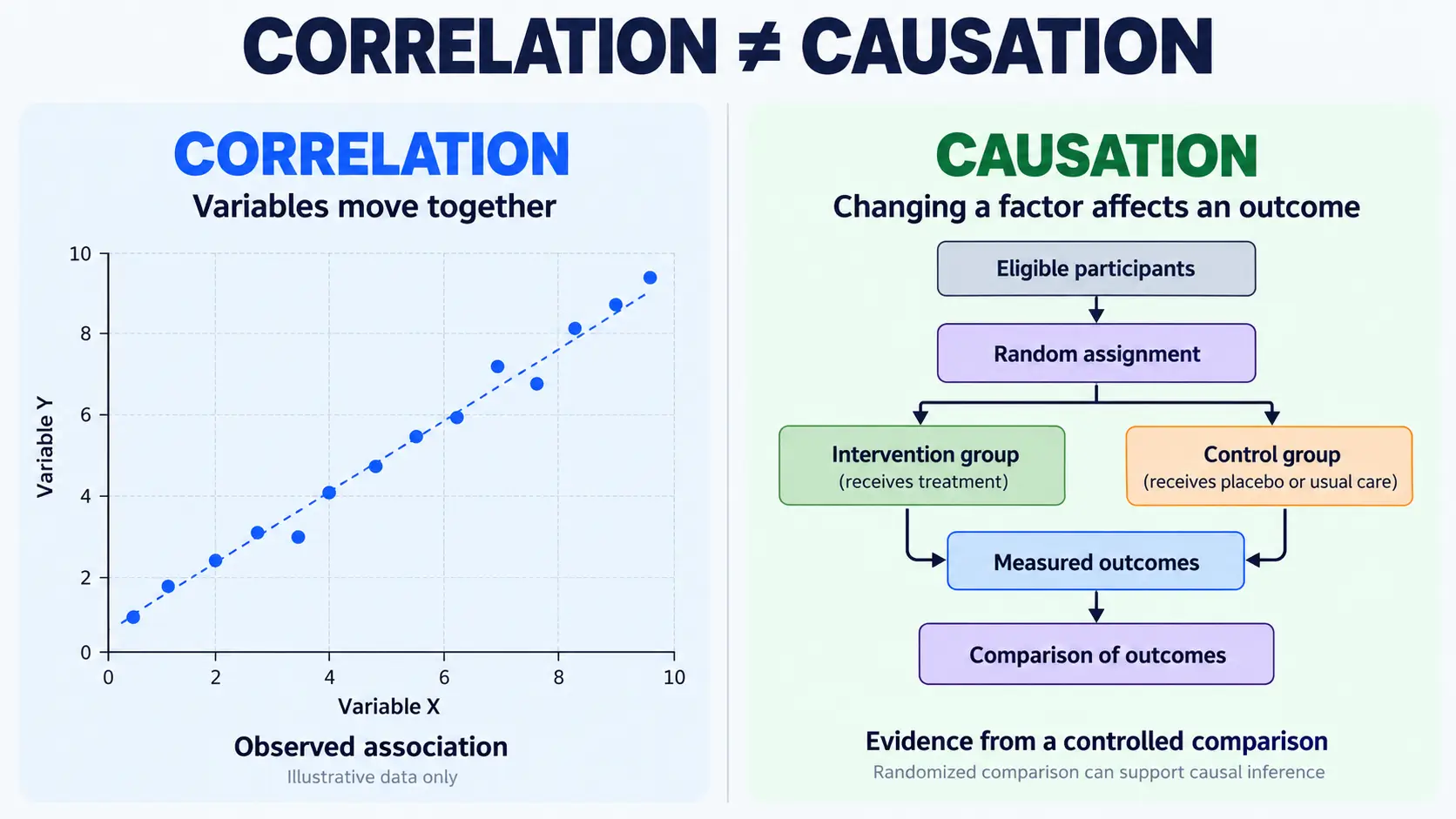
Correlation is not causation in much of this literature. The large reviews show that EI and academic performance move together on average, but they do not prove that raising EI alone will raise grades in every setting. MacCann and colleagues state that a lack of evidence for causal direction remains a limitation. That caution should stay visible in any publication-ready article on this topic.
Context, equity, and measurement limits
Context matters because students do not learn under equal conditions. OECD reports that social and emotional skills are linked to school experiences such as bullying exposure, teacher relationships, and extracurricular participation. Those findings show that emotional skill is shaped by environment as well as by individual disposition.
Measurement also remains a live issue. Bru-Luna and colleagues documented wide variation in EI instruments and psychometric quality. When articles ignore that variation, they can make the field look simpler than it is. The evidence is useful, but interpretation should remain careful.
How can students strengthen emotional intelligence in daily study?
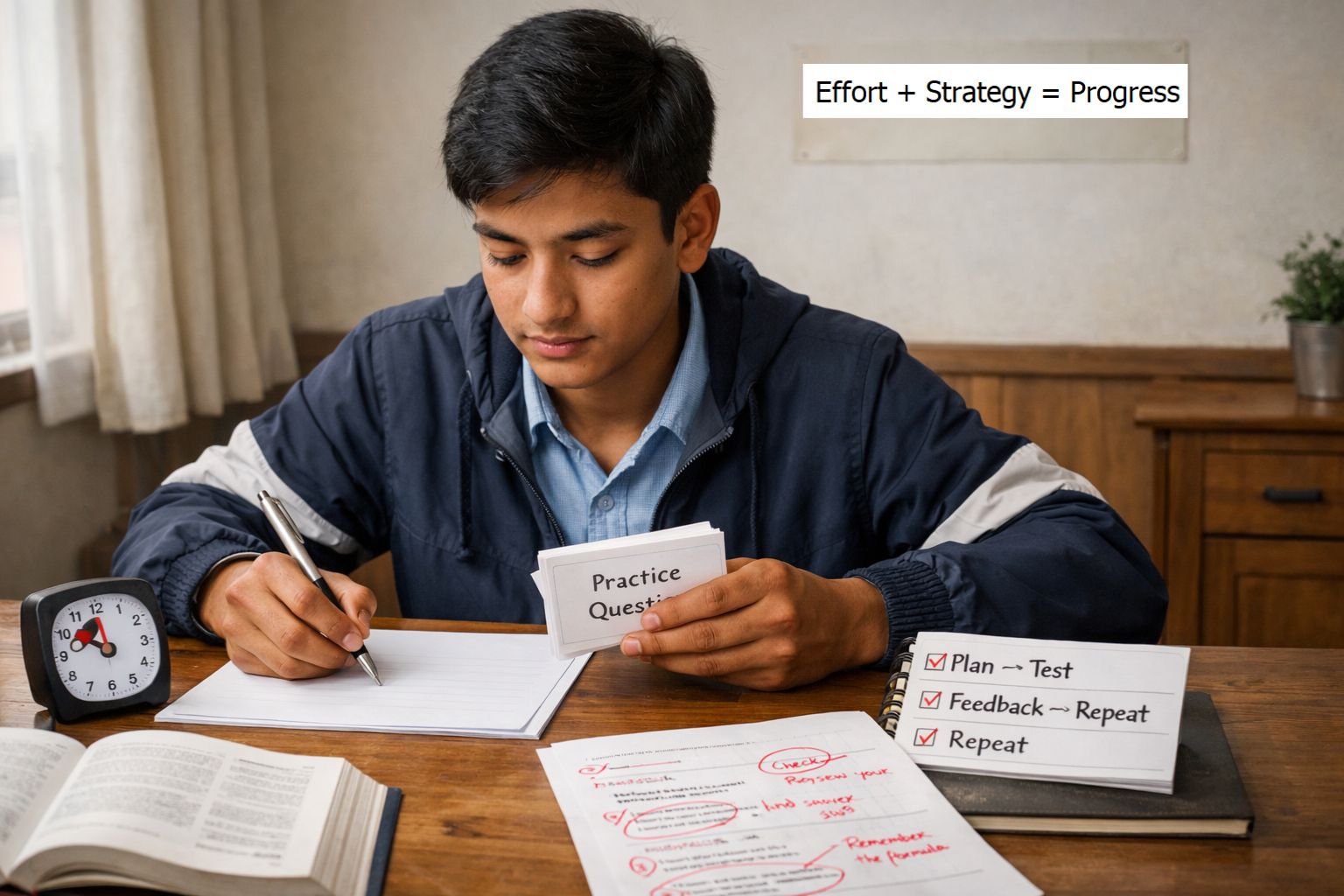
Students can strengthen EI-related study behavior by watching the emotional patterns that surround academic tasks. The goal is not to remove emotion from learning. The goal is to stop emotion from quietly deciding whether work starts, continues, or gets abandoned.
A self-check for pressure points
A good self-check starts with four questions. When do I lose focus most often: before starting, after feedback, during group work, or near deadlines? Which emotion appears first: anxiety, shame, irritation, boredom, or confusion? What do I do next: delay the task, argue, scroll, or ask for help? Which response would keep the academic task moving? This type of reflection turns EI into visible study behavior rather than a label.
Habits that link emotion and learning
Small habits connect emotional awareness to academic action. Students do not need a full personality rewrite. They need repeatable responses for ordinary academic friction.
Naming emotions before study
Naming the emotion before work can reduce automatic avoidance. “I am anxious about starting this report” gives the student a defined problem. “I do not feel like studying” hides the problem inside a vague mood. EI models place emotion perception and understanding near the front of the process, so this habit fits the theory well.
Short regulation routines during study
Short regulation routines can keep a study session intact. That may mean stepping away for two minutes, writing the next concrete task, opening feedback only after a brief pause, or breaking a large assignment into the next visible step. These routines matter because they keep work moving when emotion rises. The logic aligns with research linking EI to coping and regulation.
Handling feedback and group work
Feedback and group work are common tests of EI in education. Students with stronger EI-related habits are often better placed to hear criticism without shutting down, clarify disagreement without personalizing it, and ask for help before confusion hardens into avoidance. OECD and CASEL both point to the academic value of relationship quality, self-management, and school belonging.
What change can look like
Change in EI-related study behavior is easier to spot in academic patterns than in mood labels. Useful signs include fewer missed deadlines after setbacks, earlier help-seeking, steadier class participation, and less emotional fallout after low marks. Those signs are not perfect measures of EI, but they are practical indicators for students and advisors.
How can schools and universities support it?
Schools and universities can support EI by treating emotional skill as part of learning design rather than as a side topic. The strongest evidence points to structured, repeated, classroom-connected work rather than isolated talks or slogans.
Teaching, advising, and learning design
At classroom level, support can include clear feedback routines, reflective discussion, conflict handling in group work, and transition supports for new students. At institution level, it can include first-year advising, teacher development, and course design that lowers avoidable emotional barriers without lowering academic standards. OECD findings on teacher relationships and school experience help explain why this broader design matters.
For university students, EI support does not need to look therapeutic. It can sit inside writing feedback, peer review, project work, mentoring, and academic advising. The relevant test is whether the design helps students keep learning when pressure rises.
Why program quality matters
Program quality matters because the topic alone does not guarantee results. Durlak and colleagues found that the use of recommended skill-development practices was associated with stronger outcomes. Cipriano and colleagues also report wide variation across interventions, which means delivery, context, and design can shape results as much as the label on the program.
That is why broad claims such as “EI training raises grades” are too loose for publication. Better questions are: What skills were taught, for how long, by whom, in which setting, and with which outcome measures? Those questions produce a more careful reading of the literature.
Conclusion
Emotional intelligence has a meaningful but limited role in academic success. Research reviews support a positive relationship between EI and academic performance, and school-based social and emotional learning evidence shows that emotion-related skills can be taught in ways that benefit academic outcomes. The balanced view is that EI shapes how students stay engaged with learning under pressure. It works beside knowledge, study habits, instruction, and school climate rather than above them.
FAQs
Does emotional intelligence improve grades?
Emotional intelligence is linked with stronger academic performance on average, but the effect is not uniform across all studies or settings. The clearest evidence shows a positive association, with effect sizes changing by EI model, age group, and outcome measure.
Is emotional intelligence more useful than IQ for academic success?
The evidence does not support a simple one-versus-the-other answer. Cognitive ability remains central to many academic tasks, while EI appears to shape coping, regulation, and relationship processes around learning. Some studies suggest EI becomes more visible under stress or during transition periods.
Can emotional intelligence be taught in schools?
Schools can teach related emotional and social skills through structured social and emotional learning. Meta-analyses of school-based SEL interventions show positive effects on academic performance and other school outcomes, especially when programs are well designed and well delivered.
Why do different studies report different results?
Different studies report different results because they use different EI models, different measurement tools, different age groups, and different definitions of academic success. Ability-based measures, self-report trait measures, and mixed models are not measuring the same thing in the same way.
What is the strongest practical use of EI for a student?
The strongest practical use is early recognition of an emotion followed by a coping response that keeps the academic task moving. In study life, that often means returning to work after a setback, opening feedback without avoidance, asking for help sooner, and staying engaged during group work or exams.
Resources
-
MacCann, Carolyn, et al. Emotional Intelligence Predicts Academic Performance: A Meta-Analysis. 2020. Psychological Bulletin. PubMed record.
-
Quílez-Robres, Alberto, et al. Emotional Intelligence and Academic Performance: A Systematic Review and Meta-Analysis. 2023. Thinking Skills and Creativity. ScienceDirect.
-
Sánchez-Álvarez, Nicolás, María Pilar Berrios Martos, and Natalio Extremera. A Meta-Analysis of the Relationship Between Emotional Intelligence and Academic Performance in Secondary Education: A Multi-Stream Comparison. 2020. Frontiers in Psychology.
-
Durlak, Joseph A., et al. The Impact of Enhancing Students’ Social and Emotional Learning: A Meta-Analysis of School-Based Universal Interventions. 2011. Child Development. PubMed record.
-
Cipriano, Christina, et al. The State of Evidence for Social and Emotional Learning: A Contemporary Meta-Analysis of Universal School-Based SEL Interventions. 2023. Child Development. PubMed record.
-
OECD. Social and Emotional Skills. OECD topic page.
-
OECD. Students’ Well-Being. OECD topic page.
-
CASEL. Fundamentals of SEL. CASEL framework page.
-
Bru-Luna, L. M., et al. Emotional Intelligence Measures: A Systematic Review. 2021. Healthcare. PMC record.
-
Perera, H. N. The Role of Trait Emotional Intelligence in Academic Performance: Theoretical Overview and Empirical Update. 2016. The Journal of Psychology. PubMed record.
-
MacCann, Carolyn, et al. Coping Mediates the Relationship Between Emotional Intelligence and Academic Achievement. 2011. Contemporary Educational Psychology. ScienceDirect.
-
Petrides, K. V., Norah Frederickson, and Adrian Furnham. The Role of Trait Emotional Intelligence in Academic Performance and Deviant Behavior at School. 2004. Personality and Individual Differences.
-
Parker, James D. A., et al. Emotional Intelligence and Academic Success: Examining the Transition From High School to University. 2004. Personality and Individual Differences. ScienceDirect search record.
-
Shengyao, Y., et al. Emotional Intelligence Impact on Academic Achievement and Psychological Well-Being Among University Students. 2024. PMC-hosted article.





Comments 0
No comments yet. Be the first to start the conversation.