



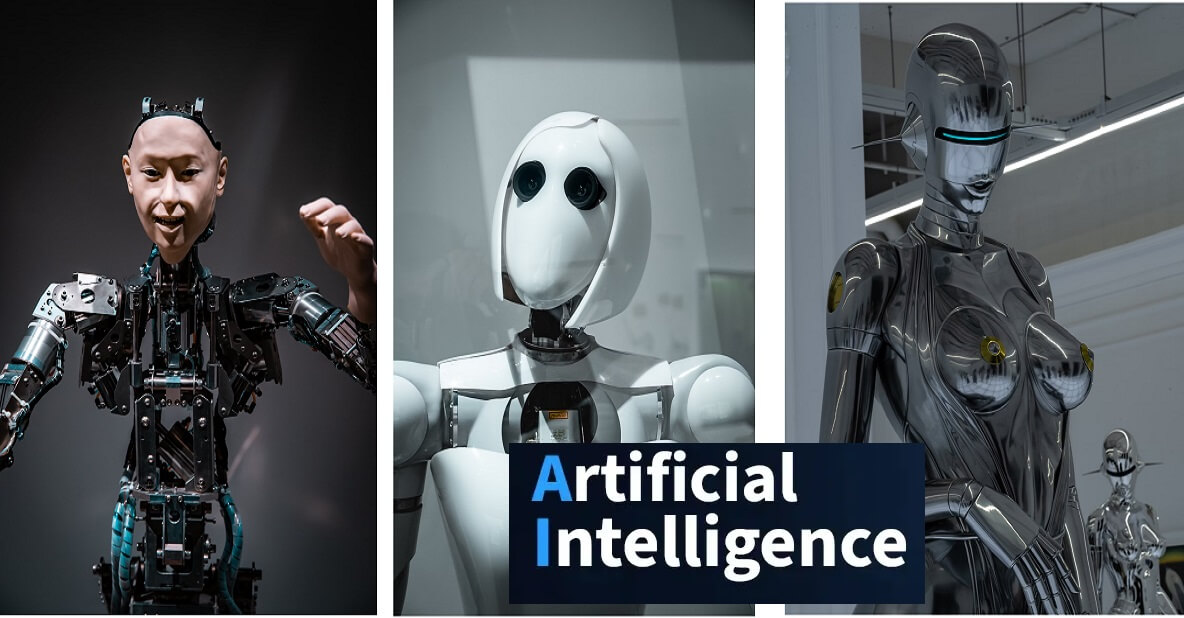
Artificial intelligence is changing how schools deliver instruction, provide feedback, support accessibility, and manage routine work. Its educational value, however, depends on how it is designed and used. AI does not improve learning simply because it is available, and it should not replace teachers, independent thinking, or human judgement.
Used for a clear educational purpose, AI can help teachers respond to different learning needs, give students timely support, and make some materials easier to access. Used without adequate safeguards, it can produce false information, expose personal data, reinforce bias, and widen existing inequalities.
The OECD’s Digital Education Outlook 2026 concludes that generative AI can support learning when it is guided by clear teaching principles. It also warns that completing a task with AI does not necessarily mean that a student has understood the subject.
What Is AI in Education?
AI in education refers to computer systems that can analyse information, identify patterns, generate content, recommend activities, or provide automated assistance.
Common applications include:
-
Adaptive learning platforms
-
Intelligent tutoring systems
-
Automated feedback and assessment tools
-
Speech recognition and transcription
-
Text-to-speech and translation tools
-
Learning analytics
-
Lesson-planning assistants
-
Generative AI tools that produce text, images, questions, or summaries
These applications do not all carry the same level of risk. A system that recommends practice questions is different from one used to assign grades, predict performance, or make decisions that affect a student’s opportunities.
Why AI Matters in Education
1. More Responsive Learning Support
Students differ in their prior knowledge, pace, language background, interests, and support needs. AI-supported learning platforms can analyse student responses and adjust the sequence or difficulty of activities.
A student who repeatedly struggles with a concept may receive additional explanations or practice. Another student may be given more advanced material after demonstrating understanding. This use of adaptive learning in artificial intelligence can help teachers manage different learning needs within the same class.
However, an AI system works only with the information it receives. It may not recognise anxiety, family circumstances, motivation, cultural context, or other factors affecting a student’s performance. Teachers must therefore interpret its recommendations rather than accept them automatically.
2. Timely Feedback and Tutoring
AI can provide immediate feedback during practice. It may identify an incorrect answer, suggest another method, explain a concept differently, or ask a question that encourages the student to reconsider a response.
This support can be useful outside normal classroom hours or when a teacher cannot respond immediately. Intelligent tutoring systems may also help students practise at their own pace.
AI feedback is less reliable when an assignment requires judgement about originality, reasoning, creativity, cultural context, or tone. The difference between an AI tutor and a human teacher is therefore important: AI can provide additional practice and explanation, but teachers understand classroom context, student wellbeing, and the wider purpose of an assignment.
A U.S. Department of Education report recommends keeping people “in the loop” when AI is used in teaching and assessment. It identifies formative assessment as a promising application while emphasising that human judgement remains necessary.
3. Improved Access to Learning Materials
AI-enabled accessibility tools can present information in different formats. Examples include:
-
Live captions for spoken content
-
Speech-to-text for students who find typing difficult
-
Text-to-speech for students who need auditory support
-
Translation and language assistance
-
Predictive typing and communication support
-
Conversion of materials into accessible formats
These tools may support students with hearing, visual, physical, communication, or learning-related needs. They may also assist students learning in an additional language.
UNICEF identifies accessibility and personalised learning as potential benefits of AI, including the development of accessible content for children with disabilities.
AI should not replace individual accommodations, specialist services, accessible teaching practices, or consultation with students about the support they require.
4. More Time for Teaching and Student Support
Teachers spend considerable time preparing materials, organising records, writing routine communications, and reviewing repetitive work. AI may assist with first drafts of lesson plans, practice questions, rubrics, summaries, or administrative documents.
Reducing some routine work may give teachers more time for explanation, discussion, mentoring, and individual support. The benefit is not automatic, however. AI-generated materials may contain factual errors, biased examples, inappropriate language, or content that does not match the curriculum.
Teachers remain responsible for reviewing every resource before it is used with students.
5. Earlier Identification of Learning Difficulties
Learning analytics can identify patterns such as repeated errors, missed activities, declining participation, or sudden changes in performance. Educators may use these signals to determine whether a student needs additional support.
Such predictions must be handled carefully. A pattern in data is not a diagnosis or a final judgement about ability. Data may be incomplete, and an algorithm may reproduce unfair assumptions found in its training data.
Analytics should begin a human review, not label students, restrict opportunities, or replace direct communication with the student.
6. Development of AI Literacy
Students need more than the ability to enter a prompt. They need to understand how to evaluate AI output and when not to rely on it.
Effective AI literacy for students includes the ability to:
-
Check factual claims against reliable sources
-
Recognise fabricated or misleading information
-
Protect personal and school data
-
Identify possible bias
-
Follow academic-integrity rules
-
Explain how AI was used in an assignment
-
Distinguish assistance from substitution
-
Seek human guidance when a decision has serious consequences
UNICEF’s updated guidance on AI and children calls for child-centred systems that protect rights, improve transparency, and prepare children for current and future developments in AI.
Common Applications of AI in Education
| Application | Educational use | Required safeguard |
|---|---|---|
| Adaptive learning | Adjusts activities according to student responses | Teacher monitoring and curriculum alignment |
| Intelligent tutoring | Provides explanations, hints, and guided practice | Accurate content and clear limits |
| Generative AI | Supports brainstorming, revision, and question creation | Source checking and disclosure rules |
| Automated feedback | Reviews structured or low-stakes work | Human review for complex assessment |
| Accessibility tools | Provides captions, speech support, translation, and alternative formats | Compatibility with individual needs |
| Learning analytics | Identifies patterns that may require attention | Privacy protection and protection against profiling |
| Administrative assistance | Supports scheduling, records, and routine communication | Limited data access and human approval |
Risks and Challenges
Inaccurate or Fabricated Information
Generative AI can produce confident answers that are false, incomplete, outdated, or unsupported. It may also invent quotations, references, statistics, or events.
Students should treat AI-generated content as material to examine, not as an authoritative source. Names, dates, calculations, quotations, and references must be checked independently.
Privacy and Data Security
Student prompts may contain assignments, learning records, personal details, behavioural information, or confidential school data. Depending on the tool, that information may be stored, reviewed, shared with service providers, or used to improve the system.
UNESCO recommends a human-centred and age-appropriate approach to generative AI and warns that institutions may not be adequately prepared to protect user data or evaluate the educational suitability of these tools.
Before adopting a tool, schools should establish:
-
What information it collects
-
Why the information is required
-
Where the information is stored
-
Who can access it
-
How long it is retained
-
Whether it is used to train other systems
-
How students and families can raise concerns
Students should not enter unnecessary personal, medical, financial, or confidential information into an AI system.
Bias and Unfair Treatment
AI systems learn from existing data, which may contain social, cultural, linguistic, or institutional bias. A system may therefore provide less accurate responses for certain languages, disabilities, communities, or learning profiles.
Schools should test tools across different student groups and provide a clear process for questioning automated recommendations. No consequential decision should depend entirely on an algorithm.
Unequal Access
Not every student has reliable internet access, an appropriate device, a paid subscription, a quiet place to study, or an adult who can provide guidance.
Introducing AI without addressing these differences may widen the digital divide. Equal access requires suitable devices, connectivity, accessible design, technical support, trained teachers, and non-AI alternatives.
Overdependence on AI
Students may become dependent on AI for writing, problem-solving, summarising, or answering questions. A polished response may hide the fact that the student has not developed the intended knowledge or skill.
Teachers can reduce this risk by asking students to:
-
Explain their reasoning
-
Verify evidence
-
Compare different sources
-
Revise inaccurate output
-
Reflect on mistakes
-
Complete selected tasks without AI
-
Discuss their work orally
The broader positive and negative impact of AI in education depends largely on whether the technology strengthens learning or allows students to avoid it.
Academic Integrity
AI has made traditional rules about authorship and independent work more difficult to apply. A complete ban may be difficult to enforce, while unrestricted use can make assessment unreliable.
Schools need clear policies explaining:
-
Which AI tools are permitted
-
Which assignments allow AI assistance
-
Which tasks must be completed independently
-
How students should disclose AI use
-
What counts as unacceptable substitution
-
How teachers will confirm individual understanding
Students using AI tools for exam preparation without cheating should use them for explanation, practice, feedback, and revision rather than for completing assessed work dishonestly.
Clear guidance on the ethical and practical use of AI tools is more useful than rules that simply assume all AI use is either acceptable or prohibited.
Conditions for Responsible Use
Schools should introduce AI only when it addresses a defined educational need. Using a tool because it is new is not an educational strategy.
Responsible use requires:
-
A clear learning purpose: The tool should support a specific instructional, administrative, or accessibility need.
-
Human oversight: Teachers and authorised staff must remain responsible for important decisions.
-
Evidence of usefulness: Schools should assess whether the tool improves learning, access, or efficiency in their setting.
-
Privacy protection: Data collection should be limited, secure, and clearly explained.
-
Fairness testing: The system should be reviewed for unequal performance across different student groups.
-
Accessible design: Students with disabilities should be able to use the tool or receive a suitable alternative.
-
Transparent rules: Students should know when AI is being used and how it affects their work.
-
Teacher training: Educators need time to test tools, recognise errors, redesign assessments, and guide students.
-
A non-AI alternative: Students should not be disadvantaged when they cannot safely or appropriately use a particular system.
-
Regular review: Schools should reassess tools as their features, policies, and data practices change.
The Future of AI in Education
The future of educational AI is likely to depend less on unrestricted general-purpose tools and more on systems designed around curriculum requirements, accessibility, learning science, teacher control, and student protection.
The OECD reports that purpose-built educational tools may offer more reliable learning support than unguided use of general generative AI, although further evidence is needed across subjects, age groups, and educational settings.
Schools will also need stronger policies for procurement, assessment, data governance, transparency, and AI literacy. The central question is not how much AI an institution can adopt. It is whether each use helps students learn without compromising their privacy, independence, fairness, or access to human support.
AI Should Support Education, Not Control It
AI can make practice more responsive, feedback faster, materials more accessible, and routine work easier to manage. It can also produce errors, expose student data, reinforce bias, weaken independent thinking, and deepen inequality.
No AI tool will benefit every student in the same way. Its educational value depends on careful selection, qualified teachers, transparent rules, reliable infrastructure, accessible design, and meaningful human oversight.
When these conditions are in place, AI can serve as a useful educational support. It should remain a tool guided by teachers and learners—not a substitute for teaching, judgement, effort, or human responsibility.







Comments 0
No comments yet. Be the first to start the conversation.