



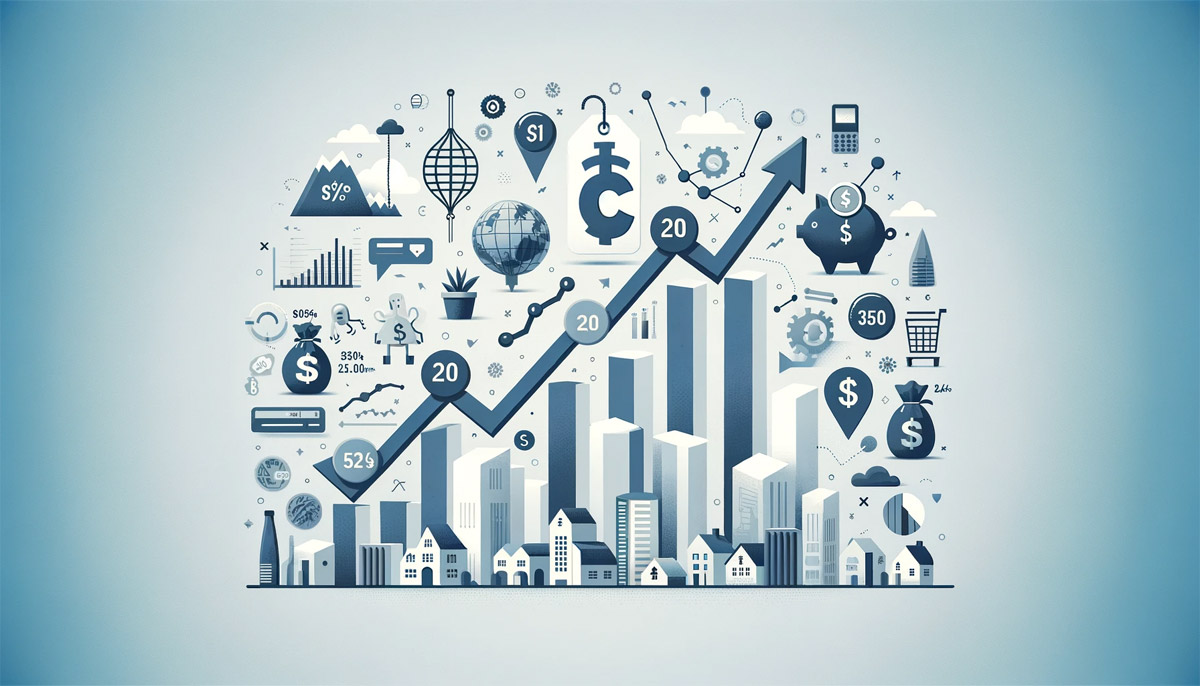
Inflation is the sustained rise in the overall price level of goods and services in an economy. When inflation increases, each unit of currency buys fewer goods and services, which reduces purchasing power. Because it affects households, businesses, and government policy decisions, inflation remains one of the most closely watched indicators in economics.
What is inflation?
Inflation is not just “prices going up.” It reflects how demand, supply, production costs, wages, expectations, and the money/credit environment interact over time. Economists usually focus on broad, economy-wide measures (not one product’s price change).
Common inflation types discussed in economics include:
-
Demand-pull inflation: prices rise when aggregate demand grows faster than an economy’s ability to supply goods and services.
-
Cost-push inflation: prices rise because production costs increase (inputs, wages, energy, logistics), and firms pass some of those costs to consumers.
-
Built-in inflation (expectations-driven): inflation persists because people expect prices to keep rising, which can influence wage demands and pricing decisions.
Key terms that clarify inflation
-
Price level vs one-off price changes: a temporary spike in one sector is not the same as broad inflation across the economy.
-
Inflation rate: the percentage change in a general price index over a period (often year-on-year).
-
Purchasing power: the amount of goods/services a unit of currency can buy; inflation reduces it.
-
Nominal vs real values: nominal values are not adjusted for inflation; real values are adjusted for inflation (real wages, real interest rates, real returns).
Inflation and interest rates are also tightly connected. Central banks often adjust rates to manage inflation, which can influence borrowing, spending, and growth. If you want that linkage, see how interest rates affect growth outcomes in this related explainer: how interest rates impact economic growth.
What causes inflation?
Inflation usually comes from multiple forces operating at the same time. The most common drivers include:
Demand-pull pressures
Demand-pull inflation occurs when spending across the economy rises quickly while supply cannot expand at the same pace. This can be triggered by:
-
strong consumer spending
-
increased private investment
-
higher government spending
-
rapid credit growth
When “too much demand” competes for limited goods and services, firms can raise prices without losing sales.
Cost-push pressures
Cost-push inflation begins on the supply side, when it becomes more expensive to produce goods and services. Typical sources include:
-
higher fuel and electricity costs
-
rising wages (especially if productivity does not rise similarly)
-
increased prices of imported inputs (raw materials, components)
-
supply disruptions (natural disasters, transport bottlenecks, conflicts)
Cost-push inflation can be difficult to manage because it can rise even when demand is weak.
Inflation expectations and wage–price dynamics
If workers and firms expect inflation to continue, they may behave in ways that make inflation more persistent:
-
workers bargain for higher wages to keep up with living costs
-
businesses raise prices to protect margins and cover higher wages
This can create a feedback loop, especially when expectations become unanchored.
Money supply and credit conditions
Inflation can also be influenced by the overall money and credit environment. If money/credit expands faster than real output for a sustained period, inflationary pressure can build.
The exact relationship depends on the financial system, expectations, and how money moves through the economy. For a focused discussion, see: money supply and interest rate policy: exploring the relationship.
Exchange rate movements (especially in import-dependent economies)
Currency depreciation can raise the local price of imports (fuel, food, machinery, medicines), which can feed into broader inflation—particularly where imports are a large share of consumption or production inputs.
How inflation affects the economy
Inflation’s effects are uneven. The same inflation rate can hurt some groups more than others depending on income, savings, and debt.
1) Purchasing power and cost of living
Inflation reduces what households can buy with the same income. If wages do not rise at a similar pace, real income falls and living standards can deteriorate.
2) Savings and investment returns
Inflation reduces the real value of money over time. If interest earned on savings is lower than inflation, savers experience a loss in real purchasing power. Inflation also changes how investors evaluate returns because “nominal gains” may not be real gains.
3) Borrowers vs lenders
-
Borrowers may benefit if inflation reduces the real burden of fixed-rate debt (assuming income rises and rates do not adjust upward too quickly).
-
Lenders can lose in real terms if loan interest rates do not adequately compensate for inflation.
4) Business planning and uncertainty
Moderate, predictable inflation is generally easier for businesses to manage than volatile inflation. High or unpredictable inflation can:
-
make cost planning difficult
-
distort pricing decisions
-
reduce confidence for long-term investment
-
encourage short-term behavior (inventory hoarding, frequent price changes)
5) Economic growth and employment
Inflation can interact with growth in different ways:
-
if inflation is driven by rising demand in a growing economy, output and jobs may rise initially
-
if inflation is driven by supply shocks and rising costs, growth may slow while prices rise (often described as a stagflation-like risk)
The growth impact also depends on interest-rate responses by the central bank.
How inflation is managed
Inflation management typically involves monetary policy, fiscal policy, and supply-side actions. The right mix depends on the root cause of inflation.
Monetary policy (central banks)
Central banks influence inflation mainly through interest rates, liquidity operations, and communication. Their role and tools are summarized here: the central bank’s impact on national economies.
When inflation rises, central banks may raise policy rates to reduce demand and slow credit growth. When inflation is low and growth is weak, they may lower rates to support activity—though effectiveness varies by conditions.
Fiscal policy (government)
Taxes, subsidies, transfers, and public spending can either add to demand or ease cost pressures. Understanding the difference between fiscal and monetary tools helps clarify who does what: difference between fiscal and monetary policy.
Supply-side and structural actions
When inflation is driven by supply constraints (food supply issues, energy shortages, logistics), responses often involve:
-
improving supply chains and market competition
-
supporting productivity and output expansion
-
targeted measures for essential goods (designed carefully to avoid distortions)
Global perspective: why inflation differs across countries
Inflation varies across countries based on:
-
exchange rate stability and import dependence
-
energy and food price exposure
-
credibility and independence of monetary institutions
-
fiscal discipline and debt servicing pressure
-
market competition and supply resilience
Global shocks (oil prices, shipping disruptions, commodity cycles) can transmit inflation across borders, but local policy and structure determine how strongly those shocks pass through.
Conclusion
Inflation is a broad, sustained rise in the general price level that reduces purchasing power. Its main drivers typically include demand conditions, production costs, expectations, money/credit dynamics, and exchange-rate movements. Inflation matters because it affects household budgets, investment decisions, business planning, government borrowing costs, and overall economic stability. The most effective policy response depends on diagnosing the cause—demand-driven inflation requires different tools than cost-driven inflation.
Disclaimer: This article is for general information only. It is not financial, legal, or investment advice.





Comments 0
No comments yet. Be the first to start the conversation.